Published: 18 November 2025
Drone defence specialist DroneShield Ltd (ASX: DRO) has ended another bruising session in the red on Tuesday, as investors continue to digest a huge insider selldown, an embarrassing contract miscommunication and a sharp ASX price query – all against the backdrop of a still‑booming counter‑drone market.
DroneShield share price today (18 November 2025)
On the ASX, DroneShield shares closed on 18 November 2025 at A$2.45, down around 5.8% for the day. According to ASX price data, the stock traded between A$2.35 and A$2.70 on heavy volume of just over 30 million shares. Investing
That leaves DroneShield:
- Roughly 25% lower than a week ago, when it closed at A$3.26 Intelligent Investor
- Down about 64% from its 52‑week high near A$6.70 reached in October Investing
- Still up more than 200% year‑to‑date, after starting 2025 below A$0.80 Intelligent Investor
An FNArena “winners & losers” wrap for the ASX confirmed DRO as one of the notable decliners of the day, listing the stock at A$2.45, –5.77%. Fnarena
Overseas trading paints a similar picture
DroneShield also trades in Europe, where German‑language investor sites show the stock:
- Around €1.36–€1.37 late on 18 November
- Down roughly 9–11% on the day in Frankfurt and on Tradegate Aktiencheck
Wallstreet‑online calculates that, in euro terms, the share is:
- Down ~27% over the past week
- Down ~45% over the past month
- Yet still up about 190–210% year‑to‑date Wallstreet Online
In other words, DroneShield remains a massive 2025 winner – but one that is now deep into a violent correction.
Another bruising session after last week’s 31% crash
Today’s decline extends a chaotic fortnight for shareholders.
European and Australian coverage has repeatedly highlighted the single‑day drop of about 31% on Thursday 13 November, when the ASX price tumbled from roughly A$3.28 to A$2.25 following news of mass leadership share sales. Ad Hoc News
Since the October peak above A$6.70, articles from Motley Fool Australia and continental outlets such as Aktiencheck and Wallstreet‑online estimate that the stock has now fallen around 63–64%. The Motley Fool
Yet, as today showed, volatility is far from over:
- The Motley Fool ran a fresh piece on 18 November titled along the lines of “Down another 8% today – when will DroneShield shares finally hit the bottom?”, underscoring ongoing retail anxiety. The Motley Fool
- A separate Meyka note published mid‑afternoon reported DroneShield “falling 8% today”, putting the intraday price around A$2.60 at that time before it slid further into the close. Meyka
That seesaw trading has turned DroneShield into one of the most actively traded names on the ASX in recent sessions, with tens of millions of shares changing hands each day. Intelligent Investor
Coordinated leadership sell‑off: the core of the trust crisis
The dominant story driving today’s price action is still the huge insider selldown disclosed last week.
A detailed recap from German and pan‑European financial sites (Boerse‑Global / Ad‑hoc‑News and Aktiencheck) sets out the transactions as follows: Ad Hoc News
- CEO Oleg Vornik sold roughly 14.8 million shares, realising close to A$49.5 million.
- Chairman Peter James offloaded stock worth around A$12.3–12.4 million.
- Director Jethro Marks sold shares valued at about A$4.9 million.
In total, leadership disposed of about A$67 million of stock (around €40m), in what several outlets describe as an “unprecedented” wave of director selling.
Key consequences highlighted in today’s coverage:
- The combined trades have wiped out more than 60% of DroneShield’s market value since its October highs. Aktiencheck
- Institutional holders have rapidly reduced exposure, leaving a far bigger share of the register in retail hands. Aktiencheck
- Commentators at Finanznachrichten, Finanzen.net and Finanzen.at all frame the situation as a “Vertrauenskrise” – a crisis of confidence – among large investors. Finanzen
Some investor notes go as far as to ask whether big funds are now “scared off” by management’s decision to cash out after a spectacular rally. Finanzen
ASX price query and contract confusion deepen the damage
Today’s articles also revisit a communications misstep that has become tightly linked to the sell‑off.
According to reporting from Ad‑hoc‑News and multiple German outlets, DroneShield: FinanzNachrichten.de
- Announced a US government contract worth about A$7.6 million on 10 November,
- Then withdrew the ASX announcement, clarifying that it related to a previously awarded order rather than a genuinely new win.
That miscommunication prompted nervous trading before the insider sales hit the market.
In parallel, the Australian Securities Exchange (ASX) sent DroneShield a formal “price query” letter, seeking an explanation for the extreme volatility. DroneShield’s response, referenced by MarketIndex and foreign press, stated that there was no undisclosed price‑sensitive information and attributed the move to market reaction to director trades. Market Index
For investors, the combination of:
- A retracted contract announcement, and
- A massive leadership selldown executed days later
has created the impression of a governance and communications problem, not just a routine bout of profit‑taking.
What today’s analyst and media commentary is saying
House broker: “dead money” but still a Buy
A widely cited note from DroneShield’s house broker, Bell Potter, has become a focal point in today’s coverage.
Summaries on Ad‑hoc‑News and Boerse‑Global say the broker still maintains a formal “Buy” rating with a price target around A$5.30, implying well over 100% upside from current ASX levels. At the same time, the stock is described as effectively “dead money” through 2025, reflecting the view that sentiment may stay depressed despite strong fundamentals. Ad Hoc News
German and Austrian investor portals (Finanzen.net, Finanzen.at, Finanznachrichten) pick up the same theme:
- Insider selling and the contract misstep are seen as potentially deterring institutional investors.
- Yet the broker still models robust growth and sees the recent crash as valuation “reset” rather than the end of the story. Finanzen
Quant platforms flag stretched valuation
On the other side, AI‑driven analytics platform Meyka emphasises how expensive DroneShield still looks on some traditional metrics, even after the plunge: Meyka
- A price‑to‑earnings ratio around 260 (based on their inputs).
- An enterprise value to sales multiple near 19.8x.
- Around +300% performance year‑to‑date, despite recent losses.
Meyka’s model leans toward a “strong sell” stance on valuation grounds, while still projecting a short‑term price rebound (their one‑month model points to ~A$3.58), underlining just how polarised views on the stock have become.
Retail vs institutional: who’s buying today?
Several European pieces note that trading volume has remained extremely high, with more than 88 million shareschanging hands in one week alone. Ad Hoc News
A breakdown cited by Aktiencheck and Ad‑hoc‑News suggests:
- Institutions have been net sellers, lightening positions after the insider trades.
- Retail investors have been net buyers, with one strategist at Bell Potter quoted as saying many are betting on a potential “DroneShield Rally Mark 2”. Ad Hoc News
Online forums captured by Wallstreet‑online show sentiment skewing negative but speculative – investors worry about further falls toward €1.00, yet also recognise the business is now substantially larger than a year ago. Wallstreet Online
Under the surface: a fast‑growing defence tech business
What makes today’s sell‑off so contentious is that the underlying business continues to grow rapidly.
Revenue, contracts and index inclusion
Boerse‑Global’s 18 November analysis emphasises that operationally, DroneShield is still firing: Ad Hoc News
- Q3 2025 revenue reached about US$93 million, already ahead of the company’s entire previous full‑year revenue.
- The company has reportedly sold more than 4,000 systems worldwide, with new US defence contracts worth roughly US$7.9 million recently added to the backlog.
- First‑half 2025 revenue grew more than 200% year‑on‑year to ~A$72.3 million.
- DroneShield was added to the S&P/ASX 200 index in September, attracting passive fund flows and raising its profile on global screens.
Market cap estimates today put DroneShield at roughly A$2.2–2.4 billion, based on a share count of about 906 million shares, up more than 50% year‑on‑year following capital raisings. Wallstreet Online
A sector with powerful tailwinds
Two separate pieces published on 18 November put DroneShield’s turmoil in the context of a rapidly expanding counter‑drone market:
- Business Insider quotes DroneShield’s US CEO Matt McCrann describing a “counter‑counter fight” where drones and anti‑drone systems are upgrading on weeks‑long cycles, not years, driven in large part by Ukraine and other live conflicts. Business Insider
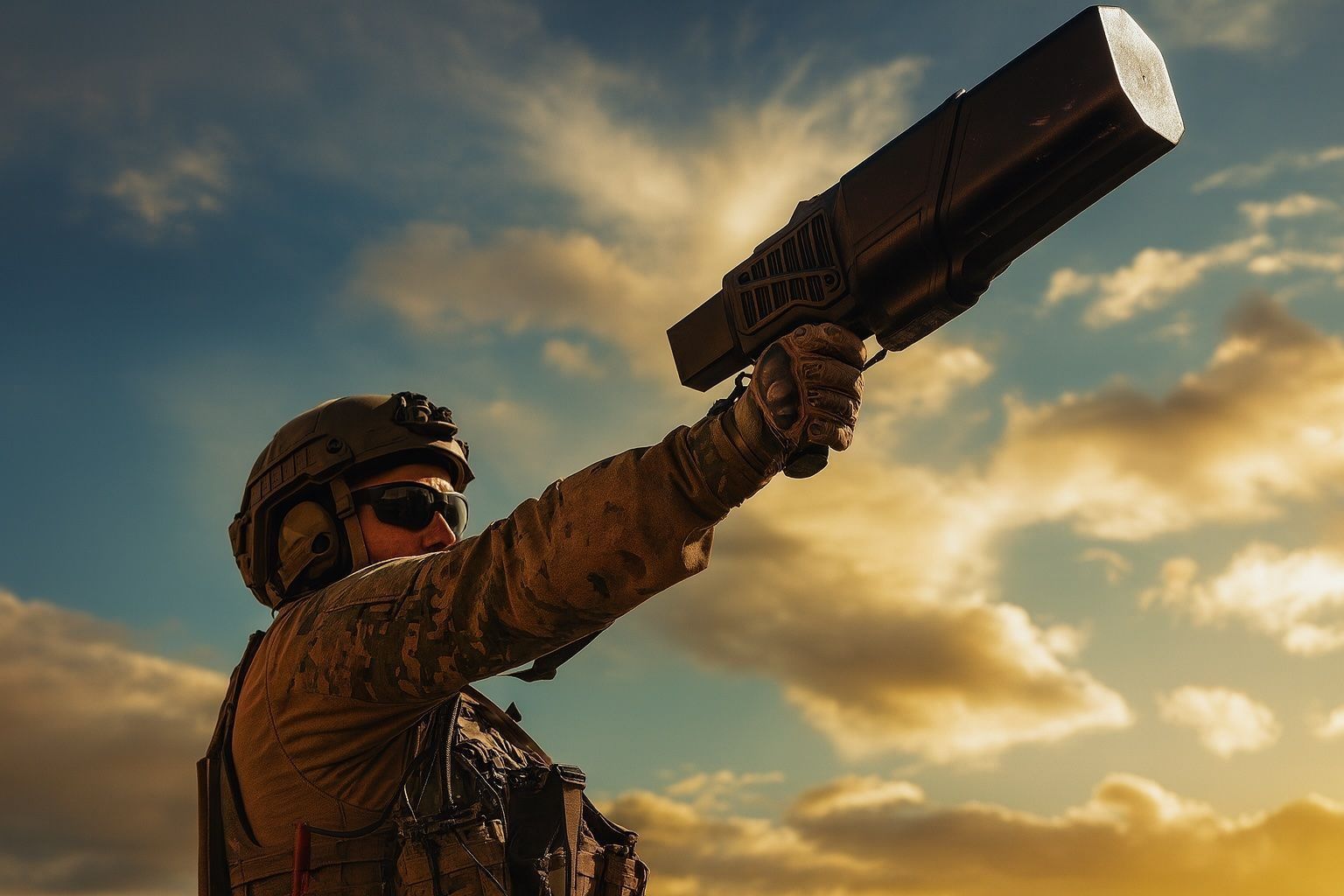
- An article on Israeli defence site i‑HLS – “Counter‑Drone Technology Market Nears $2 Billion Amid Rising Demand” – highlights DroneShield’s evolution from experimental mosquito‑tracking tech into a provider of RF‑based detection and jamming systems, now deployed in more than 40 countries at airports, prisons, critical infrastructure and military units. iHLS
DroneShield’s own investor materials stress its position as one of the only pure‑play listed counter‑UAS companies, with AI‑driven hardware and software designed to detect, track and defeat small drones. DroneShield
Put simply: the end markets remain strong, even as the share price lurches lower.
How risky does DroneShield look after today’s fall?
Today’s commentary across Australia and Europe consistently returns to one big question:
Is this a deep‑value entry point, or a warning signal about governance and valuation?
Here are the main risk factors being discussed by analysts and commentators on 18 November:
- Governance & signalling risk
- The size and timing of the A$67m director selldown is seen as a powerful negative signal.
- Investors are asking whether leadership’s interests are now sufficiently aligned with long‑term shareholders. Ad Hoc News
- Communications & regulatory scrutiny
- The withdrawn US contract announcement and the subsequent ASX price query have raised questions about disclosure discipline.
- Media headlines about a CEO “going missing in action” and “communications blunders” amplify perceptions of a company on the back foot in investor relations, even if operations are solid. finanzen.net
- Valuation vs growth
- Even after the crash, DroneShield still trades on lofty revenue and earnings multiples compared with many defence peers, particularly given the rapid growth in shares outstanding. Meyka
- Supporters argue those multiples reflect rare exposure to a hyper‑growth niche – critics counter that expectations now look stretched relative to governance risk.
- Sentiment and technicals
- A series of high‑profile news stories (Motley Fool, AFR, European investor sites) have entrenched the narrative of a stock in “freefall”, which can become self‑fulfilling in the short term. FinanzNachrichten.de
- Technical write‑ups today point to broken support levels and warn of further downside if no fresh contract news or leadership reassurance emerges before year‑end. Wallstreet Online
Against that, bullish voices point out that:
- The underlying business is much larger, more diversified and better funded than it was at the start of 2024. Ad Hoc News
- Defence procurement cycles, particularly in counter‑drone systems, are long and sticky, which can support multi‑year revenue visibility once systems are deployed. Business Insider
What investors may want to watch after today
Without giving any personalised investment advice, today’s news flow suggests a few key things for anyone tracking DroneShield shares:
- Management response
- Does leadership provide a clear, detailed explanation of the rationale for such large share sales, including future lock‑up or alignment mechanisms?
- Are there public appearances, Q&A calls or investor days that rebuild trust?
- Further ASX or regulatory developments
- Any additional queries or guidance from the ASX regarding disclosure practices or director dealings would be material.
- Contract pipeline and margins
- New orders – especially from the US, Europe and Ukraine‑adjacent customers – will help demonstrate that recent turmoil is a sentiment issue, not a demand problem.
- Given the high valuation multiples cited today, markets will likely focus on profitability and cash flow, not just revenue growth.
- Register changes
- Moves by major institutions (either further selling or fresh buying) will be closely watched as a real‑world verdict on governance concerns. Aktiencheck
For now, DroneShield’s 18 November 2025 session underlines one thing clearly:
This is still a high‑beta defence tech story, where breathtaking fundamental growth and a booming end market collide with very human concerns about insider behaviour and trust.
Anyone considering the stock should carefully weigh those factors, alongside their own risk tolerance and time horizon, and seek professional financial advice where needed.
This article is for general information only and does not constitute financial product advice or a recommendation to buy, hold or sell any security. Always do your own research and consult a licensed financial adviser before making investment decisions.