Eos Energy Enterprises (NASDAQ: EOSE) is heading into the Christmas Eve session with fresh volatility on the tape. Shares closed Tuesday, December 23, 2025 at $11.96, down 7.21%, after the market digested a board leadership transition; pre-market indications early Wednesday, December 24 were modestly higher. With U.S. equities scheduled to close early at 1:00 p.m. ET on Dec. 24, thinner holiday liquidity can amplify price swings—especially for high-beta names like EOSE. StockAnalysis+1
What happened: Eos announces a board chair handoff effective year-end
On December 22, 2025, Eos disclosed that Russ Stidolph, its non-executive Chair since 2018 and a long-time investor through AltEnergy, will step down from the board effective December 31, 2025. The board named Joseph Nigro to succeed him as non-executive Chair effective January 1, 2026. GlobeNewswire
Eos framed the move as a planned transition. Nigro brings decades of utility and energy leadership experience, including prior roles as CFO of Exelon and CEO of Constellation (an Exelon operating company), and has been on Eos’s board since early 2025. GlobeNewswire+1
Why the stock reacted: governance headlines collide with a high-volatility setup
EOSE’s drop into the Dec. 23 close underscores a familiar reality for investors in early-stage industrial scale-ups: even non-operational headlines can move the stock when the market is already laser-focused on execution risk, funding, and leadership credibility.
It also happened during a holiday week when trading conditions are quirky. With early market close on Dec. 24, volumes can be uneven, and the marginal buyer/seller has an outsized impact on price—particularly in momentum-heavy small and mid-cap stories. Nasdaq+1
The bigger bull case: long-duration storage demand and the “AI power” narrative
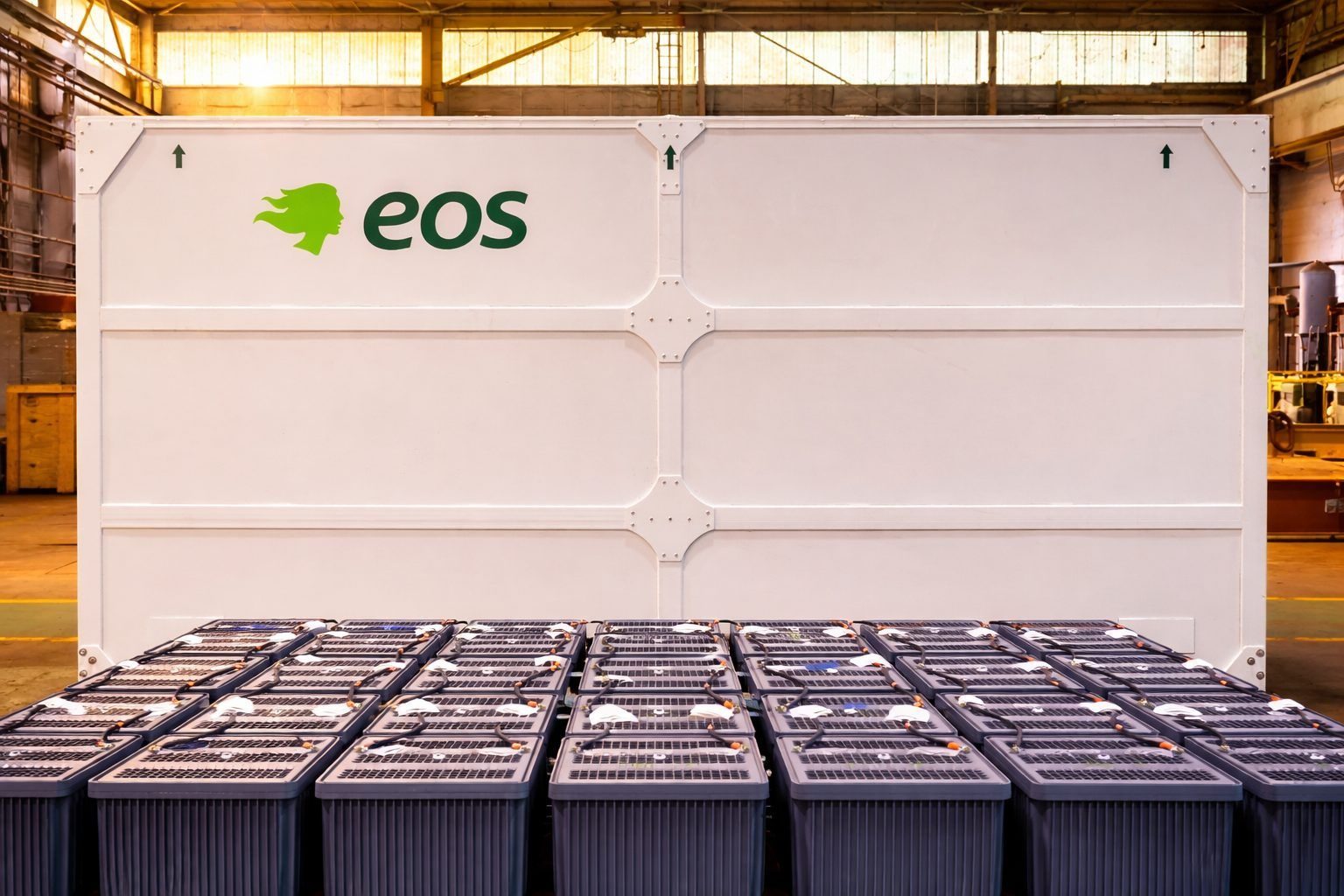
Eos positions itself as a U.S.-manufactured, zinc-based long-duration energy storage provider—aiming at applications that can run 4 to 16+ hours. GlobeNewswire+1
That “long-duration” angle matters because the grid is being pulled in two directions at once: renewables increase variability, while data centers and AI infrastructure push demand higher. Reuters reported in October that Eos and Talen Energy partnered to develop storage in Pennsylvania, explicitly linking the buildout to rising power needs from AI infrastructure and highlighting use of Eos’s Z3 zinc batteries alongside existing generation assets (including retired fossil sites). Reuters
The funding story: a major liquidity boost—plus dilution math investors can’t ignore
One reason Eos remains a market favorite (and a market battleground) is that it’s trying to sprint through the hardest part of the business: scaling manufacturing.
In late November, Eos completed a large financing package totaling roughly $1.04 billion in gross proceeds, including:
- $600 million of 1.75% convertible senior notes due 2031
- a registered direct sale of 35,855,647 shares at $12.78 (about $458.2 million gross)
Eos also used proceeds to repurchase $200 million principal of its 6.75% convertible notes due 2030, and disclosed that it added about $474 million of cash to the balance sheet (before expenses), alongside disclosure of a DOE warrant for up to 570,000 shares. Stock Titan+2StreetInsider.com+2
This is the classic EOSE trade-off in one snapshot: more runway to build, but more moving parts in the capital structure (common dilution, convert dilution, and warrant overhang).
The operating scoreboard: Q3 revenue jumped, but profitability is still the mountain
Investors have been watching whether Eos can turn commercial momentum into repeatable, profitable output.
According to a November 6 report summarizing Eos’s Q3 2025 materials:
- Q3 2025 revenue: $30.5 million, up sequentially (vs. $15.2 million in Q2), but below analyst expectations cited in the report
- Commercial pipeline: $22.6 billion (about 91 GWh)
- Backlog: $644.4 million (about 2.5 GWh)
- Eos reiterated full-year 2025 revenue guidance of $150–$160 million and discussed an objective of improving margins into 2026 Investing.com+1
The same summary also pointed to the scale plan in Pennsylvania: a 432,000 sq ft facility in Marshall Township with up to 8 GWh of production capacity and expectations around additional production capability by mid-2026. Investing.com
Commercial momentum highlights: UK order, U.S. development pipeline, and partner-led demand
EOSE’s story has also been propelled by deal headlines:
- UK / Frontier Power: In late October, Eos announced a 228 MWh order with Frontier Power—the first conversion under a 5 GWh framework agreement—and discussed deployments tied to UK grid programs. That announcement followed a sharp stock move after a short report raised concerns (Eos did not concede those claims in the announcement coverage). Investing.com
- Bimergen development pipeline: A November release described a joint development agreement targeting Bimergen’s storage pipeline totaling nearly 8 GWh, with an initial focus on late-stage ERCOT projects totaling 1.0 GWh being prepared for financing. GlobeNewswire
- Pennsylvania / Talen: Reuters’ October coverage tied Eos’s storage efforts to powering AI-linked demand growth using existing infrastructure. Reuters
These items help explain why EOSE can behave less like a slow-and-steady industrial and more like a “news-reactive” growth asset.
Analyst forecasts and price targets as of Dec. 24, 2025: optimism, but not unanimity
Analyst views remain notably split—often a sign the market sees both real upside and real execution risk.
Named targets and recent coverage
- Investing.com reported Stifel maintained a Buy rating with a $22 target, while JPMorgan initiated at Neutral with a $16 target (year-end 2026), reflecting a more measured stance on the ramp. Investing.com
Consensus snapshots (different databases, different answers)
- StockAnalysis shows 7 analysts with a consensus “Buy” and an average target around $12.79 (range $5–$22). StockAnalysis
- MarketBeat, using a broader set, lists a consensus “Hold” from 11 analysts with an average target around $12.44, and notes the page was updated 12/24/2025. MarketBeat
That difference isn’t unusual; it typically comes down to which firms are included, how stale targets are handled, and whether older ratings remain in the sample.
Street forecast model (revenue and EPS expectations)
StockAnalysis also aggregates forward estimates showing sharp revenue growth expectations into next year, while EPS remains negative—essentially the market’s “scale first, profits later” assumption written in numbers. StockAnalysis
Independent-style analysis
- A Seeking Alpha technical/fundamental note in mid-December argued that Eos’s recent financing activity improved flexibility, while also warning valuation is rich and execution timing matters. Seeking Alpha
- Simply Wall St’s December 22 commentary highlighted how financing plans and new JPMorgan coverage shape the narrative, emphasizing the tension between funding the ramp and dilution risk. Simply Wall St.
Risks investors keep circling in red ink
EOSE is not a “set it and forget it” ticker. The risks most likely to drive the next repricing include:
- Manufacturing execution risk: hitting throughput, yield, and cost targets as capacity expands Investing.com
- Margin reality: revenue growth has been strong, but gross margin and profitability remain key investor “proof points” Investing.com
- Capital structure and dilution: converts, equity issuance, and warrants can pressure per-share outcomes even if the operating story improves Stock Titan+1
- Sentiment shocks: short-seller narratives (even when disputed) can create sudden drawdowns and force rapid reassessment Investing.com
- Insider activity as a signal (often misunderstood): a December insider-trading item noted a director sale alongside option exercises and other transaction types—events that can spook momentum traders even when explanations are benign Investing.com
What to watch next for Eos Energy stock into early 2026
The chair transition itself is cleanly scheduled—Stidolph exits Dec. 31, Nigro becomes chair Jan. 1—so the bigger catalyst is whether governance stability translates into smoother operational execution. GlobeNewswire
Beyond that, investors are likely to focus on:
- evidence that backlog converts into shipped systems on predictable timelines Investing.com
- progress toward margin milestones discussed in Q3 materials Investing.com
- whether the enlarged liquidity position meaningfully reduces “raise again soon” fears Stock Titan+1
- additional partner announcements tied to AI/grid resilience themes (where Reuters has already noted momentum) Reuters
EOSE can move fast in both directions—because the market is effectively placing (and constantly repricing) a bet on one thing: can Eos industrialize its zinc-based long-duration storage at scale before the patience of capital runs out?