
New York, Jan 31, 2026, 06:29 EST — Market closed
- Shares closed Friday at $50.22, rising roughly 0.8% for the session.
- A filing revealed that Fifth Third sold $2 billion in fixed-to-floating senior notes on Jan. 29.
- Looking ahead to next week, traders are zeroing in on U.S. jobs data and signals about interest rate moves.
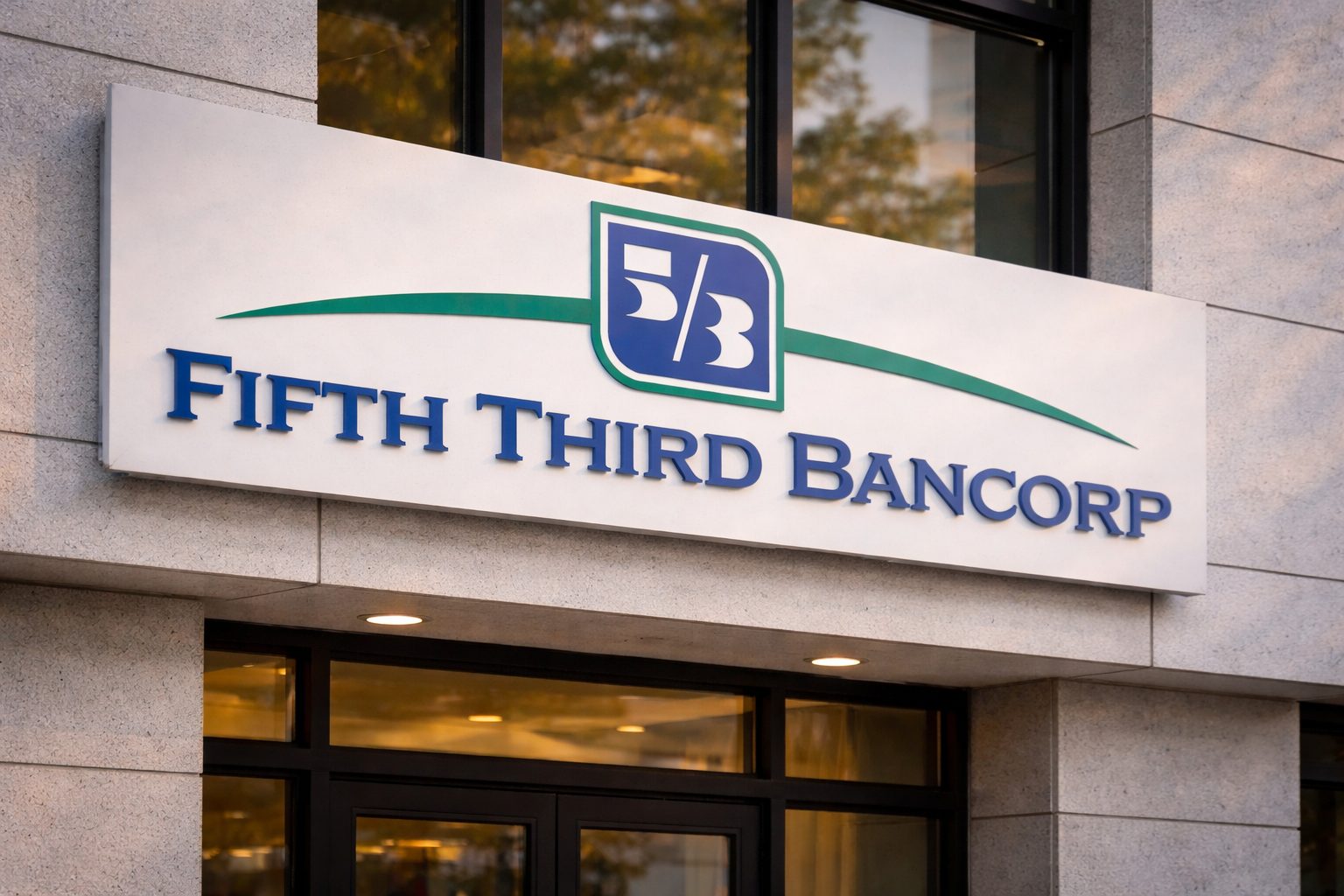
Fifth Third Bancorp shares ended Friday at $50.22, marking a roughly 0.8% gain from the previous close as U.S. markets prepared to shut for the weekend.
Bank stocks are reacting to rate moves, not headlines, as timing plays a key role. U.S. producer prices climbed 0.5% in December — the biggest jump in five months — while the Federal Reserve kept its benchmark rate steady between 3.50% and 3.75%, Reuters reported. Carl Weinberg of High Frequency Economics noted, “This report validates the pivot of the Fed away from labor market risks back toward price stability.” Reuters
In a recent SEC filing, the Cincinnati-based lender revealed it sold $1 billion of senior notes with a 4.566% fixed-to-floating rate maturing in 2032, alongside another $1 billion of senior notes at 5.141%, due 2037. After discounts and fees, net proceeds totaled roughly $1.99 billion, according to the document. The underwriting syndicate featured Morgan Stanley, BofA Securities, and Goldman Sachs.
The notes begin with fixed coupons before shifting to a floating rate tied to compounded SOFR — the benchmark based on overnight borrowing costs — plus a spread. The 2032 tranche moves to floating in 2031 at SOFR plus 0.95%, while the 2037 tranche flips in 2036 at SOFR plus 1.24%, according to the note forms.
Regional bank stocks slipped heading into the weekend. The KBW Nasdaq Regional Banking Index ended Friday roughly 0.4% lower, per Nasdaq index data.
Rate politics stirred the market. Reuters reported that Donald Trump nominated Kevin Warsh to head the Fed, pushing longer-dated Treasury yields higher as investors speculated on the new chair’s independence. “It’s kind of difficult to assess how the market is going to accept this nomination,” said Peter Cardillo of Spartan Capital Securities. Reuters
For Fifth Third, familiar pressures persist: funding costs, loan demand, and credit quality. Net interest income — the difference between earnings on loans and securities and payments on deposits — usually climbs as rates rise, but only until deposit competition squeezes margins.
Monday’s trading will hinge on whether bond yields continue to climb and if investors see the note sale as just routine balance-sheet upkeep or a subtle signal of funding demands. The stock has also been tracking the wider regional-bank sector, which swiftly punishes any signs that rate cuts are being delayed.
It could also swing the other way. If inflation remains stubborn and the Fed holds its position, borrowing might slow down, leading to credit losses down the line. On the flip side, if rates drop quicker than anticipated, margins could tighten. Plus, with the floating-rate portion of Fifth Third’s new debt, interest costs will track benchmarks once those reset periods kick in.
Investors are eyeing next Friday’s U.S. employment report, set for Feb. 6, as the next clean catalyst. They’ll be watching closely to gauge how much wiggle room the Fed has for rate cuts later in the year. January’s nonfarm payrolls are forecast to climb by 70,000, following a 50,000 rise in December, according to a Reuters poll.
Related articles: Interest Rates