GameStop Corp. (NYSE: GME) is back in the spotlight as investors weigh a familiar mix of ingredients: a shrinking legacy retail business, an expanding collectibles push, an enormous cash position, and a newly explicit Bitcoin treasury strategy—plus the ever-present “meme stock” volatility that refuses to die.
As of Monday, December 15, 2025, GameStop shares were trading around $21 (roughly $21.23 mid-session), after moving between about $21.16 and $22.23 intraday.
What’s driving attention right now is GameStop’s fiscal Q3 2025 report (quarter ended November 1, 2025) and the related Form 10‑Q, filed on December 9, 2025—where the company laid out, in unusually direct numbers, how its mix is changing and how Bitcoin now fits into the corporate playbook. SEC+1
GameStop’s latest earnings: profits improved, but sales still slid
In fiscal Q3 2025 (ended Nov. 1, 2025), GameStop reported:
- Net sales:$821.0 million, down from $860.3 million a year earlier
- Operating income:$41.3 million, versus an operating loss of $33.4 million a year earlier
- Net income:$77.1 million (about $0.13 diluted EPS), up from $17.4 million a year earlier SEC+1
The profitability improvement was largely tied to cost reductions and a more favorable product mix. SG&A expense fell sharply to $221.4 million from $282.0 million the prior year quarter. SEC+1
But revenue remains the sore point, and mainstream coverage emphasized that the quarter missed analyst expectations for sales (with estimates around $987.3 million cited) even as profits held up better. Reuters
The story inside the revenue mix: collectibles are now doing the heavy lifting
GameStop’s sales breakdown shows a business quietly transforming into something less like “physical video game retailer” and more like “gaming-adjacent collectibles merchant”:
For the quarter ended Nov. 1, 2025:
- Hardware & accessories:$367.4M (44.7% of sales)
- Software:$197.5M (24.1%)
- Collectibles:$256.1M (31.2%) SEC
Year over year, collectibles jumped about 49.7% for the quarter (and were up 55.4% over the nine-month period), while software and hardware trended down. SEC
That mix shift matters because it’s helping margins. GameStop reported gross margin of 33.3% in the quarter (up from 29.9% prior year), and management attributed much of that to higher-margin categories—explicitly calling out collectibles. SEC+1
The balance sheet is still GameStop’s superpower: $8.8B liquidity—plus big convertibles
GameStop ended the quarter with:
- Cash and cash equivalents:$7.8427 billion
- Marketable securities:$986.9 million
- Cash + cash equivalents + marketable securities:$8.8296 billion SEC
That number has become the core of the bullish thesis for many investors: whatever you think of the retail business, GameStop has a massive liquidity buffer.
But it’s not “cash with no strings.” Long-term debt is now substantial:
- Long-term debt:$4.1626 billion (as of Nov. 1, 2025) SEC
Most of that ties to GameStop’s 0.00% convertible senior notes:
- $1.5B of 0.00% Convertible Senior Notes due 2030 (issued April 1, 2025) SEC
- $2.25B of 0.00% Convertible Senior Notes due 2032 (issued June 17, 2025), with an option for $450M additional notes that was exercised in full—implying $2.7B total principal for the 2032 series SEC
The 2032 notes’ initial conversion rate is 34.5872 shares per $1,000 principal (an initial conversion price of about $28.91 per share). SEC+1
What that means for the stock narrative is wonderfully weird:
- If GME rallies meaningfully above the conversion price, dilution risk rises (more equity-like behavior).
- If GME stays below it, the notes behave more like a debt overhang, even if they carry 0% stated interest.
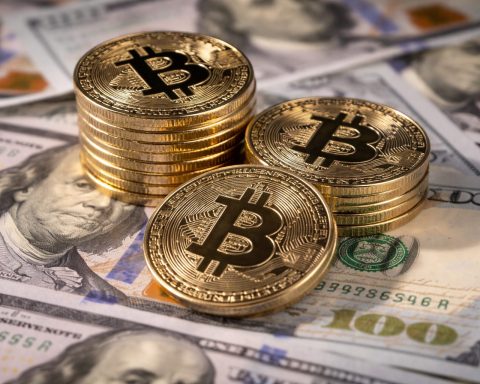
Bitcoin is now official corporate strategy—not a side quest
GameStop’s 10‑Q doesn’t treat Bitcoin like a novelty. It treats it like an asset class the board intentionally added to the treasury toolkit.
Key facts from the filing:
- GameStop purchased 4,710 Bitcoin during fiscal Q2 2025 for a $500.0 million cost basis. SEC
- As of Nov. 1, 2025, those holdings had a fair value of $519.4 million, for a cumulative unrealized gain of $19.4 million. SEC
- The company reported an unrealized loss of $9.2 million in the quarter tied to digital assets (because fair value moved). SEC+1
- GameStop said it did not buy or sell Bitcoin during fiscal Q3 2025. SEC
The bigger “tell” is policy language. GameStop explicitly states it has not set a maximum amount of Bitcoin it may accumulate and that it may also sell any Bitcoin it acquires. SEC
This isn’t just accounting trivia—it changes how investors may value GME going forward. A chunk of the company’s story is now tied to a volatile macro asset that can swing corporate earnings through unrealized gains/losses (especially under the company’s crypto accounting approach). SEC
Crypto-focused coverage has also highlighted that the company repeats language indicating it could sell Bitcoin “as part of treasury management operations,” framing it as a risk factor rather than a promise to hold forever. Decrypt
Store closures and international pullbacks: the retail footprint keeps shrinking
GameStop continues to slim down its physical footprint and restructure internationally as it chases “sustained profitability.”
In its Q3 10‑Q, the company disclosed:
- A store portfolio optimization review that led to the closure of 590 U.S. stores in fiscal 2024. SEC
- It expects to close “a significant number of additional stores” in fiscal 2025. SEC+1
- International actions include: exiting Austria, Ireland, and Switzerland (fiscal 2023), closing store ops in Germany (fiscal Q4 2024), selling the Italy subsidiary (fiscal Q4 2024), and selling the Canadian subsidiary in fiscal Q2 2025. SEC+1
- Management previously announced plans to pursue a sale of operations in Canada and France (with Canada completed). SEC
The takeaway: GameStop is still behaving like a retailer in “survive and simplify” mode—reducing costs, exiting weaker geographies, and trying to concentrate on higher-margin categories. SEC+1
Collectibles strategy gets more specific: PSA partnership and “Power Packs”
One of the most concrete “new GameStop” initiatives is its push into graded collectibles.
The company describes a collaboration with Collectors Holdings via Professional Sports Authenticator (PSA), under which GameStop became an authorized PSA dealer and offers authentication/grading services for trading cards through select U.S. stores. SEC+1
Then comes the e-commerce twist: during fiscal Q2 2025, GameStop launched Power Packs, described as a digital trading card platform developed with PSA, where collectors can buy graded PSA cards stored in a PSA vault, with options to sell back instantly, trade, ship, or hold. SEC
This matters for GME investors because it’s one of the few initiatives that:
- expands addressable market beyond traditional game discs, and
- is plausibly margin-accretive relative to software/hardware. SEC+1
Analyst forecasts for GME: limited coverage, mostly cautious targets
Wall Street analyst coverage of GameStop remains thin, and that alone is part of the “GME is unusual” story.
As of Dec. 15, 2025, MarketBeat shows:
- 2 analyst ratings in the past 12 months
- A consensus rating of “Reduce” (1 Sell, 1 Hold)
- A consensus 12‑month price target of $13.50 (implying meaningful downside from ~$21) MarketBeat
TipRanks’ coverage has framed sentiment as cautious as well, including an AI-generated view (presented on their platform) that cut a price target to around $21.50 and kept a Hold stance ahead of earnings. TipRanks
One important nuance for readers: with meme stocks, price targets can be less useful than usual because price can be driven by liquidity waves, options positioning, and retail sentiment as much as by fundamentals.
Short interest and volatility: the meme-stock machinery is still there
Even in late 2025, GameStop remains structurally primed for sharp moves.
According to NYSE-supplied short interest data aggregated by Fintel, GameStop had 69,080,228 shares sold short as of Nov. 14, 2025, with days to cover listed at 13.08 (per the official table shown). Fintel
Meanwhile, options-market snapshots continue to point to elevated attention: one options analytics source lists GME implied volatility around the high-30% range as of Dec. 15, 2025. OptionCharts
Translation: even if GameStop’s underlying business becomes calmer and more rational over time, the stock can still behave like a caffeinated physics experiment—especially around catalysts (earnings, crypto moves, corporate actions, or sudden sentiment swings).
What matters next for GameStop stock: catalysts and risks into 2026
Going into early 2026, the GME story likely revolves around a few “big levers”:
1) Holiday quarter performance and margin durability
Fiscal Q4 (holiday season) is historically the quarter that can most visibly validate (or puncture) retail turnaround narratives. Cost discipline helped in Q3; the question is whether revenue and mix improvements can scale. SEC+1
2) Bitcoin price sensitivity
With 4,710 BTC on the balance sheet—and policy language allowing more accumulation—Bitcoin can materially affect reported results through fair value changes. SEC+1
3) What GameStop does with its cash pile
GameStop’s liquidity gives it options: acquisitions, investments, buybacks, or simply building a more diversified investment portfolio under its Investment Committee structure (explicitly led by CEO Ryan Cohen). SEC+1
4) Dilution and capital structure complexity
Between convertibles (2030 and 2032) and warrant-related corporate actions, investors should pay attention to potential dilution mechanics if the stock rallies strongly—or to refinancing/repurchase obligations if it doesn’t. SEC+2SEC+2
5) The slow secular decline of physical software sales
The industry continues shifting toward digital downloads, subscriptions, and streaming-like distribution models. That trend is the backdrop behind the pressure in GameStop’s core categories and was highlighted again in mainstream coverage of the quarter. Reuters
Bottom line: GameStop is evolving—but it’s still a high-volatility stock story
As of December 15, 2025, GameStop stock sits at the intersection of two narratives:
- A retail business that is shrinking in legacy categories but finding real traction in collectibles and margin improvement through cost cuts. SEC+1
- A capital allocation story with a gigantic liquidity position, meaningful convertible debt, and a Bitcoin treasury policy that explicitly allows both accumulation and sales. SEC+3SEC+3SEC+3
For investors and readers, the practical takeaway is simple: GME is no longer “just” a videogame retailer stock—and it’s not “just” a Bitcoin proxy either. It’s a hybrid of retail restructuring, collectibles expansion, and treasury strategy, all wrapped in the volatility legacy of the meme era.