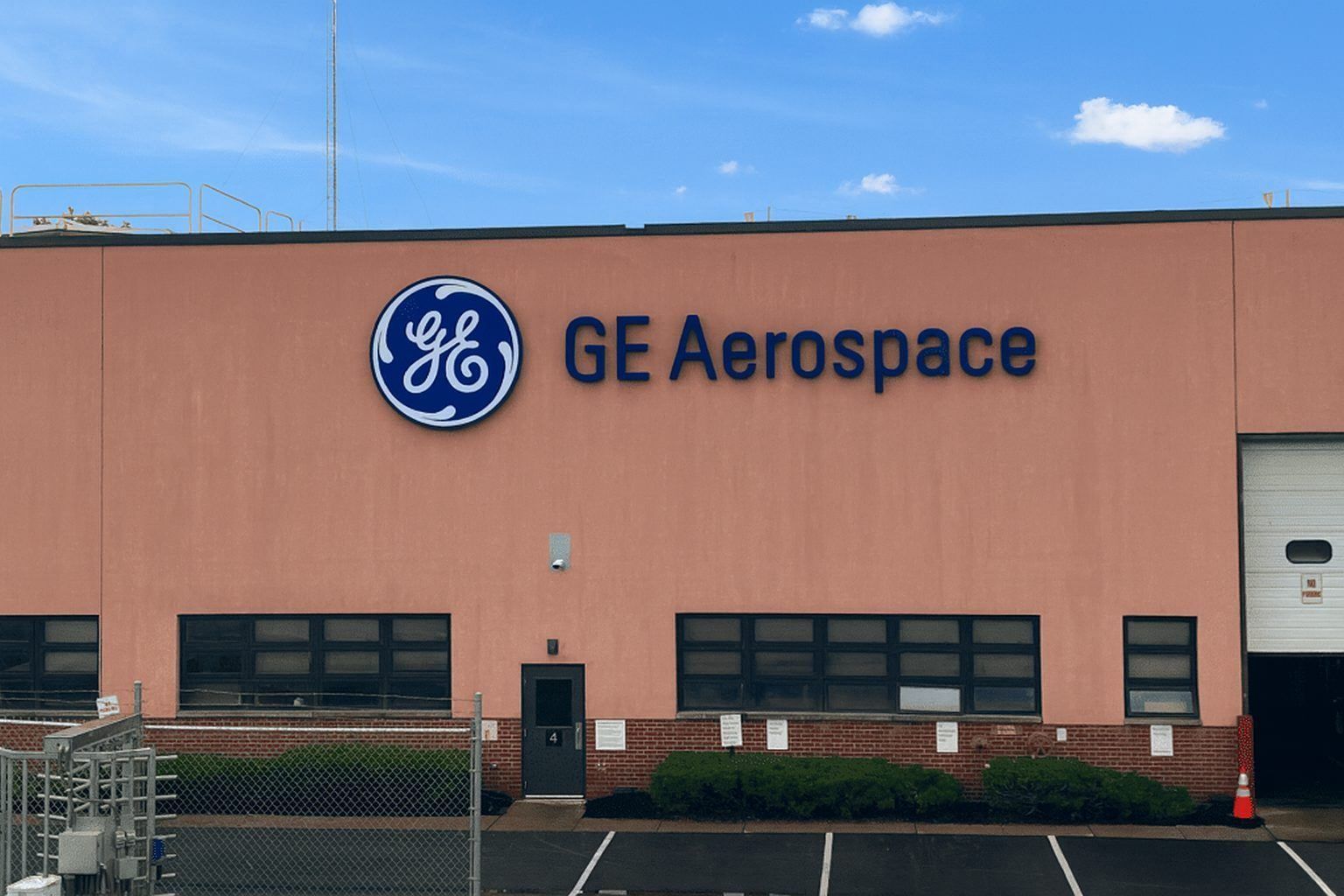
GE Aerospace stock (NYSE: GE) finished Friday, Dec. 12, 2025, at $299.81, up 3.95% on the day, after a week that kept investors focused on a familiar mix of catalysts: upbeat Wall Street calls, strong defense-adjacent demand signals, and the ever-present reality that aerospace is both a growth story and a regulated, operationally complex industry. StockAnalysis+2TradingView+2
Heading into the week ahead (Dec. 15–19), the near-term setup is clear: sentiment is positive, the stock has regained momentum, and investors will be watching macro data and any follow-on headlines from engine reliability and supply chain efforts—two themes that can swing aerospace names quickly even when the long-term demand picture stays intact. TradingView+2Flight Global+2
GE Aerospace stock this week: price action and the key drivers
Where GE stock stands now
- Friday close (Dec. 12): $299.81, +3.95% on the session. StockAnalysis
- Over the last five sessions (Dec. 8 close to Dec. 12 close), shares rose from $287.19 to $299.81—about a 4.39% gain. StockAnalysis
- GE is now up roughly ~80% year-to-date, depending on the data source and timestamp. TradingView+1
What moved the stock
- Citigroup’s new “Buy” call lit a fuse. Reuters reported GE shares rising after Citi initiated coverage with a Buy rating and a $386 price target, describing GE as well positioned for aerospace/defense “megatrends,” and noting a median target around $350 from LSEG-compiled analyst data. TradingView
- The FAA issued a new LEAP-1A airworthiness directive (AD) tied to turbine blade inspections for engines operating in South Asia—an item investors read through the lens of both risk and aftermarket opportunity. Federal Register+2Federal Register+2
- Defense and marine propulsion demand stayed visible, with GE Aerospace announcing new LM2500 marine turbine orders for U.S. Navy destroyers. GE Aerospace
The “last few days” news flow investors are digesting
Below are the major, market-relevant headlines around GE Aerospace from the past several days—and why they matter for the stock.
1) Citi initiates GE Aerospace at “Buy,” sets $386 target
Reuters (via TradingView) said Citi initiated coverage with a Buy rating and $386 price target, with GE shares up around 4% on the day and a median analyst price target around $350. TradingView
Why it matters:
- A fresh initiation from a major bank can reset the “narrative” investors trade—especially in aerospace, where the market often values aftermarket services durability and production ramp execution as much as near-term earnings beats/misses.
- Citi’s framing around “megatrends” supports a premium multiple argument—helpful after a huge YTD move. TradingView+1
2) FAA expands LEAP-1A turbine blade inspection requirements to South Asia
The FAA published a new airworthiness directive (final rule; request for comments) covering certain CFM LEAP-1A variants after reports of two in-flight shutdowns tied to cracks in high‑pressure turbine (HPT) rotor stage 1 blades. The AD requires initial and repetitive borescope inspections, with potential blade replacement depending on findings. Federal Register+1
Key details investors should know:
- The AD is effective Dec. 29, 2025. Federal Register
- It targets LEAP‑1A engines that have accumulated more than 1,100 “South Asia takeoffs” (with South Asia defined to include countries such as India, Bangladesh, Sri Lanka, Nepal, Bhutan, Maldives). Federal Register
- Inspection cadence depends on engine group: repetitive inspections at intervals not exceeding 150 or 300 flight cycles, depending on the variant group. Federal Register+1
- The FAA’s own compliance table estimates inspection labor cost at $340 per engine and an “on-condition” blade replacement cost around $1,000,950 per engine (labor + parts). Federal Register
- The FAA said 0 U.S.-registered engines are affected, which is part of why it moved quickly. Federal Register
FlightGlobal added important color:
- CFM (GE Aerospace + Safran) called it a “known issue”, said customers have been complying with a service bulletin “for some time,” and does not expect operational disruption from the expanded requirements. Flight Global
- The AD applies to LEAP‑1A (A320neo-family) and does not apply to LEAP‑1B (Boeing 737 MAX). Flight Global
Why it matters for GE stock:
- In the short run, any airworthiness directive can spark worries about warranty exposure, shop-visit timing, or airline disruptions—even when it’s geographically concentrated.
- Over time, inspections, modifications, and durability kits can also pull forward aftermarket work (spares, repairs, MRO capacity), which is often the higher-margin part of the engine business.
- Investors will watch whether operators view this as a routine extension of existing protocols—or as a sign of broader durability challenges.
3) GE Aerospace wins LM2500 marine turbine orders tied to U.S. Navy destroyers
GE Aerospace said its Marine Engines & Systems unit received orders to supply eight LM2500 marine gas turbines for the U.S. Navy’s next two Flight III Arleigh Burke-class destroyers (DDG 145 and DDG 146). GE Aerospace
Why it matters:
- Defense-adjacent propulsion programs can add resilience to industrial earnings through the cycle.
- GE also highlighted the installed base: as of January 2025, 74 Arleigh Burke-class destroyers are active with LM2500 engines (and the company referenced 296 LM2500 engines across 74 ships). GE Aerospace
4) Dividend declared; key dates are now on the calendar
GE Aerospace declared a $0.36 per share quarterly dividend, payable Jan. 26, 2026 to shareholders of record on Dec. 29, 2025 (ex-dividend date also Dec. 29). GE Aerospace
Why it matters:
- It’s not a “surprise catalyst,” but it reinforces capital return continuity—useful support for generalist portfolios, especially after a strong year.
5) Manufacturing and MRO capacity investments remain part of the story
Recent GE Aerospace updates underscore that capacity and throughput are still strategic priorities:
- GE Aerospace announced a £19 million investment over three years to refurbish its Wales site, positioning it as a key commercial engine MRO hub. GE Aerospace
- GE Aerospace also announced a nearly $53 million investment to expand its West Jefferson, North Carolina facility to increase part production for “in-demand narrowbody aircraft engines,” including adding equipment and expanding footprint. GE Aerospace
- These investments matter because engine deliveries and shop visits are gated by supply chain and capacity—the very issues analysts cite as swing factors in execution risk.
6) Macro tailwind check: airlines still expect profits, but supply chain bottlenecks persist
IATA’s latest airline industry outlook pointed to $41 billion in expected net profits in 2026 (up from $39.5 billion in 2025), with a net margin of 3.9%, while noting supply chain bottlenecks as a continuing headwind for the industry. IATA
Why it matters:
- Profitable airlines typically support stable flight activity and sustained maintenance demand—good for engine aftermarket.
- Supply chain bottlenecks remain the key “constraint narrative,” and GE’s ability to keep improving delivery cadence and parts availability is central to the bull thesis.
Wall Street forecasts: what analysts are saying now
The most market-moving “forecast” item this week was Citi’s initiation:
- Citi price target:$386 TradingView
- Street median target (LSEG compilation cited by Reuters):$350 TradingView
- Analyst ratings snapshot (LSEG compilation cited by Reuters):17 of 21 rate the stock “buy” or higher. TradingView
What those targets imply (using Friday’s $299.81 close):
- The $350 median target implies roughly ~17% upside.
- Citi’s $386 target implies roughly ~29% upside. StockAnalysis+1
A separate technical note: Investor’s Business Daily highlighted 316.67 as a buy-point area aligned with the prior record high referenced in its coverage. (That’s not a prediction—but it’s a level many momentum traders will have on their screens.) Investors
What the FAA LEAP-1A directive means for GE Aerospace stock: risk, but also services opportunity
It’s easy for headlines like “airworthiness directive” to read as purely negative. The more nuanced take is:
Why it’s a headline risk
- The FAA explicitly ties the directive to in-flight shutdowns and cracked HPT blades, which sounds severe—and is why regulators act. Federal Register+1
- Even if U.S.-registered aircraft are not affected, global investors care because GE Aerospace’s commercial exposure is global, and any perception of “durability surprises” can pressure sentiment.
Why the market didn’t treat it as a “thesis breaker”
- FlightGlobal reports CFM says it’s a known issue with an existing service bulletin and no expected operational disruption. Flight Global
- The directive is targeted to specific operating environments and thresholds (South Asia takeoffs), rather than a broad fleet-wide grounding scenario. Federal Register
Why it can be aftermarket-supportive
- Inspections, blade replacements, and retrofit kits can mean incremental shop-visit work and parts demand—and for engine OEMs, the aftermarket is often the quality revenue stream investors ultimately pay for.
The GE Aerospace bull case vs. bear case into the week ahead
Bull case: the “installed base + services” machine keeps compounding
- Strong analyst optimism is being reinforced by the idea that GE is positioned to benefit from long-duration aerospace and defense demand. TradingView+1
- Capacity investments and MRO expansion point to GE trying to remove execution bottlenecks—one of the market’s biggest concerns for the industry. GE Aerospace+1
- Airlines expect profitability to persist despite headwinds, which supports flight activity and maintenance demand. IATA
Bear case: execution and durability headlines can still bite
- The FAA directive is a reminder that modern engines run hotter/harder, and specific environments (dusty regions) can accelerate wear—creating ongoing inspection and upgrade cycles. Flight Global+1
- After an ~80% YTD run, the stock is more sensitive to “small” disappointments: production cadence, supply constraints, or a negative surprise in a major customer platform.
Week-ahead outlook for GE stock: catalysts to watch (Dec. 15–19, 2025)
1) Macro data and rates sensitivity
A data-heavy U.S. week can influence industrial leadership stocks—especially those that have rallied hard. Trading Economics flagged a focus on a delayed jobs report, November CPI, and retail sales. Trading Economics
Translation for GE shareholders:
- If macro data shifts rate expectations, it can change the market’s appetite for “premium” industrial growth stories.
- That doesn’t change GE’s multi-year fundamentals overnight—but it can change weekly flows.
2) Any follow-on commentary about LEAP durability and inspection cadence
The FAA directive becomes “old news” fast—unless:
- more regulators echo similar requirements,
- airlines disclose operational impacts,
- or CFM/partners provide more detail on durability kits and retrofit timelines.
For now, the key baseline is CFM’s statement that it doesn’t expect disruption and that this doesn’t apply to LEAP‑1B engines powering the 737 MAX. Flight Global
3) Defense/marine drumbeat
Investors will continue to reward steady defense-linked order flow, especially in a market that is increasingly valuing “industrial + national security” exposure. GE’s LM2500 announcement is exactly the kind of steady headline that supports that narrative. GE Aerospace
4) Technical posture
With GE finishing Friday near $300, traders will watch whether the stock can:
- hold recent support zones around the high-$280s to low-$290s (where the stock traded earlier in the week), StockAnalysis
- and potentially make another attempt toward the low-$300s and the prior reference point near 316.67 mentioned in recent technical commentary. Investors
Bottom line
GE Aerospace stock ends the week with momentum after a Citi “Buy” initiation helped drive a strong Friday move, even as investors kept one eye on the FAA’s expanded LEAP‑1A inspection requirements in South Asia. TradingView+2Federal Register+2
For the week ahead, the setup looks constructive—but with the usual aerospace caveat: execution headlines (supply chain, engine durability, regulatory actions) can override the calendar. Investors who already own GE will likely be watching whether the stock consolidates above recent ranges and whether any incremental news emerges around LEAP inspections, MRO capacity, and delivery cadence.