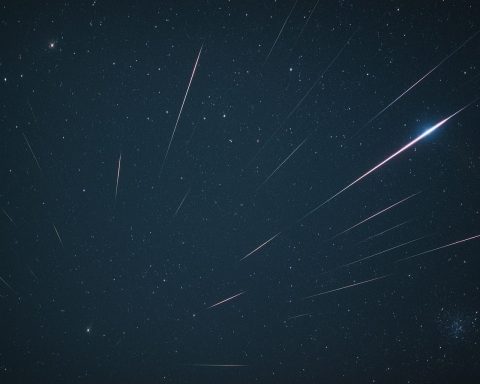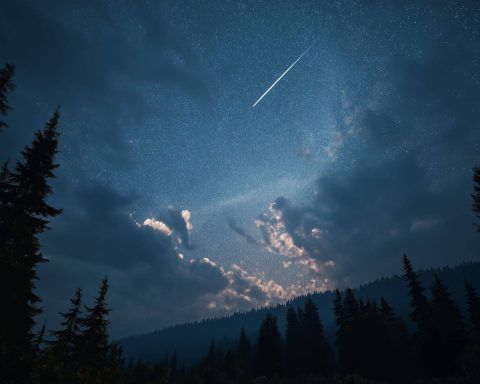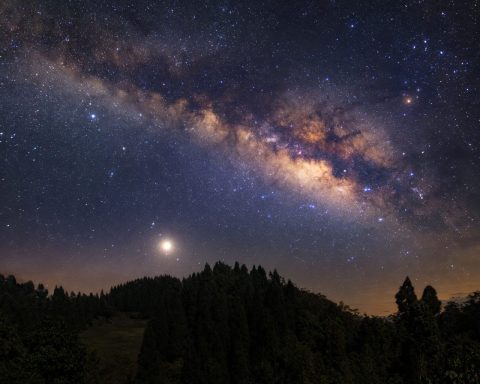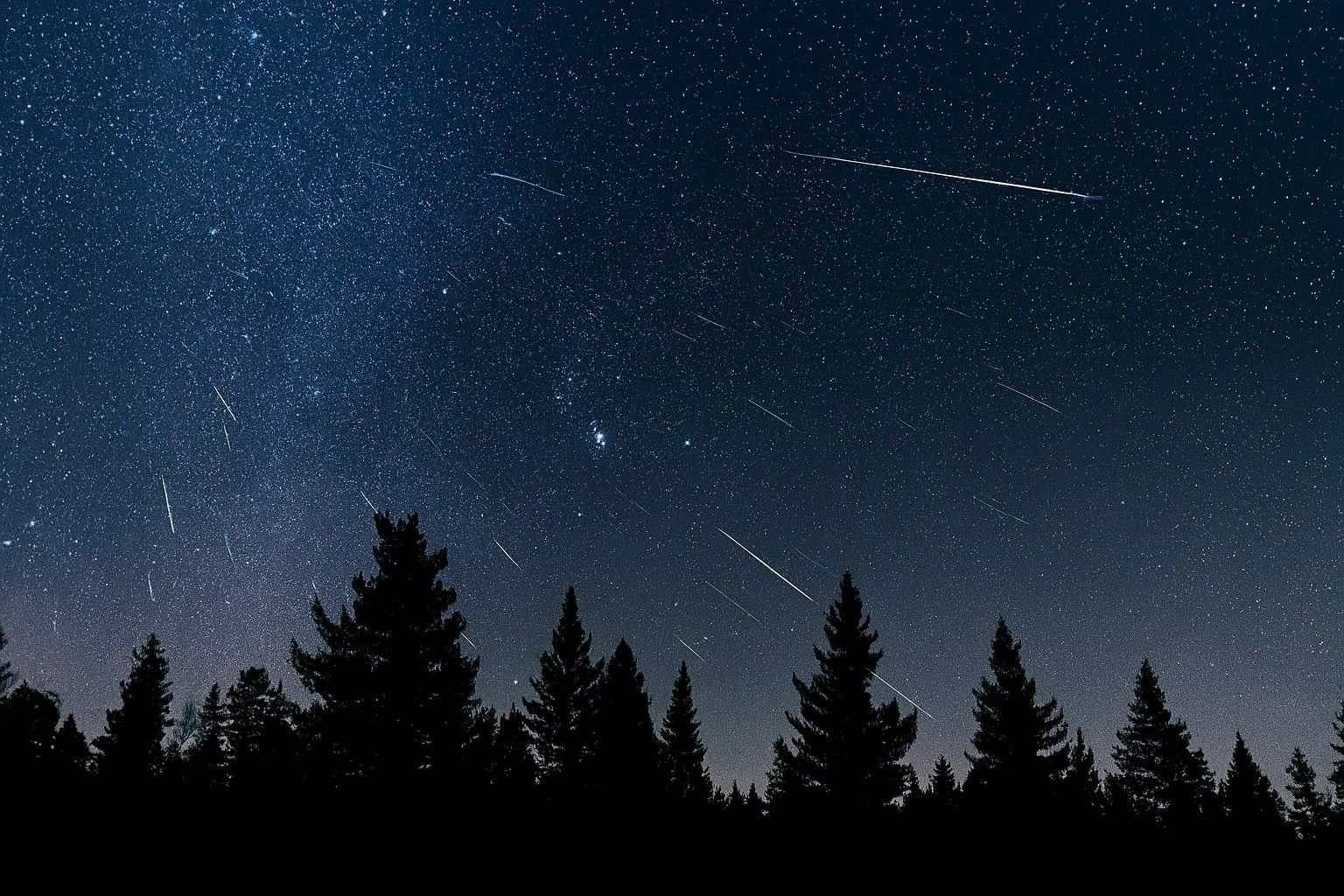
On December 15, 2025, the Geminids — often called the year’s most reliable “shooting star” show — are still making headlines around the world. While peak activity has largely passed, late-season Geminid meteors are continuing to streak across dark skies, and today’s coverage has put renewed focus on the shower’s strangest detail: the Geminids come from an asteroid, not a comet. NASA Science+1
If you’re searching for “Geminids asteroid today,” you’re almost certainly looking for the story of asteroid 3200 Phaethon — a rocky object that behaves like a comet at times, leaving behind the debris Earth plows into each December. NASA Science+1
Geminids meteor shower on Dec. 15: Is it still visible tonight?
Yes — but expect fewer meteors than during the peak night.
NASA’s current Geminids listing shows the shower active from Dec. 1 through Dec. 21, 2025, meaning stragglers can still appear on Dec. 15 if your skies are clear and dark. NASA Science
That said, peak timing depends on the forecast you follow and your time zone. NASA’s December skywatching guide points observers to Dec. 13 and Dec. 14 as key nights to look up, noting the meteors appear near bright Jupiter and can be especially colorful. NASA Science+1
A practical way to interpret the mixed dates: the Geminids’ strongest hours clustered around late Dec. 13 into early Dec. 14 (UTC), which translates into different calendar dates across the Americas, Europe/Africa, and the Asia–Pacific region. EarthSky, for example, cites a predicted peak around 03:00 UTC on Dec. 14, which lands on Dec. 13 evening in parts of the U.S. and Dec. 14 morning in much of Asia. EarthSky
What today’s Dec. 15 reports are saying around the world
Media coverage on Dec. 15, 2025 has focused on two things: vivid public sightings and “last chance” viewing advice for anyone who missed the peak.
United States: Bright, colorful streaks over Northern California
In the San Francisco Bay Area, local reporting described the Geminids as a standout weekend display, with viewing helped by the Moon rising late (around 2:30 a.m.) — keeping skies darker during prime observing hours. The same coverage also highlighted the asteroid connection: Geminids are fragments tied to near-Earth object 3200 Phaethon, a rocky body often described as a “dead comet,” with an orbit of roughly 17 months and a discovery date of 1983. San Francisco Chronicle
India: Chennai skies trend online as peak crosses into Dec. 15
In India, Dec. 15 reports emphasized that the late Dec. 14 / early Dec. 15 window likely represented the best remaining opportunity for the season in many locations — with estimates suggesting up to ~100 meteors per hour under ideal dark skies. The Times of India+1
A separate Chennai-focused report described the event as a “rare show” that drew widespread social sharing, citing that Geminids can reach roughly 80–100 meteors per hour when conditions cooperate — and again underscoring the key fact that the shower’s source is asteroid 3200 Phaethon (discovered in 1983), not a typical icy comet. Hindustan Times
Australia & New Zealand: “You still have a chance” messaging dominates
In Australia and New Zealand, Dec. 15 lifestyle and culture coverage leaned into a clear message: the peak passed overnight, but tonight can still deliver a strong display in the right conditions.
One widely circulated Dec. 15 guide reported the shower was most active overnight on Dec. 14 into the early morning of Dec. 15, with the best viewing from midnight to dawn and the most intense activity often around 2–3 a.m. The same piece listed local viewing windows by city for the night of Dec. 15–16. RUSSH
China: Photo coverage showcases Geminids across multiple provinces
Chinese photo coverage published Dec. 15 featured Geminid images captured across multiple locations, describing the shower as one of the year’s most spectacular and noting it reached peak on Sunday (local framing). en.gmw.cn
Japan: Peak-night viewing, then a rapid drop-off
Japanese reporting in English published Dec. 15 noted that meteors could still be visible the night of Dec. 15, but significantly fewer than 24 hours earlier — a familiar pattern for meteor showers after the core of the debris stream has passed. Mainichi
The “Geminids asteroid” explained: Why 3200 Phaethon is such a big deal
Most major meteor showers come from comets — icy bodies that shed dust as sunlight warms them. The Geminids are the famous exception, linked to 3200 Phaethon, a rocky object sometimes described as an asteroid–comet hybrid or “rock comet.” NASA’s Geminids explainer specifically lists 3200 Phaethon as the origin. NASA Science
What makes Phaethon so compelling isn’t just that it’s rocky — it’s that it can act like a comet. NASA has reported that Phaethon brightens and forms a tail near the Sun, and research using NASA solar observatories found that this tail is not dust, but sodium gas. That helps explain why astronomers keep debating how a largely rocky object supplies enough material to sustain a major annual meteor shower. NASA
Why the Geminids look bright and “colorful” compared with other showers
If Geminids looked unusually vivid in photos and videos this week, there’s a reason the shower has that reputation.
NASA’s December skywatching guide calls the Geminids “bright and colorful,” and notes that under the darkest skies you could see up to about 120 meteors per hour at peak — with Jupiter serving as a convenient bright marker near the radiant region. NASA Science
From a numbers perspective, forecasts vary by method:
- NASA’s Geminids “Fast Facts” suggests that 40–50 meteors per hour is a realistic expectation under dark skies in typical observing conditions. NASA Science
- The American Meteor Society lists a ZHR (Zenithal Hourly Rate) of 150 for the Geminids — a best-case value assuming perfect darkness and the radiant directly overhead. American Meteor Society
In plain English: if you’re under suburban skies, you may see a handful per hour; if you’re under truly dark rural skies at the right time, you could see dozens — and during peak bursts, far more.
How to watch Geminids tonight: Quick, practical tips that actually work
You don’t need a telescope — in fact, using one can make it harder, because meteors can appear anywhere and you want the widest view possible.
Here’s what today’s reporting and official guidance consistently recommend:
- Go darker than you think you need. Even a short drive away from bright streetlights can dramatically increase meteor counts. San Francisco Chronicle+1
- Give your eyes time to adjust. Plan for at least 20–30 minutes without bright screens. RUSSH+1
- Look up for longer than 5 minutes. Meteor watching rewards patience — many guides suggest staying out for an hour to catch variability and mini-bursts. RUSSH+1
- Don’t stare only at Gemini. The meteors “radiate” from Gemini, but the longest, most dramatic streaks often appear away from the radiant, where they cut across more of your sky. RUSSH+1
- Bundle up. This sounds obvious until you’re 20 minutes into a still, cold night — warmth is the difference between staying long enough to see a burst, or heading indoors too soon. SFGATE
What’s next after the Geminids? Another meteor shower is right behind it
If you’re in the Northern Hemisphere and love meteor season, December isn’t over.
The Ursids are next: the American Meteor Society lists their peak for Dec. 21–22, 2025, with low but sometimes surprising rates. American Meteor Society
And if you’re simply looking for another reason to step outside later this month, NASA’s December skywatching guide also highlights other sky events (including a close approach date for comet observations), keeping the post-Geminids calendar busy for anyone chasing clear skies. NASA Science+1
The bottom line for Dec. 15, 2025
Even though the Geminids’ peak has passed, Dec. 15 is still part of the active window, and today’s global coverage makes one thing clear: plenty of people are still catching late Geminids — from the Bay Area to Chennai to Australia — and the shower’s backstory is as headline-worthy as the meteors themselves.
Every streak you see is a tiny piece of solar-system history: a small fragment linked to asteroid 3200 Phaethon, burning up high above Earth in a brief, bright flash — and reminding us that sometimes the best space story is the one happening silently overhead. NASA Science+2NASA+2