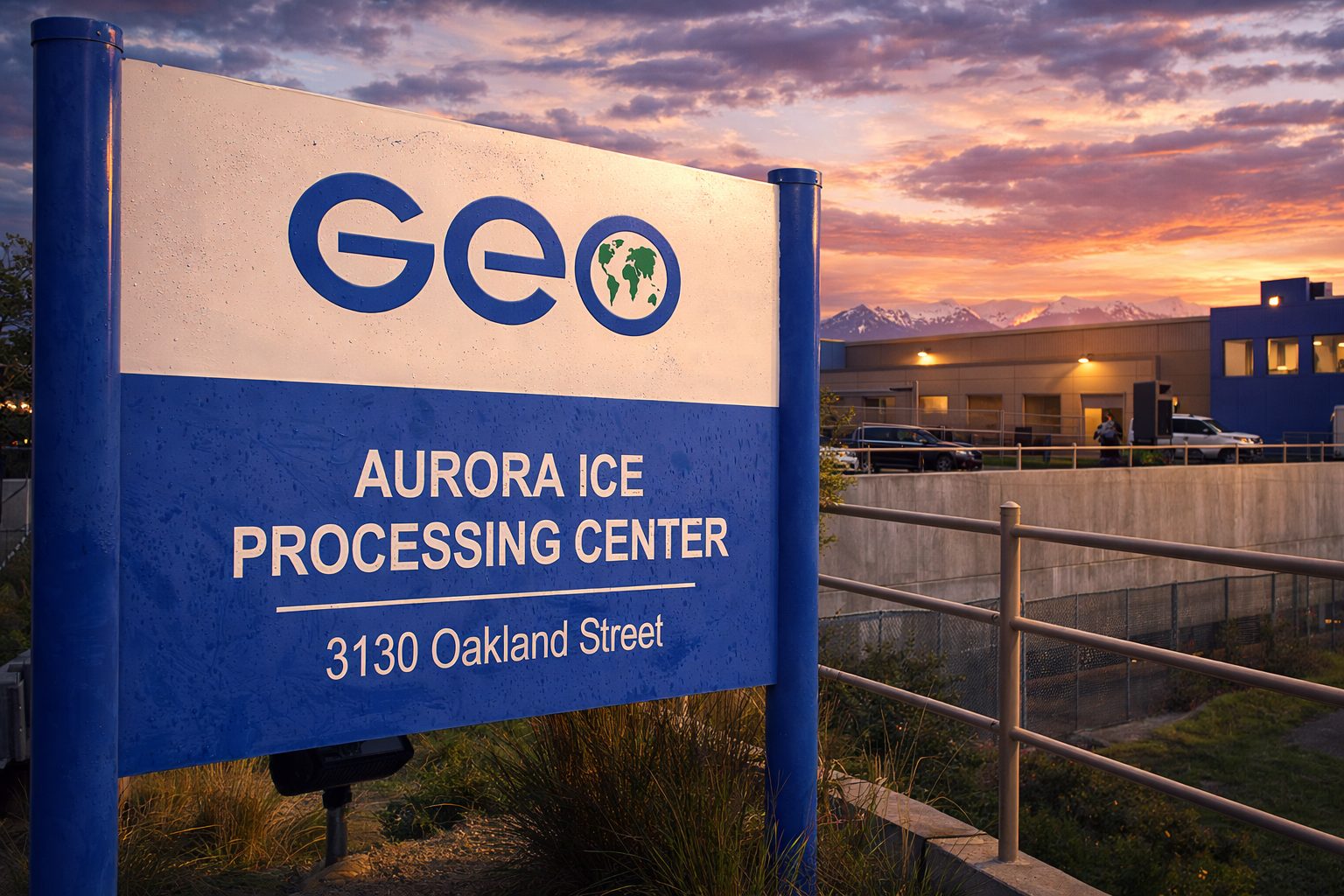
The GEO Group, Inc. (NYSE: GEO) stock is back in the spotlight on December 19, 2025, pulled in two directions at once: a contract-driven growth story tied to U.S. immigration enforcement and government services, and a wave of public scrutiny tied to conditions and deaths reported at facilities connected to GEO’s detention footprint.
As of this afternoon, GEO shares traded around $16 and were down about 3% on the day, with the stock moving in a $15.92–$16.53 intraday range and remaining far below its 52-week high of $36.46. StockAnalysis
Below is a full, up-to-date breakdown of the latest headlines, the core financial narrative, and the current forecast and analyst outlook shaping GEO stock as of 19.12.2025.
GEO stock snapshot on Dec. 19, 2025: price, valuation, and volatility
GEO stock traded near $16.03 on Dec. 19, with a market capitalization around $2.19 billion. On common valuation metrics, the stock screens as “cheap” at a glance—roughly 9.5x trailing earnings (P/E) and about 0.9x sales—but those metrics come with an asterisk because GEO’s earnings can swing sharply with one-time gains, legal items, and contract timing. StockAnalysis+1
A few numbers investors have been anchoring to today:
- Market cap: ~$2.19B StockAnalysis+1
- Enterprise value: ~$3.67B StockAnalysis
- 52-week range:$14.27 – $36.46 StockAnalysis
- 52-week price change: about -40% StockAnalysis
- Debt picture (snapshot): StockAnalysis estimates ~$1.63B total debt and ~$184M cash, implying net debt around $1.45B. StockAnalysis
- Short interest: about 9.07M shares, roughly 6.6% of shares outstanding StockAnalysis
That combination—material debt + political/regulatory risk + headline sensitivity—helps explain why GEO can look statistically inexpensive while still trading like a stock that can gap up or down fast.
The biggest GEO-related news on Dec. 19, 2025: detention scrutiny intensifies
Today’s news cycle isn’t primarily about quarterly numbers or a surprise SEC filing. It’s about operational and reputational risk—specifically, renewed scrutiny of the immigration detention system and facilities linked to GEO.
1) NPR/OPB: ICE reopening shuttered prisons, including GEO’s North Lake facility
A national story published by NPR and carried by Oregon Public Broadcasting (OPB) reports that the Trump administration is holding more than 65,000 people in immigration detention—described as the highest level on record—and that rising demand has accelerated the reopening of shuttered prisons as detention centers. opb
The report specifically references GEO’s North Lake Processing Center in Baldwin, Michigan, noting the facility’s history and allegations raised by advocates, and it also describes concerns tied to oversight cuts and accountability. opb
For GEO shareholders, the uncomfortable reality is that this type of coverage can cut two ways:
- It underscores demand growth (more detained individuals → more need for beds and services).
- It amplifies reputational, legal, and contract-renewal risk (negative publicity can raise political pressure, investigations, and litigation exposure).
2) New Jersey: death reported after detention at Delaney Hall
Several New Jersey–area reports and advocacy statements published today focus on Delaney Hall, an ICE detention facility in Newark connected to GEO.
Patch reported ICE confirmed that Jean Wilson Brutus, 41, died at a Newark hospital on Dec. 12, 2025, after what ICE described as a medical emergency that began after intake; ICE stated the death was from “suspected natural causes.” Patch
An InsiderNJ press release posting from advocates calls for an independent inquiry into Brutus’s death and explicitly links Delaney Hall’s reopening to GEO’s contract to operate the facility. Insider NJ
The ACLU of New Jersey also published a statement alleging that GEO employees delayed an ambulance’s exit due to gate access issues—an allegation that, if substantiated, is the kind of operational detail that can quickly escalate into investigations and lawsuits. ACLU of New Jersey
3) Michigan: death reported at GEO-owned North Lake Processing Center
In Michigan, CBS News Detroit reported on the death of Boris Gantchev, described as an Illinois resident detained at GEO’s North Lake Processing Center. The article quotes two members of Congress calling for a transparent investigation and citing complaints from family and advocates about conditions and medical care. CBS News
This matters to the stock not because the market is grading GEO on moral vibes (markets are rarely that poetic), but because facility-level incidents can create direct financial consequences:
- litigation and settlement costs
- higher compliance costs
- contract modifications or tighter oversight
- reputational damage that affects the pace of new awards
In other words: headlines can become line items.
The bullish core: GEO’s contract pipeline and 2026 “normalization” narrative
While today’s news is heavy, the investment case for GEO is still largely built around one central thesis: contract wins + higher utilization + expanded services = materially higher revenue run-rate.
That thesis was laid out clearly in GEO’s Q3 2025 earnings release (published Nov. 6, 2025 via Business Wire and reposted by Seeking Alpha). Seeking Alpha
Q3 2025 results: higher revenue, big GAAP income (with major one-time items)
Key Q3 2025 figures GEO reported:
- Total revenue:$682.3 million Seeking Alpha
- Net income attributable to GEO:$173.9 million (or $1.24/diluted share) Seeking Alpha
- Adjusted net income:$0.25/diluted share Seeking Alpha
- Adjusted EBITDA:$120.1 million Seeking Alpha
The company also emphasized that GAAP results reflected substantial special items—including a pre-tax gain on asset divestitures and costs tied to debt extinguishment, start-up/close-out expenses, restructuring, and litigation/settlement items. Seeking Alpha
The 2026 “normalize” story: contracted growth expected to show up in full
One of the most market-moving lines in GEO’s messaging is this: management said that new or expanded contracts signed since the beginning of 2025 represent over $460 million in incremental annualized revenues already under contract, expected to “normalize” in 2026. Seeking Alpha
They also described a portfolio of ICE-related facilities and expansions that, in aggregate, are expected to generate more than $300 million in incremental annualized revenue at full occupancy when normalized in 2026. Seeking Alpha
This is the heart of the bullish narrative: the contracts are signed; the utilization ramps are the story now.
Balance sheet and capital returns: buybacks, debt reduction, and credit flexibility
GEO has been actively trying to reshape investor perception: less “high-dividend REIT,” more “cash-flowing government services platform that returns capital and delevers.”
Buybacks got bigger: authorization raised to $500 million
In the Q3 release, GEO said its board increased total share repurchase authorization to $500 million and extended the program’s expiration to Dec. 31, 2029. Seeking Alpha
- GEO repurchased ~1.97 million shares in Q3 for $41.6 million. Seeking Alpha
- As of Nov. 6, the company said it had about $458.4 million remaining under authorization. Seeking Alpha
This is unusually large relative to GEO’s current market cap—and that’s exactly why investors pay attention. A buyback that big can be either:
- a powerful floor under the stock, if cash flow supports it, or
- a stress test of liquidity, if conditions tighten or contracts wobble
Deleveraging progress (company-reported) vs. leverage reality (market-data snapshot)
GEO reported that during the first nine months of 2025 it reduced net debt by about $275 million, ending Q3 with net debt around $1.4 billion and net leverage around 3.2x Adjusted EBITDA, plus cash around $184 million and revolver capacity around $143 million. Seeking Alpha
StockAnalysis’ snapshot also shows leverage remains meaningful—Debt/EBITDA around 3.54 and interest coverage around 1.70—which reinforces why markets still price GEO like a leveraged story. StockAnalysis
Credit agreement amendment: more room for “restricted payments”
An Investing.com summary of GEO’s SEC filing says the company amended its credit agreement in November 2025, removing a leverage-ratio requirement from part of a restricted-payments carve-out—loosening conditions under which certain payments can be made. Investing.com
For investors, that’s not a “to the moon” signal by itself, but it supports the idea that GEO is trying to preserve flexibility for capital returns (including buybacks) while managing leverage.
Leadership transition: General Counsel retiring at year-end
Another recent corporate development relevant to risk management: Investing.com reported GEO disclosed that General Counsel Joe Negron plans to retire effective Dec. 31, 2025, with a consultant role afterward. Investing.com
In a business where legal exposure is not a side quest but a main storyline, leadership changes in legal/compliance functions can matter at the margin.
GEO stock forecast: where analysts see the stock going from here
Wall Street forecasts for GEO remain strikingly optimistic on price targets—even after the stock’s drawdown.
StockAnalysis consensus: “Strong Buy,” average target $41 (range $36–$50)
StockAnalysis shows three analysts covering GEO with a consensus rating of “Strong Buy” and an average 12‑month price target of $41, with a low target of $36 and a high of $50 (targets last updated Nov. 7, 2025). StockAnalysis
StockAnalysis also publishes analyst-derived financial forecasts (sourced from Wall Street estimates), including:
- Revenue (FY 2025E): about $2.62B
- Revenue (FY 2026E): about $3.01B
- EPS (FY 2025E): about $0.86
- EPS (FY 2026E): about $1.56 StockAnalysis
Those estimates line up with GEO’s own “normalize in 2026” framing—though estimates are, by nature, fragile creatures.
TipRanks: multiple targets, generally bullish, wide dispersion
TipRanks’ GEO forecast page shows a Strong Buy analyst consensus (based on ratings in the past three months) and lists recent targets such as:
- JonesTrading: target cut $50 → $37 (Buy/Strong Buy), dated 11/07/25
- Texas Capital Securities:$30 (Buy), dated 06/30/25
- Northland Securities:$30 (Buy), dated 12/18/25
- Noble Financial:$35 (Buy), dated 12/08/25 TipRanks
Two key takeaways for readers:
- Analysts see large upside largely because the stock trades far below where it traded earlier in the 52‑week window. StockAnalysis+1
- The spread between targets reflects the fact that GEO is not a normal industrial stock—it’s a company whose fundamentals are intertwined with policy and enforcement intensity.
The risk engine: lawsuits, wage rulings, and today’s operational headlines
If you want the bearish case in one sentence: GEO can win contracts and still lose the narrative—then pay for it.
The detainee wage case: Ninth Circuit ruling, Supreme Court appeal
GEO’s Q3 release discussed the Nwauzor v. GEO case involving detainees in ICE custody and a Ninth Circuit ruling that detainees in a voluntary work program are entitled to state minimum wage. The company said the ruling has been stayed pending GEO’s appeal to the U.S. Supreme Court. Seeking Alpha
Whatever side you’re on morally, investors tend to focus on the practical implications:
- back pay exposure
- changes to facility economics
- precedent risk for other states
GEO also cited significant litigation/settlement-related costs in connection with this case. Seeking Alpha
Today’s facility headlines: investigations, oversight, and contract sensitivity
The Dec. 19 reporting around deaths at Delaney Hall and North Lake, alongside broader reporting on the reopening of shuttered prisons, increases the odds that GEO faces:
- tighter oversight requirements
- higher compliance costs
- more legal actions
- political pressure on contracting agencies ACLU of New Jersey+3opb+3Patch+3
Even when contracts remain intact, headlines can change the texture of future awards: contract language becomes stricter, margins compress, and timelines stretch.
What investors are watching next
With GEO, investors typically track a short list of catalysts because they tend to matter more than generic macro noise:
- Occupancy/utilization: whether facilities under contract ramp toward the “normalized 2026” revenue run-rate GEO described. Seeking Alpha
- Buyback pace vs. liquidity: the authorization is huge; execution depends on cash flow, credit terms, and priorities. Seeking Alpha+1
- Legal outcomes: especially the Nwauzor wage case pathway and similar litigation risk. Seeking Alpha
- Operational scrutiny: investigations and reporting tied to detention facilities can evolve quickly and affect both costs and contract dynamics. ACLU of New Jersey+3opb+3Patch+3
Bottom line on GEO stock on Dec. 19, 2025
GEO Group stock sits at a strange intersection of capitalism, policy, and accountability—like a REIT crossed with a defense contractor, except the “product” is politically radioactive.
- The bull case is straightforward: contracted growth, rising detention demand, service expansion (monitoring/transport), and aggressive buybacks into a depressed valuation. Seeking Alpha+2StockAnalysis+2
- The bear case is also straightforward: legal exposure, reputational shocks, and policy-driven contract fragility—issues highlighted sharply by today’s reporting tied to deaths and conditions at GEO-linked facilities. ACLU of New Jersey+3opb+3Patch+3
As always with analyst targets: they’re scenarios, not promises. GEO’s own filings and guidance repeatedly emphasize that timing, utilization, legal outcomes, and government contracting decisions can materially change results. Seeking Alpha+1