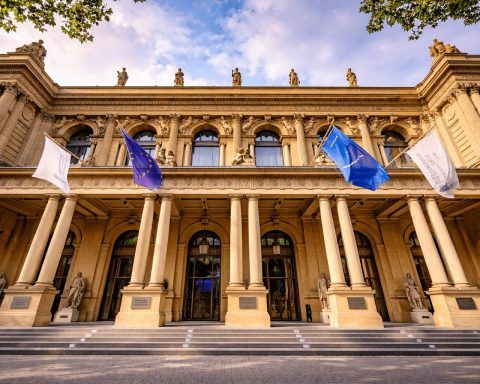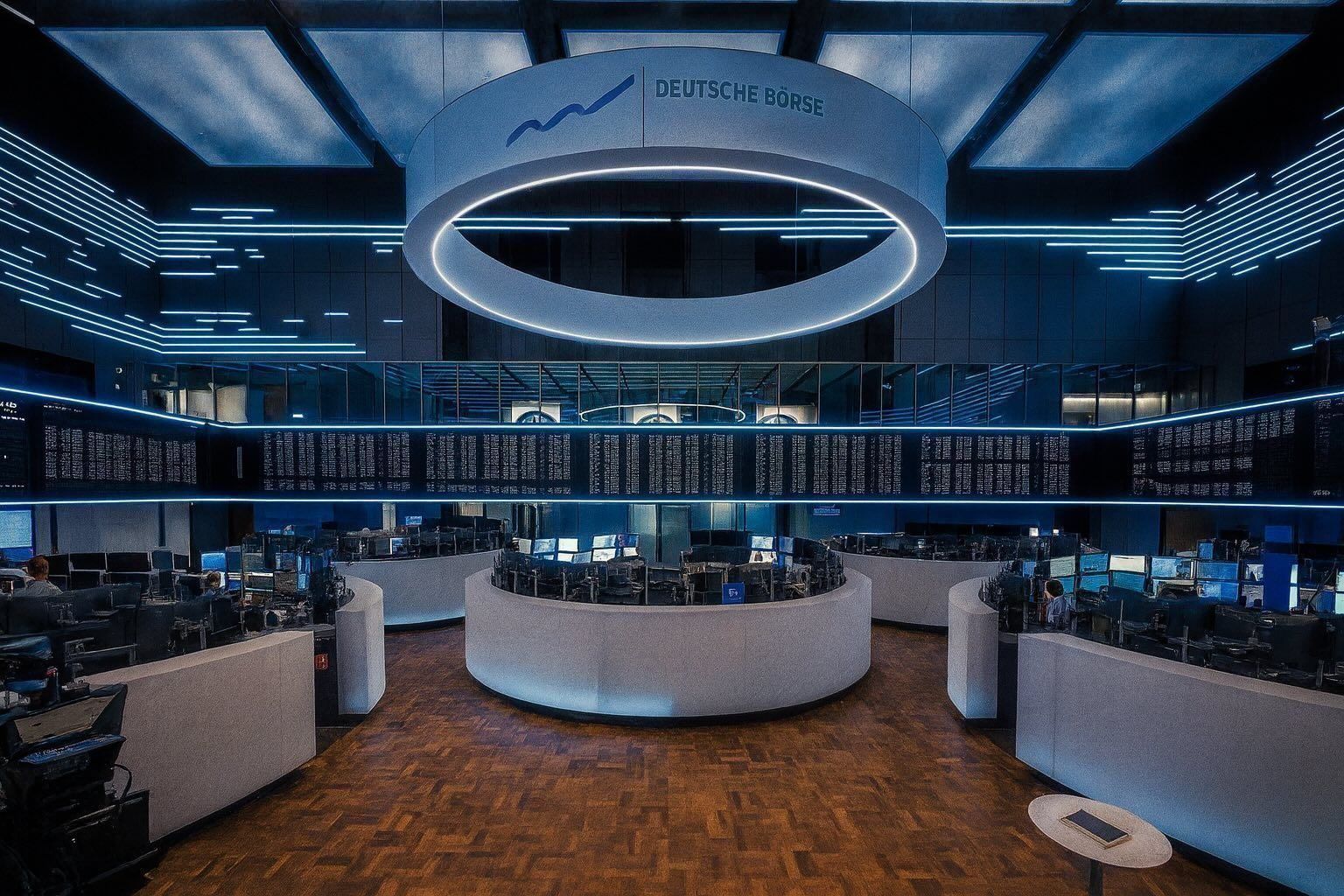
The German stock market in Frankfurt inched higher on Wednesday, December 3, 2025, with the DAX 40 up around 0.3% and trading near 23,780 points by late morning, extending Tuesday’s rebound after a weak start to December. Gains were led by technology and industrial names, in line with a broader European upswing, even as fresh PMI data and a sharp deterioration in auto‑sector sentiment highlighted how fragile Germany’s recovery remains. Reuters+4Reuters+4Investing.com+4
DAX 40 Extends Its December Rebound
After a rocky start to the month, the DAX 40 is slowly clawing back lost ground:
- On Monday, December 1, the index fell around 0.7–1.2%, weighed down by weak manufacturing PMI figures and profit‑taking after a strong prior week. Trading Economics+1
- On Tuesday, December 2, the DAX rebounded by roughly 0.5% as Bayer’s double‑digit surge offset lingering concerns over inflation and tariffs. Reuters+2Investing.com+2
- Today, Wednesday, December 3, the index added another 0.3%, with intra‑day quotes clustering around 23,770–23,785 points. Investing.com+3MarketScreener+3Reuters+3
A dpa‑AFX/MarketScreener opening report noted that the DAX was up 0.3% at 23,785 points in early trading, continuing Tuesday’s modest recovery but still hovering just below the psychologically important 24,000‑point mark. MarketScreener+1
Across Europe, the tone was broadly constructive. The STOXX Europe 600 rose about 0.4% to the 577–578 region, with Germany’s DAX and France’s CAC 40 both posting modest gains, while Spain’s IBEX hit a record high. Reuters+1 Tech and industrial stocks again led the way, mirroring strength on Wall Street, where U.S. indices advanced on renewed hopes for rate cuts and solid holiday spending. BusinessToday
Mid‑Caps Tread Water as Tech and Growth Names Outperform
MDAX: Almost Flat Around 29,500
The MDAX mid‑cap index barely moved, trading just above 29,500 points and showing a tiny gain of roughly 0.02% compared with Tuesday’s close. MarketScreener That follows:
- A 1.35% drop on Monday, when smaller industrials and construction names bore the brunt of the December 1 sell‑off. Investing.com
- A 0.14% rebound on Tuesday, lagging behind the large‑cap DAX as investors focused more on blue‑chip stories like Bayer. Investing.com
The near‑flat performance today underlines a market that is cautiously optimistic but still selective, with investors preferring liquid blue chips and high‑quality growth names over more cyclical mid‑caps.
TecDAX: Tech Index Leads with ~0.8% Gain
By contrast, the TecDAX – home to Germany’s listed tech and growth stocks – outperformed:
- The TecDAX traded around 3,573.9 points, up about 0.76% on the day, with a trading range between 3,553 and 3,590 points. Investing.com
This outperformance mirrors the broader European pattern: a Reuters pan‑European market report highlighted technology as one of the best‑performing sectors again on Wednesday, with strategists at UBS and others staying bullish on tech into 2026, albeit with an emphasis on selectivity given high valuations and tariff risks. Reuters+1
For German investors, the message is clear: quality tech and digital leaders in the TecDAX remain key drivers of index performance, even while more traditional mid‑caps move sideways.
PMI and Sentiment Data: Recovery, But Still Fragile
Services PMI: Still Expanding, but Losing Momentum
Fresh data released this morning added nuance to the growth picture:
- The HCOB Germany Services PMI for November 2025 came in at 53.1, down from 54.6 in October but revised higher than the flash estimate of 52.7. Reuters+1
- The Composite PMI (combining manufacturing and services) was revised up to 52.4 from a preliminary 52.1, but still below October’s 53.9. TradingView+1
A reading above 50 signals expansion, so the services sector is still growing, just at a slower pace. HCOB’s chief economist Cyrus de la Rubia noted that services are effectively keeping German GDP slightly positive in the fourth quarter, while also pointing to the role of fiscal support and investment in underpinning growth into 2026. Reuters+1
Manufacturing PMI: Persistent Drag from Industry
On the industrial side, the picture is less encouraging:
- Germany’s manufacturing PMI fell to 48.2 in November from 49.6 in October, remaining firmly below the 50 line that separates expansion from contraction. Trading Economics
This ongoing industrial slump is critical for the DAX, which is heavy in exporters and capital‑goods makers. Monday’s sell‑off, for example, was driven partly by PMI‑related worries, with industrial names such as MTU Aero Engines, Infineon and Siemens Energy all noted among the biggest losers in coverage of that drop. Nasdaq+1
Auto Sector: Ifo Survey Shows Sentiment “Plunges”
One of the most striking data points today came from Germany’s automotive sector:
- The Ifo business climate index for the auto industry dropped to –20.0 points in November from –13.4 in October, reversing the previous month’s improvement. Reuters+1
Ifo reported that companies’ expectations turned sharply more pessimistic, with little hope that foreign demand will bail out the sector amid:
- Competition from Chinese carmakers
- Higher U.S. tariffs on vehicles and EVs
- Ongoing chip‑supply concerns linked to disputes around supplier Nexperia
This sour mood matters for DAX names such as Volkswagen, BMW and Mercedes‑Benz, and helps explain why auto stocks in Frankfurt are no longer the engine of the rally they were earlier in the year.
Business & Consumer Climate: Slightly Better, But Still Weak
More broadly:
- The overall Ifo Business Climate Index for Germany slipped to 88.1 in November, from 88.4 in October, underlining that corporate Germany remains skeptical about a near‑term upswing. ifo Institut+1
- On the consumer side, the GfK Consumer Climate for December is expected to improve modestly to –23.2 points, still deeply negative but roughly in line with the same period a year ago. Fibre2Fashion
Taken together, Wednesday’s data paints a picture of a services‑driven, modestly expanding economy, with industry and autos still under pressure – a combination that favours tech, financials and some service‑oriented names over cyclical exporters.
Key Stock Movers in Frankfurt
Hugo Boss: Fashion Group Slumps on 2026 Reset
One of the most visible losers in German equities today was Hugo Boss.
- Shares of the fashion group slid by around 10–11% after management warned that both sales and earnings will likely decline in 2026 as the company undertakes a strategic “reset,” simplifying its product range and trimming SKUs. Investing.com Canada+2Investing.com Canada…
- Hugo Boss still expects growth to resume in 2027 and reiterated its long‑term ambition to reach a 12% earnings margin, a target previously tied to 2025. Investing.com Canada+1
The stark guidance weighed on discretionary names and served as a reminder that, even with inflation moderating, consumer‑facing stocks face margin and demand headwinds into next year.
Lufthansa & Airbus: Fuselage Flaw Casts a Shadow
Aerospace and travel stocks were also in focus:
- Lufthansa disclosed that it must inspect 11 recently delivered Airbus aircraft after the manufacturer identified a fuselage panel flaw earlier in the week. Within the Lufthansa Group, 11 planes already in service are affected, and two additional jets due for delivery have already been checked by Airbus. Reuters+1
- The airline said it will conduct the recommended inspections without delay; early market reaction saw Lufthansa shares trading modestly lower (around –0.7%). Investing.com
Meanwhile, Airbus itself:
- Cut its 2025 plane delivery goal due to the A320 fuselage quality issue but saw its shares rise roughly 3% as investors judged the news manageable relative to prior fears. MarketScreener+2infralive.com+2
The net effect on the DAX is mixed: Airbus strength supports European industrial indices, while Lufthansa weakness drags on German travel and transport names.
Defence Names: From Peace Hopes to Re‑Pricing
Defence stocks continue to be a swing factor for the DAX:
- On Monday, defence contractors such as Rheinmetall and Hensoldt were among the biggest losers as markets reacted to signs of progress in Ukraine peace talks, contributing to the early‑December slump. Trading Economics+1
- By Tuesday and Wednesday, much of that pressure had eased. A pan‑European market report noted that defence stocks including Rheinmetall and Leonardo were back in demand, contributing to today’s modest gains in industrials. Reuters
The back‑and‑forth underscores how geopolitical headlines remain a key driver for several DAX heavyweights, with peace hopes pressuring defence valuations and renewed tensions or spending pledges providing support.
Bayer, Mercedes‑Benz and Other Blue Chips: Context from Earlier in the Week
Although not the main story today, this week’s DAX narrative is still shaped by earlier moves:
- On Tuesday, Bayer jumped more than 12% after the Trump administration urged the U.S. Supreme Court to take up the company’s bid to rein in Roundup lawsuits – a move that helped pull the DAX back into positive territory for the day. Reuters+1
- Mercedes‑Benz Group shares, which had rallied into early December on buyback plans and a >7% dividend profile, were roughly flat to slightly lower today (around –0.2%), consolidating after recent gains. TS2 Tech+1
As of today’s session, no single mega‑cap is dominating price action the way Bayer did yesterday, leaving indices more at the mercy of macro data and sector rotations.
Inflation, Central Banks and the 2026 Outlook
Eurozone Inflation at 2.2%: No Rush to Cut Rates
Eurozone macro data released this week continues to shape expectations for the European Central Bank (ECB):
- Euro area annual inflation ticked up to 2.2% in November, from 2.1% in October, according to Eurostat’s flash estimate, driven largely by services prices. European Commission+1
- A Reuters report summarised the move as another reason to expect the ECB to hold rates steady, with markets largely abandoning hopes for additional cuts in the near term. Global Banking | Finance+1
ECB Governing Council member Joachim Nagel described eurozone inflation as “practically at target” and suggested it would fluctuate around 2% for some time. He also pointed to German fiscal spending on defence and infrastructure as a potential driver of growth to above 1% by 2027, while warning about structural challenges like a shrinking workforce. Reuters+1
What This Means for German Equities
For the DAX and its peers, this macro backdrop implies:
- “Higher for longer” interest rates, which typically support bank earnings but weigh on real estate and some high‑duration growth stocks. Reuters+1
- A benign but unspectacular inflation environment, consistent with the view from an ECB survey that eurozone inflation expectations and growth are on a relatively stable path, reducing the odds of abrupt policy moves. Reuters
2026 Forecasts: Cautious Optimism, Not Euphoria
Recent strategy pieces and polls provide a medium‑term frame for today’s price action:
- A Reuters poll of equity strategists published on November 26 predicts that European stock markets, including Germany’s DAX, could gain around 11% by the end of 2026, though more than half of respondents expect a correction in the coming months after this year’s strong rally. Reuters+1
- German state‑owned bank Helaba’s “Markets & Trends 2026” outlook explicitly forecasts the DAX at around 25,000 points at the end of 2026, implying further upside from today’s levels but not a runaway boom. helaba.com
- Deutsche Bank’s Capital Markets Outlook 2026 emphasises artificial intelligence as a key growth engine for equities worldwide while noting that trade conflicts and tariffs will remain a source of volatility – a combination that aligns with the current leadership of tech and defence in the DAX. Deutsche Bank+1
In short, today’s modest rise in the DAX fits into a narrative of cautious optimism: valuations are still seen as relatively attractive compared with the U.S., but investors are keenly aware of the risks from tariffs, geopolitics and stretched AI‑related names.
Index Review Day: DAX, MDAX, SDAX and TecDAX Under the Microscope
Beyond day‑to‑day trading, December 3, 2025 is also a key calendar date for German indices.
STOXX and Deutsche Börse previously announced that the next scheduled review of the DAX, MDAX, SDAX and TecDAX blue‑chip families is set for December 3, 2025. MarketScreener+3STOXX+3ISS Insights+3
As of this writing, detailed outcomes of today’s review have not yet been widely published, but investors are watching closely because:
- Index changes can trigger sizable passive flows as ETFs and index funds rebalance.
- Potential promotions or relegations between DAX, MDAX and SDAX can re‑rate individual stocks overnight, especially in sectors like industrials, defence, AI‑linked tech and specialty chemicals that have seen big performance divergences in 2025.
For now, the prospect of index reshuffling is another reason for elevated single‑stock volatility in the German market, even on a day when the headline indices appear calm.
What German Equity Investors Are Watching Next
Looking beyond today’s moves, several catalysts are likely to drive German stocks in the days ahead:
- U.S. data and Fed expectations: Global investors are eyeing U.S. private payrolls and other labour data later this week, which could shift expectations for the timing and magnitude of Fed rate cuts in 2026 – a key driver for risk assets worldwide. Reuters+1
- Eurozone and German data flow: After today’s PMIs, markets will digest additional European indicators, including Eurozone composite PMI details and Germany’s construction PMI, as well as updated surveys on inflation expectations and credit conditions. SP Global PMI+2FXStreet+2
- Sector‑specific headlines:
- Any further updates from Airbus on the A320 fuselage inspections and delivery schedule;
- Follow‑through on Lufthansa’s inspections and potential operational impact;
- Investor reactions to Hugo Boss’s 2026 reset and whether other consumer companies follow with similarly cautious guidance. Reuters+2Investing.com Canada+2
For now, the German stock market today – December 3, 2025 – reflects a delicate balance: tech and industrials are pulling indices higher, services data is good enough to avoid recession talk, but autos, manufacturing and consumer‑facing names are a constant reminder that Germany’s recovery is still walking a tightrope.