
- TKMS set to list on Oct. 20: Thyssenkrupp Marine Systems (TKMS) begins trading in Frankfurt on October 20, 2025, via a spin-off of Thyssenkrupp’s naval divisionts2.tech. Existing Thyssenkrupp shareholders received 1 TKMS share per 20 Thyssenkrupp shares held, transferring 49% of TKMS’s ~63.5 million shares to investorsts2.tech. Thyssenkrupp retains a 51% stake through a holding company.
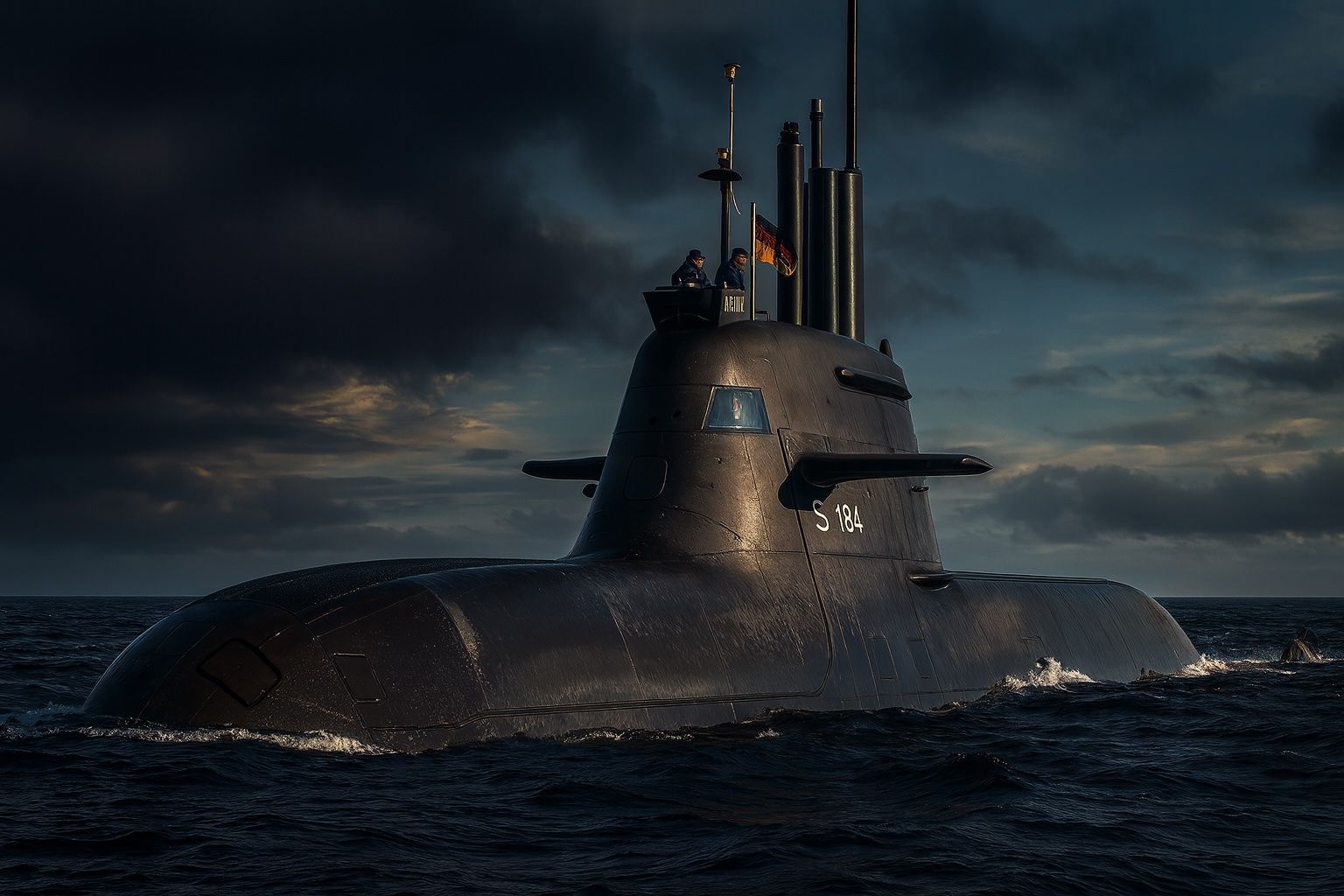
- Defense shipyard powerhouse: TKMS is Germany’s largest naval shipbuilder with 9,100 employeesn-tv.de and decades of expertise. It builds conventional submarines, frigates, corvettes and maritime systems, and is the world leader in non-nuclear subs using air-independent fuel-cell propulsionn-tv.de. Its order backlog stands at €18.6 billion – enough work into the 2040s – after a surge of new orders following Russia’s invasion of Ukrainereuters.comn-tv.de. In the first half of FY2024/25 alone, TKMS’s order intake jumped to €5.6 billion (from €669 million a year earlier)n-tv.de.
- Booming financials and growth plans: For the fiscal year ending Sept 2025, TKMS saw revenue of €1.59 billion and net profit of €75.2 millionts2.tech. Executives and analysts expect profitability to improve markedly: TKMS targets an >7% EBIT margin in the medium term (up from ~4.3% last year)reuters.com and about 10% annual sales growthreuters.com. The company plans to pay out 30–50% of net earnings as dividends from FY2025/26 onward, with its first dividend by 2027reuters.com. No fresh capital is raised in this spin-off, but as an independent firm TKMS can tap capital markets in future for R&D and expansion.
- Investor interest and valuation: The listing comes amid a European defense boom, and analysts say investor demand is high. Jefferies values TKMS around €2.3 billion (roughly one-third of Thyssenkrupp’s market cap)reuters.com, implying a ~€36 share pricereuters.com. Citi analysts are more bullish, estimating €3.4 billion ($3.9 billion) or morefastbull.com. At even the lower end, TKMS will be one of Germany’s biggest new listings this yearreuters.com. Thyssenkrupp’s stock has already climbed “over 300%” from last year’s lows as its marine business prospects lifted the conglomeratets2.tech.
- Defense stocks soaring: Russia’s war and geopolitical tensions have fueled a broad rally in European defense shares. Peers like Rheinmetall (tanks & munitions) and Italy’s Leonardo (aerospace) have seen their stock prices more than double since Januaryfastbull.com. Hensoldt, a German defense electronics firm that IPO’d in 2020 with government backing, also became one of the market’s top-performing defense stocksn-tv.de. TKMS offers investors a direct play on naval defense, an industry previously hard to invest in directlyts2.tech. The German government’s historic “Zeitenwende” defense spending surge has particularly benefited naval programs – Berlin is modernizing its fleet with new warships and submarines worth over €10 billion (including four brand-new 212CD submarines)n-tv.de.
- “Golden share” safeguards: To protect critical submarine technology, the German state opted not to take an equity stake in TKMS (unlike its 25.1% stake in Hensoldt)n-tv.de. Instead, Berlin secured a “golden share” giving it veto rights over any sale of 25%+ of TKMS and first-refusal rights above 5%n-tv.de. The government will even hold a board seat to ensure strategic decisions aren’t made without state oversightn-tv.de. This compromise lets TKMS access capital markets freely while maintaining national security controlreuters.com.
TKMS Sets Sail: A New Era for Thyssenkrupp and German Defense
When the opening bell rings in Frankfurt on Monday, it will mark a new chapter for Thyssenkrupp Marine Systems – and potentially for Germany’s defense sector. By spinning off and listing its naval shipbuilding arm, Thyssenkrupp is unlocking value from its “crown jewel” business and exposing it to public investorsn-tv.den-tv.de. “With the stock listing we are opening a new chapter,” Thyssenkrupp CEO Miguel López said this week, adding: “We are facilitating growth opportunities and access to the capital market for TKMS, while at the same time creating value for our shareholders”fastbull.com.
The IPO is structured as a pure spin-off – no new shares or fundraising, and no glitzy roadshows. Instead, 49% of TKMS was simply distributed to Thyssenkrupp’s existing shareholders on Oct. 17ts2.tech. Anyone holding 20 Thyssenkrupp shares as of Friday received 1 TKMS share automaticallyts2.tech. The parent retains a 51% holding through a new entity, enough to keep control while still letting TKMS stock float freely on the marketn-tv.den-tv.de. This approach mirrors recent defense spin-offs in Europe, and it means TKMS itself won’t receive cash immediately from the listing. However, as an independent company, TKMS can now directly raise capital down the line – for instance via bond issues or new equity – to fund R&D, shipyard expansion or acquisitions. “The new structure will give TKMS greater entrepreneurial freedom and direct access to capital markets, enabling it to finance innovation and expansion independently,” notes one analystnews.financial.
For Thyssenkrupp, the move is part of a broader shake-up. López’s strategy is to reshape the storied German conglomerate into a leaner holding company of strong, stand-alone businessests2.tech. Spinning off the naval division not only unlocks value (he expects the combined market value of Thyssenkrupp + TKMS to exceed what Thyssenkrupp alone was worth)n-tv.de, but also relieves the parent of the heavy capital needs of shipbuildingn-tv.de. It comes as Thyssenkrupp is also exiting the steel industry – talks are underway to sell its volatile steel unit, potentially to India’s Jindal Steel, after a previous deal collapsedts2.tech. By shedding steel and listing TKMS, Thyssenkrupp is pivoting away from its traditional identity and transforming into an industrial holdings group. Some even speculate Thyssenkrupp could use TKMS’s stock as “currency” for future mergers in shipbuilding – sector experts predict consolidation among Europe’s naval shipyards in coming yearsn-tv.de. Indeed, Germany has long debated merging its fragmented shipbuilders or pursuing a European alliance akin to Airbus in aerospacen-tv.de. The TKMS listing could facilitate such moves by creating a separately valued naval pure-play.
Warship Boom Drives Backlog and Optimism
The timing for TKMS’s market debut “could hardly be better,” as n-tv puts itn-tv.de. Russia’s war on Ukraine and heightened geopolitical threats have led to a once-unimaginable defense spending boom in Europe. Naval programs are at the forefront – Germany, for example, is pouring hundreds of billions into defense modernization over the medium termfastbull.com, including expanding its submarine fleet and surface combatants. “As TKMS, we are ideally positioned to meet the dynamic demand of the market,” TKMS CEO Oliver Burkhard said recentlyreuters.com. The company’s order books underscore that confidence. Over the past five years, TKMS’s order backlog has more than tripled to €18.6 billionreuters.com. This includes multi-year projects like new Type-212CD submarines for Germany and Norway, as well as frigates, corvettes, and a specialized polar research vesselnews.financial. In the first six months of this fiscal year alone, TKMS logged €5.6 billion in new orders – a staggering jump from just €669 million in the same period a year earliern-tv.de. Thanks to this influx, TKMS has enough work to keep its shipyards busy well into the 2040sn-tv.de.
Financially, TKMS is solid and growing. In the first nine months of FY2024/25, the marine division earned about €75 million net profit, up 20% year-on-yearn-tv.de. Annual revenues are around €1.6 billionts2.tech, but management sees significant upside. At its inaugural capital markets day, TKMS outlined plans for ~10% compound annual revenue growth in coming yearsreuters.com. More crucially, it’s aiming to lift its operating profit margin to 7%+, from roughly 4% last yearreuters.com. Hitting that target would put TKMS on par with other top naval contractors – Britain’s BAE Systems’ ship unit had a 7.7% margin last year, and France’s Naval Group about 7%reuters.com. To reach those levels, TKMS has been investing in efficiency, digitization and autonomous systems to improve performance and scale up outputnews.financial. The firm also intends to resume dividends once it’s on steady footing – targeting a 30–50% payout of net income and the first dividend by 2027reuters.com. All of these plans hinge on robust defense budgets continuing. Here, the outlook appears favorable: European governments from Germany to France and the UK have committed to multi-year increases in military spendingfastbull.com. Even new domains like undersea cable protection are emerging priorities, which TKMS’s submarine and sensor tech is suited forfastbull.com.
The broader defense upcycle has clearly lifted TKMS’s prospects – and its parent’s stock. Thyssenkrupp shares tripled in value this year, driven in large part by investor excitement over the warship business and its spin-offreuters.com. From its lows in late 2022, Thyssenkrupp’s stock price is up over 300%ts2.tech. This dramatic re-rating reflects a broader trend: since Russia’s invasion, defense equities have been market darlings. Germany’s tank and arms maker Rheinmetall, for example, saw its share price skyrocket by almost 1700% since the war began, and it earned a spot in the DAX blue-chip index in 2023n-tv.den-tv.de. Hensoldt, the radar and sensor specialist spun off from Airbus in 2020, soared with help from a state investment and is now one of the most successful defense stocks in Germanyn-tv.de. Across Europe, defense giants have enjoyed windfall order books and investor demand – Italian defense firm Leonardo and others have more than doubled their market value just this year amid the geopolitical tensionsfastbull.com.
Against this backdrop, TKMS’s arrival on the stock market comes at a fortuitous moment. It offers a unique pure-play on naval defense, a segment that until now wasn’t directly represented on public markets in Germanyts2.tech. Market experts predict strong interest from investors who “have flocked to defense stocks” and want exposure to submarine and warship programsreuters.com. “TKMS could become the maritime counterpart to Rheinmetall and Hensoldt,” n-tv observesn-tv.de – essentially, a new “marine champion” from Germany if all goes well. The company’s status as a leading non-nuclear submarine builder, with cutting-edge fuel-cell sub technology that lets vessels stay submerged for weeks, gives it a strategic edge globallyn-tv.de. Its submarines are in service not just with Germany’s navy but also export clients like Norway, Singapore and Egyptn-tv.de. Few rivals exist in this high-tech niche – France’s Naval Group and Italy’s Fincantieri are among the main competitorsreuters.com – which means TKMS stands to benefit as navies worldwide modernize their fleets.
High Hopes – And a Long Voyage Ahead
Analysts are divided on valuation, but most agree TKMS stock has significant room to run if the company meets its targets. Based on peer comparisons and earnings, Jefferies analysts estimate a roughly €2.3 billion market capitalizationreuters.com. With 63.5 million shares outstanding, that implies an initial price around €36–37 per sharereuters.com. In a spin-off, the market will ultimately determine the price once trading begins, but Thyssenkrupp’s own share price suggests something in that ballpark – at Friday’s close Thyssenkrupp traded at about €12 (with each shareholder about to get 1/20 of a TKMS share)n-tv.de. Some analysts see upside beyond that: Citi, for example, reportedly projects €3.4 billion or higherfastbull.com, noting TKMS’s valuation could rise as a standalone entity, especially if it improves margins. There are even bullish market commentators who speculate TKMS might eventually fetch €4–5 billion – roughly on par with Thyssenkrupp’s entire pre-spin market capnews.financial – given the “geopolitically safe” nature of its defense business and scarcity of pure defense stocks in Germany. “We see the marine business re-rating as a catalyst for Thyssenkrupp,” Citi’s analysts wrote, implying the spin-off could unlock hidden value for shareholders of both companiesfastbull.com. López himself has expressed hope that the sum-of-parts value of Thyssenkrupp plus TKMS will indeed be higher than Thyssenkrupp was on its own – rewarding investors and giving the group stronger currency for strategic movesn-tv.de.
That said, industry experts caution that TKMS’s journey will be a marathon, not a sprint. Building submarines and warships is not a fast, scalable business. “TKMS is no speedboat, but an ocean liner,” Bloomberg Intelligence quipped, urging patience with the company’s long-term trajectoryn-tv.de. Unlike making hundreds of trucks or rifles, each submarine or frigate is essentially a complex, multi-year project that can’t be easily replicated en masse. Contracts often involve protracted political approvals and international consortia – meaning revenue can be lumpy and dependent on government timetablesn-tv.de. This slower cycle might temper the kind of explosive growth that missile or ammunition makers have seen. Analysts advise patience: TKMS’s value will ultimately hinge on execution over years – delivering existing orders on time, converting its huge pipeline into profitable output, and managing risks (like cost overruns or export constraints). On the upside, TKMS enters public trading with a massive backlog and a tailwind of political support. The German government has made clear it considers TKMS a strategic national asset. By holding a “golden share” veto and a board seat, Berlin can block any unwelcome takeovers and ensure TKMS remains in German/European handsn-tv.de. This arrangement balances investor freedom with state oversight. It’s similar to mechanisms used for critical companies in other sectors – for instance, when Hensoldt went public, the government took a minority stake to secure influencen-tv.de.
For investors, TKMS’s debut opens a new avenue to participate in Europe’s defense upswing. It also comes with the complexities of the shipbuilding business. The company’s long-term vision is to perhaps spearhead a consolidation into a “Marine-Champion” for Europen-tv.de, much like Airbus in aerospace. The IPO is just the first step on that voyage. As one commentator noted, whether TKMS truly becomes Germany’s next defense star “will not be decided on Monday in Frankfurt – but in the coming years on the shipyards in Kiel and Wismar, between politics, industry and the market”n-tv.de. In other words, the stock market debut is only Day One. All eyes will be on TKMS’s first trading day to gauge investor appetite. More importantly, in the months and years ahead, the company will have to prove it can convert Europe’s naval rearmament drive into sustainable profits and shareholder returns. If it can, TKMS may well earn its title as the “Rheinmetall of the Seas.” 🚢📈
Sources: N-TVn-tv.den-tv.de; Reutersreuters.comreuters.comreuters.com; Thyssenkrupp press (via FastBull/Dow Jones)fastbull.comfastbull.com; TechStock² (TS2.tech)ts2.techts2.tech; News Financialnews.financial; company prospectus data via mediareuters.comreuters.com; Bloomberg Intelligence via N-TVn-tv.de.
Related articles: Defense Industry