NEW YORK, Dec. 28, 2025, 12:19 p.m. ET — U.S. stock market closed (Weekend)
Global stock markets are heading into the final full trading week of 2025 with a familiar mix of late-December ingredients: thin liquidity, year-end portfolio reshuffles, and a powerful “risk-on” narrative built around easing inflation pressures and the market’s expectation that the Federal Reserve will cut rates again in 2026.
For U.S. investors, the cash equity market is closed today for the weekend, with attention shifting to when index futures reopen later Sunday and how global cross-asset signals—oil, the U.S. dollar, and record-setting precious metals—set up Monday’s open.
Wall Street heads into the weekend near record highs—and investors are watching the “Santa Claus rally”
U.S. stocks ended Friday’s post-Christmas session little changed but still hovering near record territory after a strong multi-day run. The Dow closed at 48,710.97, the S&P 500 at 6,929.94, and the Nasdaq at 23,593.10, according to Reuters. Reuters
What stood out wasn’t the small move on Friday—it was the backdrop:
- Trading was notably lighter than usual, with Reuters reporting U.S. exchange volume at about 10.22 billion shares versus a 20-day average near 15.98 billion. Reuters
- The market is now inside the widely followed “Santa Claus rally” window, which Reuters describes as the last five trading days of the current year plus the first two of the new year—a stretch that began Wednesday and runs through Jan. 5. Reuters
Ryan Detrick, chief market strategist at Carson Group, told Reuters the market appeared to be “catching our breath” after a strong run and suggested there could still be “a little more upward bias” during the seasonal period. Reuters
The “week-ahead” catalyst: Fed minutes, rate-cut expectations—and a potential Fed chair headline
While the holiday period often features fewer economic releases, investors are bracing for one potentially market-moving document: minutes from the Fed’s Dec. 9–10 meeting.
Reuters notes that the Fed lowered rates by 75 basis points over its last three meetings of 2025, bringing the benchmark rate to 3.50%–3.75%. Reuters But the December decision to cut by a quarter point was divided, and policymakers’ projections for the path of rates next year varied widely—setting the stage for the minutes to shape expectations on how many cuts might actually come in 2026. Reuters
Michael Reynolds, vice president of investment strategy at Glenmede, told Reuters the minutes may be “illuminating” as investors try to handicap the 2026 cut path. Reuters
There’s also a major personnel variable. Reuters reported investors are waiting for President Donald Trump to nominate a Fed chair to replace Jerome Powell, whose term ends in May, and that any signal around that decision could move markets in the coming week. Reuters
A market that’s rallying—but rotating
One of the most important late-2025 themes is not just “stocks up,” but leadership broadening beyond megacap tech.
Reuters highlighted that, despite bouncing recently, the S&P 500 tech sector has fallen more than 3% since the start of November, while financials, transports, healthcare, and small caps have posted solid gains over the same window. Reuters
Anthony Saglimbene, chief market strategist at Ameriprise Financial, framed the shift as rotation into areas where valuations look more moderate and as more investors buy into the view that the economy is on solid footing. Reuters
That rotation narrative matters globally because it can change what “good news” looks like from here: in a market widening beyond the largest U.S. tech names, investors often pay closer attention to cyclicals, banks, industrials, and globally exposed sectors.
Asia: year-end risk appetite lifts equities, even in holiday-thinned trade
Across Asia, the last full session before the weekend delivered a strong “risk rally” feel.
Reuters reported that Asian stocks rose to a six-week high on Friday amid thin holiday trading, with Japan’s Topix hitting a record high and South Korea’s benchmark gaining enough to cement a roughly 72% annual gain—described as the best performance among major global stock markets this year. Reuters
China’s blue-chip index was also higher and on track for an 18% annual gain—its best since 2020—while MSCI’s Asia-Pacific index rose and was up about 25% year-to-date, Reuters said. Reuters
Europe: markets near record levels as the year winds down
In Europe, the story has been less about day-to-day volatility and more about where the region is ending the year: near record highs, supported by easing rates and shifting investor preferences.
Reuters reported that European shares ended a holiday-shortened week near record highs and were on track for their strongest annual performance since 2021, with the STOXX 600 around 588.61 in the Dec. 24 session. Reuters
Swissquote senior market analyst Ipek Ozkardeskaya told Reuters that factors such as heavy government debt, geopolitical uncertainty, and looser monetary policy keep the medium- to long-term outlook constructive for metals—an important point given Europe’s sensitivity to inflation expectations and energy pricing. Reuters
Middle East: Gulf markets slip as oil weakness weighs
Unlike the U.S. and many European venues, several Gulf exchanges trade on Sundays—so today’s regional action offers a real-time snapshot of how investors are reacting to Friday’s global macro signals.
Reuters reported that most Gulf stock markets closed lower on Sunday, led by a 1% drop in Saudi Arabia’s index, as oil prices fell on supply glut concerns. Reuters Qatar’s index also dipped, Reuters said, while Egypt’s EGX30 gained on the day. Reuters
For global investors, the Gulf’s sensitivity to crude is a reminder that oil’s direction into year-end is not just an energy-sector story—it can influence regional equity performance, fiscal expectations, and risk sentiment.
Commodities and FX are doing the heavy lifting in the global narrative
Oil: supply-glut fears pull crude lower into year-end
Oil is one of the clearest pressure points heading into the final trading sessions of 2025.
Reuters reported that Brent settled down 2.57% at $60.64 per barrel on Friday, while WTI settled down 2.76% at $56.74. Reuters The same Reuters report tied the move to rising concern over a potential global crude supply glut, even as markets watched geopolitical developments and peace-talk headlines linked to Ukraine. Reuters
Precious metals: silver and gold smash records
If oil is flashing “growth and supply” concerns, gold and silver are flashing “rates, currency, and geopolitics.”
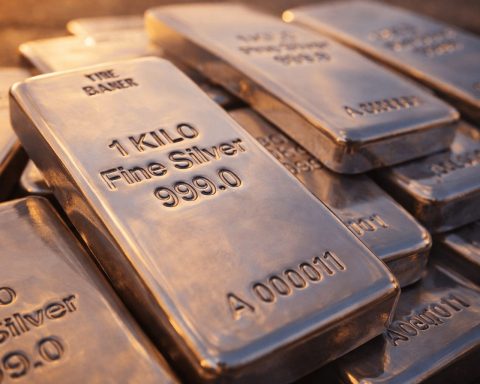
Reuters reported that silver hit a record $77.40/oz and gold surged to an all-time high around $4,549.71/oz, with precious metals supported by expectations for Fed easing and safe-haven demand. Reuters
Peter Grant, vice president and senior metals strategist at Zaner Metals, told Reuters that expectations for further easing in 2026, a weaker dollar, and heightened geopolitical tensions are driving volatility in thin markets—even as profit-taking risks rise into year-end. Reuters
Dollar and yen: policy uncertainty keeps currency markets on edge
In FX, Reuters reported the U.S. dollar has been under pressure as markets debate the Fed’s 2026 path and the potential for a new Fed chair, with the euro, sterling, and Swiss franc pushed to highs. Reuters Reuters added the dollar index rose 0.08% on Friday to 98.03. Reuters
The yen remains a focal point as well. Reuters said the Japanese yen softened and that thin year-end volumes can create conditions where authorities may choose to intervene to support the currency. Reuters
What investors should know before the next U.S. session
With U.S. cash equities closed today, the practical question becomes: what sets the tone for Monday, Dec. 29?
1) Watch when U.S. index futures reopen
CME’s equity index futures (such as E-mini S&P 500 futures) list trading hours that begin Sunday evening at 6:00 p.m. ET. CME Group
That reopen can matter in a headline-driven environment, because it is often the first market to “price” weekend geopolitical, policy, or energy news before stocks open Monday morning.
2) Know the clock for regular U.S. trading
NYSE’s core trading session runs 9:30 a.m. to 4:00 p.m. ET. New York Stock Exchange
(Trading dynamics can be unusual in the final sessions of the year, particularly when liquidity is thin.)
3) The key macro calendar: Fed minutes + housing data
Investopedia highlighted that the coming week includes November pending home sales (Monday), the S&P Case-Shiller home price index (Tuesday), and the release of minutes from the December FOMC meeting (Tuesday), along with weekly jobless claims (Wednesday). Investopedia
4) The holiday schedule matters for liquidity and timing
The week is holiday-shortened by New Year’s Day (Thursday, Jan. 1, 2026), when U.S. stock and bond markets are closed, Investopedia reported. Investopedia
For fixed income, SIFMA’s holiday recommendations list an early close (2:00 p.m. ET) on Wednesday, Dec. 31, 2025, ahead of the Jan. 1 holiday. SIFMA
5) Thin markets can amplify “small” surprises
Reuters explicitly warned that year-end portfolio adjustments can cause volatility and that light trading volumes can exaggerate price moves—an especially important point for investors placing stop orders or making large reallocations near year-end. Reuters
The bigger picture: why global markets look resilient—and why 2026 could still be choppy
Even as 2025’s final sessions approach, the market is already debating whether the rally can extend into 2026.
A MarketWatch analysis published Sunday noted that U.S. stocks are on track for a third straight year of strong gains and highlighted how history often shows more muted returns after standout streaks—while also pointing to optimistic strategist targets for 2026 gathered by FactSet. MarketWatch
Meanwhile, Reuters previously reported that a poll of top brokerages expected the S&P 500 to rise nearly 12% to about 7,490 by end-2026, supported by expectations around AI momentum and lower borrowing costs—though strategists also flagged risks including inflation and stretched valuations. Reuters
Bottom line for Monday’s open
As of this Sunday midday in New York, the U.S. stock market is closed—but global markets are still sending signals:
- Equities: U.S. indexes remain near record peaks, with investors watching whether the seasonal “Santa Claus rally” holds into early January. Reuters+1
- Policy: The Fed minutes and any Fed chair headline risk loom large in shaping the 2026 rate-cut narrative. Reuters
- Cross-asset:Oil weakness, record metals, and a pressured dollar are doing much of the storytelling heading into the next session. Reuters+2Reuters+2
For investors, the most important “before the bell” reality check is that late-December tape action can be deceptively calm—until it isn’t. With fewer participants and more mechanical flows, the market can move fast on a small catalyst. Reuters+1