New York, January 17, 2026, 19:51 (EST) — Market closed
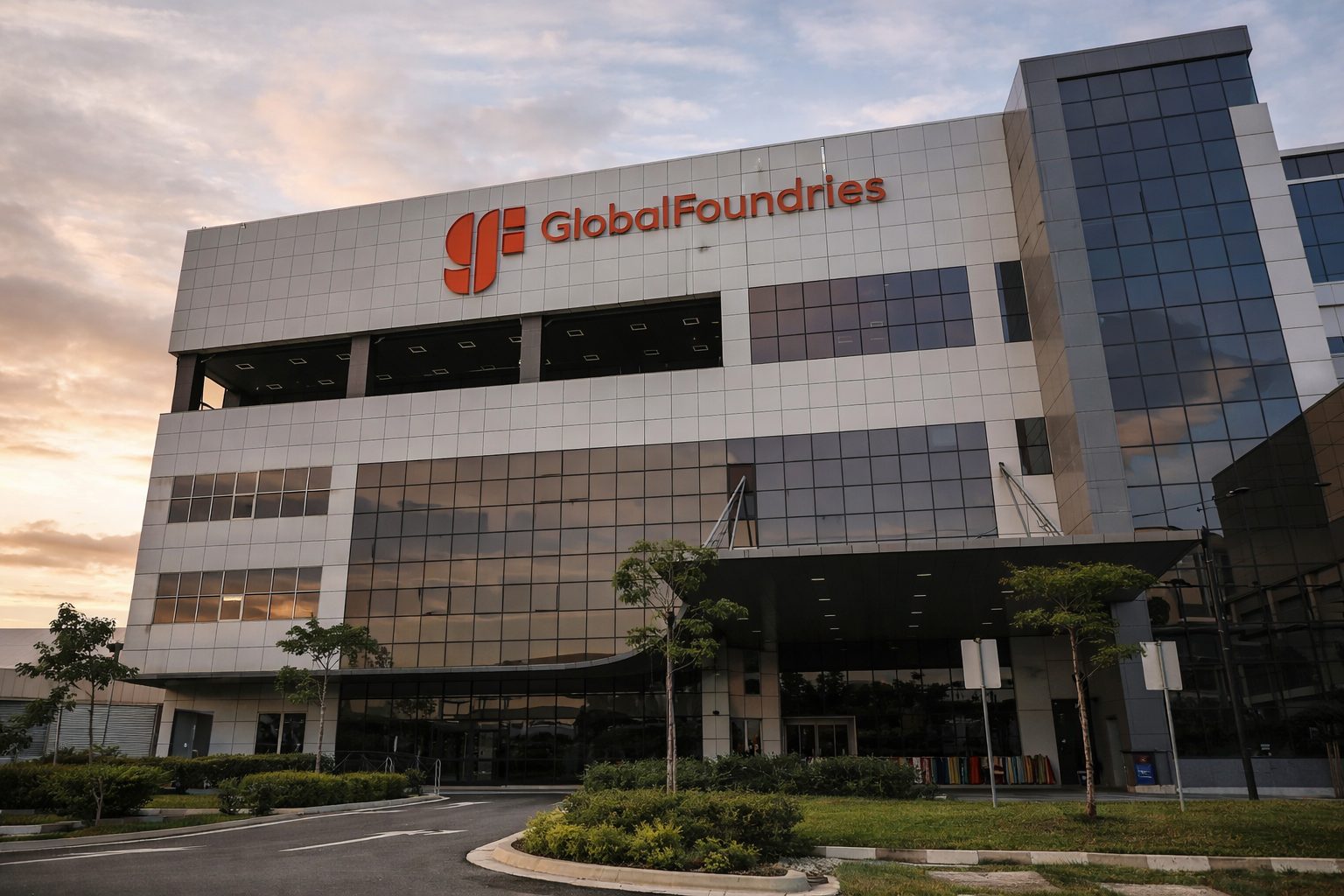
- Shares of GlobalFoundries slipped Friday, bucking the broader chip sector’s gains
- Investors are digesting a board shake-up alongside the company’s shift into processor IP
- Next key event: earnings report and conference call on Feb. 11
GlobalFoundries (GFS) shares dropped 0.5%, ending Friday at $41.05. After-hours trading showed the stock slightly higher, at $41.24. Yahoo Finance
Chip stocks drove gains late Friday on Wall Street, with the iShares Semiconductor ETF climbing 2.1% as investors sought out AI-related plays. U.S. markets will be closed Monday for Martin Luther King Jr. Day, delaying the next trading day until Tuesday. Reuters
Timing is crucial for GlobalFoundries, which has recently made corporate news but hasn’t enjoyed the same daily AI buzz as bigger chipmakers. Tuesday’s reopening offers the first real test of whether investors see Friday’s dip as just noise or a sign of growing caution.
On Thursday, the company revealed in a regulatory filing that Ganesh Moorthy has joined its board. SEC
Moorthy, who previously served as president and CEO of Microchip Technology, has joined the board effective immediately, the company announced. Executive Chairman Thomas Caulfield praised Moorthy’s “deep understanding of semiconductor technology and manufacturing at scale,” calling it “a tremendous asset to GF.” GlobalFoundries
The board move follows closely on the heels of GlobalFoundries’ agreement to acquire Synopsys’ ARC Processor IP Solutions business, which offers a suite of reusable processor designs and software tools that clients can license instead of building from scratch. CEO Tim Breen commented, “This acquisition doubles down on our commitment to advancing our leadership in Physical AI,” the firm’s term for embedding AI in devices like wearables and robotics. GlobalFoundries expects the deal to close in the latter half of 2026, subject to regulatory approval. GlobalFoundries
Some jargon matters here. Processor IP stands for intellectual property — essentially a pre-designed blueprint for a chip component. RISC-V is an open instruction set architecture that’s used to develop processors. Meanwhile, an NPU, or neural network processing unit, is a specialized block built to accelerate AI tasks.
But the deal isn’t expected to close until 2026, opening the door for potential delays. Investors might keep their eyes on near-term demand and pricing trends in GlobalFoundries’ main markets. The company has historically been more tied to consumer and industrial cycles than the top-tier AI compute boom, based on previous statements and reports. Reuters
GlobalFoundries ranks as the third-largest contract chipmaker worldwide. The company markets itself as a manufacturing alternative outside of China and Taiwan, responding to increasing government and customer demands for more resilient supply chains. Reuters
GlobalFoundries is set to report its fourth-quarter and full-year 2025 earnings on Feb. 11, followed by a conference call at 8:30 a.m. ET. GF Investors
Traders are focused on demand and margin updates, along with any insight on how processor IP fits into the foundry model. Ahead of that, Tuesday’s reopening will test if the stock’s weekend slide holds up.