Shanghai, Jan 25, 2026, 00:20 CST — Market closed.
- ICBC A-shares closed Friday’s session down 0.8%, finishing at 7.21 yuan.
- Chinese bank stocks slipped while the wider Shanghai market closed with gains.
- As the new week begins, traders are eyeing policy signals alongside the latest end-of-month factory figures.
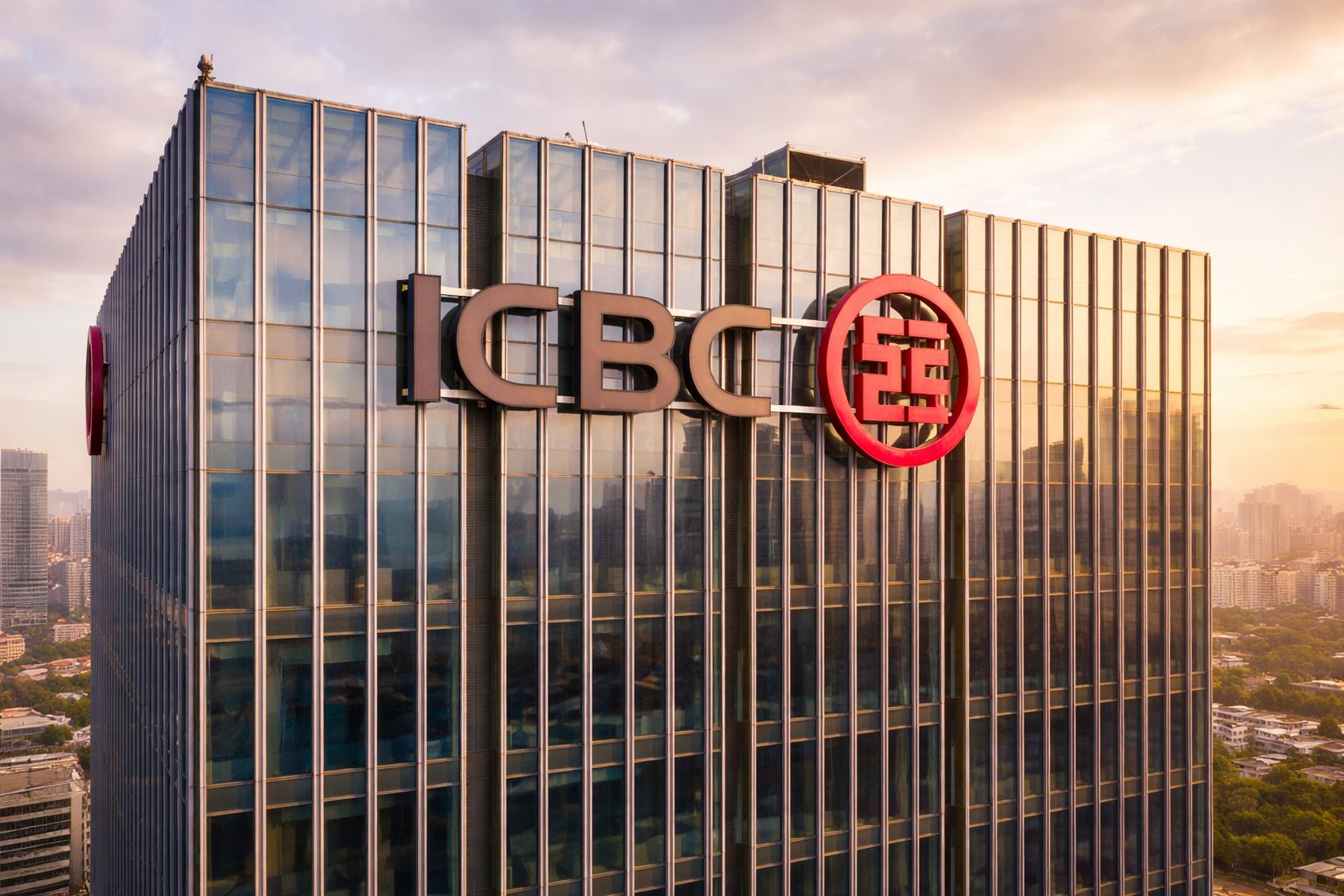
Industrial and Commercial Bank of China Ltd’s A-shares (601398.SS) closed Friday down 0.8% at 7.21 yuan, underperforming the Shanghai Composite, which gained 0.33%. Trading volume hit roughly 377 million shares. The stock trades at about 0.7 times book value, with a dividend yield close to 4.3%, according to market data. AA Stocks
This matters since China’s major lenders now serve as a rough barometer for just how aggressively officials will push growth. While more stimulus can boost loan demand, it also puts pressure on banks’ interest income.
Interest-rate moves remain a key battleground. China kept its benchmark lending rates steady for the eighth straight month this week, holding the one-year loan prime rate at 3.0% and the five-year at 3.5%. These rates affect the bulk of corporate loans and mortgages. Reuters
Friday’s slide wasn’t limited to ICBC. Other big banks also slipped, though an AAStocks roundup found “overweight” ratings still widespread. ICBC’s target price even crept higher, from 8.9 yuan to 9 yuan. AA Stocks
Beijing has been active on the policy front beyond equities. This week, China rolled out 93.6 billion yuan ($13.44 billion) in ultra-long special treasury bonds aimed at funding equipment upgrades. The state planner indicated these funds might spark over 460 billion yuan in investment. Reuters
Macro expectations are shifting in the sector. China is expected to set its 2026 growth target between 4.5% and 5%, according to the South China Morning Post. Economists caution that the export-driven growth model will face challenges if global growth slows. “At some point in time, there is not going to be enough global growth,” said Alicia Garcia Herrero, Natixis’ Asia-Pacific chief economist. Reuters
Credit risk remains anchored to property. Reuters found rural banks are having a tough time offloading foreclosed homes, even with big discounts. UBS projects the number of foreclosed units from bad loans could hit 2.43 million by 2027, up sharply from 640,000 in 2025. “The prices are shockingly low,” said real estate agent Li Youcai. UBS’s John Lam added that “the entire industry still has oversupply.” Reuters
The downside for bank bulls is clear. Additional rate cuts could squeeze net interest margins—the gap between loan earnings and deposit costs—more quickly than they lift lending volumes. Plus, a prolonged property downturn raises the chance of bigger loan-loss provisions.
China markets reopen Monday. Traders are eyeing the official January manufacturing PMI, set for release on Jan. 31, for fresh insight into factory output and demand trends. fxstreet.com