Published: 3 December 2025
ICICI Bank share price today: steady near record zone
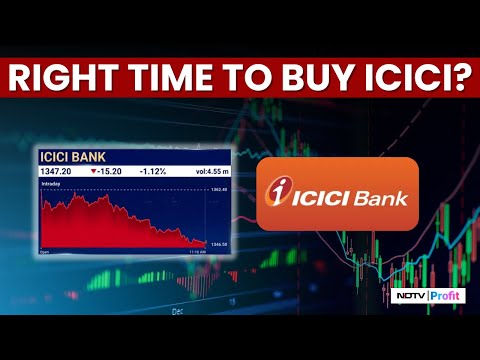
ICICI Bank Limited (NSE: ICICIBANK) was trading around ₹1,385–1,390 in mid‑day trade on 3 December 2025, up roughly 1% on the day. A liveblog from The Economic Times pegged the last traded price near ₹1,386 around 12:15 pm, while ICICI Direct’s stock page shows a spot price of ₹1,385.8, a 52‑week range of ₹1,186–1,500, and a market capitalisation close to ₹9.9 trillion. [1]
Over longer horizons, the stock’s performance has cooled but not collapsed:
- 6‑month return: roughly ‑4–3%
- 1‑year return: about +6%
- 3‑year return: around +48% according to ET’s liveblog. [2]
On valuations, ICICI Direct shows a trailing P/E of ~17.2x, P/B of ~3.0x, and dividend yield near 0.8% – a premium to most Indian banks, but not extreme given the bank’s profitability and asset quality. [3]
The near‑term backdrop is choppy. On 2 December, Indian benchmarks slipped as investors took profits in financials; Reuters reported that financial stocks fell about 0.8%, with ICICI Bank down around 1.3% alongside HDFC Bank. [4]
RBI reaffirms ICICI Bank as a systemically important lender
The big regulatory headline this week: the Reserve Bank of India (RBI) has reaffirmed ICICI Bank, HDFC Bank and State Bank of India (SBI) as Domestic Systemically Important Banks (D‑SIBs). That label effectively stamps them as “too important to fail” within the Indian system. [5]
Under the latest D‑SIB framework:
- ICICI Bank must hold an additional 0.2 percentage points of Common Equity Tier‑1 (CET1) capital above the standard capital conservation buffer.
- SBI and HDFC Bank carry even higher surcharges at 0.8% and 0.4% respectively. [6]
From an equity‑holder perspective, that surcharge is small relative to ICICI’s current strength. Moody’s notes a consolidated CET1 ratio of about 16.1% as of September 2025, providing a “substantial cushion” against risks. [7]
Implication: the D‑SIB tag slightly raises regulatory capital requirements, but it also reinforces the perception that ICICI Bank is central to India’s financial system – an argument often used to justify its valuation premium.
Moody’s reaffirms ICICI Bank’s Baa3 rating on strong fundamentals
On 2 December, Moody’s Ratings reaffirmed ICICI Bank’s long‑term deposit rating at Baa3 with a stable outlook, citing robust profitability, strong solvency, and solid funding. [8]
Key points from the rating rationale:
- Profitability: ICICI’s return on assets (ROA) is about 2.0% for the six months to September 2025, well above an Indian banking‑sector average near 1.4%. [9]
- Asset quality:Gross NPL (GNPA) ratio around 1.6%, versus an industry average near 2.3% (as of March 2025). [10]
- Capital: CET1 of ~16.1% (including year‑to‑date profits) gives ample loss‑absorption capacity. [11]
- Funding: A heavy tilt to retail deposits and strong CASA (current‑and‑savings) deposits support stable, low‑cost funding. [12]
Moody’s does warn that an upgrade is unlikely while the bank’s rating is capped by India’s sovereign rating; a downgrade could occur only if capital, asset quality and profitability deteriorate materially. [13]
Nifty Bank index rejig: why passive flows may sting in the short term
Another major driver of sentiment is NSE Indices’ overhaul of the Nifty Bank index under SEBI’s tightened rules for derivative‑linked benchmarks.
From 31 December 2025, the index will: [14]
- Expand from a maximum of 12 to 14 constituents, adding Yes Bank and Union Bank of India.
- Cap the top three stock weights at 19%, 14% and 10%, respectively, with a combined ceiling of 43%.
A detailed note from Nuvama Alternative & Quantitative Research, cited by The Financial Express, estimates: [15]
- ICICI Bank’s weight in Nifty Bank will fall from 23.1% to 14.0%.
- HDFC Bank’s weight will drop from 27.5% to 18.9%.
- These cuts could drive passive outflows of about USD 348 million from ICICI Bank and USD 322 million from HDFC Bank across four monthly tranches between December 2025 and March 2026.
NSE’s own methodology update, echoed by ICICI Direct, confirms the move to a 14‑stock universe and stricter caps to reduce concentration risk. [16]
Why this matters for ICICI Bank’s stock
- Index and ETF trackers must sell ICICI Bank to meet the new caps, even if they like the fundamentals.
- A chunk of that selling is mechanical rather than opinion‑driven, which can pressure the price despite solid earnings.
- On the flip side, once the rejig is absorbed, the selling overhang should fade, potentially leaving fundamentally strong banks like ICICI less encumbered.
Short‑term, this helps explain why ICICI Bank and HDFC Bank underperformed the broader market around the announcement. [17]
Q2 FY26 results: modest profit growth, very clean balance sheet
ICICI Bank’s latest reported quarter is Q2 FY26 (July–September 2025), released on 18 October.
Across sources such as The Economic Times, Business Standard, and Reuters, the picture is consistent: [18]
- Standalone net profit:₹12,359 crore, up about 5.2% year‑on‑year, slightly above LSEG / Street estimates.
- Net interest income (NII):₹21,529 crore, growth of 7.4% YoY.
- Net interest margin (NIM): roughly 4.30%, stable but no longer expanding.
- Asset quality:
- Gross NPA ratio improved to 1.58% (vs 1.97% a year ago).
- Net NPA ratio down to 0.39%.
- Provisions: down roughly 26% YoY, which cushioned profit despite softer treasury income.
- Balance sheet growth:
- Deposits up ~7.7% YoY to about ₹16.1 trillion.
- Advances up ~10.3% YoY to ₹14.1 trillion. [19]
Analysts broadly read this as “solid, not spectacular”:
- Profit growth is high single‑digit rather than the mid‑teens seen in earlier cycles.
- Loan growth is healthy but not aggressive.
- The real standout is how low the bad‑loan ratios now are, especially compared with the messy private‑bank cycle of the mid‑2010s.
Some post‑result commentary flagged:
- Moderating loan momentum in select retail segments. [20]
- Scope for further margin pressure if deposit competition stays fierce or if rate cuts compress spreads. [21]
But overall, the quarter reinforced a view of ICICI as a high‑ROE (high‑teens), high‑ROA (~2%) bank with very clean asset quality. [22]
Capital moves: Tier II bonds and an AMC IPO catalyst
Two capital‑related developments sit in the background of the stock story.
₹3,945 crore Tier II bond issue
Late November commentary collated by TS2 and others notes that ICICI Bank has: TS2 Tech+1
- Raised ₹39.45 billion (₹3,945 crore) via Basel III‑compliant Tier II bonds.
- Coupon: 7.40%, AAA‑rated domestically, 15‑year maturity with a 10‑year call option.
For shareholders, this:
- Boosts total capital adequacy, giving more room for loan growth.
- Locks in relatively long‑tenor funding at current rates.
Given the strong CET1 base, this is more about growth ammunition than plugging a capital hole.
ICICI Prudential AMC IPO – a group‑level catalyst
A potentially bigger medium‑term story is outside the bank’s balance sheet: the planned IPO of ICICI Prudential Asset Management Company (ICICI Pru AMC), a joint venture where ICICI Bank holds 51%. TS2 Tech+2mint+2
Across multiple reports:
- SEBI has given final approval for an IPO of about ₹10,000 crore (~$1.2 billion).
- The offer is largely an offer‑for‑sale by the Prudential side, targeting a valuation around ₹1.0–1.1 trillion.
- At that valuation, ICICI Bank’s stake would be worth roughly ₹51,000–56,000 crore, or about 5% of its own market cap. TS2 Tech+1
Even if ICICI Bank doesn’t sell in this round, a listing:
- Crystallises a transparent market value for the AMC business (useful for “sum‑of‑the‑parts” valuations).
- Creates future monetisation optionality – via stake sales, special dividends, or buybacks, subject to regulation.
Regulatory blemish: a small FEMA compounding order
Not all recent headlines are unambiguously positive.
On 25 November 2025, ICICI Bank received a compounding order from the RBI’s Foreign Exchange Department in Ahmedabad, directing it to pay ₹22,73,554 (about ₹22.7 lakh). [23]
According to the bank’s exchange and SEC filings, the issues related mainly to: [24]
- Delays in filing certain foreign investment forms (Form FCGPR and FCGPR Part B).
- Ineligible modes of payment in some ESOP allotments to non‑residents.
- Delays in filing Annual Return of Foreign Liabilities and Assets over five fiscal years.
The bank explicitly stated that the financial impact is limited to the compounding amount itself – immaterial compared with quarterly profits north of ₹12,000 crore. [25]
Still, with the RBI actively tightening FEMA compounding rules and emphasizing governance, investors will be watching for any pattern of repeated lapses, which could one day weigh on the bank’s premium valuation. [26]
Analyst views and price targets: consensus still skews bullish
Across domestic brokerages and global aggregators, ICICI Bank remains one of the highest‑conviction large‑cap financials in India, though expected upside is no longer explosive.
Street targets
Different aggregators are not identical, but they rhyme:
- Investing.com collates views from 30‑plus analysts and shows an average 12‑month target around ₹1,690, with a range roughly ₹1,440–1,910 and an overall “Strong Buy” stance. [27]
- TradingView’s forecast page indicates a similar mean target near ₹1,705, again in a roughly ₹1,440–1,900 band, with most recommendations on the Buy side. [28]
- Trendlyne, summarising 28 reports from 11 analysts, pegs the average target near ₹1,640, implying high‑teens percentage upside from current levels. TS2 Tech
- TipRanks data on ICICI Bank suggests an average target around ₹1,700 from a smaller analyst sample, pointing to ~20% upside and a consensus Strong Buy rating. [29]
For the NYSE‑listed ADR (IBN), MarketWatch‑based summaries show an average target in the high‑$30s per share, again with a predominantly positive rating skew. TS2 Tech+1
Individual broker calls
Recent commentary highlights include:
- Kotak Securities reaffirming a Buy with a target around ₹1,800, citing best‑in‑class NIMs (~4.3%), ROA around 2.3%, ROE in the 16–18% range, and very low NPAs. TS2 Tech
- Nomura placing ICICI Bank among its preferred large‑cap financials in India, as part of a strategy that projects the Nifty 50 at 29,300 by end‑2026, with financials at the core of the earnings story. [30]
More quantitative/technical models are a bit more cautious in the very near term:
- StockInvest’s algorithmic forecast sees 3‑month fair‑value bands below spot (around ₹1,270–1,350), but 12‑month ranges above spot (roughly ₹1,480–1,730), suggesting limited short‑term upside but room over a year if trends hold. [31]
The common thread: most analysts see ICICI Bank outperforming modestly over the next 12–18 months, but after its big multi‑year run, expectations are more about steady compounding than dramatic rerating.
Technical picture: consolidation with support near ₹1,350–1,370
Short‑term traders are watching a cluster of technical markers:
- ET’s liveblog notes that on 3 December, ICICI Bank crossed above its 20‑day simple and exponential moving averages and was trading above a near‑term resistance zone (~₹1,386). [32]
- ICICI Direct’s page shows the stock hovering close to its key moving averages and about 7–8% below its 52‑week high (₹1,500). [33]
- Technical round‑ups summarized by TS2 and Kotak place support in the ₹1,340–1,370 area and resistance between roughly ₹1,450 and ₹1,550. TS2 Tech
With a six‑month beta near 1.4, ICICI Bank tends to move more than the market in both directions, amplifying index‑driven swings like the coming Bank Nifty reshuffle. [34]
Macro backdrop: a fast‑growing economy, but not risk‑free
The macro canvas is unusually important for a lender this size.
- India’s real GDP growth printed around 8.2% year‑on‑year in the July–September 2025 quarter, comfortably beating forecasts and underlining India’s position as one of the fastest‑growing large economies. [35]
- Moody’s recently reaffirmed India’s sovereign rating at Baa3 with a stable outlook, flagging strong growth but ongoing fiscal challenges. [36]
- Brokerages like Nomura and J.P. Morgan now project the Nifty 50 rising 12–15% by end‑2026, with banks at the heart of that call. [37]
For ICICI Bank, that macro backdrop is a double‑edged sword:
- Upside: strong credit demand, rising per‑capita incomes, and continuing “financialisation” of savings all support banking profits.
- Risks: a sharp global risk‑off phase, currency volatility (the rupee has recently tested record lows near ₹90 per US dollar), or a policy mis‑step could quickly test valuations. [38]
Key risks to watch
Even with strong numbers, ICICI Bank is not risk‑free. The main watch‑points investors are debating include:
- Index‑related selling pressure
- The Bank Nifty weight cut is a known, mechanical headwind through March 2026, with estimated passive outflows of ~USD 348 million. [39]
- Loan‑growth and margin dynamics
- Q2 FY26 already showed moderate loan growth versus earlier years, and margins are more likely to be stable or slightly lower than expanding, especially once rate‑cut cycles deepen. [40]
- Regulatory scrutiny and governance
- FEMA reporting lapses that led to the ₹22.7 lakh compounding order are financially trivial but symbolically important in an environment where RBI is tightening compliance frameworks. [41]
- Unsecured and SME credit risk
- ICICI’s unsecured book is smaller and better managed than many peers, but any macro shock or regulatory clampdown on retail/BNPL‑type credit could still impact credit costs. [42]
- Execution around group IPOs and capital allocation
- The ICICI Pru AMC IPO will sharpen the market’s focus on how ICICI values, governs, and eventually monetises its non‑bank financial businesses. TS2 Tech+1
Bottom line: a high‑quality bank facing a technical headwind
Pulling it together as of 3 December 2025:
- Fundamentals
- Strong profitability, ROA ~2%, ROE in high teens, excellent asset quality and robust capital ratios, validated by Moody’s Baa3/stable and D‑SIB status. [43]
- Valuation
- Trading at about 17x trailing earnings and ~3x book, ICICI Bank is no longer a bargain, but it’s also not in bubble territory for a franchise of this quality. [44]
- Flows and technicals
- The Nifty Bank index rejig is likely to cause forced selling from passive funds over the next few months, adding volatility even if the business continues compounding. [45]
- Street stance
- Most analyst and aggregator models point to mid‑teens to low‑20s percentage upside over 12–18 months, with ICICI Bank often featuring as a core large‑cap pick in India portfolios. [46]
In plain language: ICICI Bank today looks like a high‑quality compounder with a temporary index‑driven speed bump, not a broken story.
References
1. m.economictimes.com, 2. m.economictimes.com, 3. www.icicidirect.com, 4. www.reuters.com, 5. m.economictimes.com, 6. m.economictimes.com, 7. www.livemint.com, 8. www.livemint.com, 9. www.livemint.com, 10. www.livemint.com, 11. www.livemint.com, 12. www.livemint.com, 13. www.livemint.com, 14. www.icicidirect.com, 15. www.financialexpress.com, 16. www.icicidirect.com, 17. www.financialexpress.com, 18. m.economictimes.com, 19. www.business-standard.com, 20. www.tradingview.com, 21. m.economictimes.com, 22. www.livemint.com, 23. www.marketscreener.com, 24. www.stocktitan.net, 25. www.stocktitan.net, 26. gblrscclp.in, 27. www.investing.com, 28. www.tradingview.com, 29. www.tipranks.com, 30. www.reuters.com, 31. stockinvest.us, 32. m.economictimes.com, 33. www.icicidirect.com, 34. m.economictimes.com, 35. www.reuters.com, 36. www.reuters.com, 37. www.reuters.com, 38. m.economictimes.com, 39. www.financialexpress.com, 40. m.economictimes.com, 41. www.stockwatch.live, 42. www.livemint.com, 43. www.livemint.com, 44. www.icicidirect.com, 45. www.financialexpress.com, 46. www.investing.com