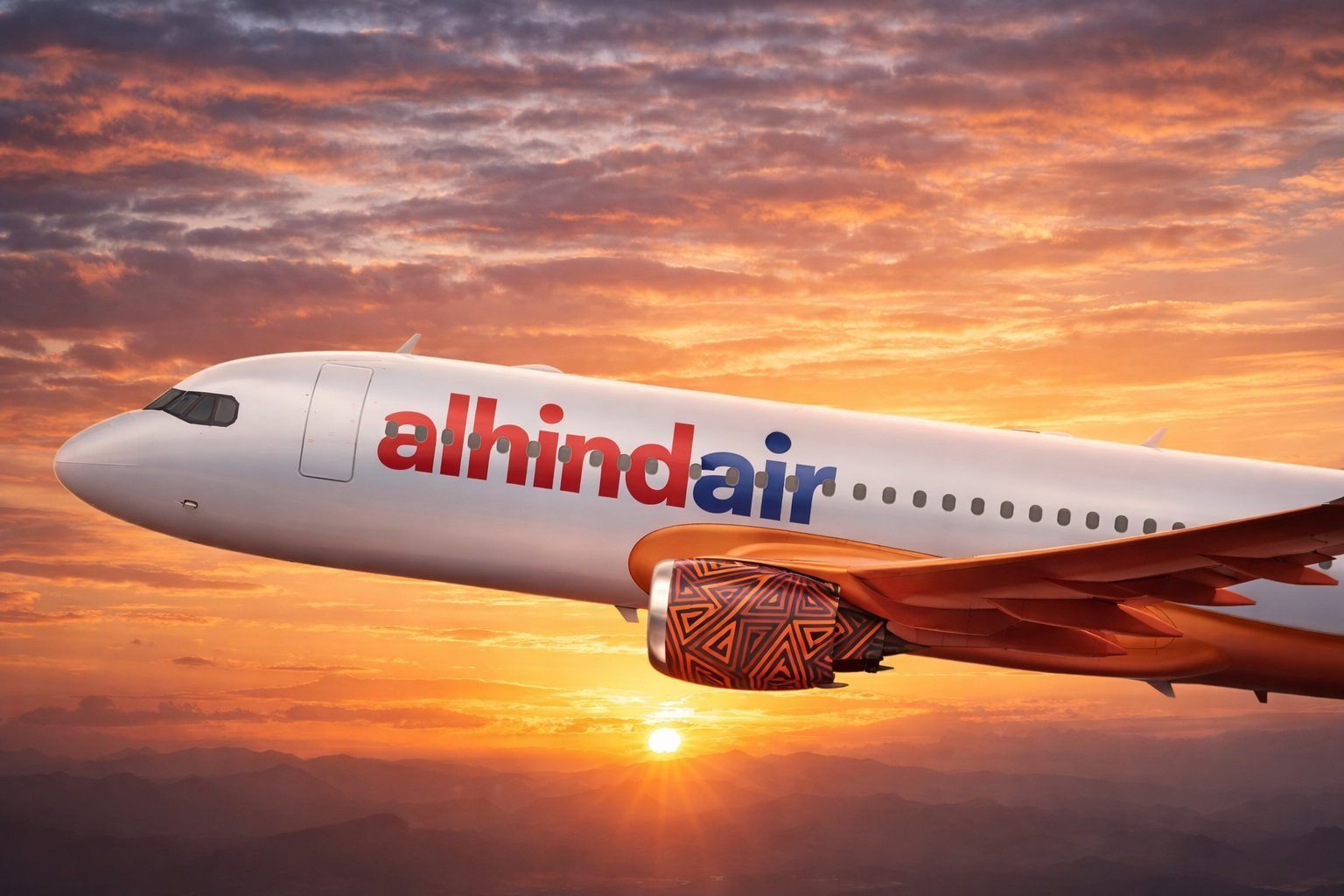
New Delhi, December 24, 2025 — India’s civil aviation market is set for a fresh round of competition after the Union civil aviation ministry issued No Objection Certificates (NOCs) to Al Hind Air and FlyExpress, two proposed carriers that now move a step closer to launching commercial operations. A third startup, Uttar Pradesh-based Shankh Air, already holds an NOC and is widely expected to begin flying in 2026, adding new capacity to a sector still dominated by a handful of big players. NDTV Profit+3The Economic Times+3News on A…
The approvals, confirmed publicly by Civil Aviation Minister K. Rammohan Naidu after a series of meetings with the three airline teams, reflect a clear policy signal: New Delhi wants more operators in the skies after December’s disruptions exposed how quickly problems at one airline can ripple across the national network. News on Air+2Business Standard+2
Why India Is Fast-Tracking New Airline Entrants Now
The timing is difficult to miss. Earlier this month, IndiGo, the country’s largest carrier, faced a wave of cancellations that multiple reports put at over 4,000 flights in early December, triggering passenger frustration, operational strain at airports, and renewed criticism about the risks of a near-duopoly. Business Standard linked the disruption to challenges in implementing updated Flight Duty Time Limitations (FDTL) norms, while Reuters described the crisis as tied to pilot roster-planning failures and noted that fare spikes during the disruption led authorities to impose temporary fare caps. Business Standard+2Reuters+2
Market concentration is at the heart of the government’s argument. IndiGo and the Tata-owned Air India Group (including Air India and Air India Express) together control more than 90% of India’s domestic market, with IndiGo alone exceeding 65% by some estimates. In a market with that level of concentration, sudden capacity loss can cascade fast—raising fares, reducing connectivity, and limiting alternatives for flyers. Moneycontrol+3The Economic Times+3NDTV Pro…
What the Government Announced on December 24
In a social media post referenced across multiple outlets on December 24, Minister Naidu said he met teams from Shankh Air, Al Hind Air, and FlyExpress over the past week and confirmed that Al Hind Air and FlyExpress received their NOCs this week, while Shankh Air already had its clearance. The minister also framed the push as part of strengthening one of the world’s fastest-growing aviation markets, pointing to the role of the UDAN regional connectivity scheme in enabling smaller carriers to expand service to underserved routes. NDTV Profit+3News on Air+3Business Standar…
Separately, sources cited by The New Indian Express said the ministry has sought details from the new airline applicants on which sectors they plan to operate and what aircraft they intend to deploy—a practical next step as regulators assess whether proposed business models and fleet plans can translate into reliable operations. The New Indian Express
Who Are Al Hind Air, FlyExpress and Shankh Air?
While full route maps and fleet announcements will likely emerge as these applicants progress toward final licensing, December 24 reporting offered several early identifiers:
- Al Hind Air is being promoted by the Kerala-based Alhind Group, a travel and services conglomerate that has been associated with ambitions to enter scheduled aviation. The Economic Times+2Moneycontrol+2
- FlyExpress is backed by a Hyderabad-based courier and cargo services company, suggesting a business DNA rooted in logistics—an angle that could influence network choices, regional connectivity priorities, or future cargo integration. Moneycontrol+1
- Shankh Air, described as Uttar Pradesh-based, is expected to focus on connecting key cities in the state—reporting highlighted targets such as Lucknow, Varanasi, Agra, and Gorakhpur—while also operating on metro routes. Moneycontrol+1
Crucially, all three remain in the “pre-launch” phase where ambition must still be matched by aircraft induction, staffing, operational manuals, safety systems, and regulatory proving processes.
What an NOC Means—and What Still Stands Between These Airlines and Takeoff
An NOC is an early-stage clearance, not a license to fly scheduled commercial services. Multiple December 24 reports emphasized that airlines must still secure an Air Operator Certificate (AOC) from the Directorate General of Civil Aviation (DGCA) before they can begin operations. Moneycontrol+1
Moneycontrol laid out what that AOC pathway typically entails: demonstrating financial capability, acquiring aircraft, recruiting and training crew, building safety and compliance systems, and completing required regulatory checks and proving flights. In practical terms, the toughest work often begins after the NOC—especially in a sector with tight access to aircraft, constrained airport infrastructure at peak hours, and high operating costs. Moneycontrol
India’s Current Airline Landscape: A Small Field for a Giant Market
Despite being one of the fastest-growing aviation markets, India has a relatively limited number of scheduled domestic operators. Economic Times reported that only nine scheduled domestic airlines are operational, and noted the list includes major names such as IndiGo, Air India, Air India Express, Alliance Air, Akasa Air, SpiceJet, Star Air, Fly91 and IndiaOne Air. The Economic Times+1
The number of active airlines has also been pressured by recurring financial and operational stress across the sector. Economic Times and NDTV Profit pointed out that regional carrier Fly Big suspended scheduled flights in October, underscoring how difficult it is not just to launch an airline in India, but to sustain one. The Economic Times+1
The IndiGo Disruption Factor—and the Competition Question
December’s disruption has continued to generate regulatory and political attention beyond the ministry’s push for new entrants. Reuters reported on December 18 that India’s competition regulator, the Competition Commission of India (CCI), began a preliminary review into allegations tied to IndiGo’s cancellations and subsequent fare spikes, a reminder that market dominance becomes a bigger public issue when service reliability falters. Reuters
That backdrop helps explain why the December 24 move is being read as more than routine paperwork. In Business Standard’s reporting, the minister framed the goal in unusually direct terms, suggesting India’s demand growth should support “more airlines” and indicating the system may ultimately need “five big airlines” to meet national demand and resilience goals. Business Standard
Can New Airlines Actually Lower Fares and Improve Reliability?
In theory, more airlines can mean more capacity, more route choices, and stronger competitive pressure on prices—especially on high-demand trunk routes. It can also improve resilience: when one carrier suffers disruptions, others can absorb displaced demand, limiting fare shocks and passenger chaos.
But India’s aviation economics can blunt those benefits. The Times of India noted industry voices urging the government to address why India has among the highest operating costs for airlines globally, highlighting jet fuel prices and taxes as key drivers. The same report argued that while launching an airline is possible, keeping it airborne is difficult due to thin funding, high costs, and limited management bandwidth—factors behind repeated airline failures in India over decades. The Times of India+1
This is the central tension in the December 24 story: the policy intent is clear—more competition, fewer duopoly risks—but the operational reality will depend on whether the new entrants can secure aircraft, build robust compliance systems, and survive the cost environment long enough to scale.
What Happens Next: The Roadmap to 2026
Based on December 24 reporting, the story now moves from approvals to execution:
- AOC process with DGCA: The decisive gatekeeper for commercial launch. Moneycontrol+1
- Fleet and network disclosure: The ministry is reportedly seeking details on intended sectors and aircraft deployment. The New Indian Express
- Operational readiness: Hiring, training, maintenance arrangements, airport slots, and safety management systems—where many startups stumble. Moneycontrol
- Market response: Even before launch, competition news can move sentiment. On December 24, Moneycontrol reported InterGlobe Aviation (IndiGo’s parent) shares fell over 2% after news of NOCs for potential competitors—an early sign the market is watching how competition may evolve. Moneycontrol
For passengers, the near-term impact may be limited—these NOCs are not immediate new flights on sale. But strategically, December 24, 2025 may be remembered as the day India signaled a more aggressive stance against aviation concentration: not by capping growth, but by trying to widen the field.
If Al Hind Air, FlyExpress, and Shankh Air can translate clearances into aircraft and reliable schedules, the payoff could be meaningful: stronger regional connectivity, more alternatives on popular routes, and a system less vulnerable to “single airline shock” moments—especially during peak travel seasons. Moneycontrol+3The Economic Times+3News on …