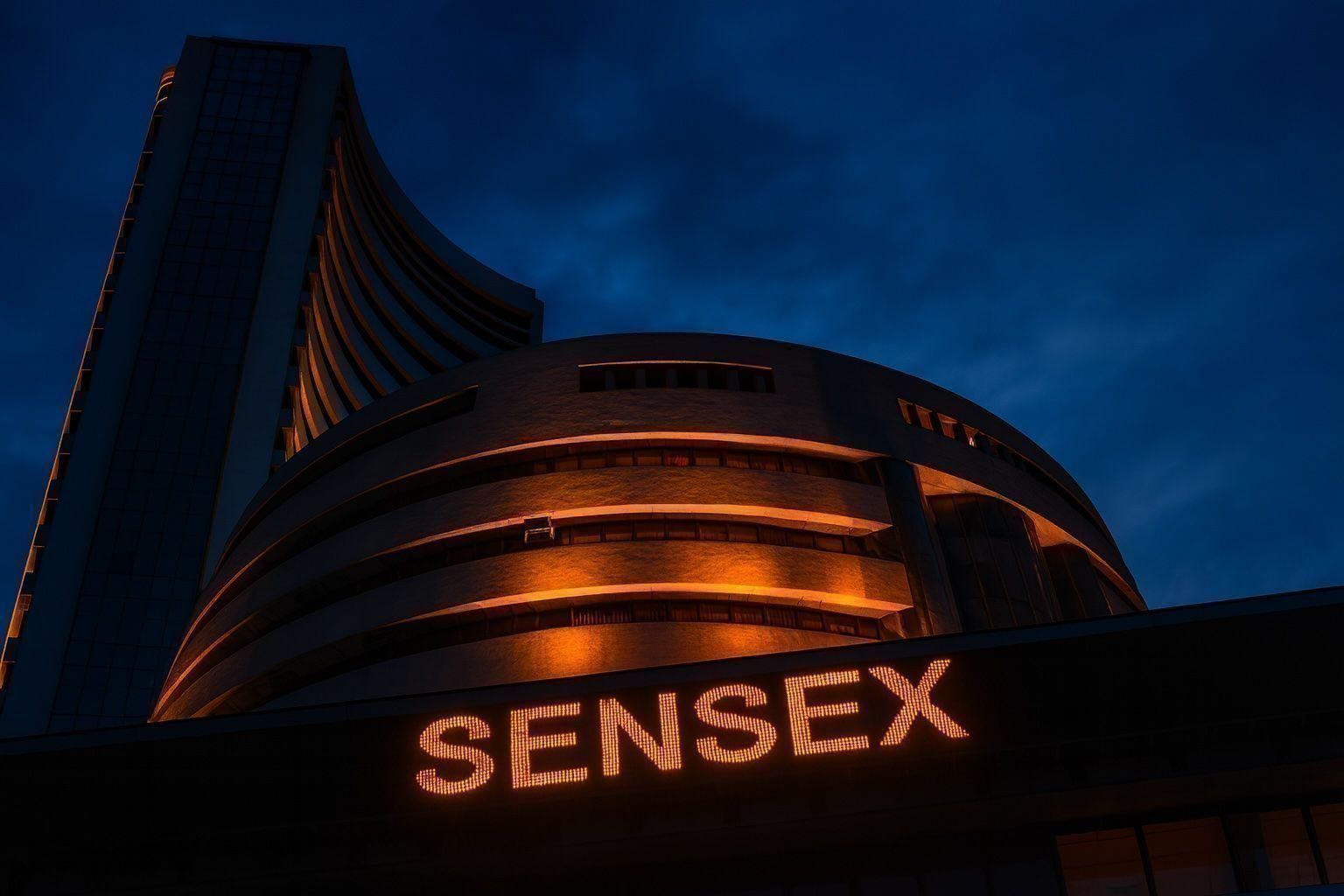
On December 16, 2025, India’s financial markets were forced to juggle two powerful (and competing) narratives:
- A currency shock—the rupee fell past ₹91 per U.S. dollar for the first time, hitting fresh record lows, and quickly became a cross-market stress point for equities and bonds. Reuters+1
- A capital cycle—India Inc is still pushing ahead with M&A-style strategic moves, demergers, and an IPO pipeline that looks set to stay crowded into 2026, even as valuations and growth choices look harder than they did a year ago. Business Standard+3Reuters+3mint+3
The result: a classic “macro vs micro” day—macro pressure from FX, flows, and trade policy uncertainty… meeting micro momentum from corporate actions, listings, and sector upcycles (including real estate).
Rupee crosses 91: what happened, and why it mattered immediately
The rupee breached ₹91/$ on Tuesday and extended its run of record lows, with market participants pointing to heavier hedging demand, portfolio outflows, and continued uncertainty around U.S.–India trade negotiations. Reuters
By the close, Indian market updates widely tracked the rupee finishing around ₹91.03 per dollar, underscoring that the move wasn’t just an intraday spike—it was a level the market had to digest at settlement. The Economic Times
What made the move more psychologically jarring is the speed of the slide: Reuters noted the rupee had only first crossed ₹90/$ on December 3, meaning the currency moved another full rupee weaker in roughly two weeks. Reuters+1
The government’s framing: four pressure points
In Parliament, India’s finance ministry pointed to a mix of domestic and global drivers behind rupee weakness—especially a widening trade deficit, a strong global dollar, relatively weak capital inflows, and external factors (including crude oil and global events). The ministry also emphasized that the rupee is market-determined and that RBI actions are aimed at smoothing volatility rather than defending a fixed level. The Financial Express
That messaging matters because it signals a key policy stance: India is not trying to “announce” a line in the sand—its priority is to avoid disorderly moves.
Stocks react: Sensex and Nifty slide as FX and foreign flows tighten sentiment
Equities took the FX signal seriously. Indian benchmarks fell for a second session, with the Nifty 50 closing near 25,860 and the Sensex near 84,680 (down roughly 0.6% on the day). Reuters+1
The market tone was not simply “risk off globally.” Investors were also recalibrating for two India-specific issues highlighted repeatedly across coverage:
- Persistent foreign selling pressure, and
- Trade-deal uncertainty with the U.S., which has become tightly linked to both currency expectations and equity risk appetite. Reuters+1
Reuters reported foreign investors had been net sellers for seven straight sessions (through Monday), with about $2 billion sold in December and roughly $18 billion sold in 2025—a scale large enough to shape day-to-day market structure. Reuters+1
Separately, The Economic Times also highlighted that foreign equity selling in 2025 had reached a new annual record—another sign that flows have been a defining feature of this market year. The Economic Times
Sector and stock signals: pressure in financials, defensive pockets hold up
On the day, financials were a key drag, and Reuters flagged Axis Bank’s sharp decline after a brokerage note raised concerns around margin pressure. Meanwhile, select defensive or upgrade-driven names held up better, reinforcing that investors were rotating rather than indiscriminately exiting. Reuters
Is the falling rupee “a cause for alarm”? Two competing interpretations
The rupee’s fall has become more than a price chart—it’s now a debate about structure vs cycle.
The “structural weakness” camp: depreciation becomes the base case
A Moneycontrol analysis cited Systematix Institutional Equities arguing that 2025’s rupee weakness is not cyclical and fits a longer “managed depreciation” story. Systematix framed a world of 6–7% annual depreciation as a potential norm and warned USD/INR could drift toward 100 over 12–24 months, citing structural pressures and a tougher global backdrop. Moneycontrol+1
Systematix also tied that currency view directly to equity expectations: muted returns could follow if a weaker rupee coincides with sticky yields and modest earnings growth, pushing investors to be selective on sectors. Moneycontrol
The “not automatically alarming” camp: depreciation ≠ economic weakness
A separate synthesis of The Hindu’s “Is the falling rupee a cause for alarm?” argument (via a daily news summary) emphasized that currency weakness doesn’t necessarily correlate with economic weakness and pointed to India’s growth and the buffer of forex reserves (noting coverage of roughly 11 months of imports). It also outlined potential benefits—especially to export competitiveness—while still acknowledging the drivers of pressure such as trade deficit dynamics, portfolio flows, and limited RBI intervention. VISION IAS
How to reconcile these views on Dec 16:
- The “alarm” question isn’t just about today’s price. It’s about whether the move becomes self-reinforcing via flows, hedging, inflation expectations, and risk premiums.
- The “not alarming” view becomes more convincing when exports, growth, and reserves look resilient—exactly the kind of data India received this week.
Trade talks meet trade data: export rebound gives India leverage—but not certainty
In one of the most consequential macro headlines of December 16, Reuters reported that India’s exports jumped in November, with shipments to the U.S. rising over 22% year-on-year and overall goods exports rising over 19%, bringing total goods exports to $38.13 billion—the highest for any November in a decade. Reuters
This matters because tariffs and the trade relationship are closely tied to the rupee narrative. Reuters noted that stronger export data could reduce the urgency for India to rush into concessions—potentially giving New Delhi more negotiating leverage even as markets remain impatient. Reuters
The same Reuters reporting pointed to a narrowing in the merchandise trade deficit to $24.53 billion (a five-month low) and highlighted services exports as another buffer. Reuters+1
The catch: even with better data, markets are trading the timeline. The longer uncertainty persists, the more room there is for hedging demand and risk premia to stay elevated.
The “market buzz” under the surface: M&A-style moves, restructuring, and the IPO pipeline
Even as FX pressure grabbed the top headline, corporate activity in India continued to project confidence—though with a more valuation-conscious tone.
Banking: HDFC Bank subsidiaries cleared to buy up to 9.5% of IndusInd Bank
Reuters reported that RBI approved HDFC Bank’s group entities to acquire an aggregate stake up to 9.5% in IndusInd Bank, with the approval valid for a year. The backdrop is IndusInd’s recent governance and accounting scrutiny, which has made it one of the most closely watched names in Indian financials. Reuters
This is the kind of strategic move that fits a broader “financial sector deal” narrative—targeted, opportunistic, and shaped by a shifting risk landscape.
Metals and conglomerates: Vedanta gets key nod for a major demerger
On Dec 16, Vedanta’s restructuring plan moved forward as the Mumbai bench of the NCLT allowed the company to proceed with its proposed demerger, despite objections raised by the petroleum ministry. The plan is aimed at creating more focused business entities and unlocking shareholder value—an example of capital allocation via re-architecture rather than just capex. mint+1
IPO engine: record pipeline, but listing-day “easy money” fades
If 2025 was about fundraising momentum, 2026 is shaping up to be about volume plus selectivity.
The Economic Times reported that India’s IPO pipeline for 2026 could exceed ₹2.5 lakh crore, with about 190+ companies either approved by SEBI or awaiting clearance. At the same time, it flagged a crucial shift: average listing-day returns in 2025 fell to about 9.4%, the lowest since 2018, suggesting investors are becoming more disciplined about pricing. The Economic Times
That “more supply, less pop” dynamic is important in today’s rupee story too: when currency risk rises, markets tend to demand a higher margin of safety on new issues.
Meanwhile, the marquee IPO calendar is still moving: Reuters said ICICI Prudential Asset Management’s roughly $1.2 billion IPO was fully subscribed (institution-led), highlighting that large institutional demand remains available—even if the market is choosier. Reuters
Capital allocation dilemma: when cash is strong but conviction is harder
The most forward-looking theme in today’s India market narrative is not just “who is raising money,” but what companies do with money.
Business Standard cited a Nuvama study warning of a capital-allocation deadlock: companies may have strong free cash flows and peak margins, but fewer compelling growth avenues amid slowing demand cycles and elevated valuations—leaving management with tougher choices. Business Standard
A separate Reuters Breakingviews piece argued India’s growth still leans heavily on government-led investment, while private capex remains relatively hesitant—raising questions about the sustainability and balance of the growth model if private investment does not re-accelerate. Reuters
This is where rupee + equities intersect:
If investors believe growth is increasingly “expensive” (high valuations) and less broad-based (capex caution), they become more sensitive to shocks like FX moves and global risk-off swings.
Realty upcycle: why property keeps re-entering the market conversation
Amid the turbulence, one sectoral theme continues to punch through: real estate momentum—especially premium housing and top-tier commercial assets.
2025’s property story: premium housing leads, offices stay resilient
The Economic Times reported that India’s real estate sector posted robust momentum in 2025, with premium and luxury housing driving a large share of demand. Notably, it cited Knight Frank data indicating homes priced above ₹10 crore accounted for over half of sales across major cities—a striking marker of how demand has shifted to the top end. The Economic Times
On the commercial side, ET reported gross office absorption was expected to cross 80 million sq ft in 2025, supported by multinational demand and the continued growth of Global Capability Centres (GCCs), while flexible workspaces expanded as hybrid work stabilized. The Economic Times
Hyderabad spotlight: cloud, AI, and data centres reshape office demand
In a second Dec 16 realty-focused report, The Economic Times said Hyderabad is poised for a fresh office demand upcycle after Amazon, Microsoft, and Google committed a combined $67 billion to expand cloud, AI, and data-centre infrastructure in India, with large portions earmarked for Andhra Pradesh—supporting demand for Grade A offices, land parcels, and compliant data-centre campuses. The Economic Times
This is a key bridge between “realty upcycle” and the broader market: real estate is increasingly tied to digital infrastructure, not just residential affordability cycles.
What a rupee-at-91 market means for investors and companies right now
Moneycontrol’s analysis captured the immediate tactical shift: as the rupee weakens, many analysts expect investors to lean toward selective, defensive exposure rather than broad risk-taking. It cited a sectoral framework where exporters and global earners (like IT and pharma) can benefit from depreciation, while rupee-sensitive or import-heavy segments face more pressure. Moneycontrol+1
At the same time, it is important to stress: the day’s export data suggests the macro picture is not one-dimensional—India’s external sector has shown resilience even under tariff stress, complicating the “doom loop” narrative. Reuters
What happens next: the five triggers that could decide whether Dec 16 was a break or a blip
With the rupee through 91 and equities wobbling, markets are now trading a short list of catalysts:
- Signals on U.S.–India trade talks—any timeline clarity (or further delay) will likely move both USD/INR expectations and foreign risk appetite. Reuters+1
- Flow regime—whether foreign selling pressure stabilizes, and whether domestic liquidity conditions ease or tighten. Reuters+1
- RBI posture—continued “volatility smoothing” is expected, but markets will watch how aggressively the RBI leans against disorderly moves. The Financial Express+1
- Primary-market supply—a record IPO pipeline can be a growth signal, but also a liquidity drain if sentiment stays fragile. The Economic Times+1
- Real estate continuity—premium housing and top-grade office/data-centre demand remain strong, and could keep realty as a relative bright spot even if broader markets de-rate. The Economic Times+1
Bottom line for Dec 16, 2025: India’s market story is no longer just “growth vs valuation.” It’s becoming “growth vs friction”—where currency levels, trade negotiations, and capital allocation choices are shaping which parts of the market can compound… and which parts stay vulnerable. The Economic Times+3Reuters+3Business Stan…