MUMBAI, March 12, 2026, 14:37 IST
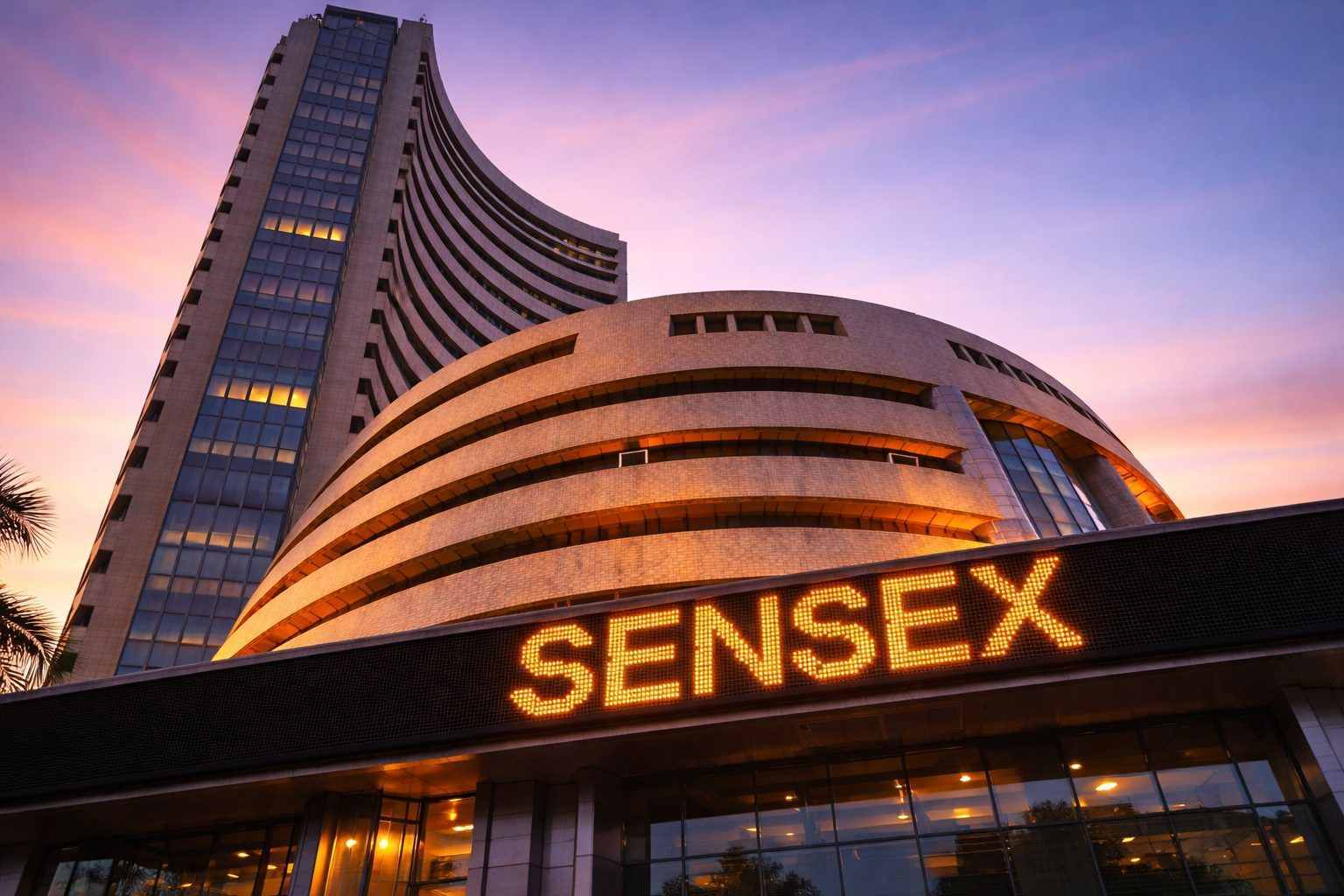
India’s Nifty 50 stayed under pressure on Thursday, down 0.53% at 23,739.30 by 2:34 p.m. IST, as oil pushed back above $100 a barrel and the rupee hit a record low. The Sensex was also in the red after falling 1% to 76,129.95 in morning trade, extending Wednesday’s selloff. NSE India
That matters because India imports nearly 90% of its crude and about half its gas, with more than half of its crude sourced from the Middle East. ICRA said in a note that if oil averages $100 a barrel for a year, India’s current account deficit — the gap between money coming in and going out of the country — could widen to 1.9%-2.2% of GDP from a projected 0.7%-0.8%. Reuters
Elara Securities estimated that $100 oil could lift annual federal spending by 3.6 trillion rupees ($39 billion), while the State Bank of India’s research department said growth could slow to 6.6% and inflation could rise to 4.1% if prices stay near that level through the next financial year. Reuters
Markets were taking another hit from trade. Washington opened Section 301 unfair-trade probes into 16 major partners, including India, a move that could lead to new tariffs by summer, while across Asia MSCI’s broadest index outside Japan fell 1.5%, Japan’s Nikkei dropped 1.4% and Hong Kong’s Hang Seng lost 1.2%. Reuters
The Nifty had been down about 1% by 10:10 a.m. IST, and 14 of 16 major sectors were lower then. Small-caps and mid-caps were off about 1.5% each, and financials, banks, private banks and state-run lenders all lost about 1.2%. By mid-afternoon, the benchmark had clawed back some ground, but the tone was still defensive. Reuters
“Volatility will likely persist as crude prices swing sharply,” Sunny Agrawal, head of fundamental equity research at SBICAPS Securities, said on Wednesday. He added that stability would return only when there is “clearer direction on the war and energy prices.” Reuters
Wednesday’s drag came from heavyweights HDFC Bank, down 1.8%, ICICI Bank, off 1.3%, and Reliance Industries, which fell 1.3%. Analysts led by Prakhar Sharma at Jefferies warned the “Mideast conflict could place banks at a risk of higher credit costs,” while non-bank lenders could also face pressure on margins and growth. Reuters
The rupee’s slide sharpened the equity hit. It fell 0.3% to 92.3575 per dollar, and Abhishek Goenka, chief executive at IFA Global, said, “We expect the RBI to intervene in 92.30-92.35,” underscoring how closely traders were watching the currency after its latest drop. Reuters
But the path is not one-way. India said on Wednesday it was ready to support the International Energy Agency’s record 400 million-barrel release, and an Indian source said Iran would allow India-flagged tankers through the Strait of Hormuz, though an Iranian source denied any such agreement. Any real easing in oil or shipping could steady sentiment; if Brent stays near $100, the downside to growth, inflation and government finances gets harder to ignore. Reuters
For now, investors are still de-risking. The benchmarks have already lost about 5% each since the start of the Iran war, and Thursday’s trade showed the market is still pricing India as one of Asia’s more exposed oil importers. Reuters