Mumbai — Indian markets opened Wednesday, December 17, 2025, on a cautious note after a volatile week in which the rupee’s slide, persistent foreign selling, and uncertainty over an India–U.S. trade agreement kept risk appetite in check. The day’s early tone was defined by two cross-currents: the Reserve Bank of India’s (RBI) aggressive pushback that helped the rupee rebound from record lows, and continued investor nerves around capital flows and macro headwinds. Reuters+1
While benchmark indices steadied in early trade, attention remained firmly on stock-specific stories—especially Axis Bank after a sharp sell-off tied to margin outlook concerns, HDFC Bank after a key regulatory approval involving IndusInd Bank, and newly listed Meesho as post-IPO momentum stayed on traders’ radar. Moneycontrol+1
Markets steady early, but nerves linger after the previous session’s drop
In early Wednesday deals, Reuters reported the Nifty 50 and BSE Sensex were little changed, with both up about 0.1% by around 9:46 a.m. IST. Ten of 16 major sectors were in the green, while broader mid- and small-cap indices were largely flat—an indication that investors were not yet ready to commit to a broad risk-on move. Reuters
That steadiness came after Tuesday’s decline, when Indian equities fell for a second session and the rupee slipped beyond 91 per dollar. On Tuesday, Reuters noted the Nifty 50 dropped 0.64% to 25,860.1 and the Sensex fell 0.63% to 84,679.86, with Axis Bank emerging as a major drag on the benchmarks. Reuters
The rupee’s swing is the headline: record lows, then RBI steps in
The currency story has been central to market sentiment, and Wednesday brought a notable pivot.
Reuters reported that the RBI intervened aggressively on December 17 after the rupee hit record lows for four consecutive sessions. Traders said state-run banks were seen offering dollars, likely on behalf of the central bank, helping the rupee strengthen roughly 0.7% to around 90.25 in early trading after opening near 91.07. Reuters
Earlier in the day, another Reuters report framed the move as a potential “breather” after a swift decline. It noted the rupee had settled at about 91.0275 on Tuesday after touching a lifetime low of 91.0750, and that a softer dollar index and lower oil prices could offer incremental support—even as the market remained highly flow-driven. Reuters
Why the rupee matters so much right now
Beyond intraday volatility, the rupee’s weakness has become a broader narrative about India’s positioning in global portfolios. A Reuters analysis published December 17 said the rupee is down about 6% against the U.S. dollar in 2025, weighed by factors including investment outflows and uncertainty around trade negotiations, while also noting tariff-related pressures and the challenge of delivering dollar returns for global investors. Reuters
For equities, the currency’s slide can be a double-edged sword: it may help exporters’ competitiveness, but it can also heighten concerns around imported inflation, foreign outflows, and risk premiums—especially in sessions where global cues are already fragile.
Axis Bank: the sell-off story and why NIM guidance matters
Among the day’s most closely watched names is Axis Bank, after a sharp move that rippled through banking indices.
On Tuesday, Reuters reported Axis Bank fell 5.1% after Citi flagged that pressure on net interest margins (NIMs) could persist into the December quarter, making the stock the biggest contributor to the Nifty’s decline and pulling down financials and private bank indices. Reuters
Moneycontrol’s reporting added detail behind the market’s reaction: Citi Research said Axis Bank management indicated NIM recovery could be delayed to Q4 FY26 (January–March 2026) or Q1 FY27 (April–June 2026), versus expectations that the trough would occur in the ongoing Q3 FY26 (October–December 2025). It also cited management commentary describing a shallow, “C-shaped” path toward a targeted 3.8% over the next 15–18 months. Moneycontrol
Why NIM is the trigger for sentiment
For banks, NIM is a core profitability metric, reflecting the spread between what the bank earns on loans and pays on deposits/funding. When investors see NIM recovery pushed out, it can alter expectations for near-term earnings momentum—especially for stocks priced for improvement.
Moneycontrol also noted Citi maintained a “Neutral” stance with a target price of ₹1,285, implying limited upside at the time, while still acknowledging positive signals in some operating areas such as corporate traction and pockets of retail recovery (with caveats around sustainability and seasonal volatility). Moneycontrol
HDFC Bank: RBI clears path for up to 9.5% aggregate holding in IndusInd Bank
HDFC Bank was also on traders’ screens—less for price volatility and more for a regulatory development that signals strategic flexibility for the broader HDFC group ecosystem.
Upstox reported that HDFC Bank disclosed the RBI had approved the bank (as promoter/sponsor of its group entities) to acquire an aggregate holding of up to 9.50% of IndusInd Bank’s paid-up share capital or voting rights. The approval applies across group entities including HDFC Mutual Fund, HDFC Life, HDFC ERGO, HDFC Pension Fund Management, and HDFC Securities, and is valid until December 14, 2026, subject to maintaining the aggregate holding cap. Upstox – Online Stock and Share Trading
For market participants, the key takeaway isn’t necessarily immediate buying pressure—but the confirmation that regulatory clearance is in place, which can matter for long-term positioning and governance-related watchlists.
Meesho: post-IPO momentum stays hot as the stock marks a new high
In a market weighed down by macro crosswinds, Meesho stood out as a momentum story that continues to attract attention.
Upstox reported that Meesho—recently listed on December 10—jumped as much as 13.28% on Tuesday to hit a record high of ₹193.44 on the NSE, and noted the stock had rallied 74% from its IPO issue price of ₹111 at that high. Upstox – Online Stock and Share Trading
Moneycontrol similarly highlighted the sharp move and the strong post-listing trajectory, underscoring how stock-specific narratives can still dominate even when index-level sentiment is cautious. Moneycontrol
What’s driving the broader mood on Dec 17: flows, Fed cues, and the trade-deal overhang
Even with the rupee finding near-term support, the bigger debate hasn’t gone away: when do flows turn?
Reuters’ early-trade report on December 17 pointed to continued foreign portfolio investor (FPI) selling pressure and noted that weakness in the rupee remains a near-term headwind, with uncertainty around India–U.S. trade negotiations adding to the caution. Reuters
At the same time, global macro cues remain a major input. Reuters noted markets were tracking muted Asian peers as investors weighed mixed U.S. jobs data and looked ahead to U.S. consumer inflation data, which could influence expectations for the Federal Reserve’s rate path—often a key driver for emerging-market risk appetite. Reuters+1
Stocks and events to watch as the session unfolds
Beyond the headline names, several other developments were shaping watchlists on Wednesday:
- Shriram Finance rose in early trade ahead of a December 19 board meeting to consider fundraising, according to Reuters. Reuters
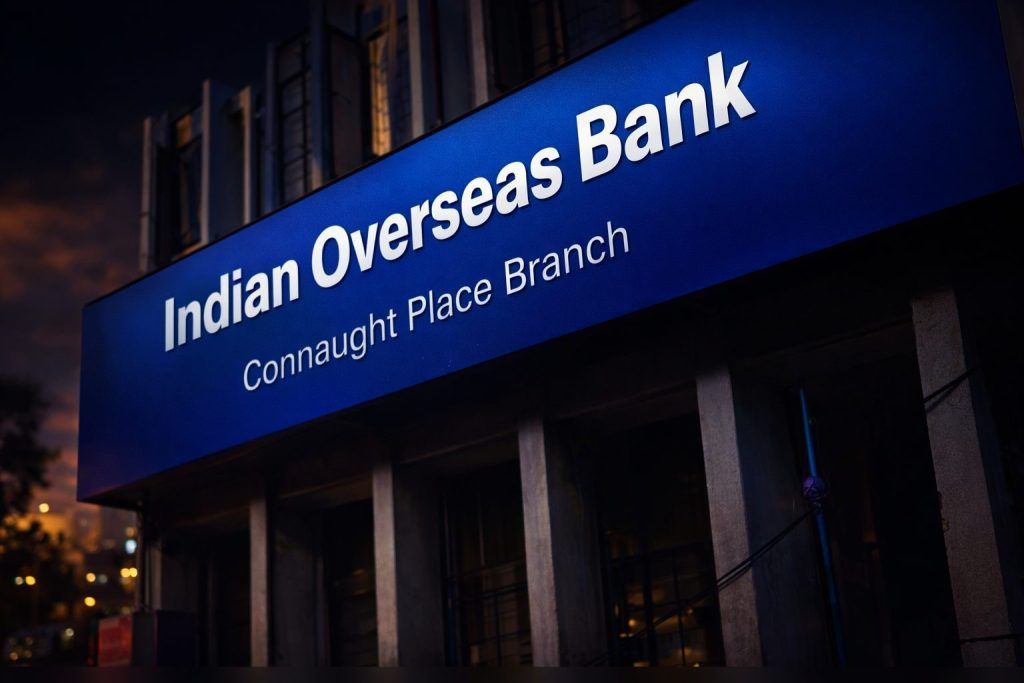
- Indian Overseas Bank slipped after the government announced an offer-for-sale of up to a 3% stake at a floor price of ₹34 per share, Reuters reported. Reuters
- Nifty range and positioning: Upstox’s Dec 17 trade setup flagged a near-term range of roughly 25,500 to 26,000 for the weekly expiry based on options open interest, and described the index as being in a consolidation phase with 26,000 acting as resistance and the 50-EMA near 25,971 as a level traders were watching. Upstox – Online Stock and Share Trading
The bottom line for Dec 17
Indian markets on December 17, 2025, are navigating a classic tug-of-war: tactical relief from RBI currency support versus strategic caution around foreign flows, global rates, and trade negotiations. The result is an index that can look calm on the surface—while underneath, stock-specific catalysts (Axis Bank’s margin trajectory, HDFC Bank’s regulatory clearance, Meesho’s post-IPO sprint) continue to drive sharp moves and sector rotation.
If the rupee’s rebound holds and foreign selling eases, it could offer breathing room for equities. But as traders and long-only investors are signaling through positioning and early-session action, confidence is still closely tied to what happens next on the trade-deal timeline and the global rate outlook. Reuters+1