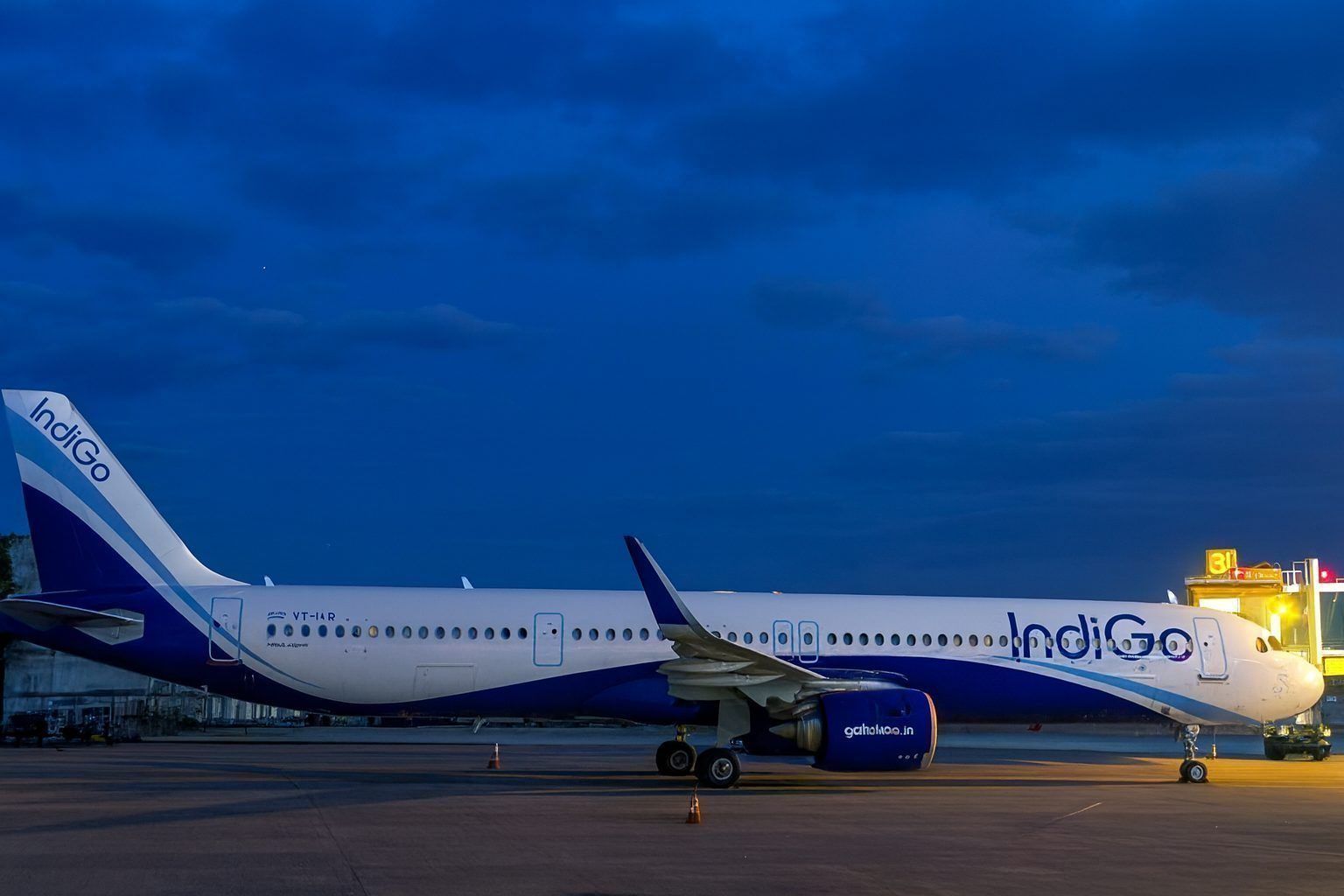
As India’s largest airline battles its worst-ever operational crisis, a series of IndiGo flight diversions — many linked to bomb threat emails — has amplified passenger anxiety and raised tough questions about aviation safety, security and planning. This article brings together all major developments, expert analysis and forward-looking forecasts as of 8 December 2025.
A turbulent week of IndiGo flight diversions
Over the past week, at least three IndiGo flights bound for Hyderabad were diverted following bomb threats, alongside a separate domestic diversion that left passengers stranded in another city.
1. Kuwait–Hyderabad flight diverted to Mumbai
On 2 December, an IndiGo flight from Kuwait to Hyderabad was forced to make an emergency landing in Mumbaiafter airport authorities received an email warning of a bomb on board. The aircraft was moved to an isolated bay at Chhatrapati Shivaji Maharaj International Airport, passengers were evacuated, and bomb disposal teams searched the cabin. No explosive device was found, and the threat was later deemed a hoax. The Times of India+1
2. Madinah–Hyderabad flight 6E58 diverted to Ahmedabad
Two days later, on 4 December, IndiGo flight 6E58 from Madinah (Saudi Arabia) to Hyderabad received a similar email threat mid‑air. The Airbus A320, carrying 180 passengers and six crew members, was diverted to Ahmedabad, the nearest suitable airport. It landed safely around 12:30 pm, was parked at an isolated bay, and subject to a full security sweep by CISF personnel, local police and a bomb squad. Again, nothing suspicious was found. www.ndtv.com+1
3. Sharjah–Hyderabad flight diverted to Mumbai
Hours after the Madinah diversion, another IndiGo aircraft operating a Sharjah–Hyderabad service was also diverted to Mumbai after a bomb threat email, marking a second scare within the same day for Hyderabad-bound IndiGo flights. The aircraft landed safely in Mumbai, where security checks were carried out. The Hans India+1
Authorities have opened investigations into the source of the threats. So far, no explosives have been recovered from any of the diverted IndiGo flights.
Domestic diversion: Nagpur–Pune flight ends up in Hyderabad
Beyond security scares, operational stress has also led to non‑security‑related diversions.
On the night of 5 December, a Nagpur–Pune IndiGo flight — scheduled to depart at 11:40 pm but delayed until 1 am — was diverted mid‑air to Hyderabad. Passengers were informed that the aircraft could not land in Pune due to “lack of landing clearance and unavailability of space” at the airport. After landing in Hyderabad, travellers reported being kept on board for nearly an hour before being allowed to disembark, with some still stranded as they waited for onward transport to Pune. Uni India
The incident has fuelled anger on social media and in local press, where it is being cited as an example of how stretched resources and congested schedules can directly impact passengers, even in the absence of a safety or security threat.
Bomb threat emails to Hyderabad: all hoaxes so far
The IndiGo diversions are part of a broader wave of bomb threat emails targeting flights into Hyderabad’s Rajiv Gandhi International Airport (RGIA) over the last week.
- According to airport and media reports, at least six flights from airlines including Emirates, British Airways, Lufthansa, Kuwait Airways, Air India and IndiGo faced emailed threat messages between 5 and 8 December, triggering emergency checks and, in some cases, diversions or returns to origin. The Logical Indian+2Organiser+2
- In all cases reported so far, the aircraft either landed safely or returned to their departure airport, and no explosives were found after detailed security sweeps. The Logical Indian+1
The pattern fits into a worrying national trend. Official data cited by Xinhua shows that between 1 January 2024 and 14 November 2024, Indian authorities received 999 hoax bomb threat calls targeting airlines and airports, prompting proposals for a five‑year flying ban for individuals who issue such threats. People’s Daily
Security experts say the Hyderabad threats appear designed to spread panic and disrupt aviation, rather than to cause physical harm, but they have nonetheless forced costly diversions, delays and extensive emergency procedures.
Inside IndiGo’s wider crisis: crew rules, cancellations and chaos
The diversions are unfolding against the backdrop of a massive network meltdown at IndiGo, which operates roughly 2,200 flights a day and holds about 60–65% of India’s domestic market. Reuters+1
New duty‑time rules and planning failures
At the heart of the crisis are the new Flight Duty Time Limitations (FDTL) rules, fully phased in on 1 November 2025. These rules:
- Extend weekly rest periods for pilots,
- Limit the number of night landings (typically to two per week instead of six), and
- Aim explicitly to reduce pilot fatigue and improve safety. The Economic Times+2The Economic Times+2
Regulators say IndiGo failed to adequately plan for the increased crew requirements under the revised FDTL framework. The Directorate General of Civil Aviation (DGCA) has accused the airline of lapses in manpower planning, rostering and system preparedness, leading to large‑scale cancellations that breached both safety and passenger rights regulations. Desi Talk’s Chicago+2Gulf News+2
On 5 December, IndiGo cancelled well over 1,000 flights in a single day, including all domestic departures from Delhi — its worst operational day on record, according to the airline’s own CEO. Reuters+1
Show‑cause notices and a DGCA probe panel
The DGCA has issued show‑cause notices to IndiGo CEO Pieter Elbers and COO Isidre Porqueras, accusing the airline of “significant lapses in planning, oversight and resource management” and seeking an explanation for apparent violations of Aircraft Rules and Civil Aviation Requirements on crew rest and passenger care. Desi Talk’s Chicago+2Gulf News+2
A four‑member DGCA panel is now investigating the breakdown and is expected to summon the CEO and COO this week. The panel’s remit includes examining crew rostering, compliance with FDTL, and the adequacy of IndiGo’s contingency planning before the crisis. The Economic Times
Aviation experts interviewed by ANI have argued that airlines were given about a year’s notice to comply with the new fatigue rules, and that other carriers such as Air India, Akasa and SpiceJet did so without comparable chaos — sharpening public scrutiny of IndiGo’s preparedness. Desi Talk’s Chicago
Government response: fare caps, refunds and temporary rule relaxations
Recognising that IndiGo’s meltdown was spilling over into the wider aviation system, the Indian government has stepped in aggressively.
Airfare caps to curb price spikes
With IndiGo cancelling hundreds of flights day after day and other airlines hiking last‑minute fares, the Ministry of Civil Aviation imposed temporary fare caps across domestic routes:
- Caps apply to all airlines and all booking platforms.
- On some key sectors, the government has indicated ceilings such as ₹15,000 for routes of 1,000–1,500 km, substantially below peak crisis fares. OpIndia+3Reuters+3Reuters+3
The move is meant to prevent “opportunistic” pricing while capacity remains constrained. However, on‑the‑ground reporting suggests that fare caps have not fully shielded travellers from very high prices on certain routes, especially where alternative capacity is limited. The Wire
Refunds, baggage and passenger support
The Ministry has also ordered IndiGo to:
- Clear all pending passenger refunds for cancelled or disrupted flights by 8 pm on 7 December,
- Deliver all separated baggage within 48 hours,
- Waive rescheduling fees for affected passengers, and
- Provide hotel accommodation and assistance to stranded travellers, with special priority for senior citizens, students, patients and persons with disabilities. Gulf News+1
IndiGo told business media on 8 December that it has already processed ₹827 crore in refunds, arranged over 9,500 hotel rooms, nearly 10,000 cabs and buses, and delivered more than 4,500 delayed bags, with the remainder expected within about 36 hours. The Economic Times
Temporary relaxation of crew rest rules
In a controversial step, the government and DGCA have temporarily relaxed parts of the new FDTL rules for IndiGothrough 10 February 2026, allowing the airline more flexibility on night operations to rebuild its schedule — a decision pilot unions and some analysts argue risks undermining the very safety goals the rules were designed to achieve. The Economic Times+2Gulf News+2
IndiGo’s recovery plan: where operations stand now
Flight counts and cancellations
IndiGo says it is now operating over 1,800 flights in a day, reconnecting all stations on its network, with on‑time performance around 91% — a marked improvement from earlier in the week. The Economic Times
However, the stabilisation is far from complete:
- On 8 December, IndiGo still cancelled about 562 flights from six major metro airports, including 150 from Bengaluru alone. The Economic Times
- The airline has told the DGCA it will cut scheduled flights from 8 December onward and only expects fully stable operations by 10 February 2026, when it plans to have completed hiring and roster adjustments under the FDTL regime. The Economic Times
IndiGo maintains that its operations remain fully compliant with FDTL and safety regulations, insisting that the disruption stems from implementation challenges rather than any compromise on safety. The Economic Times+1
Financial and industry fallout
Credit rating agency Moody’s has called the disruption “credit negative” for IndiGo, warning that a wave of cancellations during the busy winter season will hurt the airline’s revenue and could damage its brand. The Economic Times+1
Reuters analysis points out that with around two‑thirds of India’s domestic market and a fleet exceeding 400 aircraft, IndiGo has effectively become “too big to fail” for the Indian aviation ecosystem. Its meltdown has:
- Stranded tens of thousands of travellers,
- Forced rival carriers to add capacity, and
- Highlighted the risk of over‑reliance on a single dominant airline in a market where several competitors (Kingfisher, Jet Airways, Go First) have already collapsed in recent years. Reuters+1
Industry watchers see the episode as a warning that safety‑oriented regulations, market concentration and thin margins can combine into a fragile equilibrium — one serious planning error can spill over into a nationwide mobility problem.
Allegations, investigations and the narrative battle
Beyond hard numbers, a political and reputational battle is playing out in the media.
- A special report on India Today highlighted an unidentified speaker who alleged that IndiGo “orchestrated” the breakdown to pressure the government into easing FDTL rules — a claim that remains unproven and is being treated as an allegation rather than fact. India Today
- India’s aviation minister has publicly promised “strict action” to set an example for other airlines, while pilot unions argue the crisis underscores why fatigue rules must not be watered down. Aeronews Journal+1
Fact‑checkers have also stepped in: one widely shared image of passengers sitting on an airport tarmac, circulated as proof of the current IndiGo chaos, has been shown to be an old, unrelated photograph, underscoring how easily misinformation can spread during a high‑profile disruption. Fact Crescendo
What these flight diversions mean for passengers right now
For travellers, the key question is simple: how worried should I be about flying IndiGo — especially into or out of Hyderabad — in the coming days?
Based on current information:
- Security risk from bomb threats remains low but disruptive.
- All recent bomb threats to IndiGo and other carriers operating into Hyderabad have turned out to be hoaxes after thorough checks. The Logical Indian+1
- However, each threat can still trigger diversions, delays and emergency procedures, especially for flights connected to Hyderabad.
- Operational risk (cancellations and diversions) remains moderate to high in the short term.
- IndiGo is still cancelling hundreds of flights daily, even as it rebuilds capacity. The Economic Times+1
- The airline itself and the DGCA expect full stabilisation only by February 2026, meaning Christmas, New Year and early‑January travel will likely see continued, though gradually easing, disruption. The Economic Times
- Network stress makes diversions more likely when things go wrong.
- When airports like Pune or Hyderabad are heavily congested or short‑staffed, flights may be diverted to secondary hubs such as Mumbai, Ahmedabad or Hyderabad, as seen in this week’s cases. Uni India+2News.az+2
Practical tips if you’re flying IndiGo (or into Hyderabad)
If you have a booking in the next few days, especially on routes touching Hyderabad, Delhi, Mumbai, Bengaluru or Pune, consider the following:
- Check flight status repeatedly.
Don’t rely on a single SMS or email. Use IndiGo’s app/website and your airport’s live departures board right up to leaving home. - Build in extra buffer time.
If you have a same‑day connection (domestic–international or vice versa), consider bringing the flights forward where possible or splitting the journey across days. - Know your refund and rebooking rights.
The government has instructed airlines to provide automatic refunds for cancelled flights and to waive rescheduling fees for affected passengers during the disruption window. Keep screenshots and booking references if you need to contest a charge. Gulf News+1 - Keep medication and essentials in your cabin bag.
With some passengers separated from their checked baggage during diversions and cancellations, carrying medicines, chargers and one change of clothes in hand luggage is wise. Gulf News+1 - Monitor security advisories for Hyderabad.
While all recent bomb threats have been hoaxes, Hyderabad airport has been on repeated high alert. If you’re nervous about diversions, consider routings with longer connection times or alternative airports where feasible. The Logical Indian+1
Outlook: what to expect after 10 December and into early 2026
IndiGo has said it aims to have 95%+ of its network functioning reliably by mid‑December, with a full, FDTL‑compliant schedule in place by 10 February 2026. Gulf News+2The Economic Times+2
In the near term (next 7–10 days):
- Expect ongoing cancellations and occasional diversions, especially around congested metros and Hyderabad.
- Security agencies are likely to maintain high alert levels in response to the hoax threats, which means conservative decisions on diversions if any new emails emerge. The Logical Indian+1
In the medium term (through February 2026):
- If IndiGo executes its hiring and rostering plan, operational reliability should improve steadily, but analysts warn the airline may face higher costs and lower margins, putting pressure on fares once caps are lifted. The Economic Times+2Reuters+2
- Regulators and the government are likely to tighten expectations around contingency planning, fatigue management and passenger rights, not just for IndiGo but across India’s aviation sector. The Economic Times+2Reuters+2
For now, the picture is clear:
Every IndiGo flight diversion and cancellation is being magnified by a system already under strain. While safety has not been compromised in the recent incidents — all diverted flights landed safely and all bomb threats have been hoaxes — the episode is reshaping debates about how India balances rapid aviation growth with robust safety, security and consumer protection.