Intel Corporation (NASDAQ: INTC) ended Friday, December 12, 2025, on the back foot and then barely moved in after-hours trading—a “cooling-off” pattern that often signals investors are still digesting a headline-heavy week for the chipmaker.
In the regular session, Intel stock fell 4.30% to close at $37.81, underperforming several large-cap semiconductor peers on a broadly risk-off day for tech. MarketWatch
After the bell, Public’s after-hours snapshot (updated 5:00 p.m. ET) showed INTC at $37.77, down $0.04 (-0.11%), with after-hours trading between $37.85 and $37.73. Public
Intel stock after hours (Dec. 12, 2025): the numbers investors focused on
Regular session (Fri, Dec. 12):
- Close: $37.81 (-4.30%) MarketWatch
- 52-week context: Intel finished about 14% below its 52-week high of $44.02 (set earlier this month). MarketWatch
- Volume: roughly 83.7 million shares, below its 50-day average. MarketWatch
After-hours (as of 5:00 p.m. ET):
Intraday range (context for volatility):
- Intel traded roughly $37.62 to $40.03 during Friday’s session—wide enough to matter for short-term positioning and options pricing. Investing.com
What moved Intel on Dec. 12: the Reuters report that changed the tone
The most Intel-specific headline dated Dec. 12 came from Reuters, which reported that Intel has tested chipmaking tools from ACM Research, a supplier with deep China ties, including overseas units that were previously targeted by U.S. sanctions. Reuters
Key details from the Reuters report that investors will likely keep circling:
- The tools were tested for potential use in Intel’s 14A manufacturing process, a next-generation node Reuters said is targeted for a 2027 launch. Reuters
- Reuters noted there was no evidence Intel adopted the tools or violated U.S. laws, but the situation still raised national security concerns among policymakers given the strategic nature of advanced semiconductor manufacturing. Reuters
- Intel told Reuters it complies with regulations and said ACM’s tools are not used in Intel’s production processes. Reuters
Why this matters for INTC traders: Intel’s 2025 narrative has leaned heavily on “foundry credibility” and its push to become a more central player in domestic chip production. Any headline that introduces policy risk, compliance questions, or supply chain scrutiny can quickly pressure the stock—especially late in the year when positioning is crowded and sentiment can flip fast.
The broader chip backdrop on Dec. 12: AI “bubble angst” hit semis
Intel’s decline also came amid a broader pullback across parts of tech and semiconductors. Reuters reported that U.S. indexes slipped as Broadcom’s outlook reignited concerns about whether the AI investment cycle is delivering returns commensurate with spending—dragging down the semiconductor space. Reuters
Axios similarly framed the day as part of a late-2025 shift in how markets are pricing AI winners—moving from hype and capex expansion toward tougher questions about efficiency and profitability. Axios
This “macro overlay” matters because Intel can trade like two different stocks depending on the tape:
- Company-specific INTC: foundry execution, node roadmap, customer wins, subsidies/incentives, governance and legal headlines.
- Semis/AI beta INTC: risk-on/risk-off rotations that can swamp single-company news, especially on heavy sector days.
Friday looked like a mix of both.
The week’s Intel risk factors still in the air (and why they didn’t disappear after hours)
Even though your request centers on Dec. 12, traders typically carry forward unresolved catalysts from earlier in the same week because they can spark follow-up reporting, official responses, or analyst notes.
A few themes that remain “live wires” for sentiment:
- Governance/leadership scrutiny: Reuters published an investigation earlier this week describing scrutiny around CEO Lip-Bu Tan’s deal activity and potential conflicts (Intel said the board had procedures in place). Reuters
- Regulatory pressure in Europe: Reuters reported the EU’s General Court cut Intel’s antitrust fine but upheld key parts of the case—keeping the company in the regulatory spotlight. Reuters
- Litigation headlines tied to end-use of chips: local reporting described lawsuits alleging U.S. chipmakers’ components ended up in Russian weapons used in Ukraine; Intel has previously said it exited Russia and complies with sanctions. Axios
None of these were the sole driver on Dec. 12, but together they help explain why the stock can feel “headline fragile”—and why after-hours trading stayed subdued rather than snapping back sharply.
Analyst forecasts and price targets: what the Street’s numbers imply right now
Analyst targets remain wide, which is typical when the market is debating whether a turnaround is real or just momentum.
- MarketBeat’s summary showed an average 12-month price target around $34.84, with a high target of $52 and a low of $20 (as of its latest update). MarketBeat
How to read that range (without over-interpreting it):
- A wide high-to-low spread usually signals uncertainty around execution (foundry ramp, margins, roadmap timing) and how quickly Intel can translate strategy into durable earnings power.
- When the stock trades below the average target, bulls often argue it’s “discounting too much.” Bears argue the average target hasn’t fully caught up to risk.
What to know before the “Dec. 13 open” (important calendar reality) — and what to watch next
One key clarification: Dec. 13, 2025 is a Saturday, so U.S. stock markets are closed. That means there is no regular-session “open” for INTC on Dec. 13.
What you can do before the next tradable session is prepare for the next U.S. market open on Monday, Dec. 15, by monitoring the weekend’s likely pressure points:
1) Watch for follow-through on the Reuters “China-linked tool” story
The Dec. 12 Reuters report is exactly the kind of item that can trigger:
- lawmaker comments,
- calls for reviews,
- or new reporting about procurement and compliance processes. Reuters
Any escalation here can matter disproportionately for Intel because the company’s strategy is tightly connected to U.S. industrial policy and domestic manufacturing priorities.
2) Track semiconductor sentiment after Broadcom’s margin shock
If the market continues repricing AI-related margins and returns, semis can remain volatile—even for companies not directly tied to Broadcom’s specific warning. Reuters’ market wrap captured how quickly this theme can hit the whole group. Reuters
3) Know the next big Intel “product narrative” catalyst: CES 2026
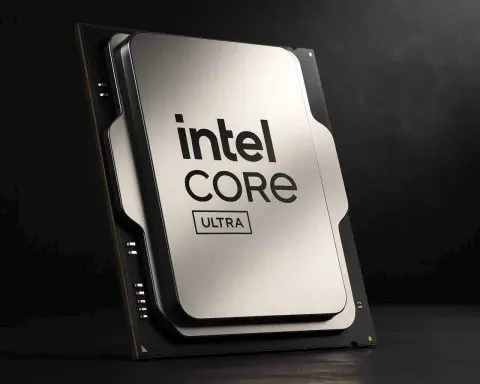
Intel is already promoting CES 2026 (Jan. 5–9, 2026) as the stage for a major launch: Intel Core Ultra Series 3 processors, codenamed “Panther Lake.” Intel
For investors, CES can influence:
- near-term client PC sentiment,
- OEM design narratives,
- and the “roadmap confidence” factor that often drives multiples more than quarterly numbers do.
4) Earnings timing: late-January expectations, but dates vary by source
Data providers currently disagree on the precise date, which is common before a company formally confirms:
- Nasdaq’s earnings page lists an estimated report date of Jan. 29, 2026. Nasdaq
- Zacks also points to Jan. 29, 2026 as the expected next release. Zacks
- TipRanks shows Jan. 22, 2026 (labeled “confirmed” on its page). TipRanks
Practical takeaway: treat “late January” as the window until Intel posts an official date/time, and expect volatility to rise as the window approaches.
5) Dividend/buyback context investors may reassess into year-end
Intel’s own investor relations page stated there were no future dividends presently declared as of Dec. 10, 2025, and also summarized the company’s buyback authorization status. Intel
For income-focused holders, that “declared vs. not yet declared” distinction can influence sentiment into the new year—especially when the stock is volatile.
Bottom line for INTC heading into next week
Intel finished Dec. 12 with a sharp regular-session drop and a nearly flat after-hours tape, suggesting the market is not yet ready to “resolve” the day’s catalyst in one direction. MarketWatch+1
Going into the next session (Monday, Dec. 15), INTC investors are likely balancing: