Intel stock heads into Monday’s U.S. session (Dec. 15, 2025) with momentum from a turbulent 2025 turnaround story — and fresh headline risk that could keep volatility elevated. The biggest themes for investors right now: governance scrutiny around CEO Lip-Bu Tan, a sensitive supplier/testing story tied to China-linked chipmaking tools, the company’s government-backed capital structure, and whether Intel can convert its manufacturing roadmap into sustainable earnings.
Below is a practical, news-driven guide to what matters most before the bell.
Where Intel stock stands heading into Monday
Intel shares were last around $37.81, down roughly 4.3% from the prior close, reflecting a rough end to the week for chips.
That pullback fits a broader risk-off tone in semiconductors: in Friday’s session, chip stocks were hit by renewed “AI bubble” worries and macro unease, sending the Philadelphia SE Semiconductor Index sharply lower. Reuters
For Monday’s open, that matters because Intel has become a high-beta “turnaround + AI manufacturing” story — meaning market-wide risk appetite and semiconductor sentiment can move INTC even when the company itself has no new filings or product launches.
The Intel headlines investors are digesting right now
Here are the Intel-specific developments circulating into the Dec. 15 open, and why each may matter for the stock:
1) Intel tested chipmaking tools from ACM Research — and the China angle is the story
Reuters reported Intel tested chipmaking tools from ACM Research, a California-based supplier with deep China ties and overseas units that have been targeted by U.S. sanctions. According to Reuters, the tools were tested for potential use in Intel’s 14A process (Intel’s next major node after 18A), currently targeted for 2027, and Intel said ACM tools are not used in its production processes. Reuters
Why it matters for INTC before the open:
- Political/national security scrutiny risk: Intel now has the U.S. government as a major shareholder and is a centerpiece of U.S. semiconductor policy, so supplier optics can become market-moving. Reuters+1
- Execution risk meets geopolitics: 14A is part of Intel’s longer-dated competitiveness plan; anything that complicates supplier qualification or raises regulatory concerns can amplify uncertainty around the roadmap. Reuters
2) CEO Lip-Bu Tan is facing fresh conflict-of-interest scrutiny
Reuters detailed how Intel pursued or explored deals that could benefit CEO Lip-Bu Tan financially, describing Intel’s internal policies requiring Tan to recuse himself from certain decisions. The report also notes Tan pitched the board on pursuing targets such as Rivos and referenced internal debate around SambaNova, where Tan served as executive chairman. Reuters+1
Why it matters:
- Governance discount: Even if operations improve, governance questions can weigh on valuation and raise the probability of regulatory or shareholder scrutiny. Reuters+1
- Deal-driven narrative risk: Intel’s turnaround has included divestitures and capital raises; headlines implying conflicts can complicate investor confidence in future M&A or strategic moves. Reuters
3) Intel’s India expansion and supply-chain strategy got a new catalyst via Tata
Reuters reported Tata Electronics signed up Intel as a major customer for Tata’s planned semiconductor facilities — including a fab in Gujarat and an OSAT (assembly/test) facility in Assam — and the partnership also includes plans to scale AI PC solutions for India’s consumer and enterprise markets. Reuters
Why it matters:
- This supports Intel’s message that it can pair product demand (PC/AI PCs) with a broader manufacturing and packaging ecosystem, especially in growth regions. Reuters
- It also reinforces the strategic reality: Intel’s turnaround is not only about CPUs — it’s about rebuilding confidence across manufacturing, packaging, and platform adoption.
4) Intel is still investing in global back-end capacity (Malaysia)
Reuters reported Intel will invest an additional 860 million ringgit (about $208 million) in Malaysia for assembly and testing operations. Reuters
Why it matters:
- Packaging, assembly, and test capacity is increasingly strategic in the AI era (advanced packaging constraints can bottleneck shipments).
- This also aligns with Intel’s longer-term push to diversify supply chains.
5) Intel decided to keep its networking and communications unit
Intel said it would keep its networking and communications unit after reviewing strategic options. Reuters
Why it matters:
- Investors have been watching whether Intel sells assets to strengthen its balance sheet. Keeping a unit can be read two ways: confidence in strategic value, or a missed chance to accelerate deleveraging. The market reaction tends to depend on whether investors view the unit as cash-generative or as a distraction.
6) EU antitrust: a fine was reduced (not a thesis-changer, but still “headline math”)
The EU’s top court cut Intel’s antitrust fine to about €237 million, per Reuters. Reuters
Why it matters:
- This is not likely to be a core driver of Intel’s multi-year outlook, but it can affect near-term sentiment and headlines — especially on a Monday where markets may be hungry for clear narratives.
Earnings and guidance: the “known numbers” the market anchors to
Intel’s latest reported quarter (Q3 2025) showed a meaningful improvement versus the prior year, alongside heavy investment and ongoing restructuring.
What Intel reported for Q3 2025
Intel said Q3 2025 revenue was $13.7 billion, up 3% year over year, and reported non-GAAP EPS of $0.23. Intel Corporation+1
Reuters also reported Intel’s adjusted gross margin hit 40%, above estimates compiled by LSEG, and that cost cuts helped drive the upside. Reuters
Q4 2025 outlook (the next key checkpoint)
Intel guided for Q4 2025 revenue of $12.8 billion to $13.8 billion and non-GAAP EPS of $0.08 (with GAAP EPS guided at a loss). Intel Corporation+1
Importantly, Intel said its Q4 guidance excludes Altera, after the company completed the sale of a majority ownership interest in Altera during Q3 2025. Intel Corporation+1
The next earnings date: late January, but watch “unconfirmed” labels
Multiple market calendars currently point to Intel’s next report in late January 2026, though some sources flag it as unconfirmed/projected rather than officially announced. Yahoo Finance+2wallstreethorizon.com+2
For trading into Dec. 15, that means the “earnings clock” isn’t imminent — but expectations about Q4 execution and guidance durability will keep setting the tone.
The turnaround plan: cost cuts, divestitures, and heavy capex
Intel’s 2025 story has been shaped by an unusual combination: deep cost cuts and asset reshaping, alongside very large capital needs to modernize manufacturing.
Cost cuts and restructuring
Reuters reported Intel planned to end 2025 with a workforce more than one-fifth smaller than the prior year, reflecting CEO Tan’s aggressive cost-cutting direction. Reuters
The Associated Press reported Intel aims to reduce its core workforce to about 75,000 by the end of 2025, while pulling back or reshaping certain global projects as part of the turnaround. AP News
Capex is rising — and that’s both the bet and the burden
Intel’s CFO said Intel plans $27 billion in capital expenditures in 2025, up from $17 billion in 2024, according to Reuters. Reuters
This is central to the bull vs. bear debate:
- Bulls see a necessary investment cycle to regain process leadership and make Intel Foundry credible.
- Bears see cash-flow strain and execution risk, especially if demand softens or yields don’t ramp as expected.
The technology roadmap: why 18A and Panther Lake are in the spotlight
A key reason Intel stock has been so reactive in 2025 is that the company has tied its turnaround to ambitious manufacturing milestones.
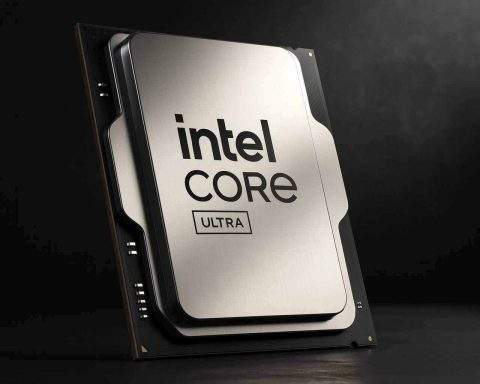
Intel announced details of Panther Lake (Core Ultra Series 3), calling it its first client SoC built on Intel 18A, and said it expects Panther Lake to begin shipping later this year (2025). Intel also said Arizona’s Fab 52 is set to reach high-volume production using Intel 18A later in 2025. Newsroom
Intel also previewed Clearwater Forest (Xeon 6+), its first 18A-based server processor, expected to launch in the first half of 2026. Newsroom
For Monday’s pre-market framing, the key question investors keep asking is simple:
Can Intel turn roadmap milestones into predictable volumes, competitive performance, and improving margins — without letting costs outrun revenue?
The “big money” deals: Nvidia, SoftBank, and the U.S. government stake
Intel’s capital structure and strategic positioning shifted dramatically in 2025, and that backdrop still matters for INTC daily trading.
U.S. government: a 9.9% stake, funded by converted grants
Reuters reported the U.S. government agreed to purchase a 9.9% stake in Intel for $8.9 billion (about $20.47 per share), using funds tied to unpaid CHIPS Act grants and the Secure Enclave program. Reuters
Subsequent Reuters reporting said Intel amended its CHIPS Act funding arrangement to receive $5.7 billion earlier, and that the revised agreement kept restrictions (including limits tied to dividends/buybacks and other conditions). It also outlined a structure involving hundreds of millions of shares issued and additional options tied to future funding. Reuters
Intel itself warned in an August securities filing (reported by Reuters) that the government’s stake could pose risks — including potentially harming international sales and affecting future grant prospects. Reuters
Reuters also reported the government negotiated an additional warrant tied to Intel maintaining majority ownership of its foundry operation. Reuters
Investor takeaway: This is not a typical shareholder base. It can help with funding certainty and political backing — but it can also raise the “policy overhang” and create unusual constraints.
Nvidia: $5B investment + product collaboration
Reuters reported Nvidia agreed to invest $5 billion in Intel (roughly 4% after new shares are issued), alongside a collaboration to develop future PC and data center products. Reuters
Nvidia’s own announcement said the companies will work on connecting architectures using NVLink, and confirmed the $5B investment price of $23.28 per share, subject to customary closing conditions and regulatory approvals. NVIDIA Newsroom
Investor takeaway: The partnership is a credibility boost for Intel’s platform ambitions — but the market will demand evidence it translates into revenue, margins, and a clearer competitive position versus AMD, Nvidia’s own roadmaps, and the broader AI stack.
SoftBank: another $2B equity commitment
Reuters reported SoftBank agreed to invest $2 billion in Intel, adding to Intel’s financing lifelines during the turnaround. Reuters
SoftBank’s statement said it would pay $23 per share, subject to customary closing conditions. ソフトバンクグループ株式会社
Policy and geopolitics: China exposure is back in focus for Intel
Even if you’re focused on earnings and product cycles, Intel’s stock is currently sensitive to geopolitics for three reasons:
- U.S. government ownership and funding,
- Intel’s global customer footprint,
- the strategic importance of chipmaking tools and supply chains.
Export controls may be shifting again — with potential read-through for Intel
In early December, President Donald Trump said Nvidia would be allowed to sell more advanced AI chips (H200) to approved customers in China under a framework that includes a government share of sales, and reporting indicated similar permissions were being considered for other chipmakers such as AMD and Intel. AP News+1
Reuters also reported a U.S. lawmaker requested details on the Nvidia decision, underscoring that this policy area could remain politically contentious (and therefore unstable). Reuters
Investor takeaway: If policy loosens, it could support industry revenue opportunities — but the political backlash risk is real, and sudden reversals are possible.
Taiwan and intellectual property protection is another emerging flashpoint
The Financial Times reported Taiwan is probing potential semiconductor trade secret leaks, including a case involving a former TSMC executive who joined Intel. Financial Times
This is not necessarily a direct financial impact, but it adds to the broader “national security + IP protection” climate surrounding chipmakers.
What to watch for INTC specifically during the Dec. 15 session
Heading into Monday’s open, Intel stock is likely to react to a mix of company-specific and macro drivers. Here’s a practical checklist traders and longer-term investors tend to watch:
- Follow-through from the ACM Research tools story: any clarifications, political responses, or additional reporting could drive premarket sentiment. Reuters
- Any new governance developments: further reporting, board actions, or commentary tied to CEO conflicts could influence the “multiple” investors apply to Intel’s turnaround. Reuters
- Chips-sector risk appetite: semis have been volatile amid AI valuation debates; if chip stocks bounce, INTC often participates — and if they slide, Intel can get dragged even without Intel-specific news. Reuters
- Roadmap confidence: headlines or channel checks tied to 18A ramp, Panther Lake timing, and future 14A planning can move INTC more than incremental PC datapoints. Newsroom+1
- Capital structure/policy overhang: investors will keep modeling dilution, restrictions, and the implications of government involvement. Reuters+2Reuters+2
Bottom line before the bell
Intel enters Dec. 15 with a clearer near-term financial anchor (Q4 guidance), a high-stakes manufacturing roadmap (18A now, 14A next), and strong strategic signaling from heavyweight partners — but also with fresh headline risk that can overwhelm fundamentals in the short run. Reuters+3Intel Corporation+3Newsroom+3
If you’re watching Intel stock into Monday’s open, the immediate question is less about a single quarterly number and more about trust: trust in execution, trust in governance, and trust that the policy environment won’t whipsaw the story.
This article is for informational purposes only and is not investment advice.