
NEW YORK, May 12, 2026, 10:05 EDT
- Intel shares slipped about 2.8% to $125.84. The stock had climbed sharply on excitement over AI server CPUs, optimism for its foundry business, and word of advanced-packaging collaborations with SK hynix—only to pull back.
- This shift is notable: investors are now sizing up Intel less as a traditional PC chip company, and more as a potential U.S. manufacturing and AI infrastructure play.
- Bulls point to fresh customer traction. Bears aren’t convinced—profit lags, the stock’s already run, foundry losses and weak PC demand still pose hurdles.
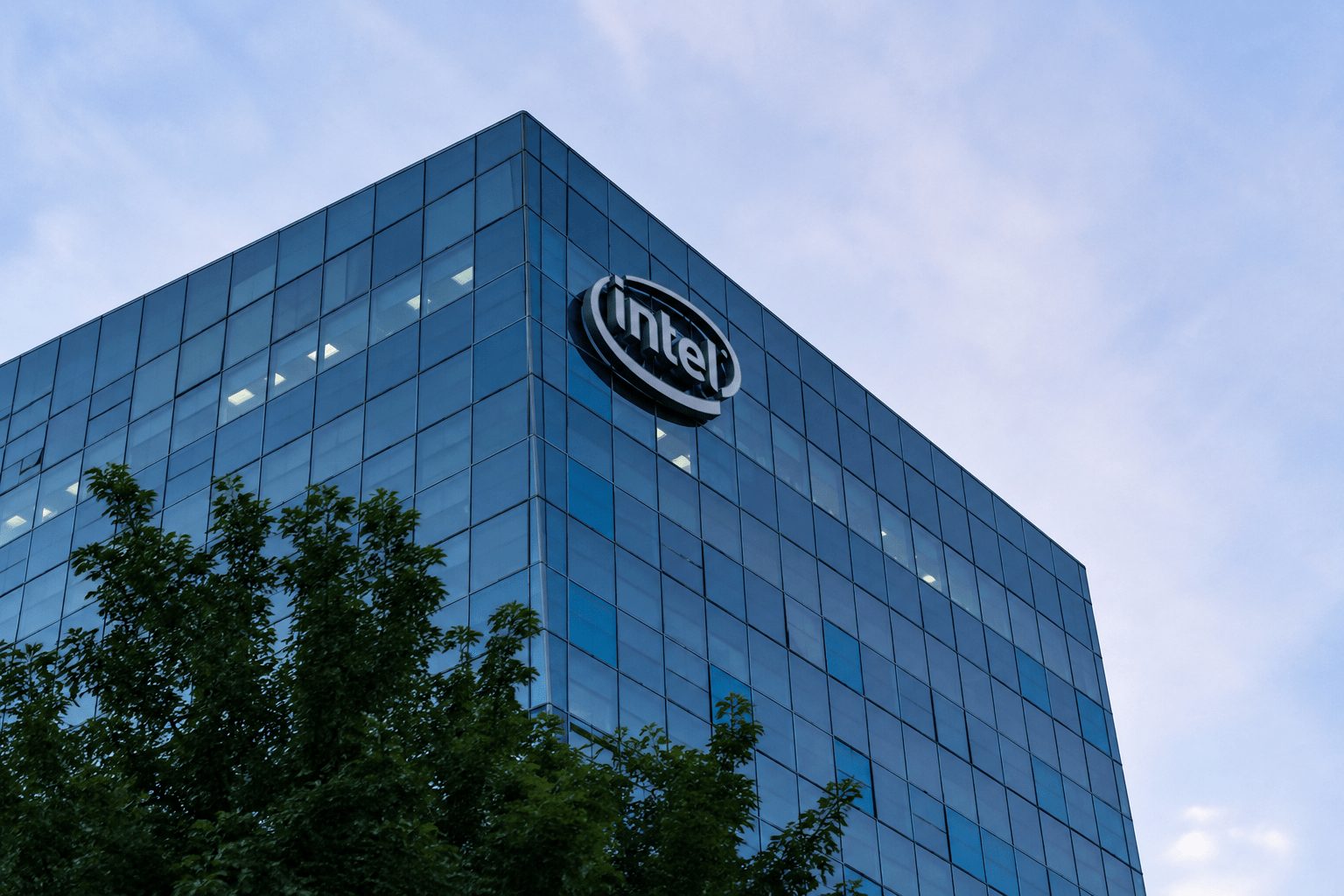
Intel pulled back Tuesday morning, snapping a rally fueled by buzz over its foundry business, AI server momentum and a burst of customer chatter. The shares sat at $125.84—still well above pre-earnings levels from April—but the fade signaled that the appetite for the turnaround story had cooled, at least for now.
Advanced packaging just set things off again. According to reports, SK hynix is testing Intel’s EMIB tech for 2.5D packaging—a process that connects high-bandwidth memory with logic chips inside one package. This isn’t some minor, behind-the-scenes step; packaging is now a real snag in AI hardware production.
Intel’s pitch is straightforward: with TSMC’s CoWoS packaging capacity still tight, major chip and memory players are looking for alternatives. EMIB, which relies on small embedded silicon bridges instead of CoWoS’s larger interposer, fits the bill. Tom’s Hardware pointed out that neither Intel nor SK hynix has gone on record to confirm the rumored partnership. Even so, the market took the news as fresh evidence that Intel’s manufacturing business could attract real third-party interest.
That notion was priced in before the news hit. On Friday, Reuters—citing the Wall Street Journal—said Intel had struck an initial agreement to manufacture some chips for Apple devices. Intel shares shot up 15% on the report. Both Apple and Intel kept quiet when asked for comment. Still, the takeaway was obvious: investors want proof that Intel Foundry can land outside clients.
Earnings brought some real numbers to the table. Intel posted first-quarter revenue of $13.6 billion, a 7% increase from the same period last year, with non-GAAP EPS coming in at $0.29—that’s their adjusted profit, stripping out certain accounting charges. Looking ahead, the company sees second-quarter revenue between $13.8 billion and $14.8 billion, and projects non-GAAP EPS of $0.20. That’s a touch better than many expected, considering Intel’s patchy track record in recent years.
Management didn’t mince words on AI this time. CEO Lip-Bu Tan put it simply: “The CPU now serves as the orchestration layer and critical control plane for the entire AI stack.” What Intel’s pitching here is that AI inference—responding to prompts and powering AI services post-training—still leans heavily on general-purpose server CPUs, not just on Nvidia-type accelerators. D1IO3YOG0OUX5 Cloudfront
So Tuesday’s pullback isn’t simply traders locking in gains. April’s CPI showed a 3.8% year-over-year rise, with core CPI at 2.8%—keeping rate-cut odds slim and the macro backdrop less forgiving. Polymarket participants put the likelihood of “0” Fed cuts in 2026 at 62%. That’s bad news for richly valued growth names, which rely more heavily on future earnings and tend to get squeezed by higher-for-longer rates. Bureau of Labor Statistics
Intel’s bullish argument? Investors are finally seeing value in assets they’d mentally discounted for years—think x86 server CPUs, domestic fabs, and packaging lines. TECHnalysis Research’s Bob O’Donnell told Reuters, “if the foundry business can start contributing in a meaningful way in 2027,” that’s when Intel’s real turnaround story takes shape. Reuters
The bear argument follows fast. Intel Foundry posted a $2.4 billion loss in Q1, despite some improvement in yields. External foundry revenue? Just $174 million. Barron’s noted Deutsche Bank stuck with its Hold, while KeyBanc pointed to a sharp 27% slide in April notebook shipments—a red flag for both Intel and AMD’s PC businesses.
Valuation isn’t budging, either. After April’s earnings rally, Reuters pointed out that Intel was trading at about 90 times forward earnings—blowing past AMD’s 37 times and Nvidia’s 22. That was before the stock’s latest surge. Now, the company’s price tag assumes foundry revenue, AI CPU growth, and packaging wins will materialize fast enough to support this lofty multiple.
Peers diverged out of the gate: AMD slipped early, but Nvidia tacked on gains, underscoring just how fractured the AI trade has become. Intel’s upside relies on AI budgets tilting toward CPUs and fresh packaging options. Nvidia keeps the edge in accelerators, and TSMC is still the gold standard on the manufacturing side—Intel’s chasing that lead.
At this point, Intel hasn’t closed the debate—it’s just shifted it. Options markets had priced in a possible 8.5% swing either way for the week, matching a stock that’s reacting to news flashes, not solid quarterly results. What comes next hinges on hard figures: confirmed customer revenue, progress on 18A yields, and whether softness in PCs gets worse or not.