
New York, June 2, 2026, 09:04 EDT
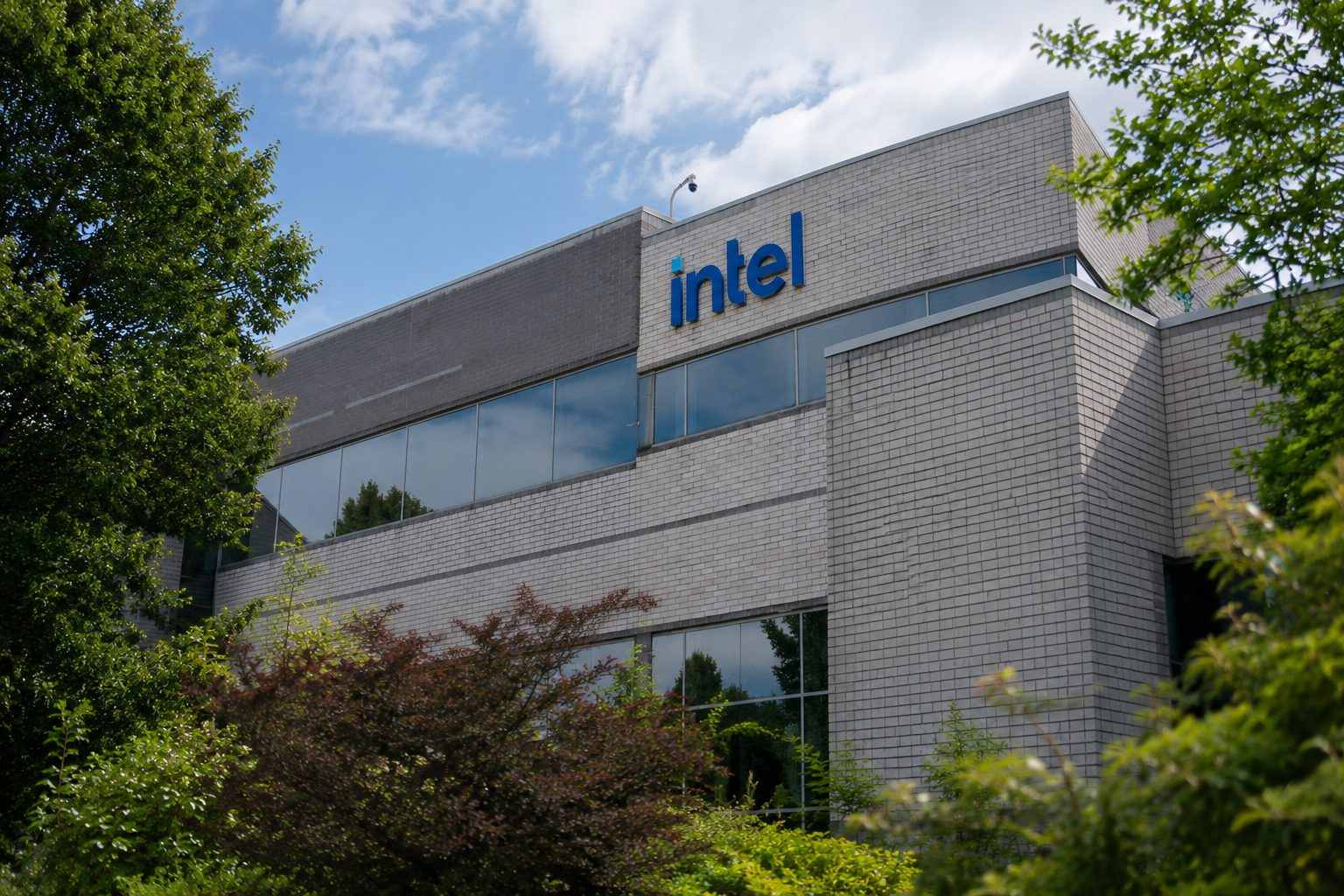
Intel shares pointed lower before the U.S. open on Tuesday after the chipmaker used Computex to pitch a broader artificial-intelligence push, a muted reaction that showed investors still want evidence the plan can turn into orders and margin recovery. Intel closed Monday at $109.33, down 4.67%, and was quoted at $107.86 in premarket trade at 8:40:46 a.m. ET, off 1.34%.
The timing matters. Intel is trying to shift the market’s focus from its long manufacturing turnaround to a more immediate claim: that AI inference, the work of running trained models, can lift demand for central processing units, or CPUs, alongside the graphics chips that have led the AI boom.
At Computex, Intel announced rack-scale AI systems, meaning full server-rack products rather than single chips, built around Xeon processors and SambaNova RDUs; new Vector Core Compute cloud services using Intel Xeon chips, SambaNova units and Nvidia Blackwell GPUs; Xeon 6+ processors built on Intel 18A; and partnerships with Foxconn, Siemens, Hitachi, Echo Neurotechnologies and Greenstone Biosciences. Chief Executive Lip-Bu Tan said Intel wanted to bring AI “from the chip to systems level,” while Creative Strategies analyst Ben Bajarin said agentic inference could move AI deployments toward “one-CPU-to-one-GPU” ratios. Intel Corporation
Agentic AI refers to software that can plan and carry out tasks with less step-by-step human prompting. For Intel, the point is simple enough: if AI moves from giant model training into millions of enterprise tasks, more CPUs may be needed to organize, route and run that work.
The problem is that the tape is already crowded with cleaner AI stories. U.S. stock futures eased on Tuesday after the S&P 500 and Nasdaq closed at records, while Reuters reported that Hewlett Packard Enterprise surged after lifting long-term targets and Alphabet sought to raise $80 billion for AI infrastructure. “Every day it seems like a different company comes out with incredible signs that this wave of AI is alive and well,” Ryan Detrick, chief market strategist at Carson Group, told Reuters. Reuters
Nvidia remains the reference point. CEO Jensen Huang said in Taipei that the company had secured supply for “very robust growth,” though it was still supply constrained, and Reuters reported its new RTX Spark PC chip would compete with AMD, Intel and Apple. Reuters
Marvell gave investors another contrast. Its shares jumped more than 24% in premarket trading after Huang called it the next trillion-dollar company, Reuters reported, underscoring how quickly money is moving toward companies seen as direct beneficiaries of AI data-center spending.
Intel’s pitch is not without force. The company is arguing that CPUs regain importance as AI systems spread into inference, agents and edge devices, rather than staying concentrated in GPU-heavy training clusters. The stock reaction suggests investors are not ready to underwrite that thesis on announcements alone.
But the risk is plain. Customers may keep spending first on GPU-led systems where Nvidia sets the pace, while AMD and Arm-based designs press Intel in servers and PCs. If Intel’s 18A process, rack-scale products or partner programs fail to show revenue traction soon, Tuesday’s news may look more like another roadmap than a turn in the numbers.
The next test comes later Tuesday, when Intel is scheduled to appear at the BofA Global Technology Conference at 3:20 p.m. PDT. Investors are likely to press for details on demand, supply, pricing and whether the Computex announcements can support the rebound already priced into the shares.
Related articles: NASDAQ:INTC