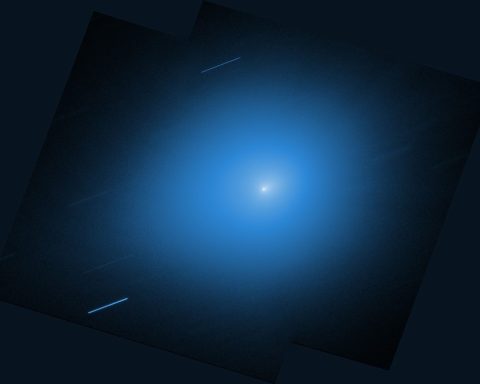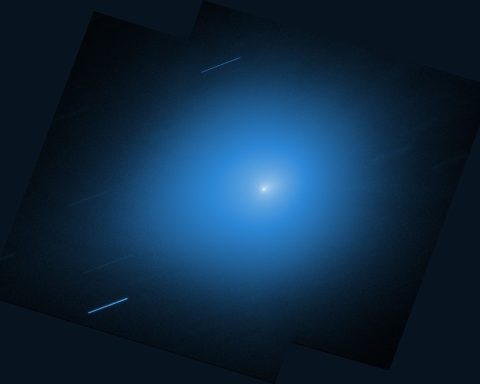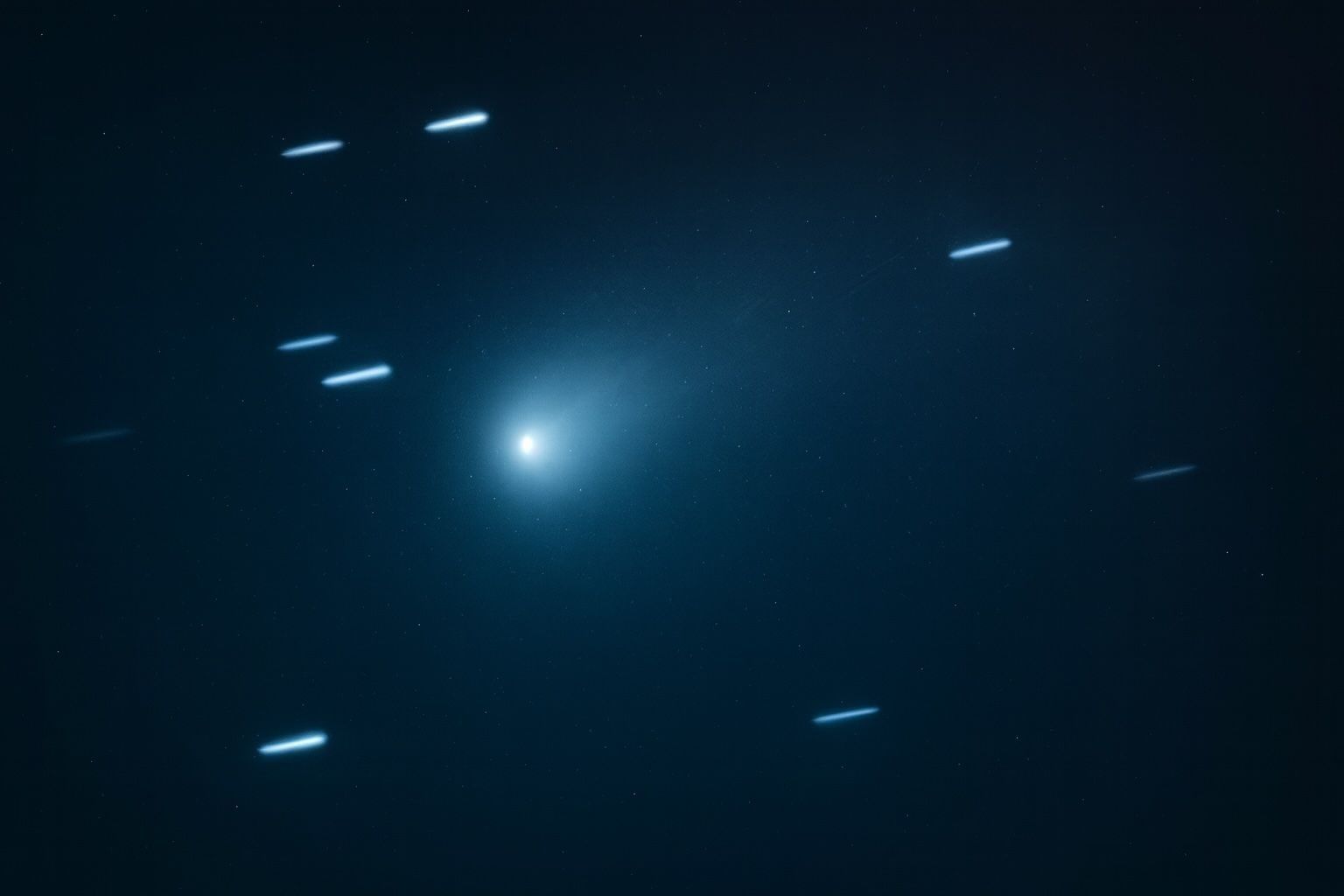
Interstellar comet 3I/ATLAS – also known as C/2025 N1 (ATLAS) – has gone from obscure discovery to the most talked‑about object in the Solar System in just a few months. As of December 2, 2025, astronomers are reporting:
- Cryovolcanic “ice volcanoes” blasting material into space
- A strange 16.16‑hour “heartbeat” pattern in its brightness
- Radio signals that look spooky but are firmly understood as natural
- A global planetary‑defense exercise led by the UN using 3I/ATLAS as a practice target
- An approaching closest pass to Earth on December 19, 2025
All of this is happening while NASA, ESA and observatories worldwide repeat the same core message: 3I/ATLAS is a natural comet from another star system, and it poses no threat to Earth. [1]
Below is a deep, news‑style rundown of what we actually know today – and what remains a mystery.
1. Quick facts: What is comet 3I/ATLAS?
3I/ATLAS is only the third confirmed interstellar object ever seen passing through our Solar System, after 1I/‘Oumuamua (2017) and 2I/Borisov (2019). [2]
Key facts as of December 2, 2025
- Type: Interstellar comet (designation 3I/ATLAS, also C/2025 N1 (ATLAS)) [3]
- Discovery: July 1, 2025, by the ATLAS (Asteroid Terrestrial‑impact Last Alert System) survey telescope in Río Hurtado, Chile [4]
- Orbit: Strongly hyperbolic – it is not bound to the Sun and will never return [5]
- Speed: On a Sun‑skimming trajectory at roughly 130,000–140,000 mph (≈210,000–220,000 km/h), comfortably above solar escape velocity [6]
- Closest approach to the Sun (perihelion): October 29, 2025, at ~1.4 AU (just inside Mars’s orbit) [7]
- Closest approach to Earth: Expected on December 19, 2025, at roughly 1.8 AU (~170 million miles / 270 million km) – more than 700 times the Earth–Moon distance [8]
- Jupiter flyby: Will pass about 0.36 AU from Jupiter on March 16, 2026, before heading back into deep space [9]
- Brightness: Around magnitude 10–11 in late November; a faint fuzzy patch needing at least a decent amateur telescope – not a naked‑eye spectacle [10]
- Age: Dynamical studies suggest several billion years old (possibly 7–14 billion), likely older than our 4.6‑billion‑year‑old Solar System, making it a candidate for the oldest comet ever seen. [11]
NASA’s official overview is blunt: 3I/ATLAS is an interstellar comet, it will stay far from Earth, and it’s a unique scientific opportunity, not a danger. [12]
2. New December 2025 headline: 3I/ATLAS is erupting in “ice volcanoes”
One of the biggest new developments, reported December 1 by Live Science, is evidence that 3I/ATLAS is erupting through cryovolcanoes – “ice volcanoes” that blast gas and frozen particles instead of molten rock. [13]
What did astronomers actually see?
- High‑resolution images from European observatories show tight, spiral‑like jets of material curling away from the comet’s nucleus.
- These jets appear to turn on and off as different regions of the surface rotate into sunlight, suggesting localized vents rather than a smooth, uniform coma. [14]
A new preprint, summarized in that coverage, argues that:
- Volatile ices – especially carbon dioxide (CO₂), with smaller amounts of water ice and carbon monoxide – are buried beneath a processed crust.
- When sunlight warms specific pockets, pressure builds and cryovolcanic eruptions punch through the surface, launching jets that can stretch hundreds of thousands of kilometers. [15]
This picture meshes with earlier James Webb Space Telescope and SPHEREx observations showing that 3I/ATLAS has an unusually CO₂‑rich coma with relatively little water, plus traces of carbon monoxide and sulfur‑bearing gases. [16]
Because the comet has been wandering the galaxy for billions of years, its outer layers are thought to be heavily irradiated, forming a tough crust that traps volatiles in deeper pockets – a perfect setup for intermittent cryovolcanic jets. [17]
3. The “radio signal” that isn’t aliens
The phrase “radio signal from an interstellar comet” sounds like the start of a sci‑fi movie – and it definitely lit up social media. But this is one of the clearest cases where the data strongly supports a natural explanation.
MeerKAT’s OH detection
In late October, South Africa’s MeerKAT radio telescope picked up a pair of narrow absorption lines at 1.665 and 1.667 GHz coming from the direction of 3I/ATLAS. [18]
Follow‑up analyses published and reported in mid‑November show that:
- The signal comes from hydroxyl (OH) radicals in the comet’s coma.
- OH is produced when ultraviolet sunlight breaks apart water molecules released by the comet – a textbook cometary process. [19]
Multiple outlets, including Live Science, Discover, and GreenMatters, all stress the same takeaway: the “radio signal” is not a transmission from a spacecraft; it’s a spectral fingerprint of natural chemistry and actually reinforces the classification of 3I/ATLAS as a comet. [20]
Harvard astrophysicist Avi Loeb even published a separate analysis placing upper limits on any technological radio transmissions from the comet – and found none. [21]
4. New today: “Heartbeat‑like” jets and repeating patterns
The latest wave of coverage on December 2, 2025 focuses on patterns in both the radio data and the jets.
Heartbeat‑style light pulses every ~16.16 hours
An October paper in Astronomy & Astrophysics, highlighted this week by Futurism, reports that the brightness of 3I/ATLAS shows a repeating pulse every 16.16 hours. [22]
- Instead of random flickering, the comet’s light curve shows a regular, heartbeat‑like pattern.
- Most of the variation seems to come from the coma and jets, not solely from the nucleus’s rotation, which raises interesting questions about how the gas is being released. [23]
A new Primetimer feature published today builds on this, describing a jet that brightens and dims on a schedule of roughly 16 hours, prompting some experts and skywatchers to liken it to a “heartbeat.” [24]
“New radio signals and heartbeat‑like jets”
That same Primetimer article also notes that astronomers have identified narrow radio features at two specific frequencies, consistent with the earlier OH detection but now being monitored for repetition or modulation. The piece carefully emphasizes that:
- Such narrow features are unusual but not unprecedented in comet physics.
- Scientists are explicitly avoiding any alien interpretation at this stage; the working assumption is still that there are natural explanations that haven’t been fully modeled yet. [25]
For now, researchers are asking:
- Are the radio features and the heartbeat‑like jet linked?
- Do both arise from the same cryovolcanic region, turning on and off as the nucleus spins?
- Or are they independent manifestations of an unusually structured coma?
We simply don’t know yet – and that uncertainty is exactly why telescopes worldwide are lining up to watch the comet through and beyond its December 19 flyby.
5. Weird acceleration: from “alien engines?” to outgassing physics
Another major storyline this autumn has been 3I/ATLAS’s non‑gravitational acceleration – a tiny but measurable deviation from the path predicted by gravity alone.
What the new research says
A long technical explainer published November 13 summarizes a series of studies using ALMA and IAWN (International Asteroid Warning Network) data: [26]
- 3I/ATLAS shows an extra acceleration of around 0.02 mm/s² over about 50 days near perihelion, producing an ~86 m/s change in speed and a small angular deviation (~4 arcseconds) from its expected trajectory.
- That acceleration can be explained by jets of gas and dust – the classic “rocket effect” seen on many comets – if the comet loses roughly 13–16% of its mass in volatile material over several months.
- MeerKAT’s OH detection strongly supports active water outgassing, while other instruments report high CO₂ and CO abundances, painting a picture of a very active, chemically unusual comet. [27]
Some of the peculiarities – like a sunward “anti‑tail” and sudden pre‑perihelion brightening – are unusual but not unheard of in comet science. Similar phenomena have been documented in comets like Hale‑Bopp and 67P/Churyumov–Gerasimenko when geometry and dust dynamics align just right. [28]
The conclusion of that research is cautious but clear: a natural explanation is sufficient, even if the combination of effects makes 3I/ATLAS one of the strangest comets ever studied. [29]
6. NASA & ESA: A solar‑system‑wide observing campaign
NASA has launched what it calls an “unprecedented solar system‑wide observation campaign” of 3I/ATLAS, turning a dozen spacecraft and multiple major telescopes toward this one object. [30]
Spacecraft watching 3I/ATLAS
According to NASA’s “Multiple Lenses” feature and its dedicated 3I/ATLAS portal, the comet has already been observed by: [31]
- ATLAS survey telescopes (discovery and follow‑up)
- Hubble Space Telescope (size estimates, coma structure)
- James Webb Space Telescope (JWST) (infrared spectra, composition)
- SPHEREx (ice and gas inventory)
- Psyche & Lucy spacecraft (long‑range imaging en route to their asteroid targets)
- Mars‑orbiting missions MRO (HiRISE camera) and MAVEN, plus a faint detection by the Perseverance roverfrom the Martian surface
- Helio missions STEREO and SOHO, and the new PUNCH mission, which tracked the comet as it passed close to the Sun from Earth’s point of view
ESA, for its part, reports that its ExoMars Trace Gas Orbiter was crucial in pinning down the comet’s path. Using Mars‑orbit data, ESA says it improved the predicted location of 3I/ATLAS by a factor of around 10, a big deal for both science and planetary‑defense planning. [32]
NASA’s November press briefing
A late‑November NASA briefing, summarized by Space.com and entertainment site Primetimer, pulled together results from more than 20 missions and hammered home one headline:
“This object is a comet.” [33]
Officials emphasized that 3I/ATLAS:
- Behaves like a comet outgassing gas and dust,
- Shows natural jets and non‑gravitational forces, and
- Is best explained as a large, carbon‑dioxide‑rich interstellar iceberg, not a spacecraft. [34]
7. UN planetary‑defense drill: Why 3I/ATLAS was chosen
Although 3I/ATLAS does not threaten Earth, it has been officially selected as the centerpiece of a planetary‑defense exercise coordinated by the United Nations and the International Asteroid Warning Network (IAWN). [35]
Recent coverage from the Times of India and other outlets explains that: [36]
- The UN campaign uses real‑time observations of 3I/ATLAS to stress‑test global communication channels, trajectory‑prediction tools, and decision‑making frameworks.
- Agencies are practicing how they would respond if an incoming object were on a collision course, from orbit determination to public information strategies.
- Because the comet is genuinely interstellar and scientifically important, the exercise also tests how to balance planetary defense and pure science under time pressure.
Think of 3I/ATLAS as a live‑fire drill without the fire: the object is harmless, but the systems being tested are very real.
8. How and when to see comet 3I/ATLAS in December 2025
If you’re hoping to see the 3I/ATLAS comet yourself, temper expectations: this will be a telescope challenge, not a blazing spectacle like Hale‑Bopp.
Where it is in the sky
- Star‑chart site TheSkyLive currently places 3I/ATLAS in the constellation Virgo on December 2, 2025, about 3° from the star Zaniah, at magnitude ~10.2. [37]
- By December 19, NASA’s December skywatching guide shows the comet near Leo, not far from the bright star Regulus, when it makes its closest approach to Earth. [38]
How bright will it get?
NASA and independent forecasts agree that 3I/ATLAS is unlikely to get brighter than about magnitude 9–10 for Earth‑based observers:
- That’s far too faint for naked eyes.
- You’ll want at least a small‑to‑medium telescope (e.g., 6–8‑inch / 150–200 mm aperture) or a very dark site with large binoculars to pick up a fuzzy glow. [39]
Practical observing tips
From NASA’s “What’s Up: December 2025” and several December 2 observing guides: [40]
- Mark December 19
- That’s when 3I/ATLAS is closest to Earth and best placed in the late‑night sky.
- Look east around midnight to 1 a.m. local time, scanning near Regulus in Leo (exact position depends on your location and date).
- Use a star chart or app
- Because the comet is faint, you’ll need accurate coordinates. Many astronomy apps now list “3I/ATLAS” or “C/2025 N1”.
- Dark skies help a lot
- Get as far from city light pollution as you can; magnitude 10 fuzzballs are unforgiving in bright urban skies.
- Long‑exposure photography
- Astrophotographers using tracking mounts can capture striking images of the comet’s tail and jets in exposures of a few minutes, even if it looks like a smudge visually.
9. Is 3I/ATLAS an alien spacecraft? What scientists actually say
Speculation about alien technology is driving a huge amount of public interest – and confusion.
The case for “just a comet”
NASA, ESA and most researchers emphasize several lines of evidence that strongly support a natural origin: [41]
- Interstellar orbit: Its hyperbolic trajectory and high inbound speed are exactly what you’d expect for a long‑wandering comet from another star system.
- Normal‑but‑extreme comet behavior: Non‑gravitational acceleration, jets, tails, and brightness changes are all seen in Solar System comets, just often less dramatically.
- Chemical fingerprints: JWST, SPHEREx and radio telescopes detect CO₂, CO, water and other cometary species, including the OH radicals behind the “radio signal.”
- No technological transmission: MeerKAT and other facilities see spectral lines consistent with natural molecules, not narrowband, modulated beacons.
Articles in Live Science, Discover, Indian Express and others explicitly note that the radio detection debunks the idea that the emission is an artificial broadcast. [42]
NASA’s November press conference and follow‑up coverage also state plainly: 3I/ATLAS is a natural comet, not an alien spacecraft. [43]
The minority view: Avi Loeb’s anomaly arguments
Harvard astrophysicist Avi Loeb, known for arguing that ‘Oumuamua might have been artificial, has laid out a set of “anomalies” for 3I/ATLAS in blogs, interviews and opinion pieces: [44]
He points to, among other things:
- The comet’s near‑ecliptic trajectory (unusual in simulations of interstellar objects)
- The finely tuned coincidence between its projected closest pass to Jupiter in March 2026 and Jupiter’s Hill radius – the region where Jupiter can hold satellites – to within about 0.06 million km
- The strong non‑gravitational acceleration, unusual composition (high CO₂, low water), complex jets and anti‑tail, and now the 16.16‑hour heartbeat pattern in its brightness
In a recent Medium post, he even toys with the idea that 3I/ATLAS could be a “mothership” seeding Jupiter’s vicinity with probes, using jets as thrusters to hit the planet’s Hill sphere with uncanny precision. [45]
These ideas are hypotheses, not measurements. So far:
- No independent data demand an artificial explanation.
- The same anomalies can be (and are being) modeled with complex but natural comet physics, especially when you allow for billions of years of radiation processing and unusual formation conditions. [46]
Science advances by testing provocative ideas, and projects like the Galileo Project are indeed looking for signs of advanced technology in space. But mainstream astronomers emphasize that extraordinary claims require extraordinary evidence, and that evidence does not exist for 3I/ATLAS today.
10. December 2025 media wave: Why 3I/ATLAS is everywhere right now
If your feed feels full of this comet, you’re not imagining it. As of December 2, 2025, major outlets have rolled out a flurry of new coverage:
- Live Science: Cryovolcanoes, ice jets and daily science‑news roundups highlighting 3I/ATLAS’s eruptions [47]
- Futurism & New York Post: The 16.16‑hour “heartbeat” brightness pattern and Loeb’s more speculative interpretations [48]
- Primetimer: New radio features and heartbeat‑like jets, plus recaps of NASA’s press conference and “natural comet” verdict [49]
- TS2.tech: Google‑News‑style explainers on the December 19 close approach and a December night‑sky guide featuring 3I/ATLAS, the Geminid meteor shower and the final supermoon of 2025 TechStock²+1
- NASA: Official December skywatching tips and multi‑mission campaign coverage, all stressing the scientific opportunity and the lack of danger [50]
- Times of India and others: The UN’s planetary‑defense exercise designating 3I/ATLAS as a global practice target [51]
- NPR’s Short Wave: A new episode on “Why experts are racing to learn about this interstellar comet,” highlighting both the alien speculation online and the real science payoff. [52]
Add in social‑media telescopes, backyard astrophotographers and the usual meme‑ification of anything with “interstellar” and “radio signal” in the headline, and 3I/ATLAS has become a genuine pop‑science moment.
11. What scientists hope to learn next
Between now and its March 2026 swing past Jupiter, 3I/ATLAS will continue to be one of the most intensely studied comets in history. Key open questions include:
- Comet physics under extreme conditions
- How do CO₂‑dominated comets behave compared with water‑rich ones?
- Can we build detailed models of 3I/ATLAS’s cryovolcanic vents, explaining its heartbeat‑like jets and anti‑tail? [53]
- Interstellar chemistry and planet formation
- What does its composition say about the protoplanetary disk where it formed?
- Are interstellar comets more chemically diverse than our own, or surprisingly similar? [54]
- Population of interstellar visitors
- Studies suggest there may almost always be an interstellar object somewhere inside the Solar System; 3I/ATLAS provides a rare, well‑observed example to calibrate those estimates. [55]
- Planetary‑defense readiness
- How well do global networks respond when a fast‑moving, unfamiliar object appears?
- What lessons from the UN exercise should be rolled into future planetary‑defense plans? [56]
By early 2026, when the comet has crossed Jupiter’s orbit and fades into the dark, we should have a vastly better picture of both 3I/ATLAS itself and the broader population of interstellar wanderers.
12. Bottom line
As of December 2, 2025, comet 3I/ATLAS is:
- Erupting with cryovolcanic jets that give us a peek at the chemistry of another star system
- Pulsing in light and radio in ways that challenge existing comet models
- Confirming its status as a natural comet via OH radio absorption and complex outgassing physics
- Training the world’s planetary‑defense systems in a high‑stakes but low‑risk exercise
- Approaching its closest pass to Earth on December 19, when telescopes big and small will be watching
It might not be an alien ship, but it is something arguably more precious: a frozen time capsule from the deep past of another star system, briefly swinging through our skies and forcing us to refine what we think we know about comets, planets and interstellar space.

References
1. science.nasa.gov, 2. science.nasa.gov, 3. en.wikipedia.org, 4. science.nasa.gov, 5. science.nasa.gov, 6. news.ssbcrack.com, 7. science.nasa.gov, 8. science.nasa.gov, 9. en.wikipedia.org, 10. en.wikipedia.org, 11. en.wikipedia.org, 12. science.nasa.gov, 13. www.livescience.com, 14. www.livescience.com, 15. www.livescience.com, 16. en.wikipedia.org, 17. www.livescience.com, 18. avi-loeb.medium.com, 19. www.livescience.com, 20. www.livescience.com, 21. avi-loeb.medium.com, 22. futurism.com, 23. futurism.com, 24. www.primetimer.com, 25. www.primetimer.com, 26. news.ssbcrack.com, 27. news.ssbcrack.com, 28. news.ssbcrack.com, 29. news.ssbcrack.com, 30. science.nasa.gov, 31. science.nasa.gov, 32. www.esa.int, 33. www.space.com, 34. www.space.com, 35. timesofindia.indiatimes.com, 36. timesofindia.indiatimes.com, 37. theskylive.com, 38. science.nasa.gov, 39. en.wikipedia.org, 40. science.nasa.gov, 41. science.nasa.gov, 42. www.livescience.com, 43. www.space.com, 44. news.ssbcrack.com, 45. avi-loeb.medium.com, 46. news.ssbcrack.com, 47. www.livescience.com, 48. futurism.com, 49. www.primetimer.com, 50. science.nasa.gov, 51. timesofindia.indiatimes.com, 52. podcasts.apple.com, 53. www.livescience.com, 54. en.wikipedia.org, 55. www.space.com, 56. timesofindia.indiatimes.com