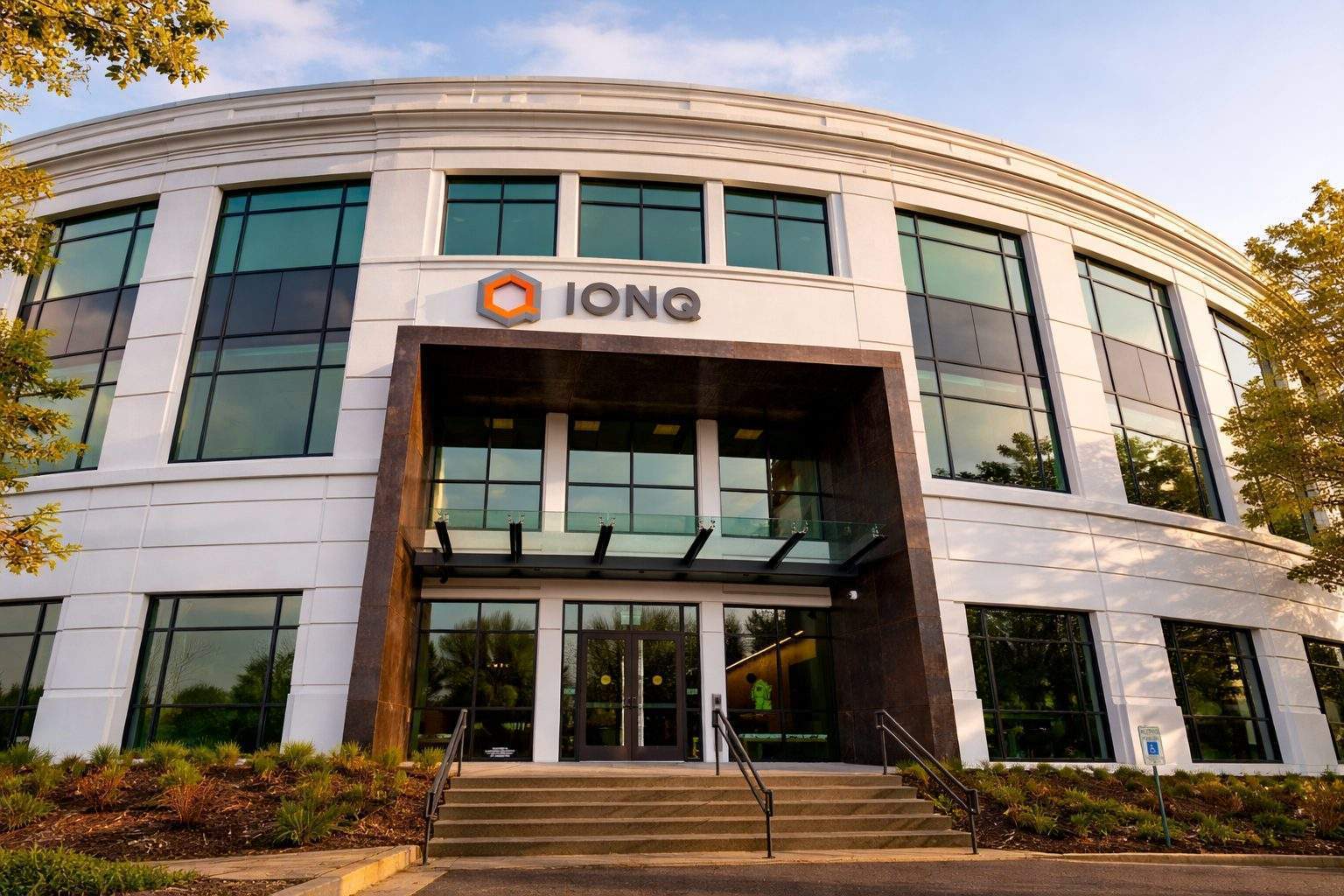
IonQ stock rises as $1.8 billion SkyWater deal puts dilution and quantum chip roadmap in focus
New York, January 27, 2026, 13:13 (EST) — Regular session
- IonQ shares were up about 3.5% in afternoon trading
- The company agreed to buy SkyWater for $35 a share in cash and stock
- Investors are watching deal filings, approvals and IonQ’s next earnings update
IonQ shares rose $1.50, or 3.5%, to $44.87 in early afternoon trading on Tuesday. The stock has traded between $43.04 and $45.53 so far in the session.
The move follows IonQ’s plan to buy U.S. chip foundry SkyWater Technology, a deal that would pull more of the hardware stack inside the company. That matters because quantum hardware is still a build-test-repeat business, and the bottleneck is often the next chip run, not the next line of code.
It also lands on a sore spot for investors: cost. A cash-and-stock purchase can speed things up, but it can also dilute existing holders and raise the bar for execution, especially when the closing date sits months away.
IonQ said SkyWater holders will receive $35 per share — $15 in cash and $20 in IonQ stock — with a collar that changes the share count if IonQ’s price moves outside a set range before closing. The offer is a 38% premium to SkyWater’s 30-day volume-weighted average price as of Jan. 23, and SkyWater shareholders would own between 4.4% and 6.7% of the combined company, IonQ said. IonQ CEO Niccolo de Masi said, “This transformational acquisition enables IonQ to materially accelerate its quantum computing roadmap and secure its fully scalable supply chain domestically,” while SkyWater CEO Thomas Sonderman said the foundry “remains fully committed” to its customers; IonQ also said it expects full-year 2025 revenue at the high end or above its $106 million to $110 million forecast when it reports results next month. SEC
In an investor presentation, the companies said embedded foundry access could cut a 256-qubit chip cycle to about two months from about nine months. IonQ also set out a goal to begin functional testing of its planned 200,000-qubit processors in 2028; a qubit is the basic unit of information in a quantum computer, like a bit in a regular machine, but far harder to keep stable. SEC
SkyWater operates facilities in Minnesota, Florida and Texas, and the companies said those sites would become quantum production hubs for IonQ. After closing, SkyWater is expected to operate as a wholly owned subsidiary and continue providing services such as wafer work, advanced packaging and specialized components including atomic clocks. Reuters
SkyWater shares were up about 3.3% at $33.43. Other U.S.-listed quantum names were also slightly higher, with Rigetti up about 1% and D-Wave up about 2.2%.
But the transaction still needs SkyWater shareholder approval and regulatory clearances, and the timeline can slip. IonQ said it plans to file a registration statement on Form S-4 with the SEC, which will include proxy materials for SkyWater shareholders. SEC
For traders, the next markers are the merger documents and any changes that show up in the fine print — especially around the stock collar and how much stock IonQ ultimately issues. The other watch item is simple: whether the deal’s promised speed-up shows up in the company’s milestones, not just its slides.
IonQ is due to report fourth-quarter and full-year 2025 results in February, where investors will look for revenue and spending guidance — and any update on the SkyWater approval and filing schedule.
IonQ stock rises as $1.8 billion SkyWater deal puts dilution and quantum chip roadmap in focus
New York, January 27, 2026, 13:13 (EST) — Regular session
- IonQ shares were up about 3.5% in afternoon trading
- The company agreed to buy SkyWater for $35 a share in cash and stock
- Investors are watching deal filings, approvals and IonQ’s next earnings update
IonQ shares rose $1.50, or 3.5%, to $44.87 in early afternoon trading on Tuesday. The stock has traded between $43.04 and $45.53 so far in the session.
The move follows IonQ’s plan to buy U.S. chip foundry SkyWater Technology, a deal that would pull more of the hardware stack inside the company. That matters because quantum hardware is still a build-test-repeat business, and the bottleneck is often the next chip run, not the next line of code.
It also lands on a sore spot for investors: cost. A cash-and-stock purchase can speed things up, but it can also dilute existing holders and raise the bar for execution, especially when the closing date sits months away.
IonQ said SkyWater holders will receive $35 per share — $15 in cash and $20 in IonQ stock — with a collar that changes the share count if IonQ’s price moves outside a set range before closing. The offer is a 38% premium to SkyWater’s 30-day volume-weighted average price as of Jan. 23, and SkyWater shareholders would own between 4.4% and 6.7% of the combined company, IonQ said. IonQ CEO Niccolo de Masi said, “This transformational acquisition enables IonQ to materially accelerate its quantum computing roadmap and secure its fully scalable supply chain domestically,” while SkyWater CEO Thomas Sonderman said the foundry “remains fully committed” to its customers; IonQ also said it expects full-year 2025 revenue at the high end or above its $106 million to $110 million forecast when it reports results next month. SEC
In an investor presentation, the companies said embedded foundry access could cut a 256-qubit chip cycle to about two months from about nine months. IonQ also set out a goal to begin functional testing of its planned 200,000-qubit processors in 2028; a qubit is the basic unit of information in a quantum computer, like a bit in a regular machine, but far harder to keep stable. SEC
SkyWater operates facilities in Minnesota, Florida and Texas, and the companies said those sites would become quantum production hubs for IonQ. After closing, SkyWater is expected to operate as a wholly owned subsidiary and continue providing services such as wafer work, advanced packaging and specialized components including atomic clocks. Reuters
SkyWater shares were up about 3.3% at $33.43. Other U.S.-listed quantum names were also slightly higher, with Rigetti up about 1% and D-Wave up about 2.2%.
But the transaction still needs SkyWater shareholder approval and regulatory clearances, and the timeline can slip. IonQ said it plans to file a registration statement on Form S-4 with the SEC, which will include proxy materials for SkyWater shareholders. SEC
For traders, the next markers are the merger documents and any changes that show up in the fine print — especially around the stock collar and how much stock IonQ ultimately issues. The other watch item is simple: whether the deal’s promised speed-up shows up in the company’s milestones, not just its slides.
IonQ is due to report fourth-quarter and full-year 2025 results in February, where investors will look for revenue and spending guidance — and any update on the SkyWater approval and filing schedule.
New York, January 27, 2026, 13:13 (EST) — Regular session
- IonQ shares were up about 3.5% in afternoon trading
- The company agreed to buy SkyWater for $35 a share in cash and stock
- Investors are watching deal filings, approvals and IonQ’s next earnings update
IonQ shares rose $1.50, or 3.5%, to $44.87 in early afternoon trading on Tuesday. The stock has traded between $43.04 and $45.53 so far in the session.
The move follows IonQ’s plan to buy U.S. chip foundry SkyWater Technology, a deal that would pull more of the hardware stack inside the company. That matters because quantum hardware is still a build-test-repeat business, and the bottleneck is often the next chip run, not the next line of code.
It also lands on a sore spot for investors: cost. A cash-and-stock purchase can speed things up, but it can also dilute existing holders and raise the bar for execution, especially when the closing date sits months away.
IonQ said SkyWater holders will receive $35 per share — $15 in cash and $20 in IonQ stock — with a collar that changes the share count if IonQ’s price moves outside a set range before closing. The offer is a 38% premium to SkyWater’s 30-day volume-weighted average price as of Jan. 23, and SkyWater shareholders would own between 4.4% and 6.7% of the combined company, IonQ said. IonQ CEO Niccolo de Masi said, “This transformational acquisition enables IonQ to materially accelerate its quantum computing roadmap and secure its fully scalable supply chain domestically,” while SkyWater CEO Thomas Sonderman said the foundry “remains fully committed” to its customers; IonQ also said it expects full-year 2025 revenue at the high end or above its $106 million to $110 million forecast when it reports results next month. SEC
In an investor presentation, the companies said embedded foundry access could cut a 256-qubit chip cycle to about two months from about nine months. IonQ also set out a goal to begin functional testing of its planned 200,000-qubit processors in 2028; a qubit is the basic unit of information in a quantum computer, like a bit in a regular machine, but far harder to keep stable. SEC
SkyWater operates facilities in Minnesota, Florida and Texas, and the companies said those sites would become quantum production hubs for IonQ. After closing, SkyWater is expected to operate as a wholly owned subsidiary and continue providing services such as wafer work, advanced packaging and specialized components including atomic clocks. Reuters
SkyWater shares were up about 3.3% at $33.43. Other U.S.-listed quantum names were also slightly higher, with Rigetti up about 1% and D-Wave up about 2.2%.
But the transaction still needs SkyWater shareholder approval and regulatory clearances, and the timeline can slip. IonQ said it plans to file a registration statement on Form S-4 with the SEC, which will include proxy materials for SkyWater shareholders. SEC
For traders, the next markers are the merger documents and any changes that show up in the fine print — especially around the stock collar and how much stock IonQ ultimately issues. The other watch item is simple: whether the deal’s promised speed-up shows up in the company’s milestones, not just its slides.
IonQ is due to report fourth-quarter and full-year 2025 results in February, where investors will look for revenue and spending guidance — and any update on the SkyWater approval and filing schedule.