
Warsaw, June 12, 2026, 18:58 CEST
- Brent and WTI fell more than 3% after reports that the U.S. and Iran were close to a deal to halt the war.
- Energy stocks were mixed-to-firmer as investors balanced lower crude prices against still-tight supply risks.
- The next major catalyst is whether a deal is signed and whether oil flows through the Strait of Hormuz recover.
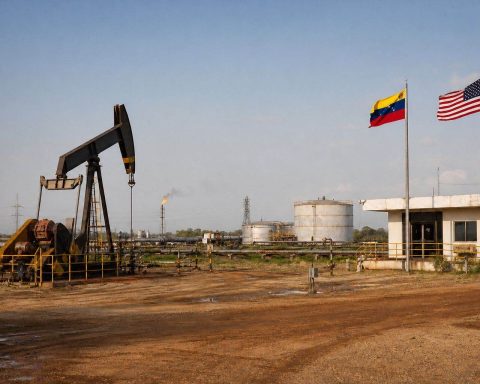
Oil prices fell sharply on Friday as hopes for a U.S.-Iran agreement pulled some of the war premium out of crude. Brent crude, the global benchmark used to price much of the world’s oil trade, was down 3.7% at $87.04 a barrel, while West Texas Intermediate, the U.S. benchmark, dropped 3.55% to $84.60, according to Reuters. Both contracts were at their lowest levels since April 17 after U.S. and Iranian officials said they were close to an agreement to halt the war in the Middle East. “The market thinks we’re closer to the deal,” Phil Flynn, senior analyst with Price Futures Group, told Reuters. Reuters
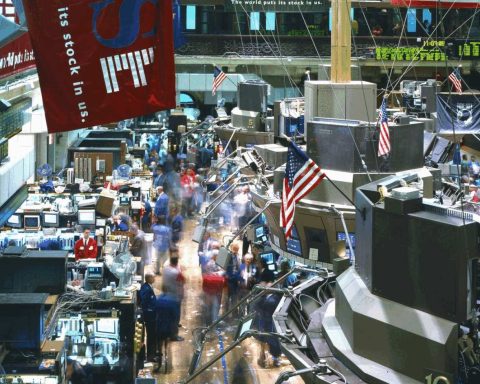
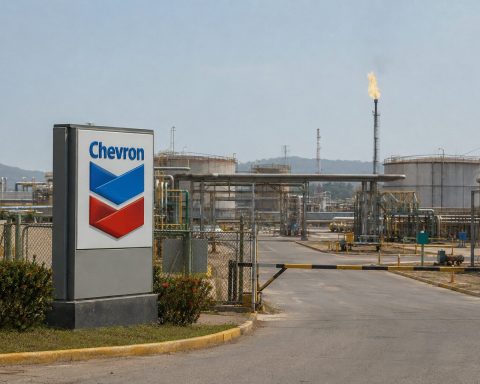
The move matters for stocks because oil is a direct earnings driver for producers such as Exxon Mobil and Chevron. When crude rises, producers usually earn more per barrel, which can lift cash flow, dividends and buybacks; when crude falls, investors often mark down future profits. But the broader stock market can rise when oil falls because lower fuel costs ease inflation pressure and can support consumers, airlines, transport companies and retailers. On Friday, Exxon Mobil traded near $148.27, up about 1.1%, Chevron traded near $187.96, up about 1.2%, and the Energy Select Sector SPDR Fund, a broad U.S. energy-stock ETF, was up about 1.6%, showing that investors were not simply selling every oil-linked stock on the crude decline.
The reason is that the supply story remains unsettled. The Strait of Hormuz, a narrow waterway at the mouth of the Persian Gulf, is a major energy chokepoint, and AP reported that roughly a fifth of global oil and natural gas once passed through it before war-related attacks and threats made shippers and insurers reluctant to use the route. AP also reported that flows remain below the roughly 15 million barrels a day that once moved through the strait, even as more Gulf Arab oil appears to be reaching the market with U.S. military support.
That is why the next catalyst is not just a headline about a peace deal, but proof that oil can move safely again. Reuters reported that a memorandum between the U.S. and Iran could be signed as soon as Sunday, with Geneva emerging as a likely venue, while Iranian media denied that speculation and said final terms had not been confirmed. “Headlines are driving the market once again as confidence grows that an eventual deal will be struck and the Strait (of Hormuz) reopens,” Tamas Varga, an analyst at PVM Oil Associates, told Reuters. Reuters
The bull case for oil and energy stocks is that crude remains historically elevated even after Friday’s drop, inventories are tight and any failed deal could quickly restore the risk premium — the extra price investors pay for the chance of supply disruption. The U.S. Energy Information Administration said in its June 9 outlook that global oil inventories are expected to fall by 6.3 million barrels a day in the second quarter and 7.6 million barrels a day in the third quarter, with OECD inventories forecast to fall to their lowest level since 2003. The EIA also forecast Brent at an average of $105 a barrel in June and July if the Strait of Hormuz remains closed to most shipping traffic in the near term.
The bear case is that de-escalation could remove more of the war premium from crude just as demand looks weaker. Goldman Sachs lowered its 2027 average Brent forecast to $80 a barrel, citing stronger supply growth from countries including the U.S., Brazil, Guyana, Venezuela and the UAE, along with persistent demand weakness and China’s shift toward alternatives such as electric vehicles. Goldman still saw Brent averaging $90 in the fourth quarter of 2026, but it also said faster supply normalization and weaker demand could push prices toward $70 in late 2026 and $60 in 2027.
For investors, that makes energy stocks risky rather than clearly cheap today. Exxon’s current price implies a price-to-earnings ratio of about 25, while Chevron’s is about 33, meaning investors are paying roughly 25 and 33 times each company’s recent earnings, respectively. Those valuations can be supported if crude stays high and cash flows remain strong, but they become harder to justify if a peace deal reopens shipping lanes and oil prices keep sliding.
The main number to watch now is not only Brent’s next move, but whether tankers, insurers and Gulf exporters behave as if the Strait of Hormuz is reopening. If shipments recover and inventories stop falling, oil-linked stocks could lose support even as the broader market benefits from lower inflation risk. If talks fail or shipping remains restricted into late July, analysts cited by Reuters warned that stronger seasonal demand and low inventories could push prices significantly higher, which would likely revive the earnings case for producers while pressuring fuel-sensitive sectors.
Related articles: NYSE:CVX