TOKYO — A powerful offshore earthquake late Monday night has rattled northern Japan, injuring dozens of people, triggering tsunami warnings and forcing tens of thousands to evacuate before authorities lifted all tsunami alerts early on Tuesday, December 9, 2025.Reuters+1
This article summarizes what is known so far about the Japan earthquake today, based on official data from the Japan Meteorological Agency (JMA), statements from Japanese authorities and reporting from multiple international news outlets. The situation remains fluid and figures may be updated.
Key Facts at a Glance
- Date & time of main quake: Around 11:15 p.m. local time on Monday, December 8, 2025 (23:15 JST), corresponding to 14:15 UTC.Reuters+1
- Magnitude: Initially estimated around 7.6; JMA now lists it at 7.5.Reuters+2Newsweek+2
- Epicenter: In the Pacific Ocean off the coast of Aomori Prefecture in the Sanriku region, roughly 80 km (50 miles) offshore at a depth of about 50–54 km.Reuters+2Newsweek+2
- Worst shaking: A maximum intensity of “upper 6” on Japan’s 1–7 shindo scale in Hachinohe, Aomori, strong enough to make standing difficult and topple heavy furniture.Reuters+2Hindustan Times+2
- Injuries: At least 30–33 people injured, mostly by falling objects and quake-related accidents; some outlets and early domestic reports mention up to around 35 injuries as assessments continue.Wikipedia+3Reuters+3Hindustan Times+3
- Evacuations: Approximately 90,000 residents along Pacific coastal areas of Aomori, Iwate and Hokkaido were ordered or advised to evacuate due to tsunami warnings.Reuters+2The Independent+2
- Tsunami: Warnings for waves up to 3 meters (10 feet) were issued; observed tsunamis reached around 20–70 cm (7–27 inches) at several ports before warnings were downgraded and later lifted.Reuters+2Live Science+2
- Aftershocks: Multiple aftershocks have followed, including a 6.6–6.7 magnitude tremor in the same region and several M5+ quakes.Earthquake Track+2Newsweek+2
- Nuclear safety: No abnormal readings at major nuclear power plants; however, regulators reported a non‑radioactive water leak (about 450 liters) from a spent fuel cooling system at the Rokkasho fuel reprocessing plant, with levels still within safety limits.Hindustan Times+1
- Megaquake advisory: Authorities have issued a rare one-week “megaquake” advisory for parts of northern Japan, warning that the probability of a much larger M8+ earthquake along nearby trenches is temporarily elevated, though still low in absolute terms.Hindustan Times+3Reuters+3Newsweek+3
Where the Japan Earthquake Hit Today
The Japan earthquake today is being widely referred to as the 2025 Sanriku earthquake, after the historically quake-prone coastal region it struck. According to JMA and the U.S. Geological Survey (USGS), the main shock occurred:Reuters+2Live Science+2
- Off the Pacific coast of Aomori Prefecture, northeast Honshu
- At a depth of roughly 50–54 km below the seafloor
- Near coastal cities such as Misawa and Hachinohe
The quake’s magnitude is described slightly differently depending on the agency: USGS initially rated it M7.6, while JMA’s current figure is M7.5. These small differences are normal and reflect updated waveform analyses.Live Science+2Newsweek+2
On the shindo intensity scale, which measures surface shaking at different locations, the quake registered upper 6 in Hachinohe. That level of shaking typically:Reuters+2Hindustan Times+2
- Makes it nearly impossible for people to remain standing
- Can topple large furniture and cause structural damage in some buildings
- Often shatters windows and dislodges wall tiles
Shaking was felt widely across the Tōhoku region and into Hokkaido, and was noticed as far south as the Tokyo area.Live Science+1
Tsunami Warnings Lifted — But ‘Megaquake’ Alert Remains
Immediately after the quake, JMA issued tsunami warnings for parts of Hokkaido, Aomori and Iwate prefectures, cautioning that waves of up to 3 meters (10 feet) could strike coastal communities.Reuters+2Live Science+2
In the hours that followed:
- Multiple ports recorded tsunami waves between roughly 20 and 70 cm.
- Authorities downgraded the warnings to a tsunami advisory as data showed lower wave heights than feared.Reuters+2Live Science+2
- By early Tuesday, all tsunami alerts and advisories were lifted for Japan’s northern Pacific coast.Reuters+2Hindustan Times+2
Internationally, agencies such as NOAA and the Pacific Tsunami Warning Center reported no risk of a basin‑wide tsunami for the U.S. West Coast, Hawaii or other distant Pacific shores.Live Science+1
What Is the ‘Megaquake’ Advisory?
While tsunami warnings have ended, another kind of alert has captured headlines: a one‑week “megaquake” advisory. This system, introduced by Japan in 2022, is activated when a strong earthquake in certain high‑risk zones increases the statistical probability of a much larger event (magnitude 8 or higher).Reuters+2The Independent+2
Officials emphasize that:Newsweek+2Hindustan Times+2
- The absolute chance of such a megaquake is still low, but higher than usual for about a week.
- The advisory covers much of the Pacific coast from Hokkaido down to Chiba Prefecture, including Sanriku.
- People are encouraged to check evacuation routes, secure heavy furniture, prepare emergency kits, and stay updated with local announcements.
In short, the advisory is not a prediction that a megaquake will definitely occur; it is a precautionary alert urging heightened readiness.
Injuries, Damage and Disruption So Far
As of the latest reports on December 9, Japanese officials and international media say at least 30–33 people have been injured, with some domestic tallies suggesting around 35 injuries as more data comes in.Wikipedia+3Reuters+3Hindustan Times+3
Most injuries have been described as non‑life‑threatening, caused by:
- Falling objects inside homes, offices and shops
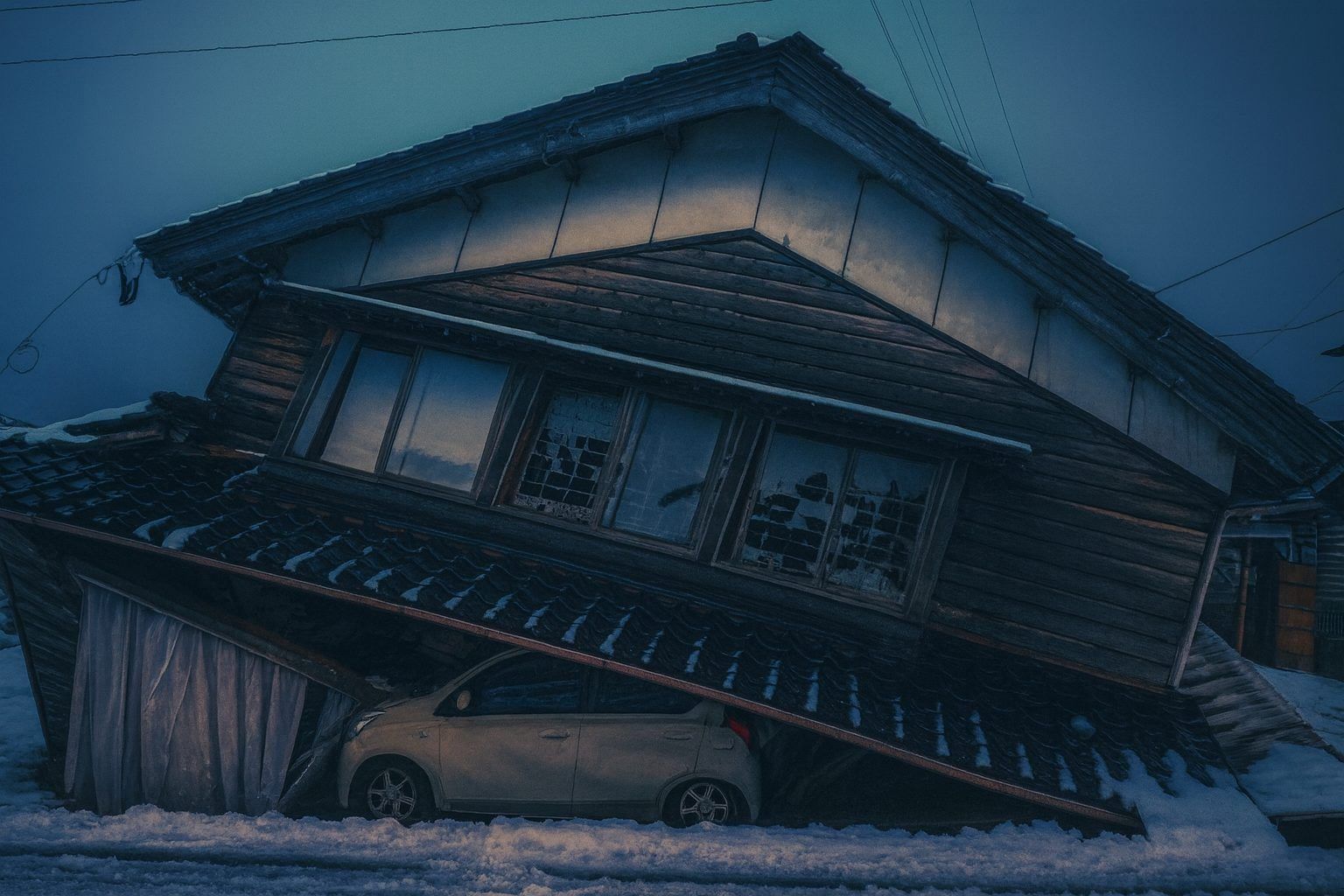
- Structural damage such as collapsed staircases or ceilings
- Road damage, including a car reportedly falling into a ground fissure or sinkhole in a quake‑affected area of TōhokuHindustan Times+1
Early damage reports highlight:
- Broken glass and interior damage to commercial buildings and homes in Hachinohe and other Aomori communitiesHindustan Times+1
- Cracked and heaved road surfaces, with some sections closed to traffic for safety inspectionsReuters+1
- At least one confirmed fire in a residential building, quickly brought under control according to government briefingsReuters+1
- Temporary power outages affecting thousands of households in parts of Aomori, Iwate and Hokkaido, with electricity largely restored by Tuesday morningReuters+2Newsweek+2
So far, there have been no reports of deaths directly linked to the earthquake or tsunami.Reuters+2The Independent+2
Transport: Bullet Trains, Flights and Local Travel
The quake hit a region heavily dependent on rail and air links. In response, operators moved quickly to check tracks, runways and other infrastructure.Reuters+2Hindustan Times+2
Key impacts include:
- Shinkansen (bullet train): East Japan Railway suspended operations on parts of the Tōhoku Shinkansen between Morioka (Iwate) and Shin‑Aomori (Aomori), with knock‑on delays further south, including services toward Tokyo and the Akita Shinkansen line.Reuters+2Hindustan Times+2
- Conventional rail and local lines: Some regional lines in Tōhoku and Hokkaido also paused operations for safety checks.
- Air travel: At New Chitose Airport in Hokkaido, about 200 passengers reportedly spent the night in the terminal after flights were delayed or cancelled during tsunami alerts and inspections.The Independent+1
- Roads and highways: Selected coastal and mountain road segments were closed or restricted where cracks, subsidence or landslides were reported.Reuters+1
Travelers are being urged to check real‑time updates from transport operators before heading to stations or airports in northern Japan.
Nuclear Plants and the Rokkasho Water Leak
Given Japan’s history with the 2011 Fukushima Daiichi disaster, any strong earthquake quickly raises concerns about nuclear safety.
Authorities and utilities report that:Reuters+2Hindustan Times+2
- Nuclear power plants in the region operated by Tohoku Electric Power and Hokkaido Electric Power show no abnormal readings and continue to run their safety systems normally.
- The Nuclear Regulation Authority (NRA) says roughly 450 liters of water overflowed from a spent fuel cooling system at the Rokkasho fuel reprocessing plant in Aomori Prefecture. Sensors indicate that:
- Water levels remain within normal operating ranges.
- There has been no release of radioactive material and no impact on public safety.Hindustan Times
Regulators stress that checks are ongoing but that there is no evidence of a nuclear emergency at this time.
Aftershocks: A Continuing Hazard
Seismologists and officials warn that aftershocks are likely to continue for days or weeks, some potentially strong enough to cause additional damage.
Current data and media reporting indicate:Live Science+3Earthquake Track+3Newsweek+3
- A 6.6–6.7 magnitude aftershock struck later in the same offshore region near Hachinohe, felt widely across northern Japan.
- Several additional quakes of around M5 have been recorded in the broader area.
- Statistical models suggest that the likelihood of another quake as strong as or stronger than the main shock is relatively low but not negligible in the coming week, which underpins the current megaquake advisory.
Residents are being told to:
- Expect strong shaking if a large aftershock occurs
- Stay clear of unsafe buildings, slopes and seawalls
- Keep emergency kits and evacuation plans ready throughout the advisory period
Why Japan — and Sanriku — Are So Earthquake-Prone
Japan sits along the Pacific “Ring of Fire”, a vast arc of subduction zones, ocean trenches and volcanoes that produces about 20% of the world’s earthquakes of magnitude 6.0 or higher.Reuters+2Newsweek+2
Northern Honshu and Hokkaido lie near the boundary where the Pacific Plate dives beneath the Okhotsk microplate, a tectonic setup that has generated many major historical earthquakes and tsunamis.Wikipedia+1
The Sanriku coastline in particular has a tragic seismic history, including:
- The 869 Sanriku earthquake and tsunami (historical records)
- The 1933 Sanriku earthquake, a powerful offshore event that produced devastating waves
- The 2011 magnitude 9.0 Tōhoku earthquake and tsunami, which killed nearly 20,000 people and triggered the Fukushima nuclear crisisReuters+2Newsweek+2
The new megaquake advisory system was introduced partly in response to 2011, when a magnitude‑7‑class foreshock struck two days before the catastrophic 9.0 mainshock. Authorities now issue a one‑week advisory whenever a large quake hits certain high‑risk subduction zones, to encourage short‑term preparedness even if precise prediction remains impossible.Reuters+2The Independent+2
What Residents and Travelers Should Do Now
If you are in Aomori, Iwate, Hokkaido or nearby coastal regions, local guidance from municipal offices and JMA should be your primary source of information. The following actions align with advice from Japanese officials and international disaster agencies:Hindustan Times+2Newsweek+2
1. Stay Informed Through Official Channels
- Follow updates from:
- Japan Meteorological Agency (JMA)
- Local city or prefectural offices
- NHK and other trusted broadcasters
- If you’re a foreign national, check alerts from your embassy or consulate.
2. Prepare for Aftershocks and a Possible Larger Quake
- Keep heavy furniture secured to walls where possible.
- Clear escape paths inside your home or workplace.
- Assemble or refresh an emergency kit with water, food, medicines, flashlights, power banks and important documents.
- Identify safe evacuation routes to high ground in case of future tsunami warnings.
3. Practice Earthquake Safety
- During strong shaking:
- Drop, Cover, and Hold On: Get under a sturdy table or desk, protect your head and neck, and stay put until the shaking stops.
- After shaking stops:
- Move away from coastal areas if you are in a tsunami zone and cannot receive official instructions.
- Avoid elevators, damaged stairwells and visibly cracked buildings.
4. Travel Cautiously
- Check live information from:
- JR (railway operators) for Shinkansen and local train status
- Airport websites and airlines for flight delays or cancellations
- Highway authorities for road closures or detours
Government and Community Response
Japan’s central government has activated an emergency task force at the crisis management center in the Prime Minister’s Office. Prime Minister Sanae Takaichi has called for rapid assessment of damage, clear communication on tsunami and evacuation orders, and close coordination with local authorities.Reuters+2Hindustan Times+2
Steps underway include:
- Damage surveys by Self‑Defense Forces, police, fire services and local officials
- Aerial inspections using helicopters and aircraft from bases such as Hachinohe Air Base to scan for landslides, coastal damage and infrastructure issuesHindustan Times+1
- Temporary shelters and support services for evacuated or stranded residents
- Ongoing public briefings about aftershock risk and megaquake advisory guidance
For now, authorities describe the event as serious but not catastrophic, thanks to Japan’s strict building codes, extensive sea walls and well‑rehearsed emergency systems. However, the one‑week advisory underscores that vigilance and preparedness remain crucial across northern Japan.
Looking Ahead
The Japan earthquake today (December 9, 2025) will likely prompt renewed debate about earthquake‑resilient infrastructure, tsunami defences and nuclear safety standards in one of the world’s most seismically active countries.
In the coming days, expect updates on:
- Refined estimates of injuries, damage and economic impact
- Detailed analyses of the fault rupture and tectonic implications
- Adjustments to the megaquake advisory, depending on aftershock patterns and scientific assessment
Until then, authorities stress a simple message: stay calm, stay prepared and rely on official information channels.