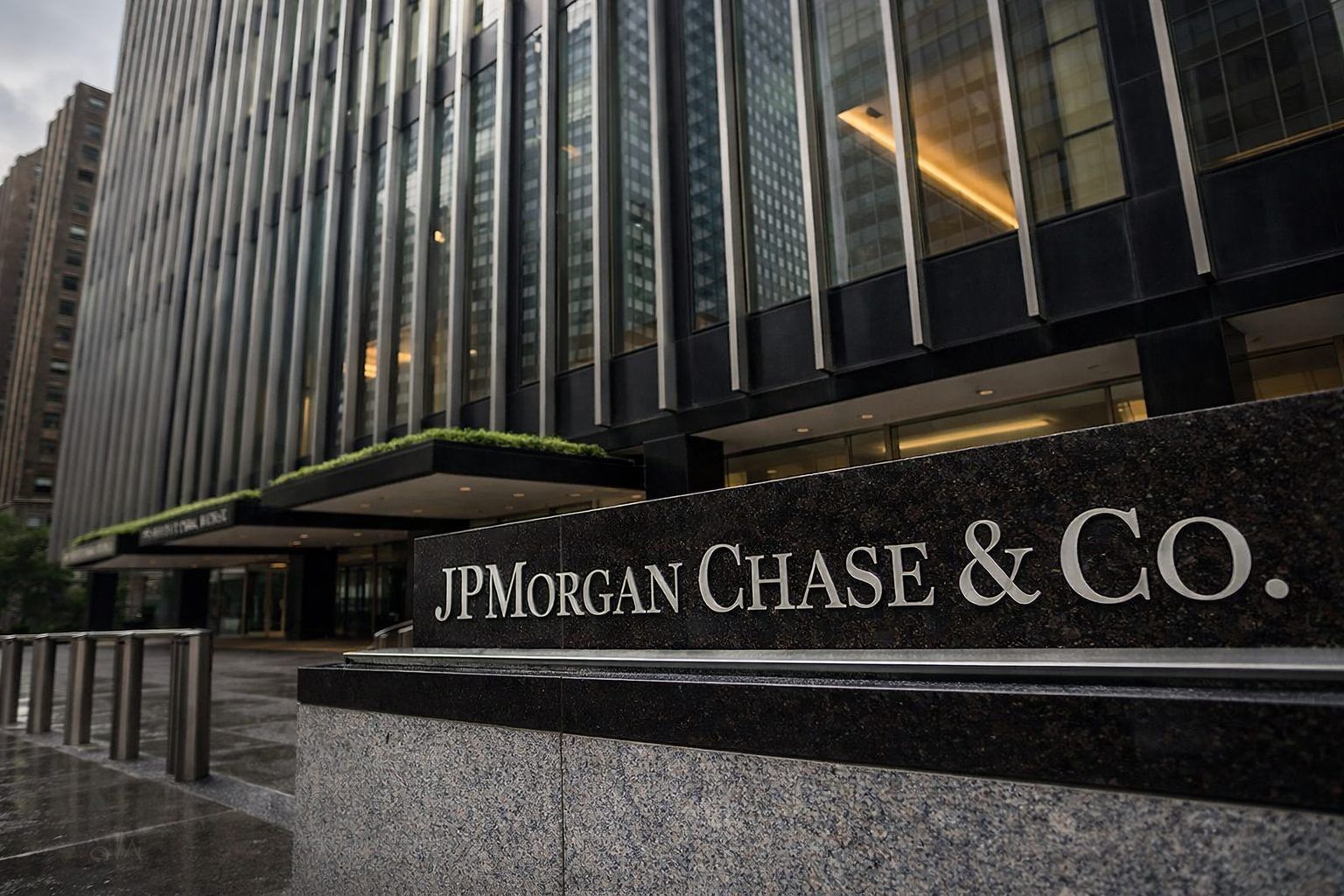
New York, January 14, 2026, 10:40 EST — Regular session
- Shares of JPMorgan Chase slipped roughly 0.8% in early trading
- The bank disclosed a $2.2 billion credit reserve tied to the Apple Card in its quarterly earnings report
- Traders are balancing dealmaking momentum against credit-card policy risks and the outlook for interest income in 2026
Shares of JPMorgan Chase & Co slipped Wednesday, continuing a mixed response to the bank’s quarterly results. Investors digested a sizable reserve linked to Apple Card and a drop in investment banking fees, offset somewhat by robust trading revenue. The stock dropped $2.40, roughly 0.8%, to $308.50.
These moves carry weight since JPMorgan’s results often set the mood for the big U.S. bank earnings week, particularly around trading, dealmaking, and consumer credit. The bank entered the report with limited scope for surprises, following a solid rally in its shares.
A policy overhang looms as credit cards regain attention, coinciding with JPMorgan’s expanding footprint in the sector. Traders are weighing the impact if Washington intensifies pressure on pricing.
JPMorgan posted fourth-quarter net income of $13.0 billion, or $4.63 per share. When excluding a “significant item” related to the Apple Card portfolio, net income rose to $14.7 billion, or $5.23 per share, with reported revenue hitting $45.8 billion. Markets revenue climbed 17%, fueled by a 40% surge in equity markets revenue, while investment banking fees declined 5%. The bank set aside a $2.2 billion credit reserve for the Apple Card portfolio. It also repurchased $7.9 billion in common stock and paid out $4.1 billion in common dividends. SEC
Investors zeroed in on credit costs. The bank posted $4.7 billion in credit expenses for the quarter, breaking down into $2.5 billion in net charge-offs and a $2.1 billion net reserve build. Net interest income — essentially the gap between loan earnings and deposit costs — came in near $25.0 billion. According to the filing, the Apple Card reserve build links to a forward purchase commitment struck late last year and made public on Jan. 7. SEC
Dimon stuck to a well-worn theme about the economy. “The U.S. economy has remained resilient,” he stated in the bank’s release, though he cautioned that markets might be underestimating risks like geopolitics, “sticky inflation,” and high asset prices.
Outside JPMorgan, some investors pointed to the stock’s setup as a key factor. “The bar for perfection is set pretty high,” David Wagner, head of equities at Aptus Capital Advisors, told Reuters. He added that even strong results can leave “a lot … priced into the stock.” Reuters also reported the bank expects 2026 net interest income excluding markets to hit about $95 billion. JPMorgan execs pushed back against a proposed 10% cap on credit card interest rates. Finance chief Jeremy Barnum warned such a cap would be “very bad for consumers” and would force significant changes in the business. Reuters
But the stock’s next move hinges on more than just a quarterly beat or a single reserve increase. For many bank bulls this year, investment banking is the key driver, and JPMorgan’s deal fees fell short of the sharp rebound investors expected to see by now.
The downside scenario is clear: uneven dealmaking, rising credit costs from current levels, or a credit-card rate cap gaining ground could make bank earnings less predictable. A sharper-than-anticipated drop in interest rates might also squeeze interest income, despite potentially boosting loan demand.
JPMorgan’s stock is reacting sharply to rival results. Citi posted an adjusted beat but took a hit from a Russia-related charge. Wells Fargo fell short of estimates, dragging its shares down and highlighting the market’s swift backlash to any uncertainty clouding the 2026 outlook. Reuters
The next key event is just around the corner: Goldman Sachs will release its earnings on Thursday, Jan. 15, providing fresh insight into trading and deal activity following JPMorgan’s report. goldmansachs.com