Santa Monica Airport is getting one last act before its scheduled shutdown in 2028 – and it looks a lot like private‑jet travel for the price of an economy ticket.
Public‑charter carrier JSX has secured a lease and operating permit to fly new ATR 42‑600 turboprops from Santa Monica (SMO) to Las Vegas starting December 19, 2025, with one‑way fares advertised from $149. At the same time, the airline is facing a California environmental lawsuit, and its entire business model sits in the middle of a stalled federal rulemaking on public charters. Santa Monica+2Avgeekery.com+2
Below is a deep dive into what’s happening now, what’s coming next, and why JSX and rival Aero are suddenly everywhere in conversations about “semi‑private” flying.
Key takeaways
- JSX has a three‑year lease and Commercial Operations Permit at Santa Monica Airport running through November 30, 2028, consistent with the City’s plan to close the airport at midnight on December 31, 2028. Santa Monica+1
- First route: Santa Monica–Las Vegas on a 30‑seat ATR 42‑600 from December 19, 2025, initially once daily, with introductory fares from $149 one‑way including checked bags and onboard drinks. Avgeekery.com+2ch-aviation+2
- Residents and a new group called Measure LC Defense have sued the City under the California Environmental Quality Act (CEQA) to overturn JSX’s permit, arguing that scheduled passenger service is a major new impact that demands full environmental review. Santa Monica Daily Press+2LCDefense+2
- Nationwide, JSX is using the same 30‑seat public‑charter model to grow a $149‑and‑up “semi‑private” market alongside rivals like Aero, letting passengers use private terminals, skip regular TSA lines and arrive about 20 minutes before departure. BizJetNation+3ATR Aircraft+3Red94+3
- Federal regulators have been weighing tougher rules on public charters, but under the current administration that crackdown has effectively stalled, giving JSX breathing room to expand with new turboprops. Flight Global+2Cranfill Sumner LLP+2
Santa Monica approves JSX – but keeps 2028 closure on the books
On December 2, 2025, the City of Santa Monica announced that it had issued a Commercial Operations Permit and executed a three‑year lease allowing JetSuiteX (JSX) to operate at Santa Monica Airport through November 30, 2028. The City framed the decision as the only legally defensible way to honor a 2017 federal consent decree that guarantees its right to permanently close the airport at midnight on December 31, 2028, provided it continues to allow qualifying aviation uses in the meantime. Santa Monica+1
City staff and outside counsel ran what they described as a multi‑disciplinary review of JSX’s proposal, looking at:
- Safety and runway performance: the ATR 42‑600 is certified by the FAA and DOT for operation on SMO’s 3,500‑foot runway, backed by city‑operated aircraft rescue and firefighting capabilities. Santa Monica+1
- Noise and environmental impacts: modeling and historical data showed community noise contours staying inside the airport fence line, and officials concluded that JSX’s service did not constitute an “expansion of use” requiring a new environmental study. Santa Monica+1
- Traffic and security: JSX operates under DOT public‑charter rules and TSA‑approved security programs similar to commercial airlines, but from private‑style terminals with much smaller passenger volumes. Santa Monica+1
Santa Monica’s message has been remarkably consistent since at least September: approving short‑term leases for qualified operators like JSX is, in the City’s view, part of the legal path to shutting the airport down on time and turning the 192‑acre site into a park. Scauwg+1
First act: Santa Monica–Las Vegas on new ATR 42‑600 turboprops
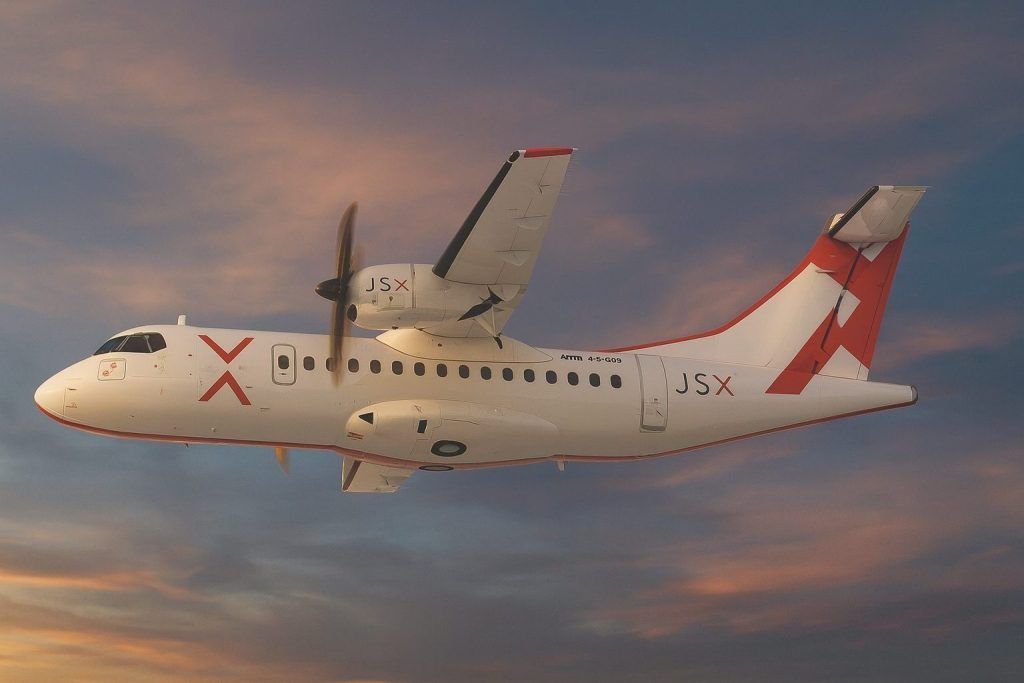
JSX’s Santa Monica launch is built around a new aircraft type for the company: the ATR 42‑600.
The route
- Launch date: December 19, 2025
- Route: Santa Monica (SMO) – Las Vegas Harry Reid (LAS)
- Frequency: one round‑trip daily to start, operating seven days a week
- Schedule (local times):
- SMO → LAS: departs 17:30, arrives 18:45
- LAS → SMO: departs 11:45, arrives 13:00 Avgeekery.com+2ch-aviation+2
JSX is selling the flights as all‑business‑class turboprop service with just 30 seats, complimentary cocktails and snacks, and two checked bags included – golf clubs and skis allowed – with starting fares from about $149 one‑way. Avgeekery.com+2Red94+2
Why the ATR 42 matters
For JSX, the ATR 42‑600 is more than a new airplane; it’s a new way into short‑runway airports like Santa Monica:
- 30‑seat, 1–2 layout: the aircraft, previously flown with 40+ seats, has been refitted with 30 wide, business‑style seats in ATR’s HighLine cabin concept. Avgeekery.com+1
- Short‑field performance: turboprop performance lets JSX safely operate from SMO’s 3,500‑foot runway, which is too short for the carrier’s Embraer regional jets. Avgeekery.com+1
- Fuel burn and emissions: turboprops typically use about half the fuel of similar‑size jets; JSX and ATR both emphasize lower operating costs and emissions as a selling point. Avgeekery.com+1
ATR’s own announcement in June 2025 highlighted that JSX would lease two ATR 42‑600s initially and signed a letter of intent for up to 25 ATR HighLine‑equipped aircraft (15 firm, 10 options), potentially including larger ATR 72‑600s – all in 30‑seat premium layouts. The manufacturer said this partnership could open more than 1,000 additional U.S. airports to JSX’s model. ATR Aircraft+1
The semi‑private trend: JSX and Aero bring “private jet vibes” from $149
JSX’s move into Santa Monica arrives amid a broader boom in “semi‑private” air travel – public charters and boutique carriers that feel like private jets but price closer to business‑class.
A recent New York Post feature spotlighted how JSX and competitor Aero let travelers: New York Post+2AFAR Media+2
- Use private or secondary airports instead of crowded hubs
- Arrive about 20 minutes before departure
- Skip regular TSA queues thanks to dedicated, TSA‑approved screening in small terminals
- Relax in leather seats with free drinks and high‑speed Wi‑Fi
- Pay starting fares advertised from around $149 for shorter routes, instead of the thousands typically associated with full private jets
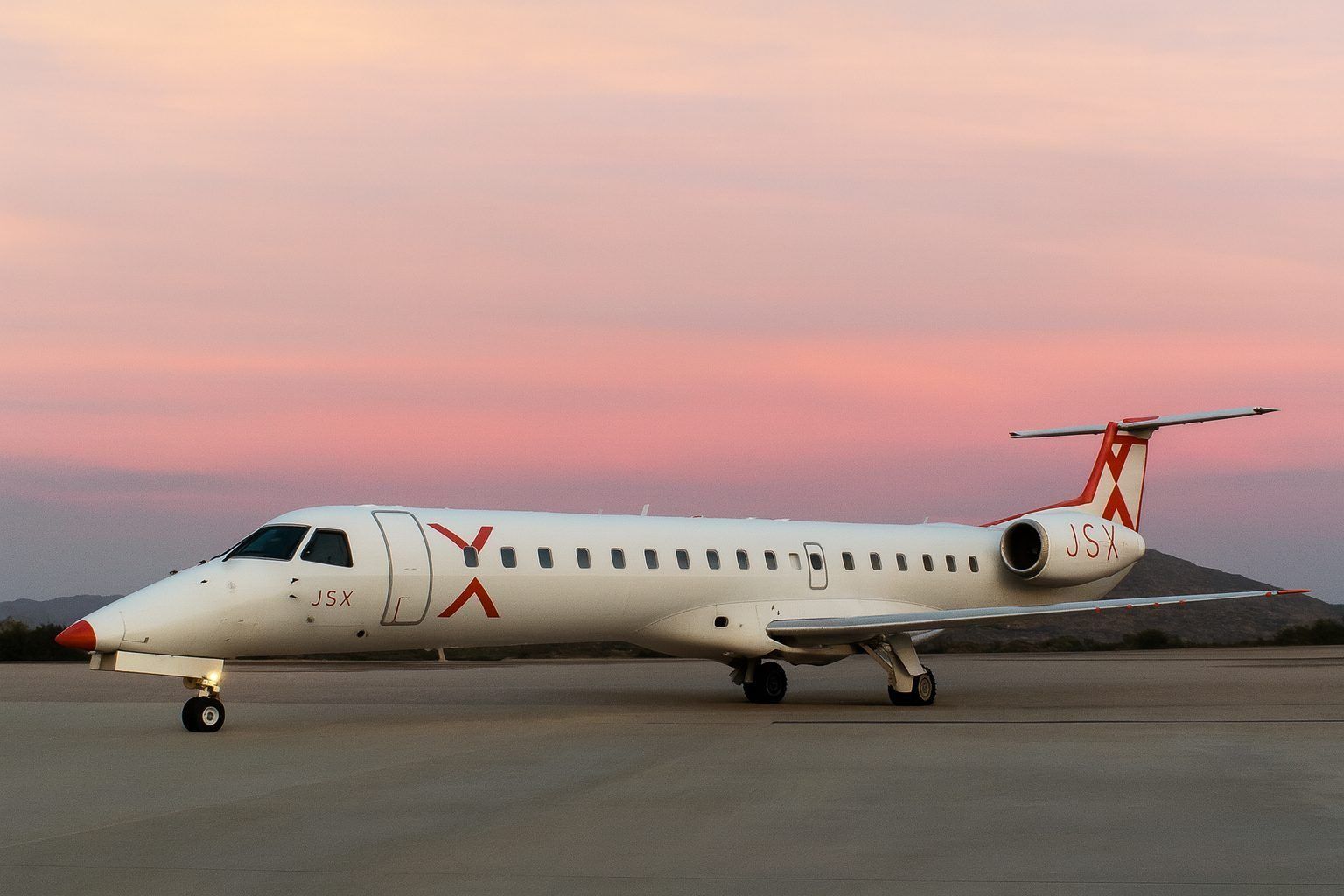
JSX leans into scale and value: it runs roughly 140 public‑charter flights a day to around 27–28 destinations in the U.S. and Mexico, mostly with 30‑seat Embraer ERJ‑135/145 jets plus a small (but growing) ATR turboprop fleet. New York Post+3ATR Aircraft+3Santa Monica …
Aero, by contrast, offers a more intimate, ultra‑premium cabin with fewer seats and fares often exceeding $1,000 per leg, targeting high‑net‑worth travelers out of airports like Van Nuys and Teterboro. New York Post+2The Airline Observer+2
Travel and aviation analysts quoted across recent coverage argue that:
- Semi‑private carriers are squeezing the gap between private jets and big‑airline first class. New York Post+1
- For busy, affluent travelers, time saved on the ground can matter more than the hour in the air. Simple Flying+1
- Major airlines are watching closely because these operators nibble at their most profitable routes and premium customers, especially on short‑haul business and leisure corridors like Los Angeles–Las Vegas. Red94+2Private Jet Card Comparisons+2
Local backlash: CEQA lawsuit targets JSX’s permit
Not everyone is excited to see more passengers at Santa Monica Airport.
On November 21, 2025, Measure LC Defense – a new advocacy group named after the city charter measure that guides reuse of the airport land – and two long‑time airport critics filed a CEQA lawsuit in Los Angeles Superior Court. They’re asking the court to: Santa Monica Daily Press+2LCDefense+2
- Rescind the City’s approval of JSX’s Commercial Operations Permit
- Block JSX from operating at SMO until a full environmental review is completed
Key arguments from the petition and advocacy materials include:
- The City relied on three CEQA exemptions, including a “ministerial” classification and a negligible‑expansion exemption, when it filed a Notice of Exemption on October 10, 2025. Santa Monica Daily Press+1
- JSX’s plan to operate multiple daily 30‑seat flights represents a significant change from SMO’s historic use as a general‑aviation field with no scheduled passenger service. Santa Monica Daily Press+1
- Petitioners say JSX operations could more than double monthly jet fuel consumption at the airport—from roughly 30,000 gallons to 66,000 gallons—worsening local air quality and ultrafine particle pollution in surrounding neighborhoods. Santa Monica Daily Press+1
- They also cite concerns about noise, ground traffic, emergency response capacity and shorter‑than‑standard runway protection zones near homes and schools. Santa Monica Daily Press+1
Measure LC Defense positions itself as pro‑closure and pro‑park, arguing that the lawsuit is meant to protect health and keep the City on track for a 2028 shutdown, not to stop the airport from closing. LCDefense+1
Aviation‑focused commentators, including mileage blogger Gary Leff, counter that CEQA is often used as a delay and cost‑inflation tool rather than an outright veto, and that federal law plus the consent decree sharply limit how far Santa Monica can go in curbing aviation activity while the airport remains open. View from the Wing+1
The lawsuit’s outcome is uncertain, but even a temporary restraining order or forced environmental impact report could slow JSX’s build‑out at SMO.
The City’s legal stance: constrained by federal consent, backed by CEQA exemptions
On the other side of the courtroom, Santa Monica argues it had very little discretion once JSX met technical and safety standards:
- The CEQA Notice of Exemption explicitly labels the operations permit as a ministerial action, citing state guideline sections for ministerial decisions, “common sense” findings of no significant impact, and minor changes to existing facilities. CEQAnet+1
- The 2017 consent decree with the FAA requires the City to keep the airport open through December 31, 2028 and to allow “qualifying aviation uses” under limited‑term leases if they meet established minimum standards. Santa Monica+1
- City officials stress that all leases, including JSX’s, will expire or be terminated before the closure date, reinforcing that the airport is still on track to become a park. Santa Monica+1
That sets up a classic California tension: environmental‑review advocates using state law to demand deeper analysis versus a local government trying to stay in compliance with binding federal agreements.
Wider regulatory backdrop: public charters in the FAA’s crosshairs – and then… pause
JSX doesn’t operate as a traditional Part 121 airline. Its flights are sold as public charters under DOT Part 380, while the aircraft themselves operate under FAA Part 135 rules, with a hard cap of 30 passenger seats per aircraft. Cranfill Sumner LLP+2crankyflier.com+2
That structure enables much of what makes JSX appealing:
- Use of many more airports, including small executive fields
- Different pilot retirement rules than major airlines
- Operations from private terminals with bespoke security screening
- Lower operating‑cost structures than big legacy carriers
Major airlines and pilot unions spent 2023–24 urging the FAA to close what they call the “Part 135/380 loophole,” arguing that public charters like JSX and Aero look indistinguishable from regular airlines and should face the same safety and labor requirements. crankyflier.com+1
The FAA responded by signaling a rulemaking effort to tighten definitions of scheduled, on‑demand and supplemental operations. At the same time, the TSA rolled out new screening rules for public charters, requiring many operators to adopt TSA‑approved equipment and processes even at private terminals as of mid‑2025. Cranfill Sumner LLP
However, a December 2025 analysis from FlightGlobal notes that under the current Trump administration, the public‑charter rulemaking appears to have stalled and is now being re‑reviewed in light of a broader deregulation agenda. The initiative remains on the FAA’s regulatory calendar but no formal Notice of Proposed Rulemaking has appeared. Flight Global+1
For JSX, that limbo is effectively an opportunity window: enough regulatory pressure to take seriously, but no immediate mandate to upend its model just as it invests in a new turboprop fleet.
JSX’s growth play: 1,000 airports and a turboprop comeback
Zoom out from Santa Monica, and the ATR 42 is clearly not a one‑off experiment.
Across ATR, ch‑aviation and business‑press reporting, a consistent picture emerges: Avgeekery.com+3ATR Aircraft+3ch-aviation+3
- JSX took delivery of its first ATR 42‑600 in November 2025, with registration N408SV (to become N400JX).
- It plans four ATR 42‑600s in the initial tranche, with options that could take the fleet to 25 turboprops.
- The aircraft are configured with 30 all‑business‑class seats, in‑seat power and planned Starlink Wi‑Fi from early 2026.
- Management repeatedly highlights a target of reaching 1,000+ mostly underserved airports that bigger jets and stricter Part 121 rules struggle to reach.
Avgeek‑focused coverage also notes that turboprops have virtually vanished from U.S. mainline regional fleets since Horizon Air retired its Dash 8‑Q400s and Silver Airways collapsed in 2025. JSX is trying to turn that absence into an advantage, arguing that on 60–90‑minute hops, the time you save on the ground matters far more than a few minutes difference in cruise speed. Avgeekery.com+2Red94+2
Future candidate markets highlighted in recent analysis include:
- Truckee, CA (TKF) – a high‑altitude, short‑runway gateway to Tahoe
- Telluride, CO (TEX) – another challenging field that traditional jets can’t easily serve
- Seasonal island and resort destinations where small airports sit closer to where travelers actually want to be
If the Santa Monica–Las Vegas route fills up at the advertised price points, analysts expect JSX to replicate the template across the West and, eventually, into the Northeast and Southeast. Red94+2Red94+2
What today’s news means for travelers
For travelers in Los Angeles and on the Westside in particular, the December 19 launch is more than just another way to get to Las Vegas:
- Shorter surface trips: Santa Monica residents avoid the slog to LAX, Burbank or Ontario for a weekend in Vegas. Avgeekery.com+1
- Time‑savings at the airport: checking in 20 minutes before departure (instead of 90–120) and walking directly from a small lounge to a 30‑seat aircraft changes the door‑to‑door math for short flights. ATR Aircraft+2JSX+2
- Predictable pricing: while fares can climb well above $149 on busy days, the headline entry price puts semi‑private travel within reach of frequent business flyers and upscale leisure travelers. Red94+2Red94+2
For residents living around SMO, the implications are more complicated:
- Noise and traffic may rise from scheduled passenger service, even with quieter turboprops and strict curfews in place. Santa Monica Daily Press+2LCDefense+2
- Environmental impacts are hotly contested: city analyses and JSX marketing emphasize lower emissions per seat, while activists focus on increased fuel throughput and cumulative exposure to ultrafine particles. ATR Aircraft+3Santa Monica+3Santa Monica D…
- The bigger fight over what comes after 2028 – Great Park vs. alternative development visions – will continue regardless of what happens with JSX’s flights. Scauwg+1
And for the broader aviation industry, Santa Monica is turning into a high‑profile case study:
- Can a 30‑seat public‑charter operator run regular, by‑the‑seat service from a politically sensitive urban airfield without triggering enough backlash to be forced out?
- Will turboprop‑based semi‑private service prove sustainable once more stringent TSA rules and any future FAA regulations are fully baked in? Cranfill Sumner LLP+2Flight Global+2
Looking ahead: three scenarios to watch
Based on current reporting and expert commentary, three broad scenarios are in play for the next 2–3 years:
- Smooth ramp‑up at SMO
- The CEQA lawsuit fails or results in only minor process changes.
- JSX adds more SMO–LAS frequencies and possibly additional destinations while staying within noise and curfew rules.
- The airport still closes on December 31, 2028, and JSX shifts those turboprops to other short‑runway markets.
- Delayed but not denied
- Courts require Santa Monica to redo environmental review, slowing but not permanently blocking JSX operations.
- JSX reallocates aircraft to other airports temporarily, then returns once paperwork catches up. View from the Wing+1
- Regulatory squeeze from Washington
- The FAA revives its public‑charter rulemaking with stricter operating rules or pushes some larger operators toward Part 121 requirements.
- That could raise costs, cut flexibility or cap growth, particularly if coupled with labor‑driven changes like stricter pilot age limits. Flight Global+2crankyflier.com+2
Regardless of which path plays out, JSX has already managed something remarkable: it has turned a small, embattled city airport into the launchpad for a national conversation about how – and where – Americans want to fly in the 2020s.