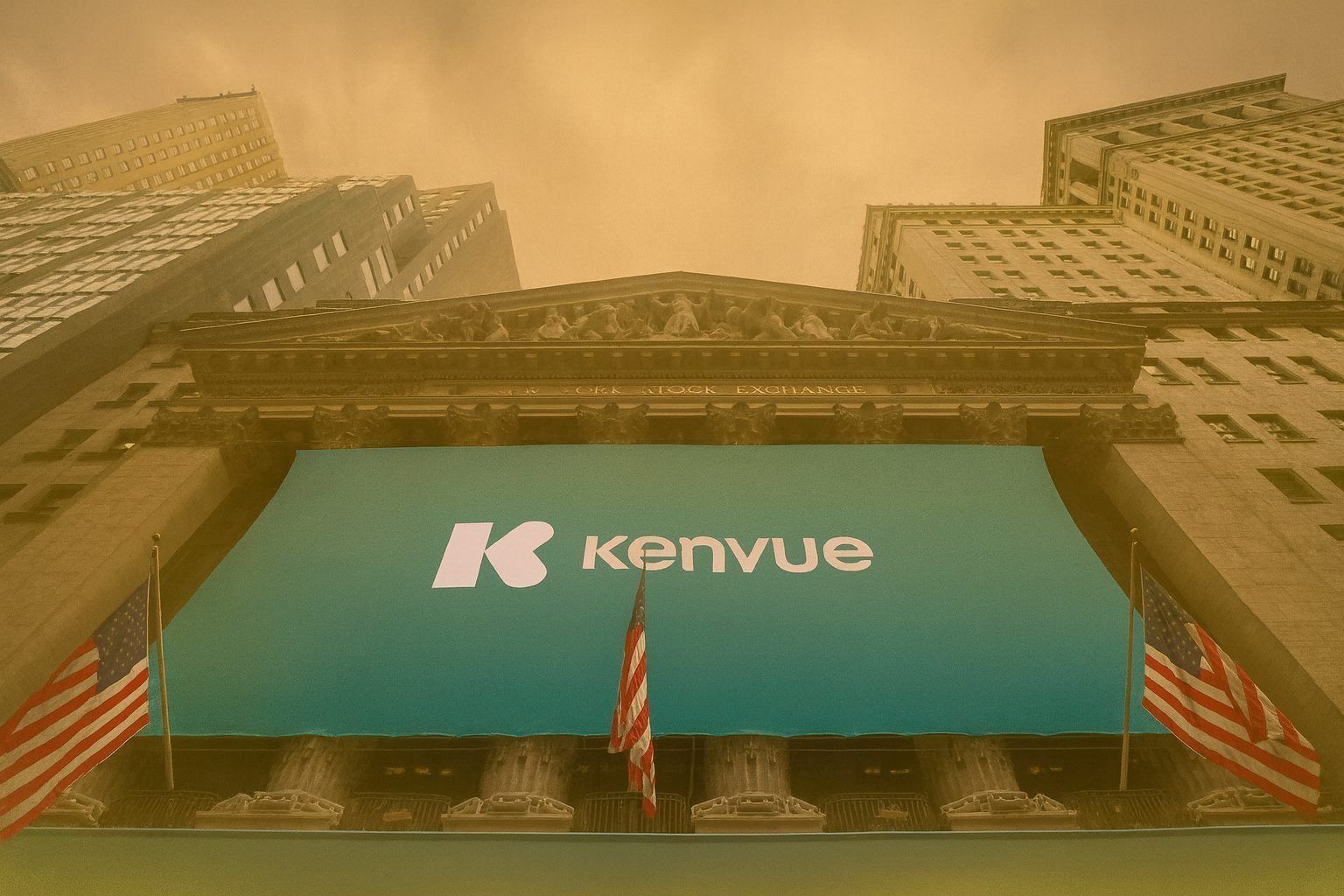
Kenvue Inc. (NYSE: KVUE)—the consumer health company behind brands such as Tylenol, Band-Aid, Listerine, Neutrogena, and Aveeno—is trading in a market that feels less like “buy-and-hold fundamentals” and more like “event-driven probability.” The reason: Kimberly-Clark’s planned acquisition of Kenvue, a deal that has put a very visible “price anchor” on KVUE… while lawsuits, regulatory steps, and the calendar to closing keep the stock from simply snapping to the offer value. investors.kenvue.com+2Reuters+2
Below is what matters for KVUE as of Monday, December 15, 2025: where the stock is trading, what the Kimberly-Clark deal implies, the newest filings and headlines hitting screens today, and the forecasts/analyses investors are using to handicap the next move.
KVUE stock price on Dec. 15, 2025: where it’s trading and what that signals
Kenvue shares are hovering around $17.3 in Monday trading (midday UTC), with company-posted “Stock Info” showing $17.32 and an intraday range roughly in the high-$16s to mid-$17s. investors.kenvue.com+1
That level is important not because $17 is magical—but because it sits below what the pending acquisition would be worth if it closed today, creating a persistent “deal discount” that the market is effectively assigning to time, risk, and uncertainty.
The Kimberly-Clark deal: the terms, the timeline, and the “spread” keeping KVUE below the offer
On Nov. 3, 2025, Kimberly-Clark (KMB) and Kenvue announced a cash-and-stock transaction valued at about $48.7 billion (enterprise value) at announcement. Under the terms disclosed by the companies, Kenvue shareholders would receive $3.50 in cash plus 0.14625 shares of Kimberly-Clark for each KVUE share. The companies have framed the combination as creating a consumer health and wellness giant with projected annual revenue around $32 billion and targeted synergies (often cited around $2.1B run-rate synergies). The expected close: second half of 2026, subject to shareholder and regulatory approvals and other customary conditions. SEC+3investors.kenvue.com+3Reuters+3
The deal math as of Dec. 15, 2025 (why KVUE isn’t trading at “$21”)
Because the offer includes KMB stock, the implied value of the consideration moves with Kimberly-Clark’s share price.
- KMB is trading around $103.15 on Dec. 15.
- The stock component therefore implies 0.14625 × $103.15 ≈ $15.09. investors.kenvue.com
- Add the $3.50 cash portion and the implied value is roughly $18.59 per KVUE share (based on those real-time inputs). investors.kenvue.com
- With KVUE around $17.33, the “spread” is about $1.26, or roughly 7%. investors.kenvue.com
In plain English: the market is pricing in that (1) closing is a long way off, and (2) there’s non-trivial risk—legal, regulatory, political, or shareholder-related—that could delay, reshape, or even derail the transaction.
Today’s “current news” flow (Dec. 15): filings, positioning, and shareholder-law-firm noise
While there’s no single blockbuster corporate press release stamped “Dec. 15” from the companies themselves, today’s headline stream is still meaningful because it reflects how investors are positioning around the deal.
Institutional positioning: new stakes and reduced positions (reported Dec. 15)
MarketBeat is flagging multiple ownership/positioning updates dated Dec. 15, 2025, including:
- Stance Capital LLC reporting a new position in Kenvue (via a filing-based writeup). MarketBeat
- Troy Asset Management Ltd reported as lowering its position (another filing-based summary). MarketBeat
On their own, these kinds of updates rarely move a mega-cap stock. But in a merger-arbitrage setup, incremental evidence about who’s in the name (and who’s leaving) can matter—especially as the shareholder vote approaches.
“Shareholder alert” press releases: what they usually mean in M&A (and what to do with them)
Over the past few days (leading into Dec. 15), multiple plaintiff-side firms have pushed “investigation” announcements related to the Kimberly-Clark/Kenvue deal, typical of large public-company mergers. Examples include notices distributed via PR Newswire and other syndication channels that repeat the deal terms and urge shareholders to contact the firm; at least one such release states that a shareholder vote is scheduled for Jan. 29, 2026 (note: this is from a law-firm release, not a company press release). PR Newswire+2GlobeNewswire+2
In practice, these releases don’t automatically imply wrongdoing. They’re better treated as a reminder to watch for:
- the final/proxy materials,
- the vote timeline,
- any disclosure updates or amended filings,
- and the level of shareholder support—especially from institutions.
Deal process update: an S-4 has been filed (a real step forward)
One concrete sign the process is moving: SEC exhibits dated Dec. 12, 2025 reference Kimberly-Clark’s Form S‑4 registration statement (File No. 333‑291928) and the joint proxy statement/prospectus that forms part of it. SEC+2SEC+2
That matters because mergers of this size don’t close on vibes. They close on paperwork, regulatory review, and votes. An S‑4 in motion means the deal has shifted from “announced” to “in the formal approval pipeline.”
The big risk bucket: Tylenol litigation, politics, and Texas legal pressure
For KVUE specifically, the market’s discount is heavily shaped by headline risk around Tylenol and the broader legal ecosystem that formed around claims related to acetaminophen use during pregnancy.
Key points investors are tracking:
- Texas Attorney General Ken Paxton sued Johnson & Johnson and Kenvue in late October 2025, alleging they concealed risks related to Tylenol use in pregnancy (claims the companies dispute). Reuters
- Texas also sought to block a roughly $400 million dividend and restrict certain marketing; Reuters reported developments in November around court consideration and outcomes. Reuters+2Reuters+2
- A separate cluster of private cases alleging a link between Tylenol and autism/ADHD has been in flux; Reuters reported that an appeals court was weighing whether to revive litigation after earlier dismissals, with Kenvue maintaining the product is safe and researchers noting there is no firm evidence of a causal link. Reuters+1
- More recently (within the last week), Bloomberg/other outlets reported a Texas judge ordering Kenvue and J&J to register to do business in Texas or face business limitations—another example of state-level legal pressure staying in the headlines. Bloomberg+1
Why this matters for the stock: even if a buyer believes the science ultimately favors Kenvue, litigation and political noise can still damage brands, raise costs, and create uncertainty—which shows up as a wider merger spread and a lower KVUE trading price versus the deal’s implied value. Reuters and the Financial Times both highlighted investor unease around the Tylenol overhang and the broader question of whether Kimberly-Clark is taking on “damaged goods” risk. Reuters+2Financial Times+2
Fundamentals check: what Kenvue last reported and what it guided for 2025
Even in a deal situation, operations still matter—because buyers can renegotiate, shareholders can vote no, and regulators can slow timelines. Kenvue’s most recent quarterly reporting (for Q3 2025, ended Sept. 28, 2025) showed:
- Net sales down 3.5% year over year; organic sales down 4.4%. investors.kenvue.com
- Diluted EPS of $0.21, adjusted diluted EPS of $0.28. investors.kenvue.com+1
- Kenvue affirmed its FY2025 outlook, including expectations that net sales/organic sales would be down low-single digits, and adjusted EPS of $1.00 to $1.05. investors.kenvue.com+1
The same day as earnings, Kenvue also confirmed leadership updates, including Kirk Perry as permanent CEO (after serving as interim), part of a broader effort to stabilize execution while the company navigates strategic change. investors.kenvue.com+1
Analyst forecasts and “street framing” for KVUE right now
Traditional 12‑month price targets are a little weird when a company is in a signed deal—because the “forecast” becomes more about deal probability and time to close than about next year’s standalone multiple.
That said, the market still circulates:
- Consensus-style targets around the high teens/near $20 from aggregator-style services, and
- a general Hold/neutral posture in many summaries (reflecting the tug-of-war between defensiveness of consumer health and the overhang of litigation + deal uncertainty). Value Investing+1
Meanwhile, Reuters coverage earlier in 2025 captured a blunt version of the bear case: Kenvue has been described as a “‘show me’ story,” needing to demonstrate sequential improvement for the stock to re-rate higher—an operational narrative that arguably helped set the stage for the strategic review and, ultimately, the Kimberly-Clark deal. Reuters+1
Technical and trading signals investors are watching (lightly, because deal stocks are… deal stocks)
Technical dashboards currently show mixed signals—one reason they can be more “descriptive than predictive” for a merger situation. For example, Investing.com’s technical page flags readings such as:
- a 14‑day RSI around the high‑50s (often interpreted as mildly bullish/neutral),
- and moving-average signals that vary depending on the window. Investing.com
The more practical trading reality is that KVUE is acting like a hybrid:
- part consumer-defensive staple proxy,
- part lawsuit headline sponge,
- part merger-arb instrument whose “fair value” moves with KMB and perceived closing odds.
What could move Kenvue stock next (the realistic catalyst list)
Between now and early 2026, KVUE’s biggest likely drivers are event-driven:
- Progress on the S‑4 / proxy process (amendments, effectiveness, final meeting details, and disclosed vote thresholds). SEC+1
- Shareholder sentiment at both companies (KMB shareholders have already shown skepticism via prior price reaction; KVUE shareholders have to decide whether the offer is good enough given the risk profile). Reuters+1
- Litigation milestones (Texas litigation, any appellate rulings in Tylenol-related cases, or changes in how public officials talk about the issue). Reuters+2Reuters+2
- KMB stock movement, because it directly affects the implied value KVUE holders would receive. investors.kenvue.com
Bottom line for Dec. 15, 2025
Kenvue stock is trading around $17, not because the market forgot the deal exists—but because the market is actively pricing the long runway to closing and the non-trivial cloud of legal and political uncertainty around Tylenol-related claims. With the S‑4 now filed and the approval process advancing, the next phase is less about headlines and more about the grind of votes, filings, and court calendars—the stuff that decides whether the spread narrows… or snaps wider. SEC+2investors.kenvue.com+2