
IRVINE, August 26, 2026, 18:49 (EDT) – Lantronix shares climbed 12.5% in after-hours trade as the company reported its unmanned systems segment is on track to account for 15%–20% of total sales.
- Lantronix shares climbed 12.5% to $6.37 in after-hours trading, offsetting a 3.4% drop from the regular session.
- Revenue for the fiscal fourth quarter rose 8% to $31.2 million, with adjusted gross margin hitting 44.1%.
- Revenue from unmanned systems totaled $12.6 million and is expected to comprise 15%–20% of sales in fiscal 2027.
Lantronix Inc. (NASDAQ:LTRX) shares surged 12.5% in after-hours trading Wednesday. At 18:49 EDT, shares were at $6.37 following the release of the company’s fiscal fourth-quarter results. The stock ended regular hours at $5.66, a decline of 3.4% Yahoo Finance quote.
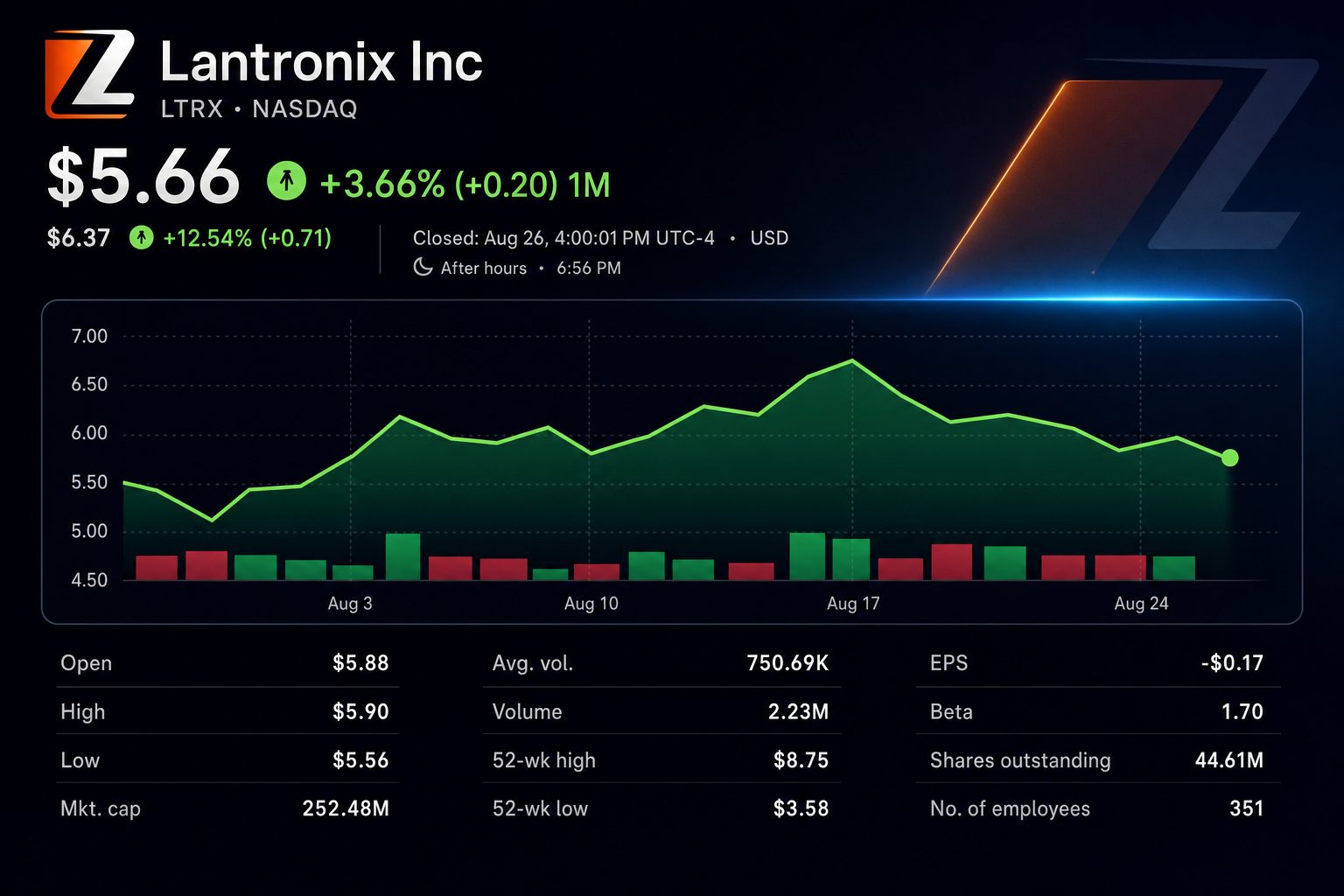
The rebound recouped more value than what was lost during the day’s earlier drop. Relative to Tuesday’s close at $5.86, the late trading price was up 8.7%. Calculating the $0.51 per share increase across 46.59 million shares outstanding at year-end indicates an estimated $23.8 million in additional equity value.
The increase amounts to 1.9 times Lantronix’s projected unmanned-systems revenue for fiscal 2026. As a result, investors attached a significant premium to management’s forecast for the next year’s product mix, rather than just the quarterly outperformance.
Revenue in the fourth quarter climbed 8% to $31.2 million. Non-GAAP earnings reached four cents per share, and the adjusted gross margin improved to 44.1% compared with 40.6%. The company posted a GAAP loss of one cent per share Lantronix results.
The yearly breakdown highlights the sources of growth. Embedded IoT and software expanded, whereas systems solutions declined.
| Fiscal 2026 revenue | Revenue | Year-over-year | Share of total |
|---|---|---|---|
| Embedded IoT Solutions | $53.6 million | +15.6% | 44.3% |
| IoT System Solutions | $58.3 million | −15.2% | 48.2% |
| Software & Services | $9.0 million | +15.6% | 7.5% |
| Total | $120.9 million | −1.6% | 100% |
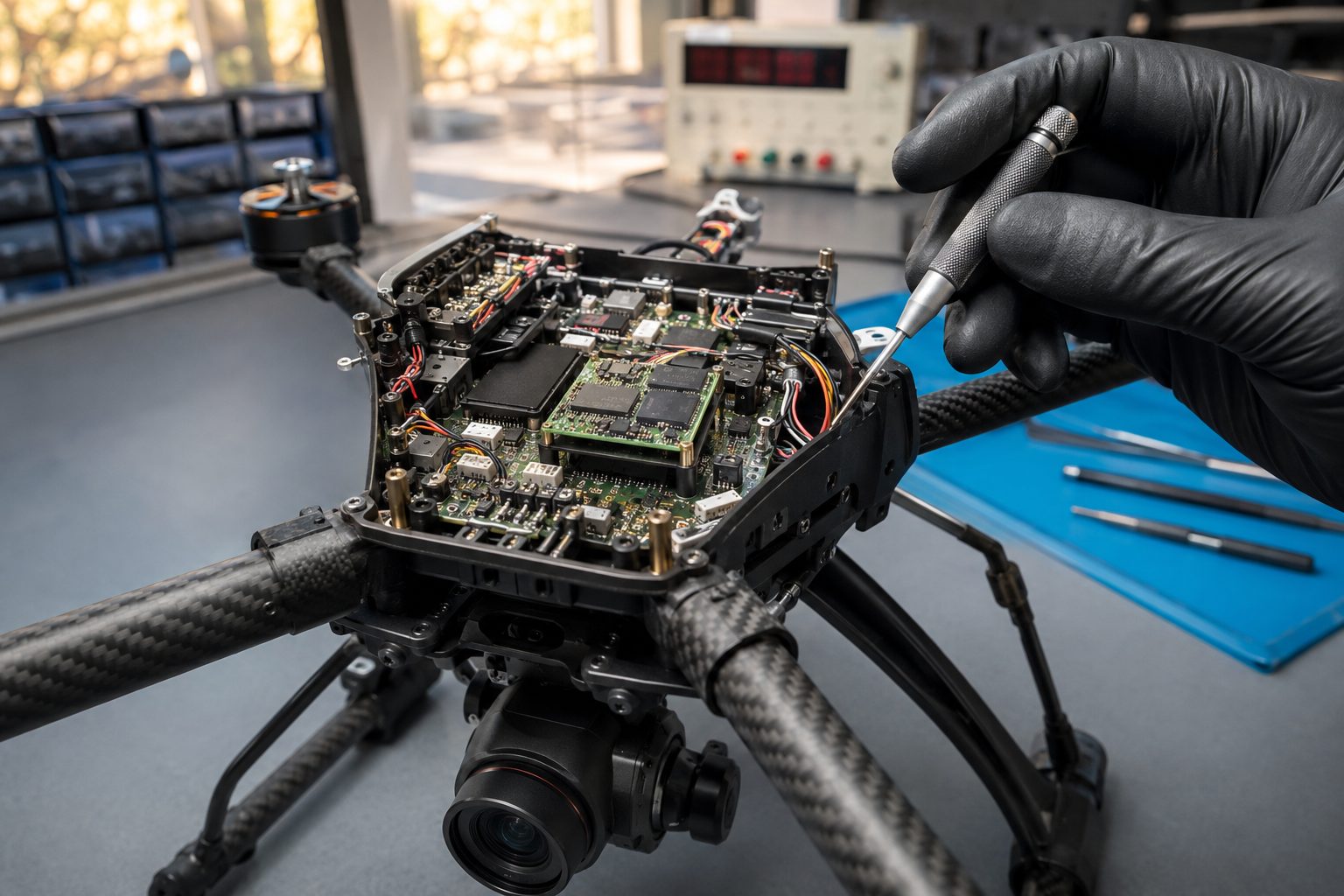
Unmanned systems accounted for $12.6 million, representing 10.4% of yearly revenue. The unit made a minimal impact in the previous year. Management projects it will deliver between 15% and 20% of revenue in fiscal 2027.
By year-end, active unmanned-systems engagements had surpassed 30. At the beginning of fiscal 2026, Lantronix counted around 10. New initiatives deployed its edge-compute modules in applications including drone autonomy, imaging, and counter-drone technologies.
For the first quarter, the company projects revenue between $31 million and $33 million. Adjusted earnings are forecast to come in at four to six cents per share. The midpoint of this range suggests sequential revenue growth of 2.7%.
Management is forecasting revenue growth in the double digits for fiscal 2027, which would mark a recovery from the 1.6% decrease seen in fiscal 2026. Achieving this would depend on sustained improvements in areas other than the declining systems-solutions segment.
The balance sheet allows capacity to support the transition. Cash increased to $60.5 million from $20.1 million, while year-end debt declined to zero. Shares outstanding, however, rose 19.2% to 46.59 million.
Lantronix’s acquisition of Vecima’s Industrial IoT segment introduces a new avenue for expansion. The business brings an anticipated $5.3 million in yearly revenue, of which $4.5 million is recurring. It also adds approximately 125,000 tracking tags to Lantronix’s offerings.
Wall Street sentiment ahead of the results was upbeat, with seven analysts rating the stock a Moderate Buy and setting an average price target of $10.40, according to MarketBeat. Price targets ranged from $8 to $12. The average target represented a 63.3% premium to the late price of $6.37, prior to analysts factoring in Wednesday’s report.
Risks: Drone initiatives require lengthy qualification periods and have unpredictable order schedules. Rising component costs may squeeze margins. If the company fails to turn engagements into large-scale shipments, the 15%–20% mix goal could be compromised, and any additional equity offerings may dilute returns.
The upcoming test is performance relative to the $32 million revenue midpoint for the first quarter. Investors are also monitoring if growth in unmanned systems can make up for declining sales in legacy systems, while maintaining the margin improvement seen recently.
Related articles: Robotics