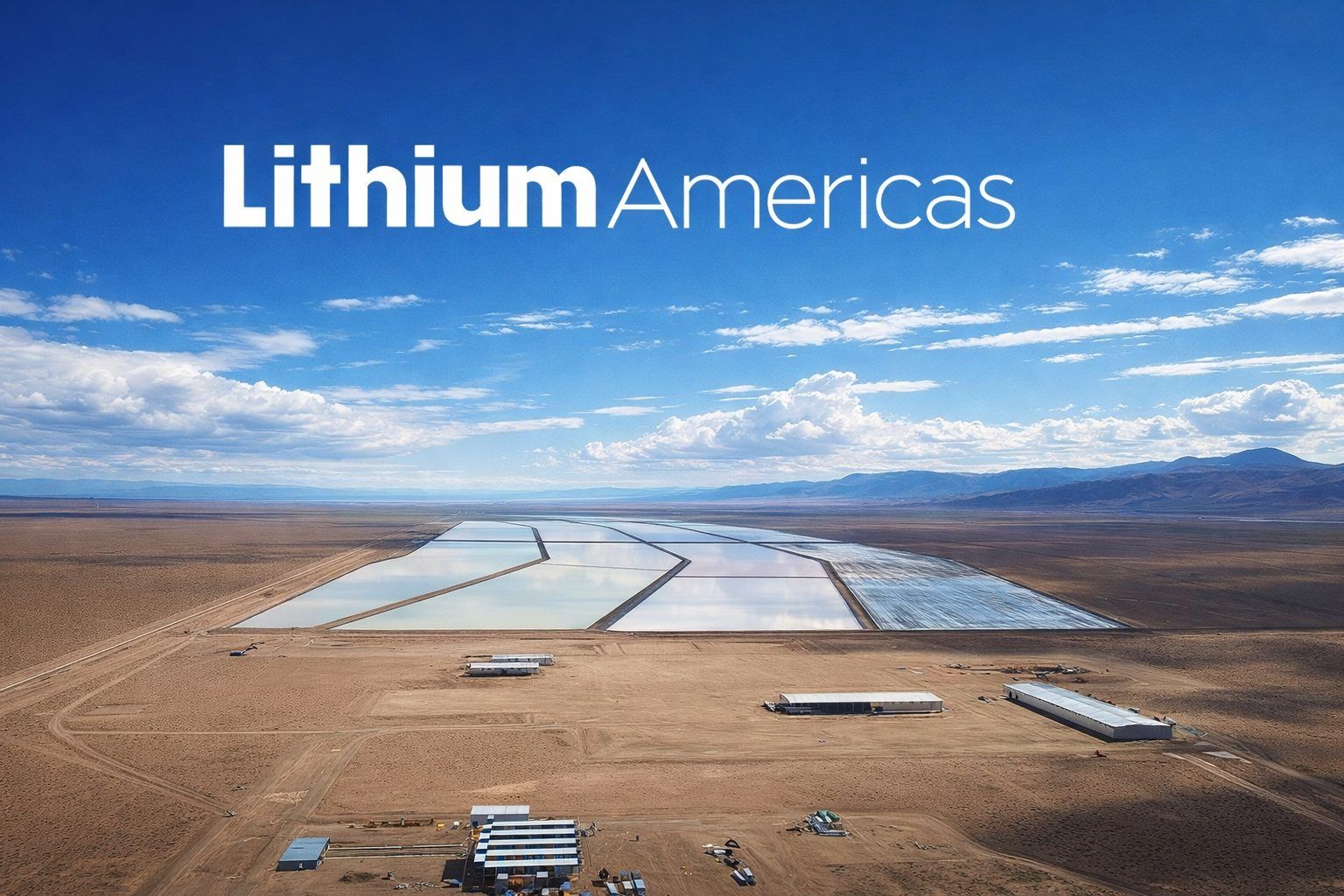
As of December 10, 2025, Lithium Americas Corp. (NYSE, TSX: LAC) sits at the crossroads of big government support, index inclusion and a still‑pre‑revenue flagship project that won’t meaningfully produce lithium until the back half of this decade. Here’s what’s driving LAC right now, and how analysts and trading models are framing the stock’s outlook.
Where LAC Stock Stands Today
On December 10, 2025, Lithium Americas’ U.S. listing is trading around $5.17 per share, implying a market capitalization of roughly $1.3 billion. The stock’s 52‑week range runs from about $2.31 at the low to $10.52 at the high, underlining just how volatile this name has been in 2025. Its 50‑day moving average is still above the current price, at roughly $6.07, and its beta of around 1.5 reflects higher‑than‑market volatility. Stocktwits
On the Toronto Stock Exchange, the shares are trading near C$7.31 on December 10, after a multi‑day run that followed fresh index news (more on that below). Investing.com
For now, Lithium Americas remains a pre‑revenue developer. Third‑party data shows zero reported revenue and a recent quarterly loss per share of about –$0.83, sharply missing analyst expectations of roughly –$0.05 for the period, with a large portion of that loss driven by non‑cash items rather than operations. TradingView+1
Big New Catalyst: S&P/TSX Composite Index Inclusion
The most immediate piece of news for LAC as of this week is its upcoming inclusion in Canada’s flagship equity benchmark:
- On December 8, 2025, Lithium Americas announced that its common shares will be added to the S&P/TSX Composite Index, effective before the open of trading on Monday, December 22, 2025. lithiumamericas.com+1
The S&P/TSX Composite is the primary index tracked by Canadian index funds and ETFs. Joining the benchmark tends to:
- Bring forced buying from index and closet‑index funds that track or benchmark against the Composite.
- Increase liquidity and visibility among institutional investors.
- Sometimes create a short‑term demand bump into the effective date, followed by normalization once passive flows are done.
In Lithium Americas’ own words, management frames index inclusion as a recognition of “significant progress” at Thacker Pass, and as a milestone in its positioning within the North American critical minerals supply chain. lithiumamericas.com
For traders, the timing matters: the index change is effective December 22, so positioning around that date has the potential to amplify near‑term volatility in either direction.
Government Stake and the Re‑Engineered DOE Loan
The more structurally important story for LAC in 2025 is the U.S. government’s deepening financial involvement in the Thacker Pass lithium project and the company itself.
A 5% Government Stake in LAC and the JV
On October 1, 2025, Reuters reported that the U.S. Department of Energy (DOE) has taken:
- A 5% equity stake in Lithium Americas, and
- A separate 5% stake in the Thacker Pass joint venture with General Motors,
via warrants exercisable at a nominal price. Reuters
That move formalized the U.S. government’s role not just as a lender but as an equity partner in what is expected to become one of the largest lithium sources in the Western Hemisphere. The announcement helped push LAC’s U.S.‑listed shares more than 20% higher in a single session, underscoring how sensitive the stock is to policy‑driven catalysts. Reuters+1
Earlier in the autumn, media reports indicated that officials were even exploring a larger equity stake of up to 10% in exchange for revised DOE loan terms, fuelling a sharp speculative rally in the stock and a wave of analysis about a so‑called “Trump premium” being priced into LAC. Seeking Alpha+2Morningstar+2
The $2.23 Billion DOE Loan, Now on Softer Early Terms
Lithium Americas’ Q3 2025 results provide more detail on how the DOE loan package has been reshaped: lithiumamericas.com+1
- The total DOE loan size is now about $2.23 billion, with principal of roughly $1.97 billion and the balance coming from capitalized interest.
- Interest is tied to long‑dated U.S. Treasury rates with a 0% spread, giving LAC access to relatively cheap, long‑tenor capital.
- The DOE has agreed to defer around $184 million of scheduled debt service from the first five years of repayment, pushing those obligations into later years.
- In return, LAC will:
- Issue penny‑exercise warrants to DOE representing a 5% stake in the company and a 5% economic stake in the Thacker Pass JV, subject to closing conditions;
- Add $120 million to loan reserve accounts within 12 months; and
- Maintain an amended offtake structure with GM that allows some volumes to be sold to third parties.
On October 20, 2025, the company drew its first $435 million from the DOE loan, an important de‑risking step that helps fund the ongoing construction program. lithiumamericas.com+1
From an equity‑holder’s perspective, this structure is a double‑edged sword:
- It reduces near‑term insolvency risk by pushing out repayments and giving LAC a cheap, long‑dated funding base.
- But it also locks the company more tightly into U.S. strategic and policy priorities, dilutes existing shareholders via warrants, and increases leverage over time as additional tranches are drawn.
Thacker Pass: Massive Resource, Long Timeline
Thacker Pass is the engine behind any long‑term thesis on LAC.
According to Lithium Americas, the project:
- Hosts the largest known measured and indicated lithium resource and proven and probable reserve in the world, located in the McDermitt Caldera in northern Nevada. lithiumamericas.com+1
- Is planned in two phases, with Phase 1 designed for about 40,000 tonnes per year of battery‑grade lithium carbonate. lithiumamericas.com+1
- Is owned by a JV between Lithium Americas (62%) and General Motors (38%), with GM securing the right to large portions of Phase 1 and Phase 2 output for up to 20 years. Reuters+1
Construction has been underway since early 2023. Recent company disclosures highlight:
- Mechanical completion for Phase 1 is targeted for late 2027, meaning full‑scale production and cash flow will only ramp toward the latter part of the decade. lithiumamericas.com+1
- Construction of Phase 1 is expected to create nearly 2,000 direct jobs, including about 1,800 skilled contractors, a figure often cited when framing the project’s political importance. lithiumamericas.com
- In Q3 alone, LAC capitalized roughly $146 million of construction and related project costs; by September 30, 2025, it had capitalized about $720 million in total on Thacker Pass. lithiumamericas.com
Zooming out, independent reporting on the broader McDermitt Caldera deposit estimates 20–40 million tonnes of lithium‑rich clay, potentially representing one of the largest lithium resources ever identified and valued in the trillion‑dollar range at current prices. Lithium Americas has been deeply involved in exploring and delineating this deposit, underscoring why Washington views the project as strategically important. Tom’s Hardware+1
The flip side: the longer the build‑out, the more time there is for lithium prices, battery chemistries, permitting regimes and political priorities to change. That’s why many recent analyses explicitly treat LAC as a “2030 story” rather than a 2025 one, even after the government stake and loan drawdown news flow. Yahoo Finance+1
Balance Sheet, Dilution and the Cost of Building a Mine
Lithium Americas’ Q3 2025 financials show what it takes to push a greenfield project of this scale toward production: lithiumamericas.com
- For the nine months ended September 30, 2025, the company recorded a net loss of about $223.9 million, versus $21.4 million in the same period of 2024. Much of the jump reflects the non‑cash loss on revaluation of embedded derivatives tied to convertible notes, as the share price climbed over the period.
- Operating expenses for the nine months rose to roughly $24.1 million, up from $18.2 million a year earlier, driven by hiring and overhead to support DOE loan compliance and Thacker Pass construction activities.
- Cash and restricted cash stood at about $385.6 million at quarter‑end, down from $594.2 million at the end of 2024, even after substantial financing.
To support that burn and fund capex, the company has leaned heavily on equity markets:
- Under a May 2025 at‑the‑market (ATM) program, LAC issued about 18.9 million shares at an average of $3.10, raising net proceeds of roughly $57.5 million.
- A new October 2025 ATM program raised a much larger $246.4 million in net proceeds by issuing roughly 30.5 million shares at an average of around $8.19, and was completed in less than two weeks.
- Convertible notes held by Orion Resource Partners saw about $97.5 million in principal converted into roughly 25.8 million shares, reducing future interest payments but contributing to share count growth.
The result is a company with rising total assets (about $1.45 billion at September 30, 2025) and substantially higher long‑term liabilities (around $452 million vs. $41 million at the end of 2024), plus a significantly larger share base than at the start of the year. lithiumamericas.com
For existing shareholders, that combination means material dilution today in exchange for de‑risked funding and a higher‑probability path to completion.
How Wall Street and Quants See LAC Right Now
Fundamental Analyst Targets: “Hold” With Modest Upside
On the fundamental side, coverage is cautious but not outright bearish:
- MarketBeat reports that around 15 research firms follow LAC, with an overall “Hold” consensus and an average 12‑month price target near $5.33. That mix includes 3 Buy, 11 Hold and 1 Sell ratings, with some recent upgrades as the government stake and DOE loan amendments became clearer. MarketBeat
- MarketWatch data points to an average target closer to $6.07 across 13 analyst estimates, suggesting a mid‑single‑digit percentage upside from recent prices. MarketWatch
- Fintel’s compilation of Wall Street targets shows a one‑year average price target around $5.72, with a range from about $4.70 on the low end to roughly $7.52 on the high end. Fintel
Taken together, these third‑party sources suggest that consensus sees limited near‑term upside from current levels, with price targets clustered only slightly above the stock’s recent trading band. Analysts are effectively waiting to see construction continue on time and on budget before moving more aggressively to “Buy” calls.
Capital.com’s multi‑source review of analyst commentary also highlights that most institutions treat LAC as a high‑risk, pre‑revenue project developer whose fair value is extremely sensitive to assumptions about capex, lithium prices and long‑term utilization at Thacker Pass. Capital.com
Quant and Technical Models: Volatile, Range‑Bound, Short‑Term Cautious
Short‑term and quantitative services are, if anything, even more explicit about the risks:
- Technical‑analysis platform StockInvest.us currently labels LAC a “sell candidate” as of December 9, 2025, after three straight down days from $5.31 to $5.27. The service notes daily price swings of about 6% and characterizes LAC as trading within a very wide horizontal range, with a 90% probability of ending the next three months somewhere between roughly $2.89 and $10.17. StockInvest
- The same model forecasts a “fair” opening price around $5.26 for December 10 and sees near‑term support near $5.12 and resistance around $5.74, underscoring how tight intraday levels can coexist with very wide medium‑term ranges. StockInvest
- StockTradersDaily, which focuses on pivot‑based trading plans for the Canadian listing (LAC:CA), recently shared long‑term trading setups with buy levels near C$7.06 and targets near C$10.00, while flagging that AI‑generated signals regard mid‑ and long‑term ratings as “strong” but near‑term signals as “weak”. Stock Traders Daily
These services are not making fundamental calls on Thacker Pass. Instead, they are effectively telling traders: expect big swings, treat the stock as range‑bound for now and manage risk tightly.
Recent Sentiment Swings: From Downgrades to “Trump Premium”
2025 has not been a straight line for LAC bulls:
- In October, a wave of brokerage downgrades and renewed worries about volatility sent the stock down more than 11% in a single session, according to one trading‑desk recap, highlighting how fragile sentiment was before the government stake was finalized. StocksToTrade
- Subsequent reporting that the U.S. government might pursue up to a 10% equity stake in LAC during DOE loan renegotiations ignited a powerful rally, with some coverage calculating a 70% surge from pre‑headline levels and coining the phrase “Trump premium” for the move. Seeking Alpha+1
- When the DOE’s 5% stakes in both LAC and the Thacker Pass JV were formally announced at the end of September, U.S.‑listed shares jumped roughly 23% in a single trading day. Reuters
Those violent swings make it clear that policy news is currently more important to the share price than lithium spot prices or quarterly earnings, at least until the project nears completion.
Key Risks and What the 2025–2030 Debate Is Really About
Most of the recent forecasts and analyses around Lithium Americas come back to a few core issues:
- Execution Risk at Thacker Pass
With mechanical completion of Phase 1 only expected in late 2027, investors face multiple years of construction, potential cost overruns, labour constraints and permitting or legal challenges. Analysts who frame LAC as a “2030 power play” are mainly reacting to this long lead time and the possibility of slippage. Yahoo Finance+1 - Lithium Price and Technology Risk
Global lithium demand is still projected to grow sharply into the 2030s, but prices have already shown that they can swing dramatically, and there is genuine competition from alternative chemistries such as sodium‑ion in certain segments. Reporting on the McDermitt Caldera deposit stresses both its potential to secure U.S. supply chains and the reality that long‑term economics depend on future battery technology and policy choices. Tom’s Hardware+1 - Political and Policy Risk
The same government involvement that de‑risks funding also creates policy overhang. Changes in U.S. administration priorities, trade policy or environmental rules could materially affect the project’s economics or operating conditions. DOE’s evolving critical‑minerals strategy, and broader geopolitical jockeying around supply chains, form a meaningful part of any long‑term LAC thesis. Financial Times+1 - Dilution and Leverage
ATM programs, convertible note conversions and DOE‑linked warrants have already expanded the share count significantly in 2025. With more capex and reserve funding still to come, few analysts expect the dilution story to be over. The trade‑off is clear: more equity now in exchange for a higher probability that Thacker Pass actually reaches production. lithiumamericas.com+1
Bottom Line: A Strategic but Speculative EV Battery Bet
Putting it all together, Lithium Americas on December 10, 2025 looks like:
- A strategically important, U.S.‑backed lithium developer tied to one of the world’s largest known lithium deposits. lithiumamericas.com+1
- A company with no current revenue, substantial net losses dominated by non‑cash items, and a balance sheet leveraged by a massive, government‑subsidized loan and ongoing equity issuance. lithiumamericas.com+1
- A stock whose 12‑month analyst targets cluster only modestly above current prices, while technical services flag it as volatile and, in the short term, skewed toward “sell” signals despite wide medium‑term trading ranges. MarketBeat+2Fintel+2
For investors and traders looking at LAC today, the central question is not whether 2025 earnings or next quarter’s chart pattern look attractive. It is whether they are comfortable with a multi‑year construction story, deeply intertwined with U.S. industrial policy, in exchange for exposure to a potentially massive and strategically crucial lithium asset by the early 2030s.