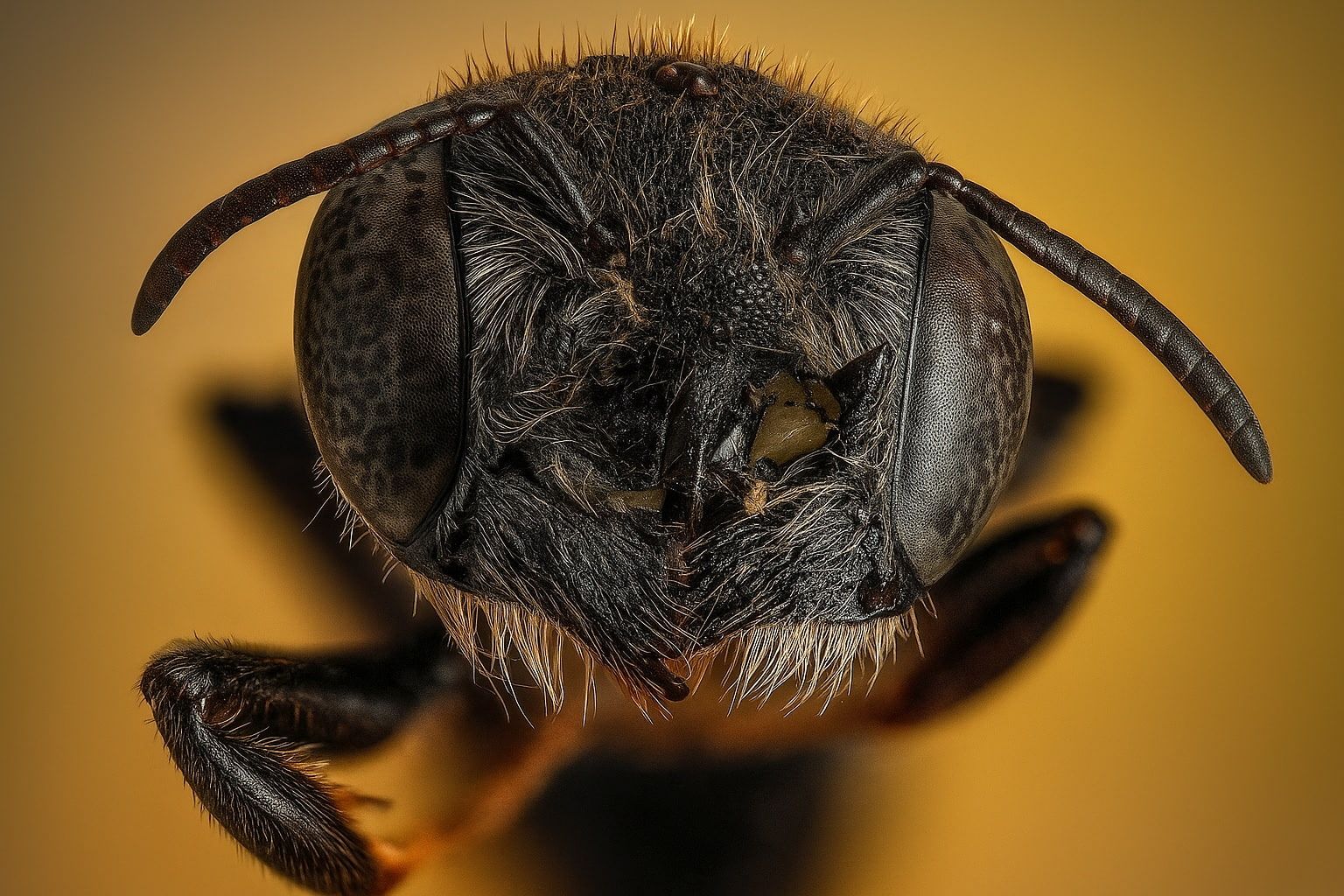

A newly described species of native leafcutter bee sporting tiny, devil‑like facial “horns” has been unveiled by researchers in Western Australia’s Goldfields. The species, formally named Megachile (Hackeriapis) lucifer, was first collected in 2019 during a survey of pollinators around a critically endangered wildflower, Marianthus aquilonaris, and is now detailed in a peer‑reviewed paper in the Journal of Hymenoptera Research. Curtin University+1
Why scientists are buzzing about Megachile lucifer
The female bees carry a conspicuous pair of forward‑curving “horns” on the clypeus (the front of the face) — a feature not seen in males. Researchers say the structures are sub‑millimetre in size and their purpose remains uncertain; hypotheses include helping females pry into flowers for nectar and pollen or serving as a defensive aid. People.com+1
Lead author and Curtin University adjunct research fellow Dr. Kit Prendergast named the species “lucifer,” a nod both to the horns’ devilish appearance and to the Latin term meaning “light‑bringer.” The study also confirms via DNA barcoding that the male and female specimens belong to the same species and are genetically distinct from known bees in global databases. EurekAlert!
Where it was found — and why that matters now
Megachile lucifer was collected in the Bremer Range — between the Goldfields towns of Norseman and Hyden — while researchers surveyed the critically endangered shrub Marianthus aquilonaris, which is restricted to that region. The plant’s tiny range and ongoing pressures in the Goldfields mean the bee’s habitat may be vulnerable to disturbance.
In the paper and subsequent reporting, scientists urged formal protection for the collection area, noting that parts of the Goldfields face threats from mining activity and climate change, and that the find spot currently lacks conservation designation. Follow‑up surveys in 2022 and 2024 did not relocate the species, underscoring how narrow its window of activity and distribution might be.
A first in more than two decades for its group
According to the research team, M. lucifer is the first new member of its subgenus (Hackeriapis) to be described in over 20 years — a reminder of how much remains to be cataloged among Australia’s ~2,000 native bee species. The announcement coincides with Australian Pollinator Week, which highlights the essential services insects provide to ecosystems and agriculture.
Key facts at a glance
- Name: Megachile (Hackeriapis) lucifer (family Megachilidae, “leafcutter” bees)
- Distinctive feature: Females possess two tiny, devil‑like facial horns; males lack them
- Discovery: First collected in 2019; species formally described Nov. 10–11, 2025 in the Journal of Hymenoptera Research (DOI: 10.3897/jhr.98.166350)
- Where:Bremer Range, Goldfields region of Western Australia
- Ecology: Seen visiting Marianthus aquilonaris, a critically endangered wildflower restricted to the same region
- Conservation: Scientists call for habitat protection; follow‑up surveys in 2022 and 2024 did not re‑find the bee
EurekAlert!+2Curtin University+2
What scientists still don’t know
- Function of the horns: Their role is unconfirmed; ideas range from helping females access tubular flowers to aiding defense.
- Population size and range: With only the original records and no subsequent collections, the species may be highly range‑restricted. More targeted surveys are needed.
- Host plant breadth: The bee was observed on M. aquilonaris and nearby mallee; further work is needed to identify its full foraging network.
The broader picture: A warning signal for native pollinators
Researchers say the discovery highlights a persistent gap: native bees are rarely surveyed in detail ahead of land clearing and development, meaning species could be lost before they’re even named. The Lucifer bee’s debut — paired with the precarious status of its associated plant — is a case study in why baseline biodiversity surveys and conservation planning matter in resource‑rich regions.
Expert context & today’s coverage
- The bee’s description and conservation plea are published in the Journal of Hymenoptera Research and amplified by outlets including The Washington Post, CBS News, The Guardian, UPI, and Phys.org, reflecting both the scientific significance and broad public interest.
FAQ
Is the “Lucifer” bee dangerous to people?
There’s no evidence it poses unusual risk to humans. Like most solitary leafcutter bees, it isn’t aggressive and lacks the colony‑defense behavior of social species. (General entomology context; discovery reporting does not indicate unusual risk.)
Why the name “Lucifer”?
It references the horns’ look and the Latin for “light‑bringer”; Dr. Prendergast also noted the moniker was an apt, playful nod while she was watching the Netflix show of the same name. EurekAlert!
What’s the next step for conservation?
Scientists recommend formal protection for the collection area and renewed surveys to determine the species’ status, especially given that repeat searches in 2022 and 2024 didn’t find it.
How is the plant doing?
Marianthus aquilonaris is critically endangered and confined to the Bremer Range; threats include mining, vehicle movement, and fire regimes — factors that also shape the bee’s prospects.
How we reported this (Nov. 12, 2025)
- Primary research & release: Journal of Hymenoptera Research (DOI 10.3897/jhr.98.166350) and Pensoft/Curtin media materials.
- Independent coverage & updates today:Washington Post (field‑survey timeline, protection status), CBS News/AFP, The Guardian, UPI, and Phys.org (study summary and images).
Related articles: Stock Market