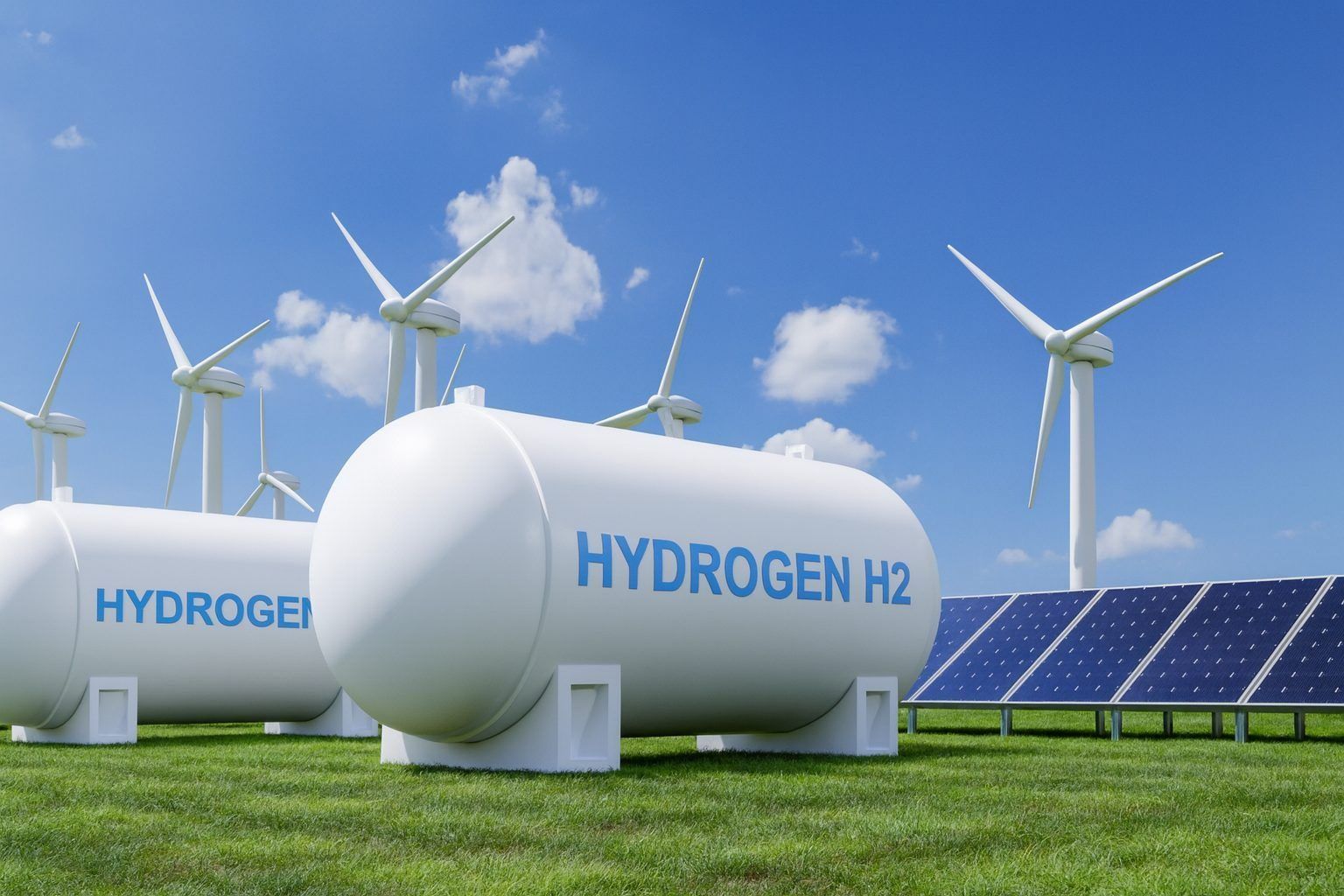

NOUAKCHOTT / DAKAR – December 5, 2025 – Mauritania has moved decisively to position itself as a green hydrogen and renewable energy powerhouse, with fresh announcements this week underscoring an ambitious goal to reach 12.5 million tonnes of green hydrogen output by 2035, backed by new utility‑scale solar, wind and Power‑to‑X (P2X) megaprojects.
The latest wave of news centres on three pillars:
- a national green hydrogen strategy anchored in Africa’s first dedicated Green Hydrogen Code; Energy Capital & Power
- a 160 MW solar plant, 60 MW wind farm and large‑scale battery storage, unveiled under a new public‑private partnership (PPP) framework; SolarQuarter+1
- and the acceleration of the “Megaton Moon” P2X project, a vast green hydrogen and ammonia complex being advanced by European partners GreenGo Energy and Select Energy. H2 View+1
These developments come as Mauritania secures over €39 million in concessional finance from France for ten solar power plants with storage and deepens its partnership with the European Union through the Global Gateway initiative.
Mauritania’s 12.5M‑ton green hydrogen ambition
In a flagship policy update released on December 5, 2025, Mauritania set out a roadmap to become “Africa’s premier green hydrogen producer,” targeting 12.5 million tonnes of output by 2035. Energy Capital & Power
According to Energy Capital & Power, the strategy rests on three core advantages: Energy Capital & Power+1
- Exceptional wind and solar resources along the Atlantic coast and interior desert plateau;
- Proximity to Europe, enabling competitive export routes for green hydrogen and ammonia;
- A rapidly evolving regulatory framework, including:
- Africa’s first Green Hydrogen Code, providing clarity on permitting, land access and grid connections;
- the establishment of the Mauritanian Agency for Green Hydrogen, dedicated to coordinating projects and investors.
The country already hosts the largest green hydrogen pipeline in sub‑Saharan Africa, with multi‑gigawatt projects led by CWP Global, TotalEnergies, Chariot, GreenGo Energy, Masdar and Hynfra, backed by international financiers such as the World Bank, European Investment Bank (EIB) and the EU.
Flagship hydrogen and green ammonia projects
The project pipeline outlined in recent briefings includes several globally significant developments: Hydrogen Central+3Energy Capital & Power+3H2 View+3
- AMAN (CWP Global)
- ~30 GW of combined wind and solar capacity;
- designed to produce up to 1.7 million tonnes of green hydrogen or around 10 million tonnes of green ammonia annually once fully built.
- Project Nour (Chariot & TotalEnergies)
- 10 GW of planned capacity near Nouadhibou in northern Mauritania;
- supported by a Port of Rotterdam partnership to facilitate future hydrogen and ammonia exports to Europe.
- Megaton Moon (GreenGo Energy & Select Energy)
- Located ~20 km south of Nouakchott, the Megaton Moon P2X complex is designed to become one of the world’s largest green ammonia hubs; H2 View+1
- Powered entirely off‑grid by hybrid solar and wind, supported by seawater desalination and air separation to produce hydrogen and nitrogen.
- The long‑term vision foresees up to 60 GW of hybrid solar and wind and around 35 GW of electrolysers, capable of producing 4 million tonnes of green hydrogen or roughly 18 million tonnes of green ammonia each year when fully scaled by 2033–2035.
- The project will also generate over 70 million tonnes of desalinated water annually, far more than the facility itself consumes, with surplus power and water earmarked for desert agriculture and new green industries.
- Phase 1 production of around 355,000 tonnes of green ammonia per year from 500 MW of electrolysers, with FID targeted for 2028 and first production around 2031;
- staged expansion to 1.7 million tonnes, then up to 4 million tonnes of ammonia annually, contingent on additional land and market ramp‑up;
- Select acting as co‑developer and long‑term offtake and marketing partner, focusing on export logistics via the Port of Nouakchott and European buyers.
- Möhring Energie’s Nouadhibou project
- A 100 MW green hydrogen and ammonia plant in Nouadhibou, expandable in stages to 1 GW;
- Target output of about 140,000 tonnes of green hydrogen and 400,000 tonnes of green ammonia per year from 2029 onwards;
- Phase‑one area of 500 km², with expansion potential to 1,600 km² in a zone described as having “the best solar and wind conditions” in Mauritania. H2 View+1
- Hynfra and Infinity Power–Masdar–Conjuncta
- Hynfra’s $1.5 billion green ammonia plant, with commercial operation targeted around 2030;
- a separate 10 GW green ammonia development by the Infinity Power, Masdar and Conjuncta consortium, further reinforcing Mauritania’s role as a green fuels exporter.
Together, these projects explain why independent research from Global Energy Monitor now counts 79.5 GW of wind and solar capacity in Mauritania linked to hydrogen production plans – an extraordinary figure in a country that currently operates only around 0.3 GW of renewable capacity.
New 160 MW solar plant, 60 MW wind farm and grid‑scale storage
While headline megaprojects dominate investor conversations, Mauritania is also pushing ahead with concrete utility‑scale renewables for the domestic grid.
On December 4, 2025, SolarQuarter and MSGBC Oil, Gas & Power organisers confirmed that Mauritania has unveiled a 160 MW solar plant, 60 MW wind farm and large‑scale battery energy storage systems, all to be developed under a new PPP framework unveiled in August.
Key features of this package include:
- A 160 MW solar park designed to harness high solar irradiation across the Sahelian belt;
- A 60 MW wind project, leveraging steady Atlantic winds;
- Large battery energy storage systems (BESS) to stabilise the grid and integrate variable renewables;
- Structuring as public‑private partnerships, aimed at crowding in private capital while keeping strategic oversight with the state utility and energy ministry.
These projects are being announced just days before MSGBC Oil, Gas & Power 2025, which runs from 8–10 December in Dakar and will feature a dedicated session on “Powering the MSGBC Region with Sustainable Technologies.” The panel will examine how emerging technologies, expanded gas‑to‑power capacity and accelerated renewables roll‑out can reinforce energy security across Mauritania, Senegal, The Gambia, Guinea‑Bissau and Guinea‑Conakry. SolarQuarter+1
€39 million French loan for ten solar plants with storage
Complementing the utility‑scale projects, Mauritania has secured a concessional loan of more than €39 million from France to build ten solar power stations equipped with storage units, with the agreement signed in Nouakchott in late November and publicly highlighted this week by multiple outlets.
According to SolarQuarter, EnergyNews and SSBCrack News, the financing will: SolarQuarter+2SSBCrack News+2
- Fund ten solar power plants with battery storage in yet‑to‑be‑disclosed locations;
- Support Mauritania’s target of universal electrification by 2030, which requires connecting an additional 3.4 million people and increasing national generation capacity by around 66%;
- Help raise renewables’ share in the power mix from 44.36% in 2023 to around 70% by 2030, in line with the country’s updated electricity code.
The new electricity code restructures the sector around stronger regulation, opens space for direct power sales and private developers, and places renewed emphasis on rural electrification, where access currently lags far behind cities (about 91% electricity access in urban areas versus just 6% in rural zones).
French support builds on broader European engagement: in October, the EU announced a €269 million Global Gateway investment package for Mauritania, including an extension of the 225 kV transmission corridor from Nouakchott to Kiffa and a €107 million railway modernisation programme designed to facilitate future green hydrogen exports. Global Gateway as a whole aims to mobilise up to €300 billion in sustainable investments worldwide by 2027.
Europe’s hydrogen appetite and the local development debate
Mauritania’s strategy is clearly oriented toward exporting green hydrogen and ammonia to Europe, where demand for low‑carbon fuels is expected to surge as the EU’s climate policies tighten.
However, new analysis published on December 5, 2025 by Global Energy Monitor and reported by Green Building Africa warns that nearly two‑thirds of Africa’s proposed large‑scale solar and wind projects (about 216 GW of 350 GW) are being designed primarily to feed hydrogen production for export, rather than domestic electricity needs.
The report highlights Mauritania as a striking case:
- 79.5 GW of wind and solar projects linked to hydrogen proposals;
- current operational renewables of only 0.3 GW;
- a build‑out equivalent to roughly three times the capacity of China’s Three Gorges Dam if all projects materialise.
Researchers caution that many projects lack confirmed offtakers, realistic timelines and proven developers, and that 65% of sponsoring companies are European, often without experience at this scale. They argue that without careful planning, the rush to supply Europe’s future hydrogen market could divert scarce renewable resources away from urgently needed local electrification and industrialisation.
For Mauritania, this tension is at the heart of policy discussions: how to leverage world‑class solar and wind resources for export revenues and green industrialisation, while also ensuring affordable power for households and domestic industries.
Infrastructure, water and skills: the big bottlenecks
Even with strong momentum, Mauritania faces significant structural challenges in executing its green hydrogen and renewables vision. Recent World Bank and government assessments flagged four main bottlenecks: Energy Capital & Power+2H2 View+2
- Water scarcity and desalination
- Large‑scale hydrogen projects will require substantial desalinated water, adding to power demand and project costs.
- Planned investments include new water wells and desalination plants in Nouadhibou and Ndiago, designed to serve both industrial demand and local communities.
- Grid and export infrastructure
- A 1,400 km, 225 kV transmission line from Néma to Nouakchott is planned to connect regional grids, integrate new generation and improve reliability.
- Ports, pipelines and storage terminals will need to be upgraded or built from scratch to handle hydrogen derivatives like ammonia at scale.
- Human capital and technical skills
- The government acknowledges a skills gap that could leave Mauritanian workers sidelined from specialised jobs in engineering, operations and maintenance.
- The World Bank–backed Development of Energy Resources and Mineral Sector Support project will fund vocational training, institutional strengthening and the country’s first utility‑scale BESS to stabilise the grid.
- Investment risk and project bankability
- Mega‑projects like Megaton Moon and AMAN require billions of dollars in capital, long‑term offtake contracts and stable policy environments.
- Initiatives such as EU Global Gateway, EIB lending and bilateral packages from partners including France, Germany and Spain are intended to de‑risk private investment and support Mauritania’s nascent Green Hydrogen Code with real project finance.
MSGBC Oil, Gas & Power 2025: Dakar as the deal‑making hub
Many of these issues will be in sharp focus at MSGBC Oil, Gas & Power 2025, taking place in Dakar from 8–10 December 2025.
The conference agenda includes:
- A high‑level session on “Powering the MSGBC Region with Sustainable Technologies”, featuring speakers from BioGasUnite, COS Petrogaz, EnGreen and Neway Valve; SolarQuarter+1
- A panel on how green hydrogen can power West Africa’s energy transition, where Mauritanian officials are expected to showcase the 12.5M‑ton target and the latest project milestones; Africa24 TV+1
- Discussions on infrastructure, logistics and cross‑border power trade, including Senegal’s 300 MW Cap des Biches gas plant and The Gambia’s push for 90% electrification by the end of 2025.
With Mauritania’s energy and petroleum leadership confirmed as key speakers, Dakar is set to become the primary regional forum where investors, policymakers and developers will test the realism of Mauritania’s green hydrogen and renewable energy roadmap.
What to watch next
As of December 5, 2025, Mauritania’s green transition is no longer just a collection of MoUs and concept notes. Between concrete PPP‑based solar and wind projects, a French‑financed rural solar roll‑out, and rapidly advancing P2X initiatives like Megaton Moon and AMAN, the country has entered an execution phase.
Key near‑term milestones for investors, policymakers and energy observers include:
- Final Investment Decisions (FIDs)
- FID timelines for Megaton Moon’s first phase (targeted for 2028) and other major hydrogen projects will signal how quickly Mauritania’s pipeline can move from planning to construction.
- Regulatory and grid reforms
- Implementation of the new electricity code, particularly around direct power sales and private grid connections, will determine how easily IPPs and hydrogen developers can plug into the system.
- EU hydrogen demand and pricing
- Outcomes from the EU’s latest hydrogen auctions and the Hydrogen Bank’s future rounds will shape the price and demand outlook for Mauritanian exports.
- Balance between exports and local needs
- Whether Mauritania can simultaneously meet domestic electrification goals and supply Europe with green fuels will be a crucial test case for a just energy transition in Africa. The contrast between gigawatt‑scale export projects and modest current electricity access in rural areas will continue to attract scrutiny from civil society and development partners.
If Mauritania can manage the water, grid, skills and financing challenges while delivering on its 12.5M‑ton hydrogen vision, the country could become one of the defining testbeds for the global green hydrogen economy—and a blueprint, or cautionary tale, for other resource‑rich nations across the MSGBC basin and beyond.