
Published December 3, 2025
Meta Platforms has hired Alan Dye, Apple’s longtime head of human interface design, in one of the most significant talent moves in Silicon Valley’s escalating battle over AI‑powered consumer devices. Dye will join Meta as chief design officer on December 31, 2025, overseeing design across hardware, software and AI experiences.
Apple has confirmed the departure and is promoting veteran designer Stephen Lemay to lead its human interface design team, underscoring a generational shift inside the company’s famed design group.
Who Is Alan Dye – and Why He Matters So Much
Alan Dye is not a household name, but if you’ve used an iPhone, Apple Watch, Mac, Vision Pro headset or any recent Apple operating system, you’ve been living inside his work.
- Dye joined Apple in 2006 on the marketing and communications team as a creative director, working on product packaging and visual communication.
- In 2012, he moved into Jony Ive’s user interface group, helping to redesign iOS with the radical, flat look introduced in iOS 7.
- Since 2015, Dye has led Apple’s Human Interface Design team, effectively becoming the company’s top software‑design decision‑maker.
During that period, Dye helped shape the look and feel of many of Apple’s most important products, including:
- iPhone X, which debuted Apple’s modern full‑screen interface
- Apple Watch, including its original software UI
- Vision Pro, Apple’s mixed‑reality headset interface
- Major redesigns across iOS, iPadOS, macOS, watchOS and visionOS Reuters+2MacRumors+2
Most recently, he led the introduction of Liquid Glass, the unified design language that Apple rolled out across its platforms in 2025.
Liquid Glass: The Design Language Dye Leaves Behind
Liquid Glass is more than a fresh coat of paint on iOS 26 and macOS Tahoe 26 — it’s Apple’s most ambitious interface overhaul in more than a decade, and Dye was its public face.
According to Apple’s June 2025 announcement, Liquid Glass:
- Introduces a translucent, glass‑like material that reflects and refracts surrounding content
- Dynamically adapts to light and dark environments, and reacts in real time to movement
- Extends across iPhone, iPad, Mac, Apple Watch and Apple TV, unifying the overall look and feel
- Redesigns controls, navigation, icons and widgets to feel more three‑dimensional and responsive while staying familiar to existing users Apple
Profiles of the project describe Dye as the creative leader who “basically oversaw the Liquid Glass revamp,” with his team taking inspiration from the depth and layering of visionOS to imagine software that can sit on top of, and blend into, the real world — a natural fit for future AR glasses. GQ+1
That vision now walks out the door with him and into Meta.
What Meta Is Hiring Dye to Do
Meta isn’t just picking up a famous name from Apple; it’s building an entire design organization around him.
Reporting to Meta CTO Andrew Bosworth, who runs the company’s Reality Labs division, Dye will: Reuters+2Stocktwits+2
- Serve as chief design officer for Meta’s consumer devices
- Lead a new design studio responsible for hardware, software and AI integration
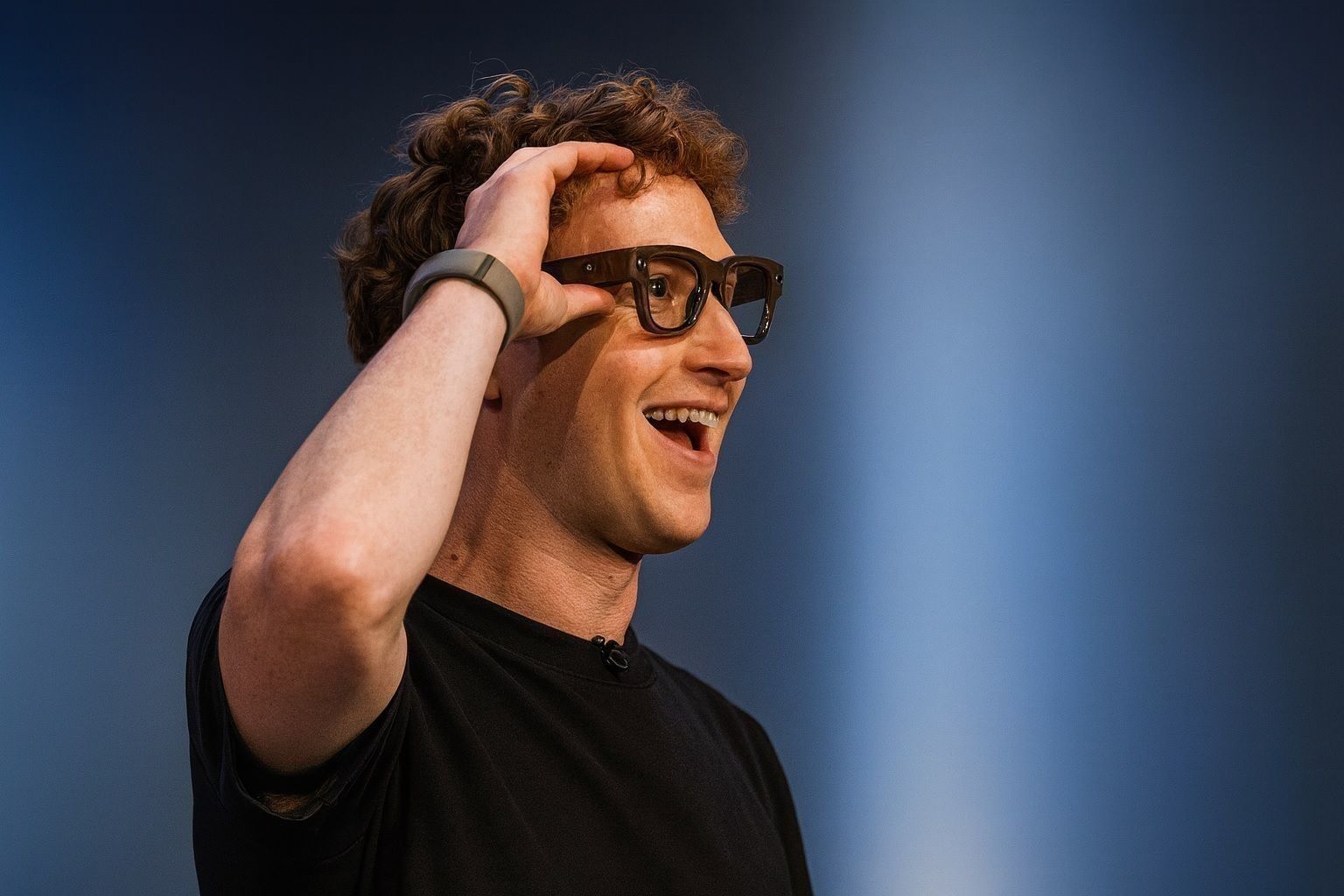
- Oversee UX for products such as Ray‑Ban and Oakley smart glasses, VR headsets and future wearables
- Focus on using AI features to make Meta’s devices more intuitive and useful in everyday life
Meta already sells AI‑powered smart glasses in partnership with EssilorLuxottica brands Ray‑Ban and Oakley, but its hardware lineup has yet to achieve the cultural impact of the iPhone or Apple Watch.
Bringing in the designer who helped define Apple’s most recent interface era is a clear signal: Meta wants its next wave of AI devices — especially AR glasses and mixed‑reality hardware — to feel as polished as Apple’s best work.
Fallout at Apple: Stephen Lemay Steps In, Billy Sorrentino Follows
Apple is not leaving Dye’s chair empty.
The company is promoting Stephen (Steve) Lemay, a designer who has been at Apple for more than 25 years and has contributed to virtually every major interface since the late 1990s.
Tim Cook has emphasized that Lemay has played a central role in the evolution of Apple’s UI for decades and that design remains “fundamental” to Apple’s identity, signaling continuity rather than upheaval. MacRumors+29to5Mac+2
However, Dye is not leaving alone. Reports say:
- Longtime design deputy Billy Sorrentino, a senior director on Apple’s design team since 2016, is also headed to Meta and will report to Dye.
- Dye had informed Apple’s top management of his decision this week, and leadership had already been bracing for the move.
For Apple, the message is that its design bench is still deep — but the center of gravity is slowly shifting as a new generation of leaders takes over.
A Pattern of High‑Profile Departures at Apple
Dye’s exit doesn’t happen in isolation. It adds to a string of senior departures from Apple during a period when every tech giant is racing to secure AI and hardware expertise.
Recent moves include:
- Longtime Chief Operating Officer Jeff Williams leaving Apple
- The departure of AI chief John Giannandrea
- Other design and hardware leaders stepping down or moving into different roles Reuters+2Stocktwits+2
These shifts have fueled speculation that Apple is undergoing a deeper leadership transition as some veteran executives approach retirement and the company reorients around AI, services and new categories like spatial computing and smart home devices.
Dye reportedly leaves behind work on next‑generation smart home devices, suggesting that Apple’s design roadmap for new product categories will now be executed by Lemay and the broader design team without his direct involvement.
Why This Matters for Meta’s AI Glasses and Hardware Ambitions
For Meta, Dye’s arrival is a bet that great industrial and interface design can turn experimental devices into mainstream hits.
Key strategic implications:
- Polish for Meta’s AI glasses
Meta’s AI‑powered Ray‑Ban glasses have drawn attention but are still niche. Dye’s background in blending hardware, software and translucent interface layers — as seen in Liquid Glass and visionOS — maps directly onto the design challenges of AR eyewear. - A unified design language for Meta
At Apple, Dye helped unify software design across iPhone, iPad, Mac, Watch and TV. At Meta, he’s expected to bring similar cohesion across Quest headsets, smart glasses and future devices, especially as AI assistants become a constant presence across them. - Competitive pressure on Apple in mixed reality
Meta has invested billions into VR and AR through Reality Labs but still faces skepticism about its long‑term strategy. Recruiting the architect of Apple’s most recent interface era is both a practical hire and a symbolic shot at Apple’s leadership in premium design.
What Comes Next for Apple’s Design Direction
Dye’s departure naturally raises questions about the future of Apple’s design language and how aggressively the company will evolve Liquid Glass and visionOS‑style interfaces.
Some likely near‑term trends:
- Liquid Glass will live on
Apple has invested heavily in the new design, rolling it across every major platform with updated developer tools and APIs. It’s unlikely to reverse direction so soon, especially with iOS 26.2 and macOS Tahoe 26.2 already in testing. - Lemay era, not a reset
With Lemay in charge, expect refinement rather than revolution: cleaning up rough edges of Liquid Glass, improving accessibility and performance, and tuning the design to future hardware like AR glasses and advanced Macs. - New voices in the design room
As veterans exit, mid‑career designers gain more influence. That could lead to bolder takes on long‑standing elements such as iconography, multitasking UI, and how AI is surfaced throughout Apple’s platforms.
The Bigger Picture: An AI Talent War With Design at the Center
For much of the past decade, tech’s “talent wars” were dominated by AI researchers and chip engineers. Dye’s move shows that world‑class design leadership is now just as hotly contested.
- Meta is using marquee hires to signal seriousness about AI‑first consumer hardware, not just software assistants.
- Apple, for its part, points to a deep bench and a long history of design‑driven products, even as it loses some of the people who helped maintain that legacy after Jony Ive’s departure in 2019.
For consumers, the rivalry could be good news: more competition in AR glasses, mixed‑reality headsets and AI‑infused interfaces may accelerate innovation on both sides.
Key Things to Watch in the Coming Months
As this story develops beyond today’s announcements, a few questions will define how consequential the move really is:
- What does Dye ship first at Meta?
Will his impact appear first in a new generation of Ray‑Ban AI glasses, a redesigned Quest interface, or something entirely new? - How quickly does Apple’s design language evolve without him?
The pace and character of design changes in upcoming OS updates will reveal how much the Lemay era differs from the Dye era. - Do more Apple designers follow?
With one senior deputy already joining Dye at Meta, further departures would deepen concerns about brain drain inside Apple’s design studio. - Can Meta close the “taste gap”?
Meta’s hardware has often been seen as functional but not iconic. Dye’s challenge is to make Meta’s products feel not just capable, but genuinely desirable.
What’s clear today, on December 3, 2025, is that the quiet designer behind Apple’s biggest interface shift in years is now at the center of Meta’s hardware future — and the battle for the next generation of AI devices just got a lot more interesting.
Related articles: NASDAQ:META