
27 November 2025
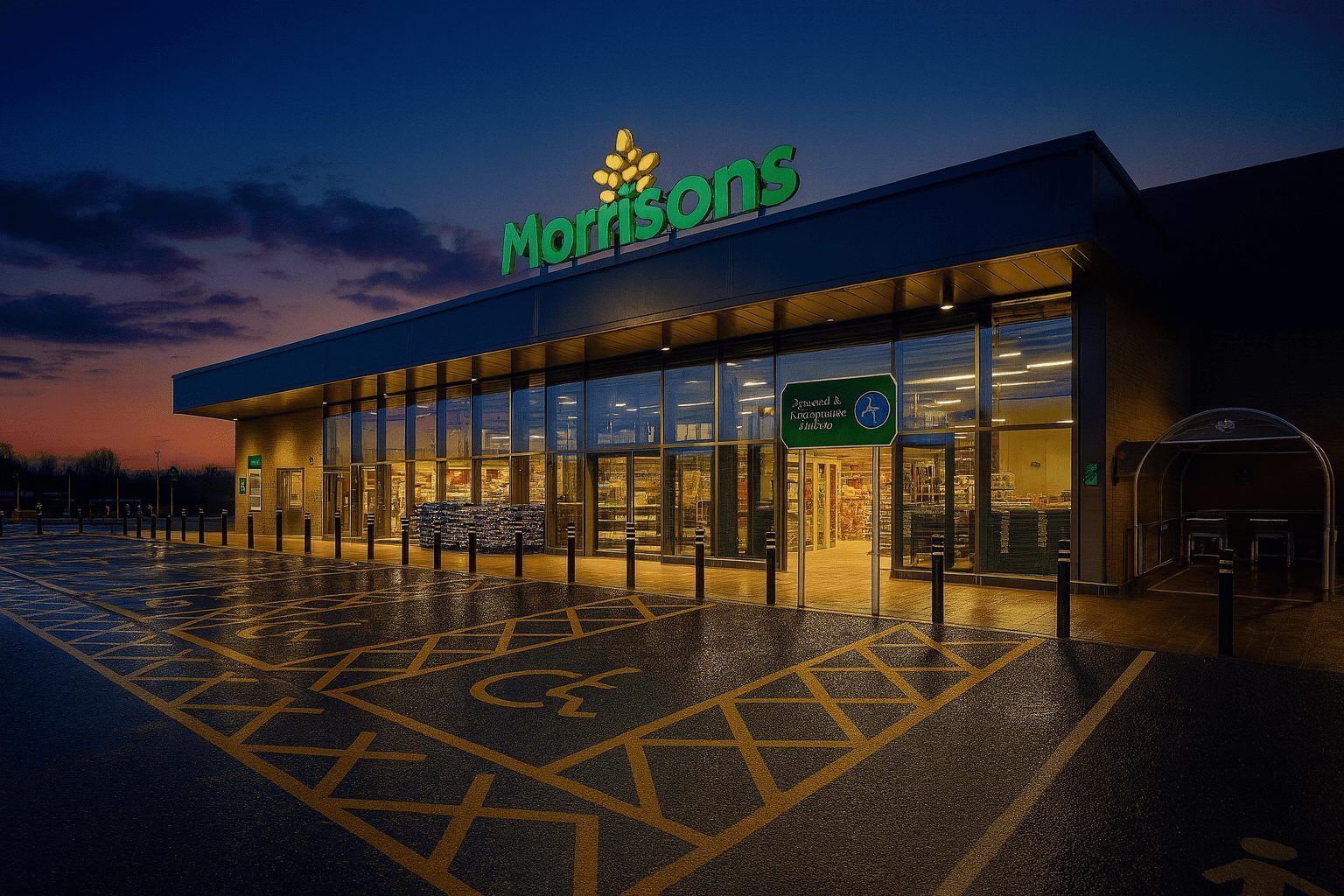
Morrisons is accelerating its transformation from a traditional grocer into a fully fledged digital retail‑media player, with two major technology programmes now converging:
- a nationwide roll‑out of digital advertising screens at 300 store entrances from early 2026, and
- the introduction of electronic shelf labels (ESLs) across all 497 supermarkets, replacing paper price tags.
Today’s coverage in trade and business media sets out how these projects will reshape the aisles — and the front doors — of one of the UK’s biggest supermarket chains.
What’s new today: entrances become “media real estate”
An in‑depth feature in International Supermarket News today frames Morrisons’ digital entrance screens as a “new front” in the supermarket battle — not over price, but over attention. The article describes how entrances at 300 stores will be turned into “digital advertising hubs”, positioning shoppers as an audience as much as customers. International Supermarket News
A companion report from Installation International, published this morning, confirms the technical detail:
- 300 “Waferlite” digital screens will be installed at Morrisons supermarkets across the UK.
- The screens sit at store entrances and are designed to deliver dynamic, programmatic digital out‑of‑home (DOOH) campaigns.
- The project is led by Bauer Media Outdoor (BMO), which has secured a seven‑year contract to install and operate the network for Morrisons.
According to today’s coverage, the first screens will start going in from Q1 2026, with the network rolling out in phases. The content will be sold jointly by BMO and Morrisons Media Group (MMG), the supermarket’s in‑house media arm.
Why this matters
By monetising its front doors, Morrisons is formally entering the high‑growth retail‑media market, where supermarkets sell advertising access to their shopper traffic. Trade reports today emphasise that:
- Morrisons’ move extends BMO’s retail DOOH footprint, reinforcing the company’s claim to operate the UK’s largest in‑store screen network.
- Brands will be able to target shoppers at the precise moment they switch into “shopping mode” — as they step through the doors and form their mental shopping list. International Supermarket News+1
- For Morrisons, the screens create a new revenue stream independent of grocery margins, something analysts say is increasingly attractive in a low‑margin sector facing rising costs.
Consumer‑facing titles, including The Sun’s money pages and regional editions, are today highlighting the same development as a “major change” coming to 300 Morrisons stores next year, focusing on how shoppers will see large digital panels above or beside the doors as they walk in. The Sun+1
The second pillar: digital shelf labels in every aisle
Behind the attention‑grabbing entrance screens sits another, arguably bigger, change: Morrisons’ plan to replace paper price labels with electronic shelf labels across all 497 supermarkets, also starting from early 2026.
Although this project was officially announced in October, it is being repeatedly referenced in today’s coverage as essential context for the new screen network.
Key facts on Morrisons’ ESL roll‑out
From Morrisons’ own corporate announcement and trade‑press reporting: Retail TouchPoints+3Morrisons+3Morrisons+3
- Scale: Over 10.8 million electronic shelf labels will be installed across all 497 supermarkets, making Morrisons the first large UK supermarket group to digitise pricing across its entire store estate.
- Timing: The roll‑out begins in early 2026, running alongside other digital upgrades.
- Technology partner: Morrisons is working with VusionGroup, a specialist in ESL and shelf‑edge technology.
- What the labels do:
- Show real‑time prices, promotions and Morrisons More Card offers.
- Integrate with digital shelf‑edge cameras to flag empty shelves and help staff replenish faster.
- Feed into e‑commerce systems to improve the accuracy and speed of online order picking.
- Infrastructure upgrade: The project also includes an upgrade of in‑store Wi‑Fi, improving connectivity for customers and staff and underpinning future digital tools.
A local‑press angle, referenced widely on LinkedIn and social media, describes Morrisons as becoming the “first large UK shop to use digital labels” at scale — closely echoing the supermarket’s own language about being first among the big four grocers to move its entire estate onto ESLs. LinkedIn+1
From grocer to media platform: how the two moves fit together
Today’s International Supermarket News piece spells out the strategic significance: by digitising both the shelf edge and the store entrance, Morrisons is repositioning its estate as a data‑driven communication network, not just a chain of food shops.
Stack these initiatives together and a clear picture emerges:
- Digital ad screens at the door
- Capture attention and brand spend before the trolley even reaches the first aisle.
- Offer programmatic campaigns that can be tuned to time of day, weather, or shopper demographics.
- Digital price labels on the shelf
- Ensure price and promotion messages match whatever is being advertised on screens, apps or online.
- Cut labour spent on manual relabelling and reduce the risk of price mismatches at the till.
- Rapid delivery through “Morrisons Now”
- Extend the same pricing and promotion logic into one‑hour delivery, so that front‑of‑store screens, shelf labels and online baskets are all drawing from the same digital backbone.
Put simply, Morrisons is building the infrastructure to sell media space, data‑driven promotions and ultra‑fast delivery on top of the traditional grocery shop.
What shoppers will actually notice in 2026
1. A more digital entrance experience
From early next year, customers arriving at one of the 300 selected stores can expect: Installation+2Morrisons+2
- Large ultra‑thin screens at or near the main doors, often showing rotating brand campaigns, seasonal offers or meal ideas.
- More prominent adverts from big FMCG brands, potentially tied to what’s on promotion inside.
- A more “broadcast” feel to the entrance area, as Morrisons and BMO sell the space as premium digital media inventory.
Consumer tabloids are already asking whether shoppers will find this intrusive or helpful, with some readers welcoming clearer promo messaging and others questioning whether the entrance will feel more like a billboard than a supermarket foyer.
2. Fewer paper labels – and more consistent prices
On the shop floor, ESL adoption will be far more subtle visually, but arguably more consequential day‑to‑day.
If you’re shopping in a Morrisons from 2026 onwards, you’ll likely see: Grocery Gazette+2Retail Systems+2
- Small digital tags beneath products instead of printed paper tickets.
- Instant price changes for promotions — for example, loyalty offers for More Card holders switching on or off across the store at the same moment.
- Fewer mismatches between shelf price and till price, as everything is updated centrally rather than by hand.
For staff, the technology is expected to remove a large chunk of manual ticket‑changing, freeing colleagues for customer service and replenishment.
The questions being asked: dynamic pricing and privacy
As with other UK grocers rolling out ESLs, today’s commentary notes that not everyone is celebrating.
Coverage of Co‑op and Asda’s own digital labelling programmes has already sparked concerns among some shoppers about “dynamic pricing” — the idea that prices could rise at busy times or change multiple times a day, much like online fares or ride‑hailing apps. The Scottish Sun+1
There is no indication in Morrisons’ own statements that it plans to use ESLs for surge‑style pricing. Official communications and trade briefings stress: Morrisons+2Retail Systems+2
- Pricing changes are primarily about accuracy, speed and labour savings, not charging different customers different amounts.
- The labels are being used to surface loyalty deals and permanent price cuts more clearly, particularly via the Morrisons More Card.
- Data generated by ESLs and shelf‑edge cameras will support better availability (fewer gaps on shelves) and smarter replenishment.
Privacy advocates are, however, likely to scrutinise how data from entrance screens, loyalty cards, online orders and in‑store devices could be combined over time to build detailed shopper profiles — a debate that is only just beginning in the UK’s physical retail sector.
What this means for brands and suppliers
From the supplier side, today’s trade pieces frame the move as a major escalation in supermarket retail media:
- With 300 entrances and millions of weekly shopper visits, Morrisons offers brands a national, high‑footfall DOOH network tightly linked to actual purchase locations.
- Programmatic buying and dynamic content mean campaigns can be targeted by location, time and even weather, then measured against sales data from the same stores.
- Suppliers may also face new commercial negotiations, as screen campaigns and shelf‑edge promotions become bundled into broader media and trade‑spend discussions.
Commentary today from specialist tech outlets suggests that the Morrisons‑Bauer deal will intensify competition among media owners to secure supermarket partnerships, while also giving brands more leverage to demand measurable returns from in‑store marketing spend.
How Morrisons stacks up against other UK supermarkets
Morrisons is not alone in digitising the shelf edge, but it is one of the most aggressive in rolling it out across its entire estate in one go:
- Co‑op is rolling out ESLs to almost 2,400 stores by the end of 2026.
- Asda has introduced digital labels across over 250 Express convenience stores, after a high‑profile trial.
- Other retailers, including Currys and several European grocers, have similar programmes under way.
Where Morrisons stands out is the combination of nationwide ESL coverage plus a dedicated DOOH network at store entrances, both tied into a fast‑growing rapid‑delivery service in Morrisons Now. That integrated approach is why today’s analysis is positioning the supermarket as an early leader in the next phase of UK grocery digitisation.
Timeline: when will shoppers notice the changes?
Based on Morrisons’ announcements and today’s trade coverage, the rough timeline is:
- Now – end of 2025
- Planning and estate selection for the 300 entrance screens.
- Technical groundwork for the ESL and Wi‑Fi upgrades.
- Early 2026
- Phase‑one installation of digital entrance screens in the first wave of stores.
- ESL roll‑out begins across supermarkets, starting with selected locations before scaling.
- Throughout 2026
- Gradual expansion towards all 300 DOOH‑equipped stores and all 497 ESL‑equipped supermarkets, subject to installation schedules and testing.
- Closer integration with Morrisons Now and other digital initiatives so that prices, offers and media messages line up across channels.
The bottom line
For most shoppers, Morrisons in 2026 will still look and feel like a familiar big‑box British supermarket — but the underlying reality will be very different.
- Every shelf will be a tiny digital screen, capable of updating prices and promotions in seconds.
- Every entrance in 300 locations will double as a bookable advertising slot, selling attention to brands before customers grab a basket.
- Every channel — in‑store, online and rapid‑delivery — will increasingly be fed from the same digital infrastructure.
Today’s wave of coverage underlines that this is not just a tech upgrade. It’s Morrisons’ attempt to redefine itself as a media‑enabled, data‑driven retailer, with new revenue streams and a sharper focus on how, when and where it influences what ends up in shoppers’ baskets.
Related articles: Technology



![US Stock Market Today 08/28/2026 [UPDATE: 00:10 EDT] [Marvell Holds 7.8% Loss Despite Raised Revenue Targets]](https://ts2.tech/wp-content/uploads/2026/08/US-market-dashboard-2026-08-28-0009-480x384.jpg "US Stock Market Today 08/28/2026 [UPDATE: 00:10 EDT] [Marvell Holds 7.8% Loss Despite Raised Revenue Targets]")


![Australia Stock Market Today 28/08/2026 [UPDATE: 14:35 AEST] [ASX Reaches Session High as Xero and CBA Extend Gains]](https://ts2.tech/wp-content/uploads/2026/08/AU-market-dashboard-2026-08-28-1435-480x384.jpg "Australia Stock Market Today 28/08/2026 [UPDATE: 14:35 AEST] [ASX Reaches Session High as Xero and CBA Extend Gains]")