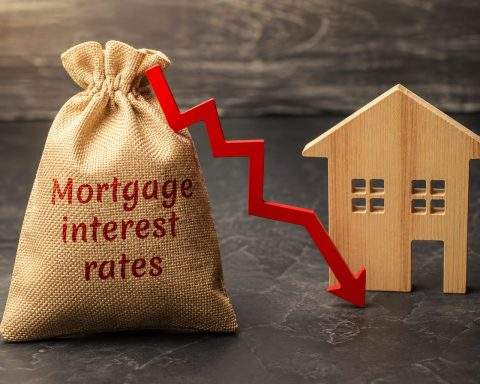

- Average 30‑year fixed mortgage rates today sit in the low‑6% range—about 6.2% to 6.3%, depending on the survey.
- Refinance rates are slightly higher than purchase rates, with national 30‑year refi averages clustered around 6.3%–6.7%.
- Freddie Mac’s benchmark index shows 30‑year fixed rates at 6.26% for the week ending November 20, barely changed in a month—confirming a stubborn “holding pattern.” FRED+1
- Redfin’s economists and coverage highlighted by TheStreet say rates are likely to hold near current levels until the Fed’s December meeting, with a meaningful shift possible afterward.
- An overdue September jobs report and a recent government shutdown are keeping markets on edge, but for now, small daily moves—not big swings—are defining the mortgage market.
Where mortgage rates stand on November 24, 2025
Several major trackers updated their numbers this morning, and while methodologies differ, the story is consistent: mortgage rates are lower than earlier this year but stuck near the low‑6% range.
National snapshot: purchase loans
- 30‑year fixed (conforming)
- Optimal Blue data (via a syndicated report) shows the average 30‑year fixed conforming mortgage at about 6.236% today.
- NerdWallet, using Zillow data, reports an average 30‑year APR around 6.08%, down about 0.09 percentage points from a week ago.
- Bankrate’s national survey pegs today’s 30‑year fixed rate at roughly 6.33%.
- 15‑year fixed
- Optimal Blue shows 15‑year conventional loans near 5.52%.
- Zillow/NerdWallet has 15‑year APRs around 5.53%.
- Jumbo and government‑backed loans
- 30‑year jumbo loans average about 6.51%.
- FHA 30‑year rates hover just over 6.1%.
- VA loans are still among the lowest, around 5.9%.
How today compares with last week
Freddie Mac’s long‑running Primary Mortgage Market Survey shows the average 30‑year fixed rate at 6.26% for the week ending November 20, up only 0.02 percentage points from the prior week and just 0.09 points from late October.
Realtor.com’s latest “Mortgage Interest Rates Today” update, published on November 20, highlighted the same figure—6.26% on a 30‑year fixed, up from 6.24% the previous week—and linked the uptick to the long‑delayed September jobs report finally hitting the wires after the government shutdown. Real Estate News in USA+1
Put simply: today’s rate levels are almost exactly where they were a week ago. The mortgage market has been inching sideways, not sprinting in either direction.
Refinance mortgage rates today
Refinancers are seeing a similar pattern: a gentle drift lower from earlier in the year, but no dramatic break.
- A syndicated summary of Fortune’s “Current refi mortgage rates report for Nov. 24, 2025” notes that the average 30‑year fixed refinance rate is about 6.33%, based on Zillow data. Fortune+1
- Bankrate’s refi table shows:
- 30‑year fixed refi: ~6.72%
- 20‑year refi: ~6.42%
- 15‑year refi: ~6.09% Bankrate+1
Meanwhile, Money.com’s November 21 update put the average 30‑year refinance rate around 6.50%, down a bit from earlier in the week and still described as being firmly in the “low‑6% range.” Money
This wide band—6.3% to 6.7%—reflects differences in:
- Whether a survey is tracking raw interest rates or APRs,
- Whether the data is based on closed loans, rate locks, or daily lender quotes,
- The borrower profile (credit score assumptions, down payment, and points).
What Yahoo Finance reported over the weekend
In its Saturday, November 22 update, Yahoo Finance wrote that mortgage and refinance rates have been “stuck in a range for six weeks,” even as the 30‑year fixed trend has been gradually lower since late May. Their piece cited Zillow’s index showing the average 30‑year fixed ticking up to roughly 6.11% that day. Yahoo Finance+2Yahoo Finance+2
Taken together with today’s numbers, that supports the view that rates are bobbing around within a narrow corridor rather than resetting to a dramatically new level.
Why are mortgage rates stuck in a “holding pattern”?
Several overlapping forces explain why today’s numbers look so stubbornly similar to last week’s.
1. The delayed jobs report and a “mixed” labor picture
Redfin’s economics team, analyzing the long‑overdue September jobs report released last week, found: Redfin+1
- Unemployment climbed into the mid‑4% range, the highest since 2021.
- The economy added around 119,000 jobs, more than expected, but almost all the strength was concentrated in healthcare and leisure/hospitality.
- Prior months were revised down, leaving average job creation near a “breakeven” pace of roughly 60,000 jobs per month.
In plain English: the labor market is weakening but not collapsing. That’s exactly the kind of ambiguous backdrop that makes the Federal Reserve cautious—and keeps mortgage rates from swinging wildly.
2. The Fed’s December 9–10 meeting looms large
Redfin’s note concludes that mortgage rates are likely to “hold steady” into the Fed’s December 10 meeting, wobbling slightly as traders bet on (or against) an additional rate cut. Redfin
On Friday, New York Fed President John Williams said there is still “room for a further adjustment” to the federal funds rate in the near term, prompting traders to raise the odds of a December cut and nudging mortgage rates down as investors piled into bonds. Investopedia+1
This tug‑of‑war—between mixed economic data and Fed officials hinting at possible cuts but not promising them—is exactly what you see reflected in today’s low‑6% readings.
3. Bond markets and the 10‑year Treasury
Mortgage rates typically track the 10‑year U.S. Treasury yield plus a spread.
- Bankrate notes that the 10‑year yield has recently bounced around the low‑4% range, and when it ticked higher last week, their average 30‑year mortgage rate crept up to about 6.37% before easing again.
- As yields cooled following dovish‑sounding Fed comments, NerdWallet/Zillow’s 30‑year APR slid to 6.08% today, roughly 9 basis points lower than a week ago.
Bottom line: until bond markets get a clear signal from the Fed, mortgage rates are likely to oscillate in a tight band rather than break sharply higher or lower.
What Redfin and TheStreet are really saying about a “major” mortgage‑rate change
TheStreet has been amplifying Redfin’s message in headlines like “Redfin predicts major mortgage rate pivot” and “Redfin sends strong message on mortgage rates.” The Street+2The Street+2
So what is that pivot?
Putting Redfin’s own research and the coverage together: Money+3Redfin+3Redfin+3
- The big change has already begun: Rates have fallen from highs near 7.8% in late 2023 and above 7% in early 2025 into the low‑6% range today.
- Redfin expects rates to remain above 6% on average, echoing forecasts published earlier this year that put 2025 mortgage rates mostly between 6% and 6.8%.
- The “pivot” is less about a collapse back to 3% and more about moving from a world of relentlessly rising, highly volatile rates to a flatter, slightly declining path.
Redfin economists stress that:
- Many buyers are waiting for sub‑6% rates before jumping in, but that may or may not happen in 2026.
- The risk is that waiting for a perfect rate means missing today’s improved affordability versus the 7%–plus loans of early 2025—especially if home prices keep rising.
So when you see “major mortgage rate change” in headlines, think:
A structural shift from 7–8% “shock” territory down into a new, relatively stable 6‑ish percent environment—
not a guaranteed plunge back to the ultra‑low pandemic rates.
How Realtor.com’s November 20 update fits into today’s picture
Realtor.com’s November 20 “Mortgage Interest Rates Today” piece pegged the average 30‑year fixed at 6.26%, up from 6.24% the week before, and directly linked that move to the release of delayed government jobs data. Real Estate News in USA+2cln.realtor.com+2
A real‑estate‑focused recap of that article points out:
- Mortgage rates have been hovering around “six and a quarter” percent since mid‑September, moving only a couple of basis points each week. Real Estate News in USA
- Despite the government shutdown, existing‑home sales in October rose to their highest level in eight months, helped by those slightly lower rates.
Today’s readings—still clustered around the low‑6% mark—show that those trends are intact heading into the final week of November.
What this means if you want to buy a home right now
With the 30‑year fixed near 6.2–6.3% today, the key question is whether to buy now or wait in hopes of sub‑6% rates.
Here are some general considerations (not personal advice):
- Affordability first, timing second
- Use a mortgage calculator and today’s rates to see if the payment works on your current income and budget.
- At these levels, a quarter‑point rate move changes your payment far less than a 5–10% jump in home prices.
- Inventory and price dynamics
- Redfin and Realtor.com both note that low inventory and high prices remain challenges, but recent data show slightly more listings and better buyer discounts in some markets.
- If you find a realistically priced home where you want to live for several years, today’s low‑6% rate can be “good enough” compared with this year’s 7% highs.
- Rate locks matter in a choppy market
- With daily ups and downs driven by Fed comments and delayed data, locking a rate you can live with can protect you from a sudden spike before closing.
- ARMs vs. fixed‑rate loans
- Fortune’s ARM update today stresses that while most buyers still choose fixed‑rate mortgages, some may benefit from an adjustable‑rate loan—especially if they plan to move or refinance within the initial fixed period.
- That said, ARMs carry reset risk; you’ll want to be sure you could afford higher payments if rates rise in the future.
What this means if you’re thinking about refinancing
Refinancing at today’s rates can still make sense—but only in particular scenarios.
General rules of thumb drawn from major personal‑finance outlets: Money+2Bankrate+2
- A bigger rate drop is better. Many experts suggest running the numbers if your current mortgage rate is at least 0.5–1 percentage point higher than what you can get today.
- Factor in closing costs and time horizon. If you expect to sell or move in a couple of years, the upfront costs of refinancing may outweigh the monthly savings.
- Shorter terms can accelerate payoff. With 15‑year refi rates near the low‑6% range and even high‑5% range in some surveys, switching from a 30‑year to a 15‑year loan can cut total interest dramatically—if you can handle the higher payment.
Given that refi rates today are around 6.3–6.7%, homeowners whose mortgages are already in the 4–5% range are generally better off staying put, while those still carrying loans at 7% or above may find today’s market more compelling.
How we got here: from 7%+ to “low‑6s”
A longer‑view snapshot helps explain why Redfin and others talk about a “major change”:
- According to Optimal Blue and Freddie Mac data, 30‑year fixed mortgage rates were above 7% in January 2025, not far from the highest levels since 2004–2006.
- Average weekly rates have eased to about 6.26% as of November 20, and today’s daily surveys show many borrowers seeing quotes just above 6%.
- A long period of government‑shutdown‑induced data gaps made every new release—from inflation to jobs—feel like a potential turning point, adding short‑term volatility but not fundamentally changing the trajectory.
Viewed against this backdrop, November 24 looks like a pause on a gentle downward slope, not the end of the story.
What to watch next
If you’re planning a purchase or refinance, the next few weeks are crucial:
- The Fed’s December 9–10 meeting
- Redfin and other economists say the outcome is a “nail‑biter,” with the Fed weighing mixed labor data and delayed inflation reports. Redfin+2Investopedia+2
- A surprise decision or a strongly worded statement could nudge the 10‑year Treasury—and mortgage rates—noticeably higher or lower.
- Updated inflation data (CPI and PCE)
- Markets are watching to see whether the recent cooling in inflation continues. Persistent inflation would limit how far mortgage rates can fall, even if the Fed trims its policy rate.
- Housing‑market reaction
- If rates remain near 6.2–6.3%, economists will be studying whether more sellers list their homes and whether buyer demand rebounds heading into the 2026 spring season.
The bottom line for November 24, 2025
- Today’s 30‑year fixed mortgage rates are clustered around the low‑6% range, with most major surveys landing between 6.1% and 6.3%.
- Refinance rates are a bit higher, mostly in the mid‑6% range.
- Redfin’s research and TheStreet’s coverage don’t promise a dramatic crash in rates—they point instead to a shift from 7–8% extremes to a more stable (but still elevated) 6‑ish percent world, with the Fed’s next moves determining whether we eventually drift closer to or further from 6%.
- For borrowers, affordability, time horizon, and personal finances matter more than perfectly timing a few basis points—but staying informed over the next few weeks will be key.
Important: Mortgage rates change daily—sometimes hourly—and vary by borrower profile, loan type, and region. Always compare quotes from multiple lenders and consider speaking with a qualified housing or financial professional before making decisions.
Related articles: NASDAQ:RDFN