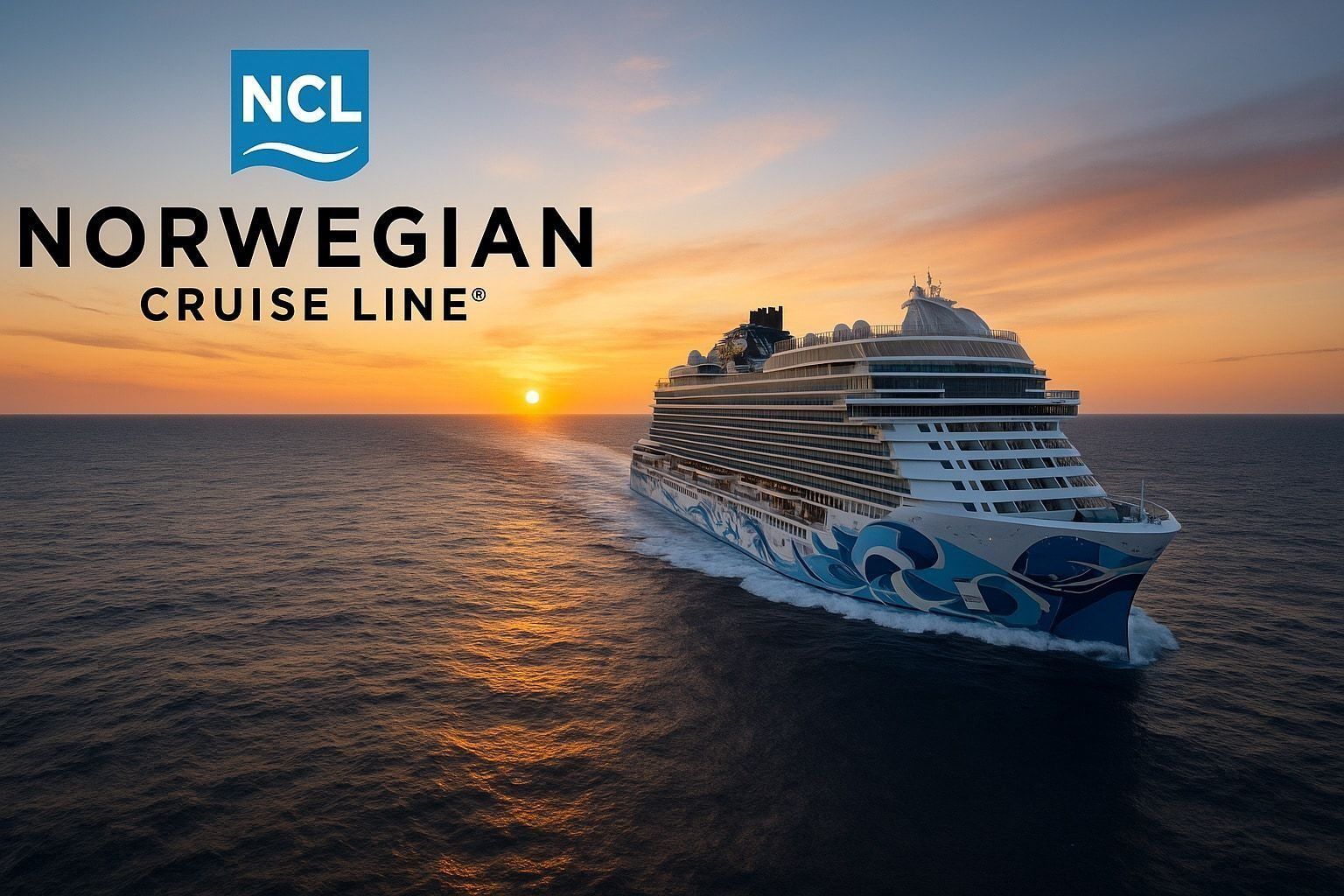
NCLH stock is trading far below its 52‑week high even after record earnings and raised guidance. We break down the latest Norwegian Cruise Line results, analyst price targets, 2026 cruise demand, and key risks for investors as of December 7, 2025.
Where NCLH Stock Stands Now
Norwegian Cruise Line Holdings Ltd. (NYSE: NCLH) is ending 2025 in a strange place: the business is hitting record revenue and profits, yet the stock remains deeply discounted.
- Share price: NCLH closed around $18.92 on December 5, 2025. Benzinga
- According to Zacks, the shares have fallen 31.8% over the past year, leaving the stock about 36% below its 52‑week high of $29.29 and above its 52‑week low of $14.21. Nasdaq
- Over the same period, the S&P 500 gained about 15.1%, highlighting how sharply NCLH has lagged the broader market. Nasdaq
On valuation, several data providers suggest the market is pricing in a lot of bad news:
- Zacks puts Norwegian’s forward 12‑month price‑to‑earnings (P/E) ratio around 7.2, versus 15.8 for its industry and 23.4 for the S&P 500. Nasdaq
- Simply Wall St estimates NCLH’s trailing P/E at about 12.9x, versus a hospitality industry average above 21x and a peer group near 40x; its internal model argues the shares trade at roughly a 58% discount to a fair value of about $45 per share. Simply Wall St
Those numbers explain why “undervalued” keeps showing up in third‑party models—but valuation is only half the story.
Q3 2025: Record Results, Raised Guidance… and a Selloff
Norwegian’s third quarter of 2025 was objectively strong:
- Record revenue: About $2.9 billion, up 5% year‑on‑year, driven by higher capacity and solid demand. Norwegian Cruise Line Holdings Ltd.
- GAAP net income: Roughly $419 million, or $0.86 per share. Norwegian Cruise Line Holdings Ltd.
- Adjusted EBITDA: Around $1.02 billion, up 9% from 2024 and slightly above guidance. Norwegian Cruise Line Holdings Ltd.+1
- Adjusted EPS:$1.20, beating both internal guidance ($1.14) and analyst expectations (~$1.16). Norwegian Cruise Line Holdings Ltd.+2Reute…
- Net yield (a key revenue-per-berth metric) rose roughly 1.6%, while occupancy reached 106.4%, beating guidance. Norwegian Cruise Line Holdings Ltd.+1
Management also raised full‑year adjusted EPS guidance to $2.10, up from $2.05, while keeping full‑year adjusted EBITDA at about $2.72 billion and adjusted net income at around $1.05 billion. Norwegian Cruise Line Holdings Ltd.
Yet the stock dropped hard on the report:
- Reuters notes that revenue of $2.94 billion fell short of the roughly $3.02 billion analysts expected, and Q4 adjusted EPS guidance of $0.27 came in below the $0.30 consensus. Reuters
- Barron’s reports that shares fell nearly 10% after the release and are down about 14% year‑to‑date, even as the S&P 500 gained roughly 17%. Barron’s
The tension is clear: operationally, Norwegian is improving; but the market is worried about where that growth is coming from and how sustainable the margins are.
The New Strategy: More Families, More Caribbean, More Questions
A big theme in 2025 has been Norwegian’s shift toward short Caribbean sailings and family-heavy bookings, especially on the Norwegian brand:
- In its Q3 press release and call commentary, management highlighted record bookings and strong demand for Caribbean itineraries, describing 2025 as another record year for the booking curve and positioning heading into 2026. Norwegian Cruise Line Holdings Ltd.+1
- CEO Harry Sommer has emphasized a strategy to attract more families through shorter, more affordable itineraries and enhanced private island experiences, particularly at Great Stirrup Cay. Norwegian Cruise Line Holdings Ltd.+2Reute…
Analysts, however, see both upside and downside:
- Zacks points out that more third and fourth guests per cabin—typical of family sailings—boost occupancy but dilute blended pricing, since extra guests usually pay lower fares than the first two passengers. Nasdaq
- That dynamic is already showing up in guidance: strong volumes, but somewhat softer per‑diem yields than investors were originally hoping for. Reuters+1
Then comes the Caribbean capacity problem.
Goldman Sachs’ Caribbean Warning: A 2026 Stress Test
Goldman Sachs analyst Lizzie Dove recently sounded a loud alarm on the entire cruise sector, and Norwegian in particular:
- Caribbean cruise capacity is projected to grow about 9% year‑over‑year in 2026, to nearly 15.9 million passengers. Benzinga
- Goldman connects this to a historical precedent: after a major capacity surge in 2014, Caribbean pricing “crumbled” and took roughly a year to recover. Benzinga
- Norwegian is singled out as the most exposed: the company is boosting its Caribbean deployment from about 30% to 40% of capacity, with Caribbean berths up roughly 37% year‑on‑year, more than any major rival. Benzinga
Goldman expects:
- A 1% decline in net per diem in early 2026 for Norwegian and
- A slowdown in net yield growth to around 2.9% in 2026, versus the higher run‑rate investors had come to expect. Benzinga
As a result, Goldman cut its NCLH price target from $27 to $23, arguing investors may need to wait until the second half of 2026 to see clear payoff from this Caribbean-heavy strategy as the company digests the capacity spike and works to defend pricing. Benzinga
So even as demand remains robust, the mix shift—more families, more Caribbean, more shorter itineraries—creates near-term margin and pricing risk.
Demand Tailwinds: Cruises Are More Popular Than Ever
The bear case focuses heavily on pricing and leverage, but the demand backdrop remains supportive:
- NerdWallet, citing AAA projections, notes that 21.7 million Americans are expected to cruise in 2026, up from 20.7 million in 2025—a 4.5% year‑over‑year increase and the fourth consecutive record year for U.S. cruise passenger volumes. NerdWallet
- AAA calls out cruises as a “go‑to vacation” for a wide demographic, from retirees to multi‑generational families, which aligns almost perfectly with Norwegian’s push into the family segment and private destination upgrades. NerdWallet
Norwegian’s own guidance is built on that demand:
- For full‑year 2025, the company expects net yield to rise 2.4–2.5%, adjusted EBITDA around $2.72 billion, and adjusted EPS of $2.10, while maintaining occupancy above 100% and capacity days of about 24.45 million. Norwegian Cruise Line Holdings Ltd.
- Management says it remains on track for its 2026 “Charting the Course” financial targets and is planning around 7% capacity growth in 2026, according to Q3 call summaries. Seeking Alpha+1
Meanwhile, Norwegian continues investing in its product:
- Great Stirrup Cay, its private island in the Bahamas, is getting a significant upgrade—including a large new pool, expanded dining and a major water park expected to open in summer 2026. Zacks reports management believes that alone could add about 25 basis points to yields in 2026, with a larger effect in 2027 as more guests experience it. Nasdaq
In other words: structurally, people still want to cruise, and Norwegian is leaning hard into that trend. The debate is about how much profit it can squeeze out of that demand once the Caribbean gets crowded.
Wall Street’s View: Cheap Stock, Big Upside—With Caveats
Despite the volatility, most sell‑side analysts remain generally positive on NCLH.
Consensus ratings and price targets (as of early December 2025):
- Benzinga:
- Consensus rating: Buy
- Consensus 12‑month price target: $28.58
- Range: $21 (low) to $40 (high), based on 20 analysts. Benzinga
- StockAnalysis.com:
- 18 analysts, consensus “Buy”
- Average price target: $28.83, implying about 52% upside from the current share price. StockAnalysis
- TickerNerd:
- Uses a broader panel of 31 analysts
- Median price target: $26.50, with a range of $19 to $40
- Overall rating: “Strong Buy”, with 17 Buy, 7 Hold, and 0 Sell ratings at the time of its latest update, implying around 40% upside from roughly $18.90. Ticker Nerd
Some firms are more cautious, but still see upside:
- MarketBeat data shows a “Moderate Buy” consensus and a price target around $28–29, even after Wells Fargo trimmed its target from $30 to $29 while keeping an Overweight rating. MarketBeat+1
- Susquehanna, on the more conservative end, has cut its target to $21 with a Neutral stance, while JPMorgan has gone as high as $40–43 with an Overweight rating. Benzinga
Zacks, for its part, is more balanced:
- It assigns NCLH a Rank #3 (Hold), highlighting that earnings estimates for the current and next fiscal year have been revised slightly lower in the past month (to around $2.09 and $2.65 per share), even though those numbers still imply double‑digit EPS growth. Nasdaq
On the pure valuation front, Simply Wall St’s discounted cash flow model remains the most aggressive, with a fair value estimate around $45.10 per share, suggesting roughly 58% upside from current levels, though that’s very much dependent on long‑term cash flow assumptions. Simply Wall St
Balance Sheet and Leverage: The Main Bear Argument
No discussion of NCLH stock is complete without talking about debt.
From Norwegian’s Q3 report and subsequent analysis:
- Total debt as of September 30, 2025: about $14.5 billion. Norwegian Cruise Line Holdings Ltd.
- Net leverage stood around 5.4x, up slightly from the previous quarter because of the delivery of the new ship Oceania Allura. Norwegian Cruise Line Holdings Ltd.+1
- MarketBeat estimates a debt‑to‑equity ratio around 8.0, with a current ratio near 0.18—figures that underscore how tight near‑term liquidity is relative to long‑term obligations. MarketBeat
Management has taken steps to de‑risk the capital structure:
- In September, the company refinanced most of its 2027 exchangeable notes, extended its maturity profile and eliminated all secured notes, swapping about $1.8 billion of secured debt for unsecured debt while keeping net leverage roughly unchanged. Norwegian Cruise Line Holdings Ltd.
Even so, high leverage remains one of the key overhangs cited by bears, alongside:
- Fuel price volatility, with fuel cost per metric ton net of hedges rising from $699 to $744 year‑on‑year in Q3. Norwegian Cruise Line Holdings Ltd.+1
- Exposure to macroeconomic shocks, including inflation, geopolitical risk and government disruptions that can hit travel and port operations. Reuters
Insiders Are Buying While Some Institutions Trim
Recent ownership moves send mixed—but interesting—signals.
On the institutional side:
- MarketBeat reports that Thomas J. Herzfeld Advisors cut its NCLH position by 68.2% in Q2, reducing its holdings to 30,000 shares worth about $608,000, while other institutional investors made smaller incremental changes. MarketBeat
At the same time, insider activity has been notably bullish:
- CEO Harry Sommer bought 25,000 shares at roughly $18.52. MarketBeat+1
- Director Zillah Byng‑Thorne purchased 29,008 shares around $18.11. MarketBeat+1
- Director Harry C. Curtis acquired 5,000 shares near $19.25. MarketBeat
- In total, insiders accumulated about 90,000 shares worth approximately $1.66 million over the last three months, even as some institutions reduced exposure. MarketBeat+1
Insider buying doesn’t guarantee future returns, but it does show that senior leadership is willing to commit personal capital at price levels not far from where the stock trades today.
Cruise Industry Context: Growth, Ports and Competition
Beyond Norwegian’s own ships, the broader ecosystem is gearing up for more volume:
- AAA’s U.S. cruise passenger forecast for 2026 points to a fourth straight record year, suggesting that the overall pie is getting bigger for all operators. NerdWallet
- Ports like Galveston are preparing for “staggering” passenger numbers, investing hundreds of millions in new terminals that attract brands including Norwegian and MSC, reinforcing the long‑term infrastructure around cruising. Chron
Norwegian, Royal Caribbean and Carnival are all positioning themselves around private islands, mega‑ships and itinerary mix. But as Goldman’s note stresses, Norwegian is taking the most aggressive leap into the Caribbean, which could mean either outsized market share gains or extra pain if pricing weakens. Benzinga
Key Risks for NCLH Stock
For investors evaluating NCLH in December 2025, the main risks to keep in focus include:
- Leverage and interest rates
- With net leverage above 5x and total debt around $14.5 billion, Norwegian has less flexibility if demand softens or credit markets tighten. Norwegian Cruise Line Holdings Ltd.+1
- Caribbean capacity and pricing pressure
- A 9% capacity jump in 2026 and Norwegian’s 37% increase in Caribbean berths could compress yields, especially if promotional activity intensifies. Benzinga+1
- Mix shift to families and short cruises
- While volume and occupancy look strong, Zacks and others highlight the risk that blended pricing and per‑diem revenue could stay under pressure as more cabins are filled by lower‑priced third and fourth guests. Nasdaq+1
- Macro and fuel risk
- Inflation, geopolitical tensions, and potential travel disruptions can affect bookings, while fuel prices remain volatile and a material input cost. Reuters+1
- Execution on deleveraging
- Management’s plan hinges on hitting 2025–2026 earnings targets and using cash generation to chip away at debt; any earnings shortfall would slow that process. Norwegian Cruise Line Holdings Ltd.+1
The Bull Case: Why Some See NCLH as a Contrarian Opportunity
On the positive side, the bullish thesis rests on a few core points:
- Demand backdrop is strong: U.S. cruise volumes are projected to set new records in 2025 and 2026, and Norwegian’s bookings and occupancy already reflect that momentum. NerdWallet+1
- Operational performance is improving: Record revenue, expanding EBITDA margins and raised EPS guidance show that the business can grow earnings even with cost and fuel headwinds. Norwegian Cruise Line Holdings Ltd.+1
- Valuation is compressed: Multiple sources show NCLH trading at a steep discount to both its industry and broad market on both forward and trailing P/E, and some models see more than 50% upside to fair value. Benzinga+3Nasdaq+3Simply Wall St+3
- Insiders are buying: Senior executives and directors have been accumulating shares around current levels, signaling internal confidence. MarketBeat+1
For long‑term, risk‑tolerant investors who believe:
- Cruise demand will remain robust,
- Norwegian can manage its Caribbean exposure without destroying pricing, and
- Management will steadily deleverage the balance sheet,
NCLH looks like a classic high‑beta recovery play: cheap, volatile, and highly sensitive to both macro conditions and execution.
The Bottom Line: NCLH in December 2025 Is a High‑Reward, High‑Risk Bet
As of December 7, 2025, NCLH stock sits at the intersection of strong fundamentals and elevated risk:
- The company is printing record earnings, raising guidance and enjoying record bookings.
- The stock, meanwhile, trades closer to distressed travel valuations than to the multiples awarded to its better‑positioned peers.
- Analysts largely see 40–50% upside over the next 12 months, but warn that leverage and Caribbean capacity could cause more turbulence before any sustained rally. Benzinga+3Benzinga+3StockAnalysis+3
For cautious investors, it may make sense to treat NCLH as a wait‑and‑see name until there’s clearer evidence that 2026 Caribbean pricing is holding up and that the deleveraging path is firmly on track.
For more aggressive investors comfortable with volatility and sector‑specific risk, NCLH is one of the more leveraged ways to bet on continued growth in global cruise demand—with the understanding that both the upside and downside are amplified by debt, capacity decisions and the behavior of consumers who, for now, still really, really want to go on vacation.