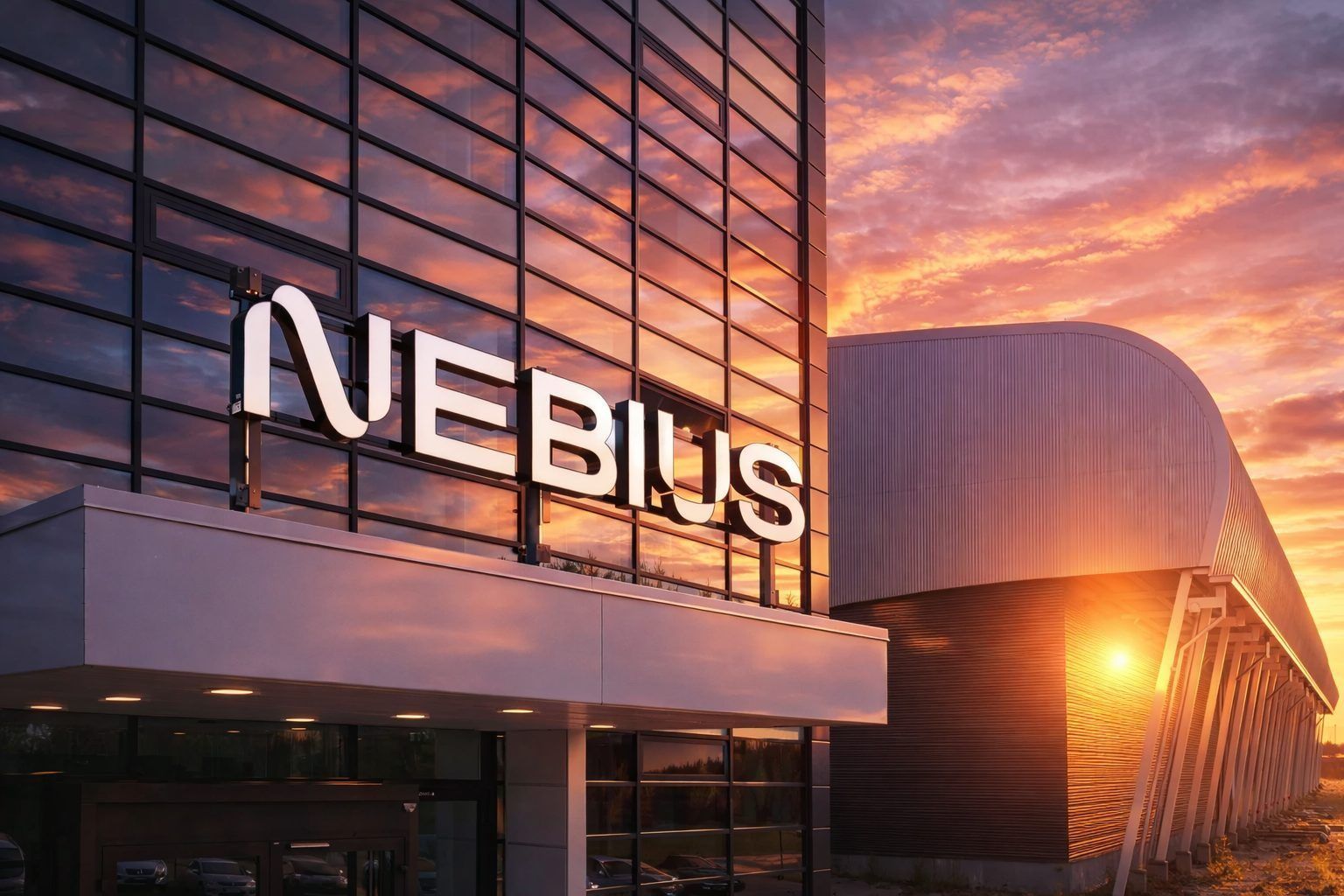
Nebius Group N.V. (NASDAQ: NBIS) shares were lower on Tuesday, December 16, 2025, extending a recent pullback that has split Wall Street into two camps: investors who see Nebius as a scarce, high-demand “AI infrastructure” winner, and skeptics who argue the stock’s fundamentals can’t yet justify the volatility and valuation. As of the latest trade Tuesday, NBIS was around $78.54, down about 3.2% on the day, with an intraday range of roughly $76.95 to $81.88 and volume near 9.5 million shares.
That decline follows a sharp drop in the prior session: MarketBeat reported NBIS fell 7.5% on Monday to about $81.14 after closing at $87.69, with trading volume near 16.85 million shares. MarketBeat
What’s driving NBIS stock today
The immediate story is price action—NBIS is behaving like a classic high-beta AI trade. MarketBeat lists a beta above 3 and flags that the stock had been trading below its 50-day moving average while hovering near its 200-day average, a setup that often attracts both dip buyers and momentum sellers. MarketBeat
But the bigger picture is that AI infrastructure stocks have entered a more turbulent phase. After a blockbuster 2025 run, the market is increasingly focused on the sector’s hardest questions: how quickly revenue converts into cash flow, how much dilution is required to fund expansion, and whether long-term demand can stay ahead of rapidly growing supply.
Even among commentators who remain constructive on the business, the tone has shifted from “straight line growth” to “execution and financing matter now.” Simply Wall St described Nebius as a polarizing AI infrastructure play, noting the stock’s strong year-to-date gains even after the latest pullback. Simply Wall St
The contracts investors keep coming back to: Microsoft and Meta
The reason Nebius remains a headline stock—despite the drawdowns—is that it has landed some of the most eye-catching AI infrastructure contracts in the market.
Microsoft deal: up to about $19.4 billion over five years
Investopedia reported in September that Nebius signed an agreement with Microsoft worth up to $19.4 billion over five years, tied to delivering compute resources via a New Jersey data center—positioning Nebius as one way Microsoft can address AI-related infrastructure constraints. Investopedia
Reuters also referenced a Microsoft agreement in that range and described it as a major catalyst for the stock’s 2025 surge. Reuters
Meta deal: roughly $3 billion, with delivery starting now
Nebius also struck a major deal with Meta to provide AI infrastructure over a multi-year term. Reuters reported in November that Nebius signed a deal worth about $3 billion with Meta and highlighted the broader theme: hyperscalers still need more AI compute capacity than the market can easily supply. Reuters
In a related SEC filing, Nebius described an order under an agreement that totals approximately $2.9 billion, with GPU services deployed in two tranches during December 2025 and February 2026—and stated that cash flow from the agreement will help finance part of the associated capital expenditure. SEC
Why it matters for NBIS stock: these contracts provide revenue visibility and credibility—but they also imply heavy upfront investment, which pushes investors to scrutinize cash burn, capex discipline, and funding choices.
Financial momentum is real—so are the spending requirements
Nebius has posted explosive top-line growth, but it’s pairing that growth with aggressive investment.
Reuters reported that Nebius posted a 355% jump in Q3 revenue to $146.1 million and that capital expenditures surged to $955.5 million in the September quarter as the company invested in GPUs, land, and power. Reuters
At the same time, Nebius has talked openly about how far it wants to scale. Reuters said Nebius was targeting $7 billion to $9 billion in annualized run-rate revenue by the end of 2026, compared with ARR of about $551 million at the end of September. Reuters
That ambition requires infrastructure—especially power.
- Reuters reported Nebius plans to secure 2.5 gigawatts of contracted power by end-2026 across the U.S. and Europe. Reuters
- A Zacks analysis published on Nasdaq.com echoed that scale-up narrative, citing the company’s target of 2.5 GW contracted power by 2026 and ARR goals of $7–$9 billion by 2026 and $900 million–$1.1 billion by end-2025. Nasdaq+1
But the same Nasdaq/Zacks piece underscored the risk: it said Nebius raised full-year capex guidance sharply—from around $2 billion to approximately $5 billion—and that the company tightened full-year revenue guidance to $500–$550 million, pointing to timing delays in bringing capacity online. Nasdaq
Dilution is part of the story—and the company says so
If you’re trying to understand why NBIS swings so sharply, it helps to remember: building AI data centers and GPU clusters is capital intensive, and the market reacts instantly to any sign the expansion will require more equity.
Nebius’ own communications highlight that reality. In its Q3 financial results release, the company said it would put in place an at-the-market (ATM) equity program for up to 25 million Class A shares, describing it as a way to access equity funding while also noting it would remain “dilution-sensitive” as Nebius finances future growth. nebius.com
Reuters also reported that, following the Microsoft deal, Nebius raised $4.2 billion through a public share offering and the sale of convertible notes. Reuters
Today’s debate, summarized: bulls see scarcity; bears see economics
A key feature of NBIS coverage on December 16 is that it’s not just “up or down”—it’s a genuine debate about what matters most right now.
The bullish framing: demand exceeds supply, and Nebius has “hyperscaler validation”
A Seeking Alpha analysis published late Dec. 15 (U.S. time) argued the long-term outlook is strengthening even after the pullback, pointing to:
- scaling infrastructure and contracted power targets above 2.5 GW by YE2026,
- major Microsoft and Meta contracts with revenue ramping into 2026,
- and the view that risks like cash burn and dilution are balanced by robust ARR guidance and improving adjusted EBITDA trends. Seeking Alpha
TipRanks, in a widely shared “NBIS stock forecast” piece circulating Tuesday, emphasized the same trio of pillars—AI demand, “deal power,” and bullish Wall Street targets—highlighting a top price target of $211 and an average price target that implies substantial upside from current levels. TipRanks
The skeptical framing: high risk, uncertain profitability, and valuation pressure
A separate Seeking Alpha piece published early Dec. 16 took a harsher stance, arguing the bullish narrative is disconnected from economic reality and saying there’s no credible reason yet for confidence in significant profitability—suggesting investors should avoid the stock at current risk levels. Seeking Alpha
Meanwhile, the Nasdaq/Zacks analysis leaned cautious as well—calling out “stretched valuation,” macro uncertainty, and the challenge of sustaining returns if capex remains elevated and AI demand normalizes. Nasdaq
Wall Street forecasts and price targets for NBIS
Despite the volatility, sell-side targets remain high, though they vary widely depending on the analyst set and platform.
Here’s what the major trackers show as of Dec. 16:
- MarketBeat: average 12-month price target $144.71 (high $211, low $84), implying substantial upside from the then-current price shown on its page. MarketBeat
- Investing.com: average target $151.50 from 8 analysts, with a high of $211 and low of $70; it also lists recent “Buy” ratings and targets from multiple firms. Investing.com
- StockAnalysis: “Strong Buy” average rating, with a 12-month price target around $157.2 (based on its tracked analyst set). StockAnalysis
What investors should take from this: the Street is broadly constructive, but the spread between low and high targets is unusually wide—consistent with a stock whose outcome depends heavily on execution (bringing power and GPU capacity online), financing decisions, and whether 2026 demand materializes as expected.
The operational milestones that matter next
For readers tracking Nebius Group stock into early 2026, several near-term milestones stand out:
- Meta deployment schedule (December 2025 and February 2026)
Nebius’ SEC filing describes GPU services rolling out in two tranches—a timeline investors may use to frame when revenue (and cash flow) could begin matching capex intensity more closely. SEC - Power and capacity progress toward the 2026 target
Management’s push toward 2.5 GW of contracted power by end-2026 is central to the bull thesis because it underpins how much GPU infrastructure Nebius can physically operate. Reuters+1 - Funding choices and dilution signals
Any use of the ATM program—or additional equity/convertible issuance—can move the stock quickly, because it directly impacts per-share upside even if the business grows. nebius.com+1 - Next earnings window (mid-February 2026, estimates vary)
The company has not always confirmed dates far in advance, so calendars differ. MarketBeat lists an estimated next report around Feb. 18, 2026 (based on past schedules). MarketBeat TipRanks lists Feb. 17, 2026. TipRanks
Investors should treat these as tracking estimates until Nebius confirms. MarketBeat+1
A quieter but notable company update: expanding the ecosystem
While not a direct stock catalyst, Nebius continues investing in positioning its platform as a backbone for “physical AI” and robotics. On December 10, 2025, the company announced its Robotics & Physical AI Awards and Summit and said it awarded $1.5 million in Nebius AI Cloud compute and inference credits to selected startups. nebius.com
For long-term investors, moves like this can matter indirectly: they’re part of how cloud platforms seed developer adoption and build vertical credibility—especially in emerging AI categories beyond pure model training.
Bottom line for Dec. 16: NBIS is a conviction stock again
Nebius Group’s stock action on December 16, 2025 reinforces what NBIS has become: a high-conviction, high-volatility AI infrastructure trade.
- The bull case rests on scarce AI compute supply, hyperscaler-scale contracts, and aggressive capacity expansion that could turn today’s spending into 2026–2027 revenue power. Reuters+2Seeking Alpha+2
- The bear case argues that profitability and unit economics remain unproven at scale—and that financing, dilution, and valuation compression can overwhelm the narrative in the near term. Seeking Alpha+2Nasdaq+2