NextEra Energy, Inc. (NYSE: NEE) is ending 2025 with a familiar role—and a new narrative. For years, investors have treated NextEra as a premium “growth utility,” built on Florida Power & Light’s regulated stability and NextEra Energy Resources’ renewables scale. In December, that story expanded into something broader: power for AI and hyperscale data centers—and the infrastructure required to deliver it reliably.
As of Saturday, Dec. 20, 2025, U.S. equity markets are closed. NEE last traded at $79.54, reflecting Friday’s close. Stock Invest
What’s driving attention now isn’t a single headline—it’s a cluster of announcements and analyst updates that, together, outline NextEra’s strategy for the next decade: sign long-term agreements with Big Tech, build “data center hubs,” expand gas capabilities, and invest in transmission and nuclear to support a grid under stress. NextEra Energy Investor Relations+4NextEra…
NEE stock today: where shares stand heading into year-end
NEE’s latest close ($79.54) came after a down day Friday, with one market summary noting the stock fell 1.62% in that session. Stock Invest
Earlier in the week, the stock had also lagged peers during a broad market slide—MarketWatch reported NEE at $80.29 on Dec. 17, about 8% below its 52‑week high of $87.53, with volume near its recent average. MarketWatch
In other words: the market is listening, but it’s not blindly chasing the AI-power theme—especially in a sector where interest rates, financing costs, and regulatory outcomes can matter as much as headline growth.
The central story: NextEra’s AI data center push moves from theme to contracts
The clean-energy buildout for Big Tech has existed for years. What changed in December is that NextEra showcased more explicit “data center campus” development, paired with raised earnings guidance that management linked to demand strength.
Google Cloud partnership: multi‑GW campuses and an “energy + tech” tie-up
On Dec. 8, NextEra and Google Cloud announced an expanded partnership centered on multiple new gigawatt-scale data center campuses and accompanying energy infrastructure. NextEra also said Google Cloud would support NextEra’s enterprise-wide digital transformation using AI and infrastructure, with the first commercial product expected in the Google Cloud Marketplace by mid‑2026. NextEra Energy Investor Relations+1
The release adds key color that matters for investors trying to separate buzz from execution:
- The companies said they are currently developing the first three campuses and working to identify additional locations. NextEra Energy Investor Relations
- NextEra said the relationship builds on a base of roughly 3.5 GW already in operation or contracted between the two firms. NextEra Energy Investor Relations
This matters because “AI power demand” can sound abstract. Campuses and interconnections are concrete, and they tend to show up—eventually—in capex plans, project backlogs, and regulated filings.
Meta contracts: 2.5 GW of clean energy agreements, plus storage
Also on Dec. 8, NextEra Energy Resources and Meta disclosed they had reached roughly 2.5 GW of clean energy contracts, achieved via 11 power purchase agreements (PPAs) and two energy storage agreements (ESAs). NextEra Energy Investor Relations+1
NextEra specified:
- 2.1 GW enabled through nine solar projects across ERCOT, SPP, and MISO. NextEra Energy Investor Relations+1
- In New Mexico, 190 MW of solar and 168 MW of battery storage tied to PNM’s system through a rate structure designed to help customers contract for clean energy more efficiently. NextEra Energy Investor Relations+1
- The broader set of 13 projects is scheduled to come online between 2026 and 2028. NextEra Energy Investor Relations+1
For NEE stock, these aren’t just ESG headlines. They are long-duration, large-volume commitments that support NextEra’s claim that it can grow into the data center era without taking the same balance-sheet risks a merchant power company might.
The “15 by 35” plan: data center hubs become a new growth platform
At its investor conference materials, NextEra’s subsidiary messaging became even more specific: “data center hubs” could drive a major wave of new generation—and more gas origination.
A slide from the investor conference presentation states that data center hubs are expected to contribute at least 15 GW of new generation by 2035, with an upside case of ~30 GW by 2035. The same material says NextEra had already identified 20+ potential hubs, and expected to grow that opportunity set to over 40 by the end of 2026. NextEra Energy Investor Relations
That’s a bold claim, and investors should read it as both:
- An opportunity (scale, first-mover advantage, repeatable development playbook), and
- A disclosure of intent (large capital needs, permitting timelines, interconnection risk, and dependence on counterparties following through).
Gas is part of the data center equation—by design
One investor-conference “Letter of Intent” slide describes a partnership with Comstock Resources to build gas-fired generation to support hyperscaler data center build-out, with a plan to build up to ~8 GW of new generation (including gas and storage) and initial power expected as early as 2027. NextEra Energy Investor Relations
This is a crucial nuance for anyone trying to model NextEra’s long-term earnings:
- The AI-driven grid crunch isn’t being met with renewables alone.
- The market’s near-term reliability needs often pull in gas generation and storage, especially where interconnection and permitting timelines are tight.
Barron’s framed this moment as a “golden age” for power demand, reporting that NextEra projects U.S. electricity usage could rise sharply by 2045, with AI data centers a major driver of incremental growth. Barron’s
Transmission investment: NextEra and Exelon tapped for a major PJM upgrade
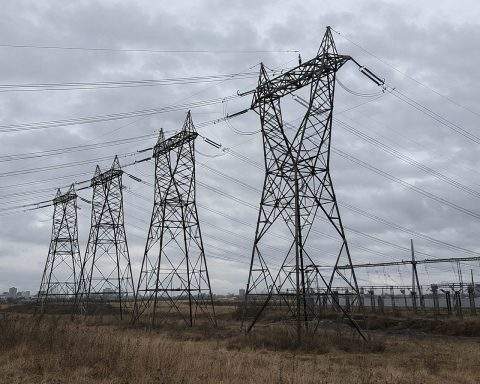
A separate (but strategically aligned) piece of December news: PJM recommended NextEra Energy Transmission and Exelon for an approximately 220‑mile, 765‑kV high-voltage transmission line across Pennsylvania and parts of West Virginia. NextEra Energy Investor Relations
NextEra’s release highlights several details relevant to long-term investors:
- The project is part of PJM’s 2025 Regional Transmission Expansion Plan. NextEra Energy Investor Relations
- A 765‑kV line is described as transferring 2–3 times more power than 500‑kV lines and reducing transmission losses by 50%. NextEra Energy Investor Relations
- The proposed line would facilitate approximately 7 GW of power, and PJM’s board is expected to hold a final vote in early 2026. NextEra Energy Investor Relations
In the current market, transmission is often the “hidden bottleneck.” If generation is the story investors like to buy, transmission is the constraint that decides how quickly growth becomes revenue.
Natural gas capabilities expand again: Symmetry Energy Solutions acquisition
NextEra Energy Resources also announced an agreement to acquire Symmetry Energy Solutions from Energy Capital Partners, a deal expected to close in Q1 2026 (subject to regulatory approvals). NextEra Energy Investor Relations
According to the company, Symmetry provides natural gas supply, storage, and asset management solutions and serves approximately:
- 5,500 large commercial and industrial customers, and
- 80,000 residential and small customers
across 34 states. NextEra Energy Investor Relations
Strategically, this aligns with the “data center hubs” narrative: if electricity demand growth pulls more gas-fired generation into the mix, then gas procurement, logistics, and supply optimization become more valuable capabilities.
Nuclear: long-term supply agreements remain part of the reliability stack
NextEra’s nuclear footprint also appeared in December headlines.
Point Beach: extending WPPI supply into the 2050s
NextEra Energy Resources reached a new agreement to continue supplying WPPI Energy with electricity from the Point Beach Nuclear Plant in Wisconsin. WPPI currently takes 168 MW of the plant’s nearly 1,200 MW output, and under the agreement will continue taking 168 MW into the 2050s. NextEra Energy Newsroom
The release notes this followed an NRC approval for Point Beach’s subsequent license renewal, enabling continued operations for another 20 years. NextEra Energy Newsroom
For investors, the relevance is simple: as grids tighten, firm, carbon-free baseload becomes harder to replace—and often more valuable.
Florida Power & Light: rate visibility improves and leadership evolves
Investors sometimes over-focus on NextEra Energy Resources and underweight the role of Florida Power & Light (FPL), which remains central to NextEra’s stability and credit profile.
Florida PSC approves a four-year rate agreement (2026–2029)
On Nov. 20, NextEra announced that Florida regulators approved a four-year rate agreement setting rates for 2026 through 2029, intended to support grid investment while keeping bills below the national average. NextEra Energy Investor Relations
The release provided specifics that are notable for regulated-utility modeling:
- For 2026, FPL’s typical 1,000‑kWh residential bill in most of Florida would rise about $2.50/month (roughly 2%) to $136.64. NextEra Energy Investor Relations
- FPL also said it expects to add 335,000 new customers by the end of the decade, implying ongoing load growth and capital needs. NextEra Energy Investor Relations
Leadership update: Scott Bores becomes FPL president
On Dec. 1, NextEra announced the promotion of Scott Bores to president of FPL, effective immediately, reporting to Armando Pimentel, who remains CEO. NextEra Energy Investor Relations
Earnings outlook: raised 2025 guidance, stronger 2026 range, dividend growth narrative intact
The most market-moving “forecast” in December wasn’t a third-party model—it was NextEra’s own updated guidance, widely covered by major outlets.
Reuters reported that NextEra increased its adjusted EPS forecasts:
- 2025 adjusted EPS: $3.62–$3.70 (from $3.45–$3.70)
- 2026 adjusted EPS: $3.92–$4.02 (from $3.63–$4.00)
with rising demand from data centers a key driver. Reuters
Investopedia also summarized the same guidance changes, tying them directly to the Google and Meta deals. Investopedia
Meanwhile, NextEra’s Q3 2025 materials reiterated longer-term expectations at the time, including a stated expectation to grow dividends per share at roughly 10% per year through at least 2026, off a 2024 base. NextEra Energy Investor Relations
Analyst forecasts: price targets cluster in the low-to-mid $90s, with mixed tweaks in December
Wall Street’s consensus view remains broadly constructive, but recent notes show analysts fine-tuning targets rather than rewriting the thesis.
Consensus targets
- MarketBeat lists an average 12‑month price target around $91.56 (with targets ranging from $77 to $100 in its snapshot). MarketBeat
- StockAnalysis shows a similar “Buy” indication and a 12‑month target around $92 in its summary. StockAnalysis
- MarketScreener, citing analysts polled by FactSet, referenced a mean price target around $91.85 and an overweight-type consensus framing. MarketScreener
Using Friday’s close of $79.54, a ~$91–$92 target implies roughly mid‑teens upside—but that’s dependent on execution, rates, and how fast data-center demand becomes monetizable capacity. MarketBeat
Recent notable analyst moves (mid‑December)
- UBS lowered its price target to $91 from $94 and maintained a Buy rating. TipRanks
- Morgan Stanley lowered its target to $95 from $97 and kept an Overweight rating, with commentary that utility performance could be heavily driven by data centers and 2026 growth upside. TipRanks
- JPMorgan was reported as raising its target to $97 from $94 while maintaining an overweight/overweight-equivalent stance (as aggregated in market coverage). MarketBeat+1
- BMO Capital lowered its target to $89 in a valuation-focused note, while still maintaining an outperform-style view in the same coverage stream. Investing.com
The pattern: analysts generally accept the growth story, but differ on how much to pay for it today, especially when utilities are still sensitive to the cost of capital.
The broader backdrop investors can’t ignore: grid stress, politics, and who pays for demand
Data centers are reshaping U.S. electricity planning in real time—and the political and regulatory questions are getting louder.
Reuters reported that capacity prices in PJM’s latest auction hit a new record, a signal of supply tightness that could translate into higher bills and accelerated buildout pressure. Reuters
Meanwhile, the Associated Press reported Georgia regulators approved a major generation expansion plan aimed largely at serving data centers—along with intense debate over whether projected demand will materialize and how much risk falls on regular ratepayers. AP News
For NextEra, this matters because:
- The opportunity is enormous, but
- public scrutiny is rising around data-center tariffs, cost allocation, and the speed of new builds.
What to watch next for NextEra Energy stock
With the December news flow largely digested, the next catalysts are likely to come from execution milestones and regulatory checkpoints:
- Progress on the Google campus buildouts (site selection, interconnection, timelines). NextEra Energy Investor Relations
- Meta project cadence as contracted solar/storage projects move toward 2026–2028 in-service dates. NextEra Energy Investor Relations
- Symmetry acquisition approvals and closing (targeted for Q1 2026). NextEra Energy Investor Relations
- PJM board vote in early 2026 on the 765‑kV transmission project. NextEra Energy Investor Relations
- Any updates to the “15 by 35 / 30 by 35” data center hubs pipeline, including additional named counterparties. NextEra Energy Investor Relations+1
- NextEra’s next earnings cycle, where investors will look for capex, financing, and updated long-term EPS/dividend framing consistent with the new guidance band. Reuters+1
Bottom line
NextEra Energy stock is being repriced—carefully—around a bigger idea: utilities aren’t just defensive income vehicles anymore; some are becoming core infrastructure plays for AI. NextEra is trying to prove it can capture that upside with contracts, hubs, and regulated-like risk profiles rather than merchant-style volatility. Investopedia+2NextEra Energy Investor Rela…
Whether NEE ultimately earns a higher multiple from here will likely hinge on three questions investors will keep asking in 2026:
- How quickly can NextEra turn AI demand into permitted, interconnected megawatts? NextEra Energy Investor Relations+1
- What does it cost to build—and who pays for reliability? Reuters+1
- Can the company sustain growth while protecting its balance sheet and dividend trajectory? NextEra Energy Investor Relations+1