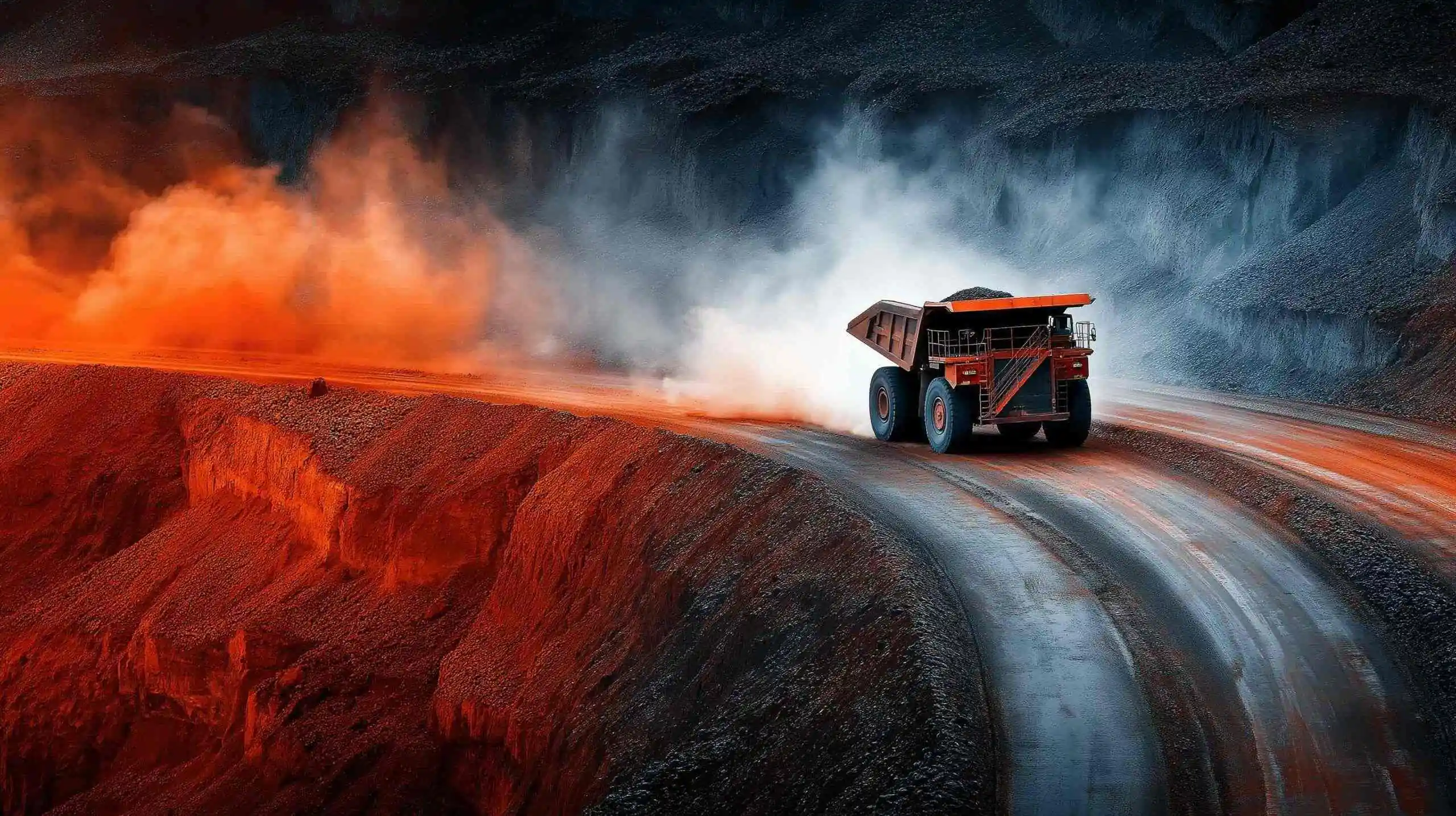
As of 1 December 2025, Niger’s decision to put uranium from the nationalised SOMAIR mine on the open market – and the reported movement of a massive uranium convoy in defiance of an international tribunal – is reshaping the geopolitics of nuclear fuel. NucNet+2Reuters+2
A uranium convoy tests court orders and colonial legacies
On 1 December 2025, French nuclear fuel group Orano said a convoy of uranium concentrate (“yellowcake”) had left its expropriated SOMAIR mine near Arlit in northern Niger and warned that the shipment posed “serious safety and security risks”.Reuters
According to a security source quoted by Reuters, around 1,050 tonnes of uranium were moved from the SOMAIR site – an amount equivalent to well over a year of the mine’s pre‑coup output and worth hundreds of millions of dollars at current prices.Reuters+1
Orano says it did not authorise the shipment, has no information on the quantity, destination or buyer, and fears the material could be diverted or transported in breach of international safety rules.Reuters+1
Niger’s military rulers, however, have gone on state television to assert what junta leader General Abdourahamane Tiani calls the country’s “legitimate right” to dispose of its resources and sell uranium to “whoever wants to buy it” under market rules – a direct challenge to France’s decades‑long dominance of the sector and to a September ruling by the World Bank’s International Centre for Settlement of Investment Disputes (ICSID).Arab News+1
That ICSID tribunal ordered Niger not to sell, transfer, or facilitate the transfer of uranium produced by SOMAIR that had been withheld in violation of Orano’s rights.World Nuclear News+1 The latest convoy appears to ignore that order, raising the stakes in a confrontation that blends resource nationalism, energy security and great‑power competition.
From French stronghold to nationalised asset
Niger has been a cornerstone of the French and European nuclear fuel chain for more than half a century. SOMAIR began producing uranium in 1971, and together with other mines made Niger one of the world’s top producers. As of 2023, the country held about 454,000 tonnes of identified uranium resources and supplied around 5% of global mine output.World Nuclear Association
France’s Orano (formerly Areva) historically controlled SOMAIR and the now‑closed COMINAK mine, as well as the huge but still undeveloped Imouraren deposit.World Nuclear Association+1
The turning point came after the July 2023 coup that toppled President Mohamed Bazoum. The military junta embraced an openly anti‑French, sovereigntist agenda and began revisiting mining contracts.World Nuclear Association+1
Key steps:
- June 2023–June 2024 – licences revoked: Niger withdrew Orano’s operating permit for Imouraren, citing lack of progress, and later moved against other foreign licences, including Canada’s GoviEx at the Madaouela project.World Nuclear Association+2Valdai Club+2
- Late 2023–2024 – export bottleneck: ECOWAS sanctions and a Benin border blockade choked off the traditional truck‑and‑rail route from Arlit to the port of Cotonou, leaving hundreds of tonnes of yellowcake stranded inside Niger and forcing SOMAIR to scale down and eventually halt operations.World Nuclear Association+1
- December 2024 – de facto takeover: Niger stopped recognising SOMAIR’s French‑dominated board, seized operational control and blocked Orano’s access to the site.Wikipedia+1
- June 2025 – formal nationalisation: The government announced it would nationalise SOMAIR, transferring shares and assets to the state.Wikipedia+1
Niger’s main mineworkers’ union, SYNTRAMIN, publicly backed nationalisation, accusing Orano of “decades of pillaging” and claiming that 86.3% of production since 1971 had gone to the French group despite it owning only 63% of SOMAIR.Reuters+1
Orano rejects the accusations and has launched multiple ICSID cases arguing that Niger’s actions amount to expropriation in breach of investment treaties, including the Energy Charter Treaty.World Nuclear News+1
How big is the SOMAIR uranium prize?
The dispute centres on a sizeable stockpile.
- In September 2025 Orano said about 1,500 tonnes of uranium were stockpiled at SOMAIR’s Arlit site and warned it would seek compensation and pursue criminal charges if that material was sold without its consent.Reuters
- A mine source cited by Reuters put total inventory at about 1,570 tonnes, while earlier reporting and French press estimates had suggested stocks between 1,300 and 1,400 tonnes, worth roughly €250–300 million at spot prices.Reuters+2Le Monde.fr+2
If the latest convoy really carried around 1,050 tonnes, Niger may have moved two‑thirds of the contested uranium in one go – despite the tribunal’s explicit order not to sell or transfer it.Reuters+2Reuters+2
Niger, for its part, argues that the uranium was mined on its soil, that Orano unilaterally suspended production after the coup, and that nationalisation simply restores sovereignty over a strategic asset.Reuters+2NucNet+2
Why Niger’s uranium still matters for Europe
Even after diversification, Europe’s nuclear fleet cannot ignore Niger.
Before the coup, Niger was the second‑largest supplier of natural uranium to the European Union, delivering 2,975 tonnes in 2022 – about 25% of EU supply, according to Euratom data cited by Reuters and Al Jazeera.Reuters+1
France, where nuclear power provides around 70% of electricity, sourced roughly 20% of its imported uranium from Niger that year.Reuters+1
EU officials have repeatedly stressed that there is no immediate risk to reactor operations if Niger cuts deliveries: utilities hold uranium inventories equivalent to roughly three years of fuel, and imports can be re‑routed from other producers.Al Jazeera+1
However, the supply map is shifting fast:
- In 2024, Canada supplied about 33% of EU uranium imports, Kazakhstan 24%, Australia 10% and Russia 15%, according to an analysis based on Euratom’s 2024 report. Niger’s share dropped sharply after the coup.enstrat.hu
- While Europe has cut Russian uranium imports by roughly 36% year‑on‑year, it still relies heavily on Russian conversion and enrichment services – stages downstream of the ore itself.enstrat.hu
In other words, Niger’s ore plus Russia’s processing capacity have been two pillars of Europe’s nuclear fuel security. Disruptions in Niger complicate Brussels’ plan to phase out Russian fuel by the 2030s and increase competition for alternative supply.enstrat.hu+1
Moscow, Tehran and Ankara in the wings
Who might buy Niger’s uranium if it’s no longer flowing to Europe under Orano‑mediated contracts?
Several reports point to a queue of potential buyers:
- In September 2025, a Reuters report citing mine sources said Iran, Russia and Turkey were among those interested in SOMAIR uranium.Reuters+1
- French daily Le Monde reported that Chinese and Russian entities had discussed acquiring portions of the stockpile, with one scenario involving China’s state‑owned CNNC purchasing 1,000 tonnes and Rosatom about 130 tonnes.Le Monde.fr
- A Polish Institute of International Affairs (PISM) brief describes talks as early as late 2023 over a possible sale of 300 tonnes of yellowcake to Iran, which appears not to have materialised under Western pressure.pism.pl
More recently, Niger’s minister of mines reportedly proposed that Russia help develop its uranium deposits, and Rosatom signed a memorandum of understanding on civil nuclear cooperation with Niamey in July 2025.Valdai Club+1
From Moscow’s perspective, access to Niger’s ore would complement its dominant position in conversion and enrichment. From Niamey’s point of view, Russian and Chinese interest provides leverage against France and the EU.
Western officials worry that opaque deals could undermine non‑proliferation norms or further entangle uranium supply in the politics of the Ukraine war and Sahel security – though there is no public evidence so far of uranium being diverted from civilian to military programmes.Reuters+1
Safety oversight and the IAEA’s tightrope
Beyond ownership, safety and safeguards are central concerns.
In March 2025, International Atomic Energy Agency (IAEA) Director General Rafael Mariano Grossi visited Niger, touring the SOMAIR and COMINAK mines and meeting Prime Minister Ali Lamine Zeine. Grossi emphasised the need for “safe and secure” management of uranium production and pledged continued technical cooperation on mining, water management and cancer care.International Atomic Energy Agency+2NucNet…
The visit was widely interpreted as an attempt to maintain IAEA oversight and continuity of presence amid political turmoil and Orano’s suspended operations.NucNet+1
Orano’s latest warnings underscore why the agency is watching closely. The company says it cannot confirm whether international transport regulations were followed for the SOMAIR convoy and fears radioactive material could be mishandled or diverted along insecure routes in the Sahel.Reuters+1
If Niger starts shipping uranium outside established export chains – for example, via new road corridors or air freight instead of the traditional Cotonou route – the IAEA may face greater challenges in tracking material, even if formal safeguards remain in place.World Nuclear Association+1
A tight global uranium market gets tighter
Niger’s crisis lands in a uranium market already gripped by a dual supply shock and booming demand for nuclear power.
Key trends:
- Uranium spot prices have climbed from around $28 per pound in 2020 to the $70–80 range in 2024–2025, touching highs above $80 per pound this autumn, according to industry data summarised by the American Nuclear Society.American Nuclear Society+1
- Long‑term contract prices have lagged but are rising, with recent averages around $65–75 per pound, high enough to revive mothballed projects.Discovery Alert
- Kazakhstan’s Kazatomprom, the world’s largest producer, plans to cut output by around 10% in 2026, while Canada’s Cameco has lowered production guidance due to delays at its McArthur River mine.American Nuclear Society+1
On the demand side, the World Nuclear Association (WNA) forecasts that uranium requirements for the global reactor fleet will grow 28% by 2030 and could more than double by 2040 to over 150,000 tonnes per year, driven by energy security and decarbonisation goals.American Nuclear Society+1
Yet current mine capacity, even at full tilt, is estimated at only 140,000–150,000 tonnes annually, leaving a structural gap to be filled by new projects or inventory drawdowns.Discovery Alert
Analysts increasingly describe a “dual supply shock”:
- Conversion and enrichment constraints, particularly in non‑Russian facilities; and
- Primary mine risk, concentrated in a handful of jurisdictions – above all Kazakhstan and Niger.Discovery Alert+1
Against that backdrop, every tonne of Nigerien yellowcake becomes more strategically valuable, and any perception of political or logistics risk in the Sahel can ripple quickly through price expectations and utility contracting strategies.
Niger’s high‑stakes domestic bet
For the junta in Niamey, uranium is both economic lifeline and political symbol.
Uranium mining has long been a major source of export revenue, but critics say local communities in the Arlit‑Akokan region saw little benefit while bearing the environmental burden.World Nuclear Association+1
By nationalising SOMAIR and putting its uranium on the open market, the authorities aim to:
- Increase the state’s share of mining profits and, potentially, insist on more local processing and jobs.pism.pl+1
- Signal a definitive break with France and align with the broader trend in Mali, Burkina Faso and Guinea of military regimes tightening control over natural resources.Reuters+1
- Leverage competition between Western, Russian, Chinese and Middle Eastern players to win better terms – not only in uranium but also in security assistance and broader economic deals.pism.pl+1
However, this strategy carries serious risks:
- Technical capacity: PISM and other analysts note that Niger currently lacks the full technical and managerial capacity to run complex uranium operations alone, at least at previous production levels. In the medium term it still needs foreign partners, which may be hesitant amid sanctions, legal uncertainty and security risks.pism.pl+1
- Legal overhang: ICSID rulings in Orano’s favour – including bans on selling SOMAIR uranium and demands for the release of detained Orano staff – could translate into damages awards, complicate Niger’s access to international finance and deter new investors wary of treaty violations.World Nuclear News+1
- Sanctions or reputational blowback: If uranium is sold to sanctioned entities or in ways seen as undermining non‑proliferation norms, Niger could face targeted sanctions or financial restrictions, deepening its economic isolation.pism.pl+1
For now, Niger’s main union has pledged to “ensure the continuity of production” under state control, and the government appears determined to prove it can monetise uranium outside the old French‑centric model.Reuters+1
New projects: Dasa, Madaouela and the next chapter
While the SOMAIR drama dominates headlines, new uranium projects in Niger are quietly moving forward – or being fought over.
- Dasa (Global Atomic, Canada): Often described as one of Africa’s highest‑grade undeveloped uranium deposits, Dasa holds around 73 million pounds of reserves and targets first production in 2026, with the Nigerien government signalling continued support despite political turmoil.Wikipedia+2Discovery Alert+2
- Madaouela (GoviEx, Canada): Once a cornerstone of Niger’s longer‑term uranium plans, Madaouela lost its mining licence in 2024 after authorities said the company failed to start production on time. GoviEx has since launched ICSID arbitration.Valdai Club+1
- Other prospects: Studies by the IAEA and OECD highlight additional deposits in the Adrar Emoles region, such as Isakanan and Tagadam, with tens of thousands of tonnes of potential resources. These could attract new partners if the legal and logistics environment stabilises.Valdai Club+1
If Dasa enters production on schedule and Niger resolves – or at least contains – the SOMAIR dispute, the country could remain a major uranium player under a more diversified set of partnerships. If not, output could stagnate and the spotlight will shift to alternative producers in Canada, Australia, Kazakhstan, Namibia and elsewhere.Discovery Alert+1
Scenarios for 2026 and beyond
Looking ahead from late 2025, several plausible scenarios emerge:
1. Negotiated settlement with Orano
- Niger and Orano strike a deal, possibly under ICSID pressure, that recognises state ownership of SOMAIR but compensates Orano and restores some form of joint marketing or offtake rights.
- Uranium exports resume through more conventional, IAEA‑tracked channels, and the dispute becomes a precedent for “renegotiated but not repudiated” mining contracts across West Africa.
2. Deeper pivot to Russia and non‑Western buyers
- Niger proceeds with sales of SOMAIR stock and new production primarily to Russia, China and potentially Iran or Turkey, using alternative logistics routes and financial channels less exposed to Western pressure.Le Monde.fr+2pism.pl+2
- This accelerates Europe’s push to lock in uranium supply from Canada, Australia and Kazakhstan and to expand Western conversion and enrichment capacity – but also deepens the geopolitical split in nuclear supply chains.enstrat.hu+1
3. Prolonged stalemate and under‑production
- Legal, security and logistics problems persist; SOMAIR output stays well below potential; stockpiles move slowly and opaquely; Dasa’s ramp‑up is delayed.
- The global market compensates through higher prices, more restarts of dormant mines elsewhere and increased use of secondary sources, but at a cost to utilities and, eventually, consumers.American Nuclear Society+1
In reality, the outcome may mix elements of all three, evolving as Niger’s domestic politics, Sahel security, Russian‑Western rivalry and global decarbonisation efforts intersect.
Key dates in Niger’s uranium standoff
- 1971: SOMAIR begins uranium production near Arlit; Niger becomes a cornerstone of French nuclear fuel supply.World Nuclear Association
- July 2023: Military junta seizes power, adopting anti‑French, resource‑nationalist rhetoric.World Nuclear Association+1
- June 2023–2024: Niger revokes Orano’s permits at Imouraren and later acts against GoviEx at Madaouela.World Nuclear Association+2Valdai Club+2
- December 2024: Authorities take operational control of SOMAIR, sidelining Orano.Wikipedia+1
- June 2025: Niger formally announces SOMAIR nationalisation; miners’ union backs the move.Reuters+1
- 23 September 2025: ICSID tribunal orders Niger not to sell or transfer SOMAIR uranium stock held in breach of Orano’s rights and calls for the release of an Orano representative detained since May.World Nuclear News
- 27 November 2025: Orano issues a press release condemning an “illegal” uranium shipment leaving SOMAIR in violation of the tribunal ruling.orano.group
- 1 December 2025: Niger’s rulers announce they are putting SOMAIR uranium on the international market; Orano warns a convoy of about 1,050 tonnes of uranium concentrate has left the site and poses serious safety and security risks.NucNet+2Reuters+2
What to watch next
For governments, utilities and investors tracking Niger’s uranium, several signposts will be crucial:
- Any further ICSID decisions – including potential damages awards and enforcement efforts.World Nuclear News+1
- Public confirmation of buyers and routes for the recent uranium convoy and any future shipments.Reuters+1
- Progress at Dasa and other new mines, which could anchor Niger’s role in the market even if SOMAIR remains contested.Discovery Alert+2Valdai Club+2
- EU policies on Russian nuclear fuel and long‑term uranium contracts, as Brussels tries to square energy security with sanctions.enstrat.hu+1
- IAEA engagement, including any follow‑up to Grossi’s 2025 visit, to ensure safeguards and transport safety keep pace with rapid political change.International Atomic Energy Agency+2World …
How Niger manages this moment will determine whether uranium becomes a lever for sustainable development and strategic autonomy – or a flashpoint that deepens instability in the Sahel and adds another layer of risk to the global nuclear renaissance.