Saturday, December 20, 2025 brings one of the most skywatcher-friendly setups of the year: a New Moon has wiped out moonlight, Jupiter is blazing in the evening sky and staying up late, the Ursid meteor shower is building toward its peak, and an interstellar comet—3I/ATLAS—is still within reach of backyard telescopes just after its closest pass by Earth. AP News+4EarthSky+4Scientific American+4
If you’ve been waiting for a “go night” to step outside, let your eyes adjust, and simply follow bright signposts across the sky, tonight is it.
New Moon Night: The Dark-Sky Advantage Peaks Now
The Moon reaches New Moon at 01:43 UTC on Dec. 20—which lands on Friday evening, Dec. 19, in much of the Americas—meaning the Moon is essentially absent from the night sky and won’t wash out faint objects. EarthSky+1
EarthSky also notes this New Moon is part of a trio of “new micromoons” (New Moons occurring near lunar apogee, when the Moon is farther from Earth than average). You won’t “see” a micromoon at New Moon the way you might notice a slightly smaller Full Moon, but the takeaway is simple: skies are darker, and the observing window is wide open. EarthSky
Why it matters tonight:
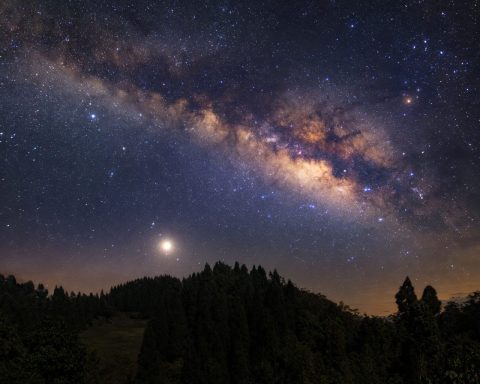
Moonlight is often the single biggest spoiler for casual stargazing. With the Moon out of the way, the sky’s contrast improves—helping you pick out faint meteors, star clusters, and the subtle haze of the Milky Way from a dark site.
Planet Forecast Tonight: Jupiter Dominates, Saturn Slides West, Mercury Hugs the Dawn
Jupiter: The “holiday beacon” in the east
Across December, Jupiter has been the obvious bright “star” stealing the show—rising earlier each night and dominating the eastern sky. The Planetary Society+1
EarthSky’s December sky guide notes that Jupiter rises soon after sunset and remains visible through dawn, with the planet headed toward opposition on Jan. 10, 2026 (when it will be at its biggest and brightest for the season). EarthSky
How to use Jupiter tonight: once you spot it, you’ve got a bright anchor to help you orient yourself—and to start a quick “constellation walk” across the winter sky.
Saturn: Yellowish and lower in the early evening west
Saturn is still an early-evening highlight, described by the Planetary Society as yellowish and high in the west early in the evening. The Planetary Society
EarthSky adds that Saturn is spending the month in Aquarius, and it’s trending toward earlier set times as December closes. EarthSky
Mercury: A low, pre-dawn catch (handle with care)
Mercury is in the morning sky in December, and EarthSky calls this stretch the best morning apparition of 2025 for the Northern Hemisphere, lasting into late December—though it stays low near the horizon. EarthSky
Safety note: Mercury sits close to sunrise. If you’re using binoculars or a telescope, stop well before the sky brightens too much and never sweep near the Sun.
Venus and Mars: Off the stage for now
If you’re hunting for Venus or Mars tonight, don’t waste time—EarthSky reports both Venus and Mars are behind the Sun this month, making them effectively unobservable. EarthSky
Meteor Forecast: The Ursids Are Next—and 2025’s Timing Is Excellent
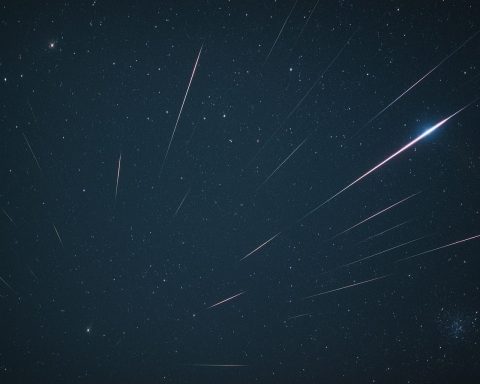
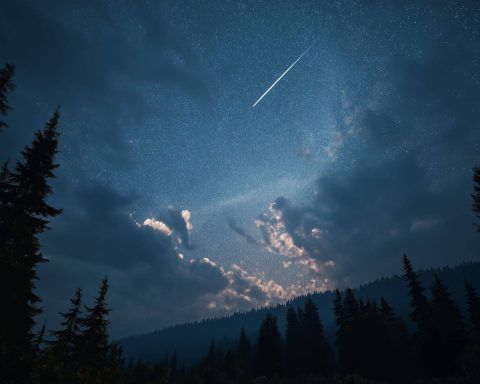
The headline meteor story for this weekend is the Ursid meteor shower, the final notable shower of 2025.
Peak window:overnight Dec. 21–22 American Meteor Society+2Scientific Americ…
Typical rates: around 5–10 meteors per hour under good conditions American Meteor Society+2Scientific Americ…
Moonlight factor: minimal—AMS notes the Moon is only a thin crescent near peak, and its light “will not interfere” much this year. American Meteor Society+1
Scientific American points out why this year is especially inviting: the Ursids line up with a New Moon (Dec. 20) and the winter solstice (Dec. 21), combining darker skies with the longest night of the year in the Northern Hemisphere. Scientific American
Where to look: follow the Little Dipper
Meteor showers are named for where they appear to radiate from. For the Ursids, that’s Ursa Minor (the Little Dipper), with the radiant near Kochab, a bright orange star forming part of the Little Dipper’s bowl. Scientific American+1
Live Science notes that while you can see Ursids all night, the hours before dawn are often best, when the radiant is higher. Live Science
How to boost your meteor count
You don’t need gear—just strategy:
- Go darker than you think you need. Even a short drive away from bright shopping areas can help.
- Give your eyes 20–30 minutes to adapt. Scientific American explicitly recommends allowing about 30 minutes for dark adaptation. Scientific American
- Watch a wide patch of sky, not the radiant itself. Meteors can flash anywhere; the radiant is mostly for orientation. Scientific American
- Dress like it’s colder than the forecast. Standing still is different than walking.
Interstellar Comet News: 3I/ATLAS Is Still in the Sky (But You’ll Need a Telescope)
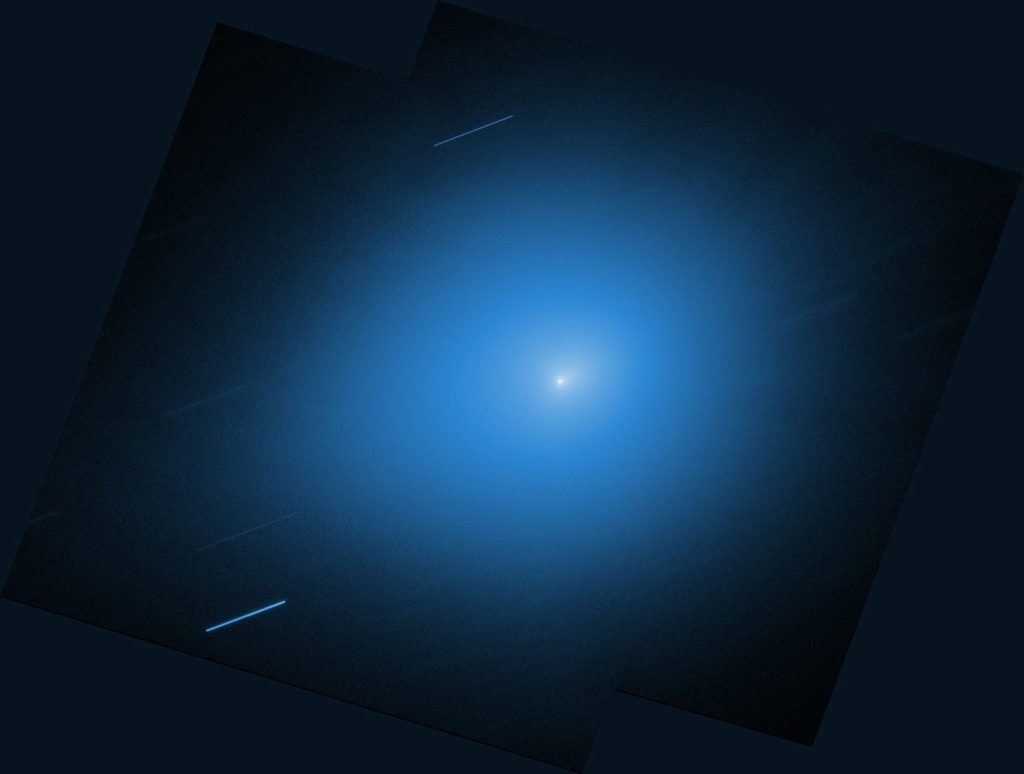
While meteors are the easy win, the rare-science headline around Dec. 20 is still Comet 3I/ATLAS, the third confirmed interstellar object ever discovered passing through our solar system. NASA Science+2NASA Science+2
What just happened: closest approach to Earth
NASA’s December skywatching tips highlight Dec. 19 as the comet’s closest approach to Earth, stressing it remains very far away—about 170 million miles—and poses no threat. NASA Science
NASA’s official FAQ page also frames that distance as roughly 1.8 astronomical units (AU) (about 170 million miles / 270 million km) at closest approach. NASA Science
AP’s reporting aligns: the comet passes within about 167 million miles (269 million km) and is fading as it exits, meaning now is the time for backyard observers to try for it with telescopes. AP News
Where to aim tonight
NASA’s “What’s Up” guide says early pre-dawn observers can look east to northeast and try to catch the comet under Regulus, the bright star marking the heart of Leo. NASA Science
What you’ll need
NASA suggests an observing setup with a telescope aperture of at least 30 centimeters to have a realistic shot. NASA Science
NASA’s FAQ adds that the comet can be observed from the ground in the pre-dawn sky and should remain observable into spring 2026, though conditions and brightness change over time. NASA Science
Why scientists care
NASA explains that 3I/ATLAS is on a hyperbolic trajectory—moving too fast to be bound to the Sun—confirming it’s just passing through before heading back to interstellar space. NASA Science
AP notes it may have originated in a much older star system, making it an unusually tantalizing “sample” of material from beyond our solar neighborhood. AP News
Solstice Watch: The Longest Night Is Part of the Story
The winter solstice arrives on Dec. 21 (the next day), marking the start of astronomical winter in the Northern Hemisphere and astronomical summer in the Southern Hemisphere. The Planetary Society+2EarthSky+2
EarthSky puts the moment of the solstice at 15:03 UTC on Dec. 21 (which corresponds to 10:03 a.m. EST). EarthSky+1
For stargazers, solstice talk isn’t just trivia: it’s a reminder that, in the Northern Hemisphere, you’re entering the season of earlier darkness—more hours for viewing planets, constellations, and meteors.
Aurora Forecast Tonight: Mostly Quiet—But Watch the High Latitudes
If your “night sky today” plans include aurora hunting, tonight looks more quiet than stormy.
NOAA’s official 3-day geomagnetic forecast (issued Dec. 19 at 22:05 UTC) predicts mostly low Kp values for Dec. 20, generally in the 1.3–2.7 range across 3-hour blocks. SWPC Services
That typically favors aurora staying closer to higher latitudes (think Alaska, northern Canada, Scandinavia). The same NOAA forecast suggests higher activity later, with Dec. 22 reaching higher Kp values (up to 4.67, a G1-level maximum in the forecast). SWPC Services
If you’re serious about auroras, the practical move is to check updates closer to your local night—space weather can change quickly.
A Simple Sky Tour for Tonight (No Telescope Required)
Here’s a low-friction way to enjoy the sky on Dec. 20, even if you only have 10–20 minutes.
1) Start at dusk: find Saturn in the west
Look west in early evening for a steady, yellowish light—Saturn’s the prime candidate. The Planetary Society+1
2) Turn east: lock onto Jupiter
Later in the evening, Jupiter becomes the obvious bright “star” in the east and stays up late. The Planetary Society+1
3) Go constellation-hopping in the dark
With the Moon out of the way, this is a great night for winter classics—especially from suburban-dark skies or better:
- The bright stars of the winter sky (including the region around Orion) become easier to pick out once your eyes adapt.
- From darker areas, you can attempt the faint band of the Milky Way and richer star fields.
4) Save pre-dawn for the “challenges”
- Mercury: low in the east before sunrise. EarthSky+1
- Comet 3I/ATLAS: pre-dawn, near Regulus in Leo, but telescope-required. NASA Science+1
Key Dates to Bookmark After Tonight
If you’re planning your next looks up:
- Dec. 21, 2025: Winter solstice (Northern Hemisphere) EarthSky+1
- Dec. 21–22, 2025:Ursid meteor shower peak American Meteor Society+2Scientific Americ…
- Late December: Jupiter continues to improve as it approaches opposition on Jan. 10, 2026 EarthSky
- Spring 2026: NASA expects 3I/ATLAS to remain observable (conditions permitting) NASA Science
Tonight’s theme is simple: dark skies. Whether you spend five minutes spotting Jupiter or settle in for a longer meteor watch ahead of the Ursids’ peak, Dec. 20, 2025 is one of the best “just look up” nights of the month—and it’s doing it with a rare bonus: an interstellar visitor still hanging in the pre-dawn sky for those with the patience (and aperture) to chase it. NASA Science+2Scientific American+2