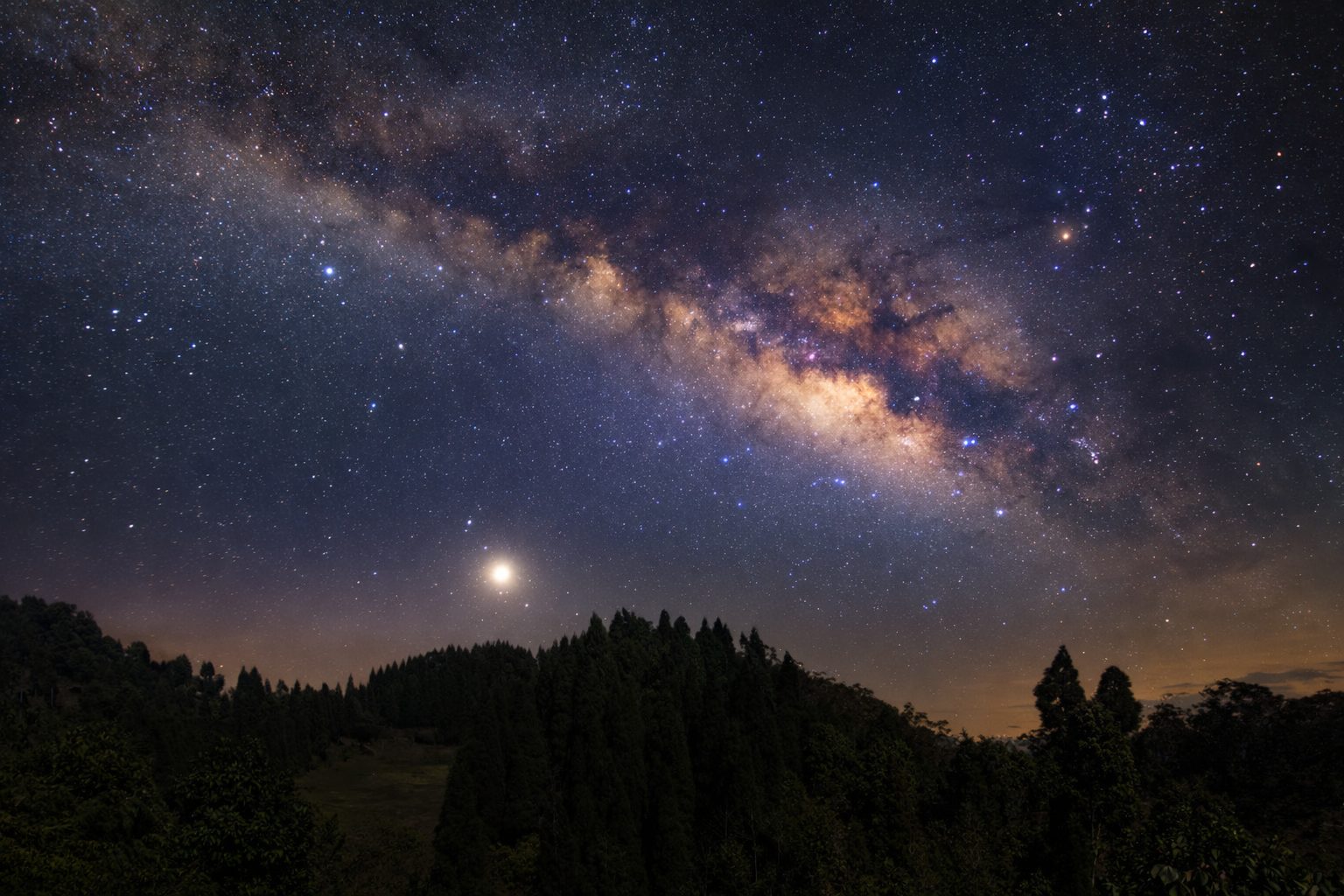
Christmas night has a delightfully “classic winter sky” vibe in the Northern Hemisphere: a fat waxing crescent Moon glowing in the southwest as twilight fades, Saturn parked nearby like a steady golden bead, and Jupiter muscling its way up in the east-northeast to dominate the late-evening and overnight sky. StarDate Online
Add in the last few nights of the Ursid meteor shower (still active through Dec. 26), plus a widely timed International Space Station pass before sunrise in many parts of North America and Europe, and Night Sky Today is doing its best to be a holiday encore. AP News
Below is what’s happening in the sky tonight (Thursday, Dec. 25, 2025)—with quick, practical pointers for naked-eye viewing, binocular targets, and “new telescope on Christmas morning” first-light ideas.
The Moon tonight: a waxing crescent that sets up a darker late night
The Moon is in a waxing crescent phase today, on its way to First Quarter on Dec. 27 (timing varies by location). Time and Date
For example, Timeanddate’s page (set to New York) shows the Moon around 25% illuminated in the early hours of Dec. 25 and lists First Quarter on Dec. 27. Time and Date Meanwhile, the Saint Louis Science Center’s Dec. 16–25 night-sky update describes Dec. 25 as a waxing crescent at about 31% illumination (local to St. Louis). SLSC
Why it matters for stargazing: a crescent Moon is bright in early evening, but it doesn’t usually hang around all night—so late-night meteor watching and deep-sky observing can get noticeably darker once the Moon drops lower.
Dusk highlight: Saturn near the Moon (and Saturn’s rings are unusually thin)
As twilight fades, look high-ish in the southwest: the crescent Moon is already well up, and Saturn sits to the Moon’s upper left, appearing like a bright, non-twinkling “star.” StarDate Online
Saturn is worth extra attention this week because its rings are close to edge-on from our viewpoint—tilted by less than about 1°, according to Sky & Telescope—so they look far thinner than the “storybook Saturn” most people expect. Sky Telescope
And this isn’t even the closest pairing of the week: Sky & Telescope notes that the Moon’s monthly conjunction with Saturn is especially close on Dec. 26 (about 3° apart for evening viewers in the Americas). Sky Telescope Tonight is the warm-up.
How to spot Saturn fast
- Naked eye: find the Moon, then look up-left for the brightest “star” nearby.
- Binoculars: Saturn stays star-like, but it pops nicely against twilight haze.
- Small telescope: even with rings looking “thin,” you can often still see the ring line and (with patience) some moons—though a steadier atmosphere helps a lot. Sky Telescope
Jupiter is the real “Christmas Star” this year (and it’s almost at opposition)
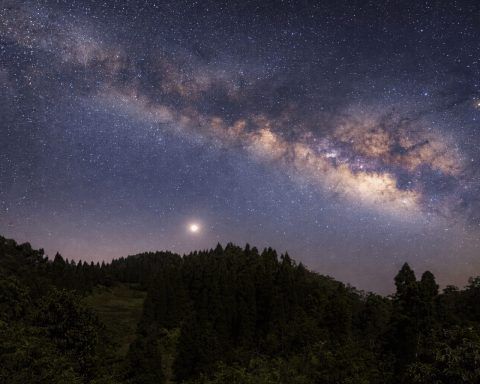
Once it’s properly dark, Jupiter takes over. StarDate describes Jupiter climbing into good view in the east-northeast by about 7:00–7:30 p.m. (times are “good for the entire Lower 48 states,” per McDonald Observatory’s notes). StarDate Online
Sky & Telescope adds the hard numbers: Jupiter is around magnitude –2.6, currently in Gemini near Castor and Pollux, and it reaches opposition on Jan. 10, 2026—which is why it’s already so glaringly bright and up for so many hours. Sky Telescope
Easy Jupiter “wow” moments
- Binoculars: you can usually see the Galilean moons as tiny dots changing position night to night.
- Small telescope: look for two main cloud belts; on steady nights, you can start chasing finer banding.
Orion, Taurus, and Sirius: the winter sky’s greatest hits are back
If you want the quick constellation roadmap for tonight:
- Orion sits up and to the right of Jupiter later in the evening, with the three-star Belt acting like a neon sign. StarDate Online
- Taurus rides above Orion and is marked by orange Aldebaran—a great binocular area because the sky around Taurus is rich in clusters. StarDate Online
- Sirius, the brightest true star in the night sky, climbs into good view later in the evening below Orion’s Belt. StarDate Online
This is the kind of sky where even city observers can do satisfying “naked-eye astronomy” without needing a dark-sky road trip.
Holiday deep-sky pick: the Christmas Tree Cluster (NGC 2264)
A lot of late-December sky coverage is leaning into the seasonally appropriate Christmas Tree Cluster, and honestly… fair. It’s a real object, it’s genuinely beautiful, and it’s timed well for evening viewing.
EarthSky calls it magnitude 3.9 and says it sits in Monoceros, roughly between Betelgeuse (Orion) and Procyon, with binoculars giving a better look than the naked eye. EarthSky
If you want the science postcard version: NASA describes NGC 2264 as a cluster of young stars (about 1–5 million years old) in the Milky Way about 2,500 light-years away. NASA
What to use
- 10×50 binoculars: great for simply finding the starfield and getting the “cluster” impression. EarthSky
- Small telescope at low power: best chance to start perceiving structure without getting lost in a too-tight field. Optics Pro
Meteors tonight: the Ursids are still active through Dec. 26
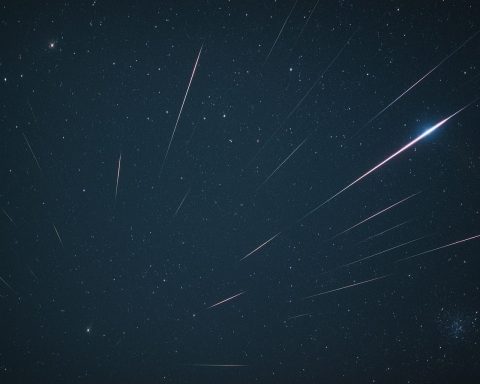
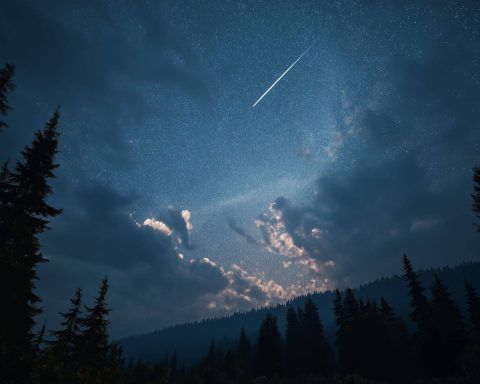
The Ursids are the quieter, moodier cousin of the Geminids—but they can still deliver. The Associated Press notes the Ursid meteor shower is visible through Dec. 26 and typically produces 5–10 meteors per hour, with occasional outbursts that can push higher (up to about 25 per hour in the AP write-up). AP News
They appear to radiate from Ursa Minor (the Little Dipper) and are associated with Comet 8P/Tuttle. AP News
Best approach tonight
- Go out late (after evening activities), because meteors tend to pick up after midnight and toward pre-dawn.
- Get away from bright lights and give your eyes time to adapt.
- Skip the temptation to stare at your phone between meteors—screens nuke night vision fast. AP News
Before sunrise: a bright International Space Station “Christmas flyby”
One of the most “this feels like a holiday event” stories this week is the ISS pass: Space.com flagged a bright, steady-looking International Space Station flyby on Dec. 24 and Dec. 25 visible in many locations across North America and Europe, depending on where you live. Space
A few examples Space.com listed for Dec. 25 include:
- New York: roughly 5:56–5:59 a.m. (EST) Space
- Chicago: roughly 6:29–6:35 a.m. (CST) Space
- London: roughly 6:17–6:22 a.m. (GMT) Space
- Rome: roughly 7:19–7:22 a.m. (CET) Space
The ISS looks like a very bright star that moves smoothly and does not blink (unlike aircraft). NASA’s Spot the Station guidance notes that ISS sightings happen within a few hours of sunrise or sunset, when sunlight can reflect off the station against a darker sky. NASA
Aurora watch: check the latest forecast—today’s NOAA update trends quieter
Aurora forecasts have been bouncing around this week. Space.com reported recently on aurora chances tied to solar-wind conditions and noted the possibility that effects could linger into Christmas. Space
But here’s the key “today” update: NOAA’s Space Weather Prediction Center 3-day forecast text, issued Dec. 25, 2025 (00:30 UTC), says the greatest expected Kp for Dec. 25–27 is 3.67—below NOAA’s geomagnetic storm scale levels—and explicitly states no G1 (Minor) or greater geomagnetic storms are expected in that window. NOAA SWPC Services
Translation: auroras are never impossible (space weather loves chaos), but the official forecast as of today leans subdued, especially for mid-latitudes.
Reality check: ignore the “planet parade” hype—Venus and Mars are basically out of the show
If you’ve seen viral posts promising an epic “planet lineup” or a cute “smiley face” in the sky tonight, here’s the practical limiter: Venus and Mars are currently out of sight in the Sun’s glare, per Sky & Telescope’s weekly roundup. Sky Telescope
So the real, reliable Night Sky Today headline is not “every planet at once.” It’s:
- Moon + Saturn after dusk StarDate Online
- Jupiter blazing later (nearing opposition) Sky Telescope
- Ursids still active AP News
- ISS pass before sunrise (many locations) Space
Which is honestly a pretty great Christmas lineup.
A simple “tonight’s plan” you can actually follow
- Right after twilight: Find the Moon in the southwest; spot Saturn up-left of it. StarDate Online
- Early evening: Turn east-northeast and wait for Jupiter to become unmissable. StarDate Online
- Later evening: Use Jupiter as a signpost to pick out Orion and then Sirius below Orion’s Belt. StarDate Online
- Late night: Watch for Ursid meteors away from lights. AP News
- Before sunrise: Catch the ISS if your location lines up with a visible pass. Space