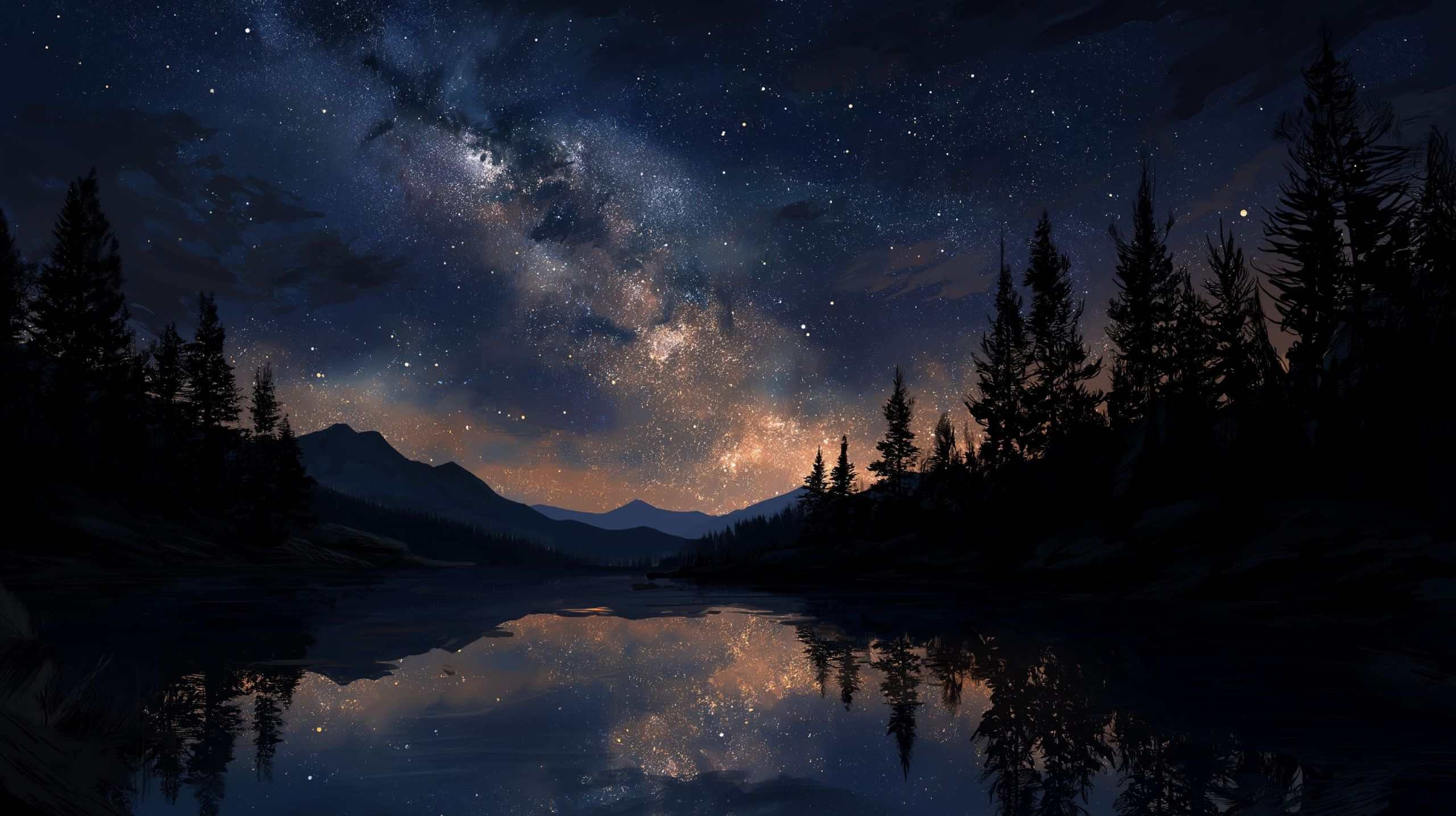
Friday, December 19, 2025 brings a rare “headline night” for skywatchers: an interstellar comet is making its closest pass by Earth, the Moon is slipping into (or extremely near) a New Moon phase that darkens the sky, and the year’s final major meteor shower is ramping up ahead of its peak just before Christmas.
If you only step outside once this week, tonight is a strong candidate—especially if you have access to binoculars or a telescope and a spot away from city lights.
The big sky story today: Interstellar comet 3I/ATLAS makes its closest approach
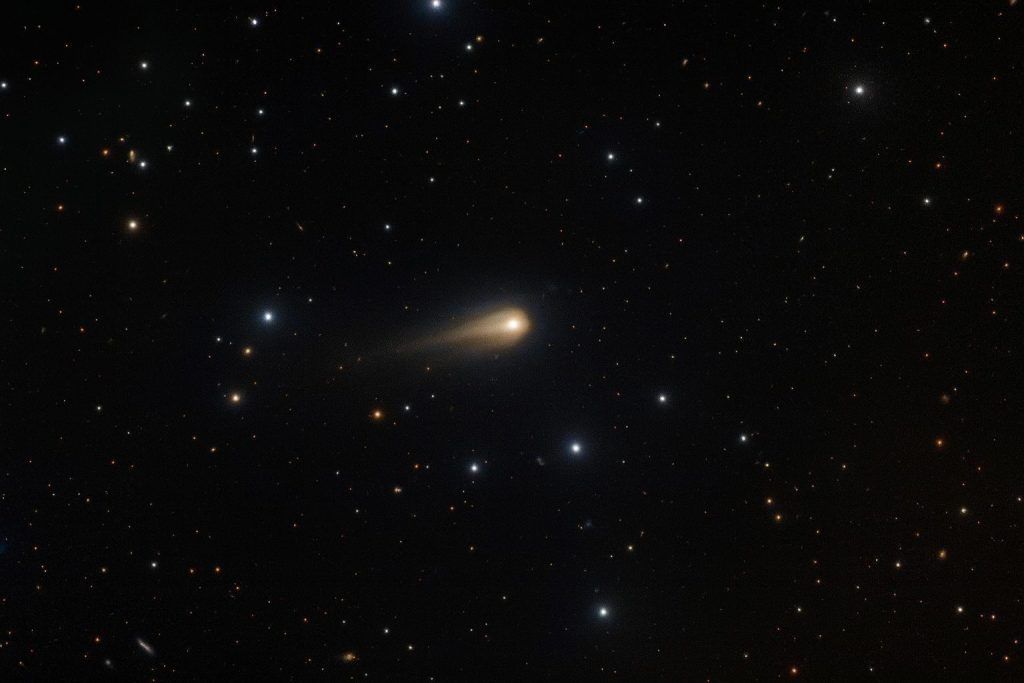
The most talked-about celestial visitor in today’s skywatching news is comet 3I/ATLAS, one of only a handful of confirmed objects known to have entered our solar system from another star system. It’s making its closest approach to Earth in the early hours of December 19, turning an already busy December sky into a true “mark your calendar” moment. National Geographic+2AP News+2
What makes 3I/ATLAS different from typical comets?
Most comets we see are “locals” from our own solar system’s outskirts (the Kuiper Belt or Oort Cloud). 3I/ATLAS is different: it formed elsewhere in the galaxy and is only passing through—meaning this is a one-time opportunity for observers and researchers alike. National Geographic+1
Scientists have been rushing to observe it because interstellar comets can offer a rare look at material from beyond our solar system—essentially a natural sample from a distant planetary system.
When is it closest, and how close is “close”?
Multiple outlets converged on the same key timing:
- Closest approach time: about 1 a.m. EST (06:00 GMT) on Dec. 19
- Closest distance: roughly 168 million miles (270 million km)—about 1.8 AU, nearly twice the average Earth–Sun distance
- Safety: there is no impact risk; it’s a distant pass
AP noted a similar “closest pass” distance of about 167 million miles (269 million km) for today’s flyby reporting. AP News
Where to look in the sky tonight
Right now, 3I/ATLAS is being reported in the constellation Leo, near Regulus (Leo’s brightest star). Skywatching apps can help you zero in on the right patch of sky quickly.
A crucial practical point: depending on where you live, the comet may be better placed before dawn rather than right at the exact closest-approach moment. National Geographic specifically notes that for the U.S. East Coast, it’s expected to be highest and easiest in the pre-dawn hours.
Can you see it with your eyes?
Set expectations correctly: this is not a naked-eye comet. Reports consistently emphasize that you’ll likely need a telescope (or, in some cases, binoculars—though “binoculars only” may be challenging depending on conditions and your experience). National Geographic+1
Space.com also stresses that while the close approach is meaningful, the comet remains too faint and distant to become a big naked-eye spectacle.
Livestream option if clouds ruin your plans
If weather—or light pollution—gets in the way, several reports point to coverage by the Virtual Telescope Project via an online livestream around the close-approach window (timings can shift “weather permitting”). Space+1
Tonight’s underrated upgrade: New Moon darkness arrives
Even if you don’t chase the comet, tonight’s sky has another advantage: the Moon is at (or extremely near) its New Moonphase, which means minimal moonlight and better visibility for faint objects.
EarthSky pins the New Moon moment at 1:43 UTC on December 20, which corresponds to 7:43 p.m. CST on December 19—a time-zone nuance that effectively makes this a “tonight” event across much of the Americas and “early Dec. 20” elsewhere. EarthSky
EarthSky also notes this New Moon is the third of three New “micromoons” of 2025 (a New Moon occurring when the Moon is relatively far from Earth), and highlights that nights around New Moon are prime for stargazing and meteor watching. EarthSky
Why it matters: New Moon conditions are the difference between “I can sort of see a few stars” and “wow, the sky is actually full.” If you’re trying to spot a faint comet, a subtle meteor shower, or star clusters, the timing couldn’t be better.
Planet watch for December 19: Jupiter steals the show, Saturn fades early, Mercury lurks before sunrise
If your goal is simply to step outside and see something bright and obvious, planets are the easiest win—no telescope required.
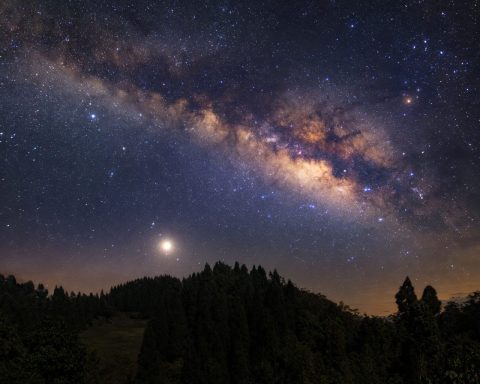
Jupiter: bright, high, and visible through dawn
EarthSky reports that bright Jupiter rises in the east soon after sunset during December and stays visible into the morning hours, with opposition coming soon (early 2026).
Translation for tonight: if you see one “star” that’s almost too bright to be true in the evening sky, it’s probably Jupiter.
Saturn: the steady “gold” planet in the west
Saturn remains the standout object in the western evening sky this month (besides the Moon when it returns as a crescent). EarthSky notes that by late December, Saturn is setting earlier (before midnight) and remains an evening object into early 2026.
Mercury: best morning appearance of the year (Northern Hemisphere)
Mercury is the tricky one, but December has been a good month for it. EarthSky calls this the best morning apparition of Mercury for Northern Hemisphere viewers in 2025, with visibility low in the eastern pre-dawn twilight (and fading toward late December).
If you have a clear, unobstructed eastern horizon and can get outside shortly before sunrise, Mercury is worth the attempt.
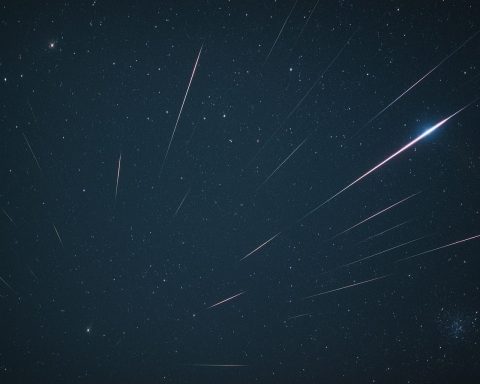
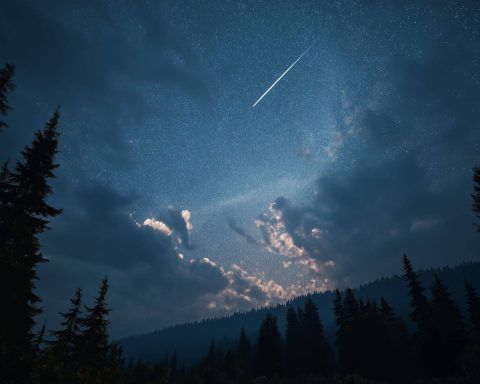
Meteor shower news: The Ursids peak this weekend (and the Moon won’t wash them out)
Today’s meteor-shower headline is the Ursids, the last major meteor shower of the year.
AP reports the Ursids peak Sunday night into Monday morning (Dec. 21–22) and remain active through Dec. 26 for Northern Hemisphere skywatchers.
What to expect:
- Typical peak rates: about 5–10 meteors per hour
- Possible outbursts: up to ~25 meteors per hour (rare, but noted)
- Moonlight: the thin crescent Moon around the peak is expected to be a minor obstacle, which is excellent news for visibility
- Parent body: the Ursids come from comet 8P/Tuttle
- Radiant: the meteors appear to radiate from Ursa Minor (the Little Dipper)
Even though the Ursids are usually more subtle than the Geminids, the timing—dark skies, long winter nights—makes them a very approachable “holiday meteor shower” if you can get outside.
Solstice setup: the longest nights are here
The December solstice is just around the corner, and it matters for skywatchers for a simple reason: longer nights create more observing time.
EarthSky gives the solstice timing as 15:03 UTC on December 21, 2025, marking the longest nights and shortest daysin the Northern Hemisphere (and the opposite in the Southern Hemisphere).
If you’re planning a late-night meteor watch or a pre-dawn comet attempt, this is one of the best windows of the year to do it—especially when combined with a New Moon.
A practical “Night Sky Today” plan for December 19, 2025
If you want an easy game plan that fits most locations:
- Right after sunset (evening):
- Find Jupiter in the east and Saturn in the west (both easy targets).
- Enjoy the darker sky—tonight is near the New Moon window.
- Late evening:
- If you have a telescope and experience star-hopping, start preparing for a comet search (apps help).
- Pre-dawn (best time for 3I/ATLAS in many places):
- Look toward the region of Leo near Regulus for comet 3I/ATLAS (telescope strongly recommended).
- If you have a clear eastern horizon, try for Mercury low in brightening twilight.
Quick tips that actually improve what you’ll see
- Go darker than you think you need to. Even moving from a bright street to a backyard can help, but a true dark site is transformative.
- Give your eyes 15–20 minutes to adapt and avoid bright phone screens (AP specifically advises avoiding bright lights during meteor viewing).
- Use “expectation management” as a superpower: interstellar comets are scientifically exciting, but visually subtle; meteor showers can be hit-or-miss minute to minute.
Bonus: Aurora chances tonight look modest—but not impossible
For skywatchers at high latitudes, aurora is always part of the “night sky today” conversation. NOAA’s geomagnetic forecast for Dec. 19–21 suggests relatively quiet conditions overall, with a Kp forecast around 3 and only small probabilities for storm levels (minor storm chances are listed but not dominant). services.swpc.noaa.gov
Translation: you probably shouldn’t plan an all-night aurora road trip based solely on tonight’s outlook—but if you live in a prime aurora zone and the sky is clear, it’s still worth checking local alerts.
Tonight’s sky (December 19, 2025) is a rare blend of headline astronomy and practical observing conditions: a historic interstellar flyby, moonless darkness, bright planets, and a meteor shower building toward a well-timed peak. If clouds cooperate, it’s one of the most rewarding nights of the month to look up.