NEW YORK, Dec. 28, 2025, 1:49 a.m. ET — Market closed
NuScale Power Corporation (NYSE: SMR) stock is heading into the next U.S. trading session under a familiar late-2025 cloud: sharp volatility, renewed dilution anxiety, and a market still trying to decide whether small modular reactors (SMRs) are the next great industrial buildout—or a capital-hungry science project with a long runway.
With U.S. equities closed for the weekend, the most actionable “right now” for investors is what happened in the last regular session (Friday) and what the latest 24–48 hours of coverage is emphasizing: the stock’s steep drop on heavy volume, and the financing overhang created by recent corporate actions that expand NuScale’s flexibility to issue shares. MarketBeat+1
SMR stock: where it left off before the weekend
NuScale shares last traded around $14.85, reflecting a sharp decline from the prior close and a bruising finish to the week. On Friday, SMR traded between roughly $16.00 and $14.75, with volume near 25 million shares—a notably busy day for a company of NuScale’s size. MarketBeat
MarketBeat’s recap of Friday’s action put the move plainly: shares fell about 7.7% to roughly $14.85 with heavy trading, citing approximately 24.1 million shares changing hands—well above average daily volume. MarketBeat
What’s driving the latest attention: dilution math, not reactor physics
In the past 24–48 hours, the most-circulated writeups weren’t about a new customer contract or a fresh regulatory milestone. They were about capital structure and investor psychology—especially dilution risk.
A weekend TipRanks roundup attributed much of the pressure to concerns about NuScale’s financial profile and the possibility of future share issuance, noting that shareholder approval to increase authorized Class A shares has amplified dilution worries. TipRanks
That concern isn’t hypothetical. In an 8-K tied to a Dec. 16, 2025 special meeting, NuScale disclosed that shareholders approved an amendment increasing the number of authorized shares of Class A common stock from 332,000,000 to 662,000,000. SEC
It’s crucial to parse this correctly:
- Authorized shares are not the same thing as newly issued shares.
- But increasing authorization is often read by the market as the company giving itself more room to raise capital through equity—especially when the business is still in heavy commercialization mode.
And NuScale has already been using equity markets as part of its funding toolkit. In early November, Investing.com reported that the company entered a new at-the-market (ATM) equity offering program allowing NuScale to sell up to $750 million of Class A shares through multiple sales agents. Investing.com South Africa
Taken together, the “stock story” right now is less about whether SMRs will matter (they probably will) and more about who pays for the journey—and at what price.
The last 24–48 hours of SMR headlines: what’s actually new
Here’s the honest scoreboard from the most recent coverage window:
1) Friday’s selloff recap (published Dec. 26):
MarketBeat highlighted the steep decline, heavy volume, and the way investor focus keeps snapping back to losses, analyst positioning, and insider activity whenever the stock weakens. MarketBeat
2) Weekend analysis framing the move as dilution-driven (published over the weekend):
TipRanks’ weekend piece emphasized dilution fears, insider selling chatter, and price-target cuts as the narrative threads explaining why SMR has continued sliding. TipRanks
3) “Nuclear stocks to watch” lists (Dec. 27):
MarketBeat also included NuScale in a broader “nuclear stocks to keep an eye on” roundup—useful as a sentiment indicator that the name remains actively tracked, even as it trades more like a high-beta momentum stock than a steady energy compounder. MarketBeat
Notably absent in the last couple of days: a new NuScale press release. The company’s press release archive shows its most recent corporate releases dated Nov. 6, 2025. NuScale Power
Analyst forecasts: big upside targets, but the street is split
If you want a single number that summarizes why NuScale stock can feel like a physics experiment inside a casino: analyst price targets are still dramatically higher than where the stock trades, but ratings and recent revisions show plenty of caution.
Different data providers show different consensus math (because they don’t all track the same analysts, and they weight updates differently):
- TipRanks shows an average price target around $33.32 (high $60 / low $18.50) and a consensus rating built from a mix of buys, holds, and sells. TipRanks
- MarketBeat shows an average price target around $35.18 (high $60 / low $20) with a consensus rating of “Reduce.” MarketBeat
- StockAnalysis shows a higher average target (mid-$30s) and also lists notable recent revisions. StockAnalysis
What matters more than the averages are the recent changes—because momentum investors and risk managers tend to follow revisions, not just absolute targets:
- B. Riley Securities analyst Ryan Pfingst cut a target from $38 to $24 while maintaining a bullish stance (per StockAnalysis’ compiled ratings table). StockAnalysis
- Goldman Sachs analyst Brian Lee is shown maintaining a Hold rating with a target trimmed $27 to $23 (StockAnalysis). StockAnalysis
- UBS analyst Jon Windham is shown with a target reduced $38 to $20 (StockAnalysis). StockAnalysis
That pattern—targets still well above the market price, but drifting lower—fits the current narrative: investors may buy the long-term opportunity, but they’re increasingly pricing in execution risk and financing cost.
Positioning check: high short interest, and a stock that can “snap”
For traders and longer-term investors alike, NuScale’s short interest is not a footnote—it’s a volatility engine.
MarketBeat’s short-interest tracker lists approximately 40,999,142 shares sold short as of Dec. 15, 2025, with a days-to-cover figure around 1.7. MarketBeat
That combination can cut both ways:
- In a downtrend, short interest can reinforce pressure as rallies get sold.
- In a sharp upside catalyst (contract, regulatory step, policy headline, funding surprise), short covering can accelerate moves.
TipRanks also pointed to an interesting divergence: options activity has at times looked “moderately bullish” even as the stock trends down—suggesting some traders are positioning for a rebound or at least expecting less dramatic day-to-day downside than the recent tape delivered. TipRanks
NuScale fundamentals in one paragraph: big ambition, cash needs, long timelines
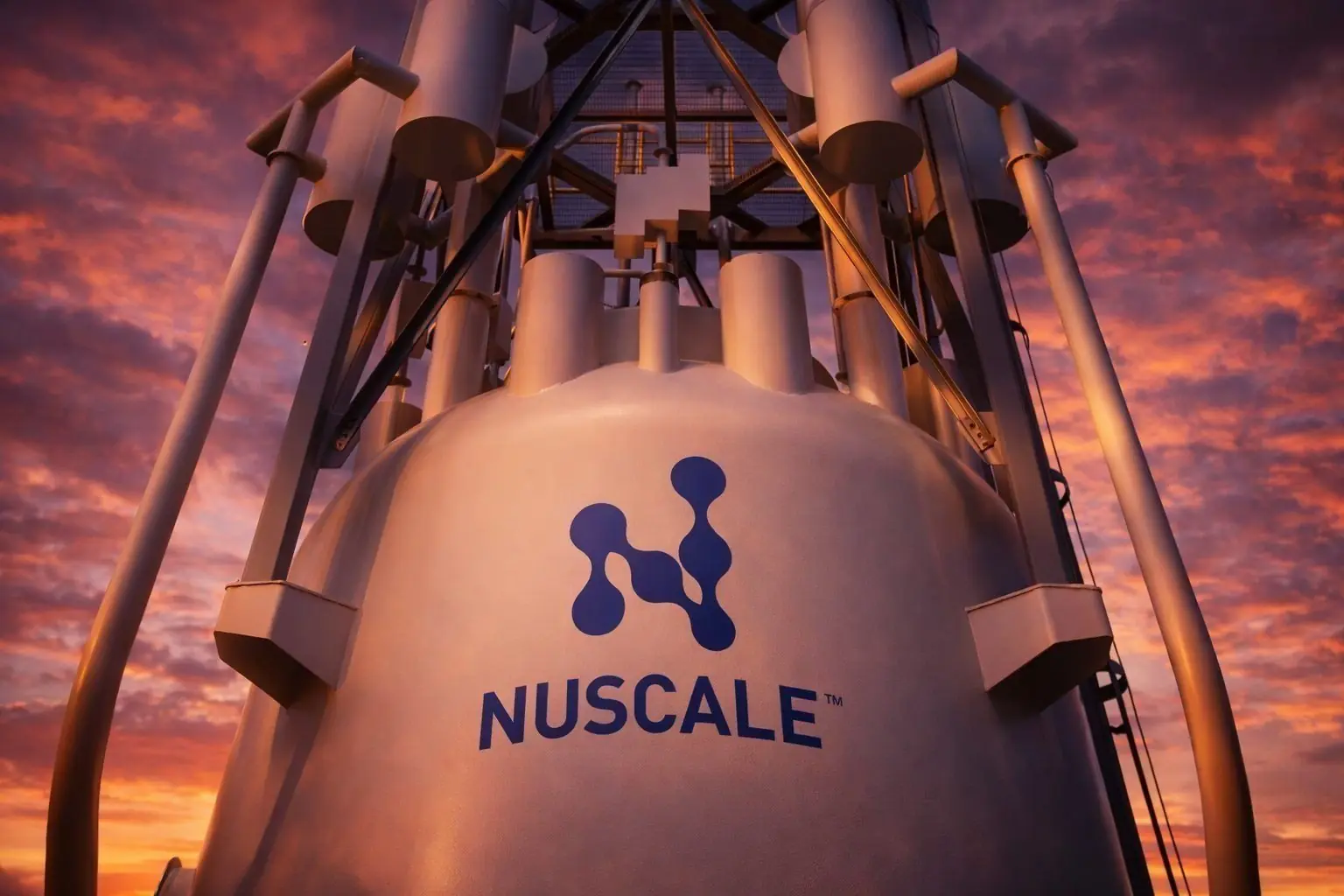
NuScale is trying to commercialize small modular nuclear reactor technology, including its 77 MWe design that the company has previously said received U.S. Nuclear Regulatory Commission standard design approval. NuScale Power
On the commercialization front, NuScale has pointed to large-scale deployment interest through its strategic partner ENTRA1, including support for a major planned SMR deployment program tied to the Tennessee Valley Authority (TVA). NuScale Power+1
But the market’s persistent skepticism shows up in the financing conversation because losses have been substantial during the ramp. In its third-quarter 2025 results materials, NuScale discussed revenue/cost-of-sales changes tied to engineering services work (including Romania-related efforts) and also highlighted balance-sheet and capital actions (including prior ATM activity). NuScale Power
What investors should know before the next session opens
With the market closed, the question isn’t “what’s SMR doing right this second?” It’s “what could reprice it when liquidity returns Monday?”
Here are the practical items to keep on the radar before the next opening bell:
Watch for dilution-related headlines (and don’t overreact to the wrong ones).
NuScale’s authorized share increase is already approved and disclosed, but investors will stay sensitive to any sign of actual issuance—ATM usage, secondary offerings, or other equity-linked financing. The key filing outlining the authorization increase is already public. SEC+1
Expect volatility early in the session.
Friday’s high-volume drop and the stock’s elevated short interest are a recipe for outsized moves at the open—especially in thin year-end trading conditions. MarketBeat+1
Key price zones traders will stare at immediately:
Friday’s intraday low was around $14.75 and the prior close referenced in widely circulated recaps was near $16.08—levels that often become near-term “line in the sand” points for momentum flows. MarketBeat
Separate “industry tailwinds” from “company execution.”
Policy support and broader nuclear investment themes can lift the whole group, but NuScale’s stock tends to trade on company-specific funding and commercialization credibility. If a new week brings sector headlines, investors will still ask: does this improve NuScale’s path to signed, bankable contracts—or just improve vibes?
Know what isn’t new.
No fresh company press releases have hit NuScale’s press-release feed over the past couple of days, so price action is more likely being driven by positioning, analyst-note digestion, and capital-structure interpretation than by a brand-new corporate catalyst. NuScale Power+1
NuScale Power stock remains one of the market’s most sensitive “energy transition + nuclear + AI power demand” expressions—but right now, the debate is being priced through dilution risk, not reactor milestones.