
New York, May 12, 2026, 14:03 EDT
- NuScale Power shares slid roughly 11.4% to $11.78 in afternoon trading Tuesday, having opened at $12.90 and dipping as low as $11.49 earlier in the session.
- After Citi slashed its target to $7, shares slid, pressured further by a disappointing Q1: revenue fell well short and losses missed the mark, coming in heavier than Wall Street anticipated.
- Bulls latch onto NuScale’s green-lighted reactor blueprint, TVA/ENTRA1 negotiations, plus movement in Romania. Bears zero in on the missing big-ticket contracts and hefty cash requirements before any rollout.
NuScale Power shares took another hit Tuesday. Sellers kept pressing, and this didn’t look like just a routine dip after earnings. The stock started at $12.90, lost its early rebound, and dropped as low as $11.49 before settling near $11.78. By the afternoon, volume had already reached about 28.7 million shares.
The reason counts here. NuScale isn’t priced for current revenue; with a market cap around $3.8 billion, the bet is all on its small modular reactor technology leading to actual projects and future deals. Tuesday’s selloff signals investors marking down what they’ll shell out for that possibility.
Pressure on the stock came from two directions: Citi slashed its NuScale target down to $7 from $9 and stuck with its Sell call, MarketBeat reported. That same note flagged a Q1 EPS loss of 14 cents—deeper than the minus 11 cents analysts expected. Revenue, too: just $0.57 million, far short of the $7 million consensus. For a pre-commercial company, numbers like that sharpen investor focus on just how thin the current revenue stream is compared to the valuation.
The filing didn’t mince words. NuScale logged just $565,000 in first-quarter revenue—a sharp fall from $13.4 million the previous year. Net loss for Class A holders ballooned to $44.0 million, up from $14.0 million. According to the company, last year’s revenue had been boosted by RoPower licensing and Phase 2 FEED engineering work for Fluor, both of which wrapped up in late 2025. Nothing comparable came through this quarter. FEED stands for front-end engineering design, the upfront planning stage before any construction gets moving.
The management team didn’t sound defensive during the call, though there was a clear effort to steer investors’ focus toward the long-term picture. CEO John Hopkins described the current period as a “watershed” for the industry and pointed to NuScale’s regulatory approval, secure fuel supply, and deployment readiness as key differentiators. CFO Robert Hamady noted that by early May, liquidity—cash plus investments available for operations—had topped $1.2 billion. The Motley Fool
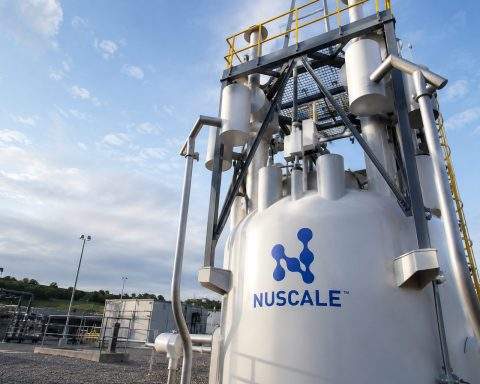
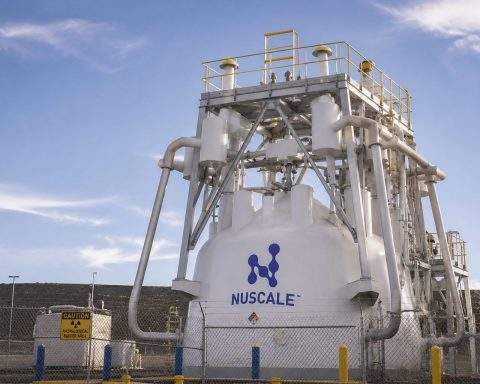
Here’s the bull thesis in a nutshell: NuScale stands out among nuclear startups for one key reason. The Nuclear Regulatory Commission’s US460 listing confirms the 77-megawatt-per-module setup as a light-water SMR—six modules together deliver 462 megawatts. According to the Federal Register notice, that approval can be cited in future bids for construction, operating, combined, or manufacturing licenses. A combined license gives the green light to both build and run a plant at a specific site.
Bears don’t mince words: design approval doesn’t build a plant, and it doesn’t bring in actual cash flow. NuScale burned through $314.7 million in operating cash during Q1, most of that from a hefty $259.9 million payment to ENTRA1, plus softer customer receipts and advance payments to vendors. After the quarter wrapped, NuScale raised another $216.8 million by selling 22.36 million Class A shares. More stock means more cash now, but it also flags the risk of dilution—the company might need to spread its future upside across a bigger pool of shares.
Prediction markets aren’t pushing the stock around, but they’re picking up on the same skepticism about nuclear project timing. Over on Polymarket, traders were pricing in an 81.5% chance the U.S. won’t grant a new nuclear reactor combined license in 2026. Volume was light, so the read is more of a hint than a firm call. Even so, that echoes investors’ core concern: getting from a greenlit design to an actually licensed and bankrolled build is still inching along.
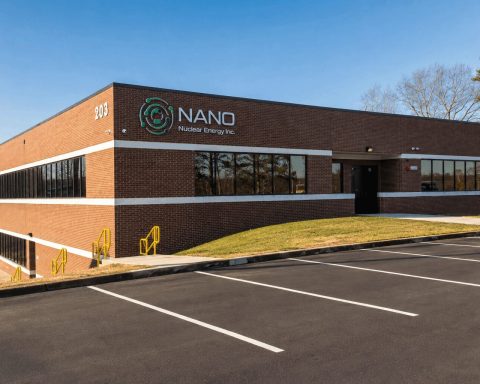
Peer trading pointed out this wasn’t just a NuScale issue. Oklo dropped close to 7.4%, Nano Nuclear Energy shed around 6.7%, Vistra gave up 3.3%, and Constellation Energy eased back 2.4%. Losses ran deeper for the more speculative reactor developers, though the pullback reached across the nuclear and power sector.
The main bullish argument for NuScale: clear project traction. ENTRA1 is still teaming up with Tennessee Valley Authority, eyeing as much as 6 gigawatts of NuScale SMR capacity. Over in Romania, Nuclearelectrica’s shareholders have green-lit the next phase of the RoPower project—six NuScale Power Modules slated for Doicești. “We are building the infrastructure that this pivotal moment requires,” Hopkins said in the release. NuScale Power
The street’s waiting for actual paperwork, not just more interest. Management emphasized that TVA tops the list right now; once those power purchase agreements get inked, NuScale’s planning to kick off combined license application work, plus pre-FEED and the OEM contract—the latter covers the reactor module supply deal. Without those signatures, traders keep pricing in execution risk.
The stock’s stuck in a tight, telling spot. If NuScale inks a TVA-linked power deal, the narrative shifts in an instant—investors would finally have numbers to work with, not just early services income. Until then, it’s still NuScale: a rare regulatory license, plenty of cash, and a price chart that harshly marks down every stumble between ambition and proof.
Related articles: NYSE:SMR