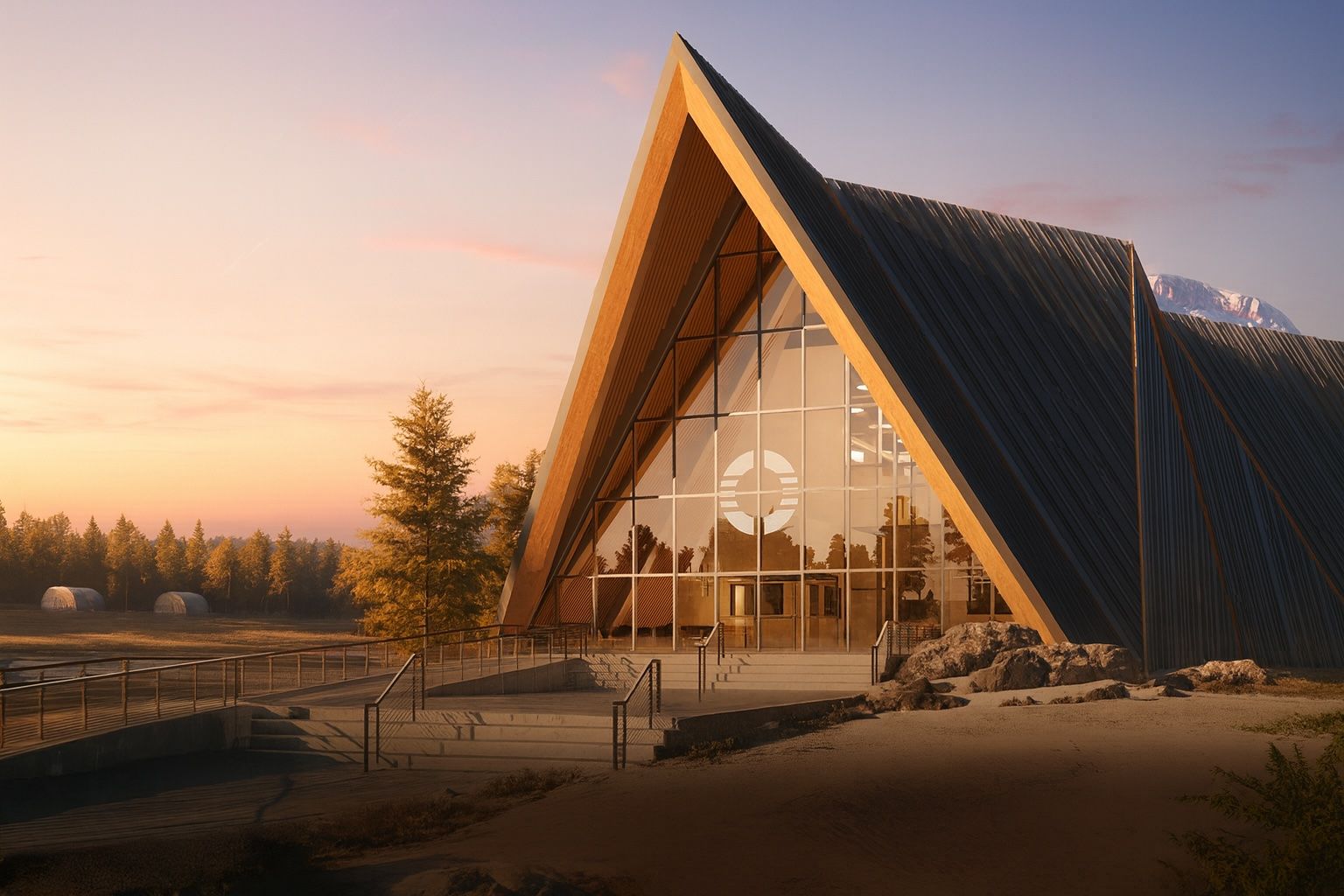
Key Facts: – Ticker: OKLO (NYSE); Sector: Advanced Nuclear/Clean Energy – a Santa Clara-based fast-fission reactor developer (sodium-cooled) with a focus on fuel recycling businesswire.com oklo.com. – Market Cap ~$17B (as of early Oct. 2025) za.investing.com. – 52-week range: $8.36–$144.49 google.com; YTD return ≈+450% za.investing.com, driven by big DOE awards and nuclear/AI hype. – Went public via SPAC merger (with Sam Altman’s AltC) in May 2024, raising ≈$306M oklo.com; Sam Altman is Oklo’s board chairman oklo.com. – No revenue yet; burning cash on development (analysts don’t expect profitability in 2025 za.investing.com). – Analyst consensus: Moderate “Buy” (avg target ~$88–90) sahmcapital.com, though price targets vary widely (Barclays: overweight/$146 sahmcapital.com; Goldman and BofA: neutral at ~$117 intellectia.ai za.investing.com). – Key partnerships: DOE reactor and fuel programs oklo.com reuters.com; TVA (waste fuel recycling) oklo.com; Siemens, Korea Hydro & Nuclear Power, Liberty Energy, ABB, Centrus (fuel) oklo.com oklo.com; Swedish fast-reactor firm Blykalla (co-leading $5M raise) oklo.com; fuel-tech firm Lightbridge (co-located fabrication) reuters.com. – Major news (Sep. ’25): DOE selected Oklo for pilot reactor and fuel-line projects oklo.com reuters.com; NRC accelerated its design criteria review businesswire.com; Oklo announced a $1.68B nuclear fuel recycling center in Tennessee oklo.com reuters.com. – Technology: Developing Aurora – a 75 MWe sodium fast reactor – plus fuel recycling to turn “waste into gigawatts” oklo.com oklo.com.
Recent Stock Performance and Analyst Commentary
Oklo’s stock has been on a tear in 2025, surging roughly 400–450% this year za.investing.com. After debuting in mid-2024 around the IPO price, OKLO ran to an all-time high near $144 in late Sept. 2025 stockanalysis.com, fueled by DOE contract news and the buzz around nuclear’s role in powering AI/data centers. This April–October rally follows a broader nuclear comeback: “U.S. nuclear power is gaining traction after decades of stagnation, fueled by surging electricity demand from … data centers and the electrification of transportation and manufacturing industries”, Reuters notes reuters.com.
However, the stock has been volatile. In late September, profit-taking and some analyst re-ratings trimmed gains. Bank of America downgraded OKLO from Buy to Neutral on Sept. 30 (price target ~$117) intellectia.ai, warning the lofty valuation leaves “little room for error” and relies on very optimistic deployment assumptions finviz.com. Goldman Sachs similarly initiated coverage at Neutral/$117 za.investing.com. Even so, Barclays just kicked off coverage with an Overweight rating and a $146 target sahmcapital.com, citing Oklo’s growth prospects (though noting the stock is already up ~445% YTD). Overall analysts are mixed: the Street consensus is roughly “Moderate Buy” with a mean target in the high-$80s sahmcapital.com stockanalysis.com. (In practical terms, despite recent pullbacks around $110–120, Oklo’s valuation – market cap $sim$17B – is far beyond any revenue or profit, reflecting long-term hype.)
Financials and Business Development
As a deep-technology startup, Oklo currently has no commercial revenues. Its early funding came from venture capital and a SPAC merger, leaving it with hundreds of millions in cash to fund R&D. (The May 2024 business combination with AltC brought $306M gross oklo.com.) The company’s latest financial reports (Q2 2025) show ongoing R&D and construction spending, resulting in widening losses – in line with expectations for a capital-heavy nuclear developer. For example, an Investing.com summary notes Oklo has “more cash than debt” on its balance sheet but that “analysts do not expect profitability this year” za.investing.com.
Oklo’s strategy is an owner-operator model: it designs, builds and plans to operate its small advanced reactors. It targets niche markets like AI data centers, remote industrial and defense sites, as well as local utilities oklo.com oklo.com. The company highlights that long-term power purchase agreements will ultimately provide recurring revenue streams (once reactors are running). Meanwhile, in 2025 Oklo expanded its tech capabilities: it established a subsidiary “Atomic Alchemy Inc.” for isotope fuels and got selected for three DOE pilot projects (two for reactors, one for fuel) oklo.com, and announced partnerships across the supply chain (see below).
On the partnerships and funding front, Oklo has been active. Besides the SPAC capital, it has secured strategic agreements with energy firms and research labs. Notably, Oklo co-leads a new funding round for Blykalla AB – a Swedish lead-cooled SMR developer – committing about $5 million oklo.com. Oklo also has alliances with companies like Diamondback Energy (shale gas player) and Centrus Energy (nuclear fuel supplier) oklo.com. These collaborations – as well as earlier deals with Siemens, Korea Hydro & Nuclear Power, Liberty Energy and ABB oklo.com – strengthen Oklo’s access to technology and parts (e.g. turbines, controls, HALEU fuel). For example, an industry report notes Oklo in January signed an MOU with Lightbridge to co-locate a commercial HALEU fuel fabrication plant, potentially lowering capital and operating costs reuters.com.
Overall, Oklo’s 2025 business momentum is driven more by announcements than sales: it has no operating reactors yet, but is building momentum with DOE and investor support to move toward first deployment (target ~2026-2027).
Regulatory Milestones and Government Support
Oklo has been at the forefront of the new pro-nuclear regulatory push. In May 2025, President Trump (having returned to office) issued executive orders to speed nuclear licensing and allow DOE to authorize test reactors independently of the NRC reuters.com. Under these directives, Oklo is pushing through several milestones. In September 2025, the NRC accepted Oklo’s Principal Design Criteria (PDC) topical report for review on an expedited timeline businesswire.com. This PDC report defines Oklo’s fundamental safety and performance requirements; once approved it can be reused for later licensing, greatly streamlining future approvals businesswire.com. Impressively, the NRC accepted the PDC submission in just 15 days (versus 30–60 normally) and set a draft evaluation date in early 2026 businesswire.com za.investing.com. Oklo CEO Jacob DeWitte praised this as evidence of “the NRC’s commitment to timely oversight” and a model for accelerated nuclear deployment businesswire.com.
At the DOE level, Oklo was one of the first companies selected for President Trump’s new Reactor Pilot Program. In August 2025, DOE announced that Oklo (and its Atomic Alchemy arm) won three project awards under this program – tied to new federal goals of having three advanced reactors achieve criticality by America’s 250th birthday (July 4, 2026) oklo.com. (Oklo CEO DeWitte lauded this as “ushering in a new era” of faster U.S. nuclear build-out oklo.com.) Just days later, Reuters reported that on Sept 30 DOE picked Oklo (along with Terrestrial, TRISO-X, Valar) for its Advanced Nuclear Fuel Line Pilot Program reuters.com. Under this DOE initiative – part of Trump’s domestic energy agenda – Oklo will build and operate fuel-fabrication facilities for its reactors (using High-Assay LEU) reuters.com. Such government backing (and new federal laws like the ADVANCE Act) underscores the political momentum behind Oklo’s plans.
In interviews, Oklo’s CEO has reiterated confidence in meeting these regulatory goals. On Bloomberg TV (Sept. 30, 2025) DeWitte said he expects “at least one” of Oklo’s DOE pilot reactors to be online by mid-2026, with the others following by 2027 news.bloomberglaw.com. The company is also advancing its combined license application and fuel fabrication permits in parallel. And with sites already secured (Oklo was the first to get a DOE site use permit for an advanced plant businesswire.com), Oklo is positioning itself for quick construction once approvals come through.
Technological Progress and Projects
Oklo’s technology is based on fast-neutron reactors using sodium coolant (via its Aurora powerhouses, up to ~75 MWe each) and advanced metal fuel. The recent press releases highlight steady R&D progress. On Sept. 25, Oklo announced completion of full-scale thermal-hydraulics testing of a prototype fuel assembly at DOE’s Argonne National Laboratory oklo.com. Using Argonne’s PELICAN loop, Oklo measured pressure-drop and flow distribution through its fuel design oklo.com, benchmarking simulation models. CEO DeWitte noted these “full-scale, prototypical tests are vital in moving us from design into production” oklo.com. This bridges the gap between lab design and manufacturable hardware for the Aurora reactor.
The most attention-grabbing project is Oklo’s planned Advanced Fuel Recycling Center in Tennessee. In early Sept. 2025 Oklo announced it will build and operate a $1.68 billion facility (in partnership with TVA) to recycle used nuclear fuel into new fuel for fast reactors oklo.com reuters.com. This “first-of-its-kind” plant (targeting early 2030s operation) would process spent fuel from TVA’s reactors into HALEU for Oklo’s own reactors oklo.com reuters.com. The process separates uranium and plutonium and mixes them into metal fuel slugs. Oklo highlights that “recycling used fuel at scale … turns waste into gigawatts, reducing costs, and establishing a secure U.S. supply chain” oklo.com. As Reuters notes, Oklo’s CEO says this unlocks the energy equivalent of five times the oil reserves of Saudi Arabia reuters.com. (Fuel recycling has proliferation concerns, but Oklo maintains its output materials would not be weapons-grade. reuters.com oklo.com.) This recycling center – part of a larger “multi-facility advanced fuel campus” – would also create 800+ jobs and cement Oklo’s vertical integration oklo.com.
Other technical milestones: Oklo reported it successfully “completed pre-application readiness” for its Aurora combined license in July 2025, and Oklo’s partner Liberty Energy (spun-out by DOE’s Nat’l Labs group where Oklo’s co-founder Chris Wright is CEO) is also pursuing radioisotope projects. In short, Oklo’s lineup of projects and DOE collaborations (GAIN Voucher testing, Reactor Pilot, fuel recycling) suggests steady progress toward building an operational advanced reactor system.
Competition and Industry Trends
Oklo operates in a fast-evolving nuclear sector. Its sodium-cooled fast reactor is unusual in the SMR arena; most US SMRs are light-water (NuScale) or high-temperature gas (X-energy) designs. Oklo’s peers include companies like Terrestrial Energy (molten salt reactors), Valar (fast reactor), Kairos Power (fluoride salt), and legacy firms like GE Hitachi (PRISM fast reactor) or Westinghouse. Recently, nuclear has drawn massive interest: Big Tech firms and investors (Altman, Gates, etc.) are pouring money into advanced nuclear to meet AI-driven power needs intellectia.ai reuters.com. SMR developers have collectively raised billions; for example, Altman-backed Oklo and others see nuclear as part of a $10 trillion AI power market (per Bank of America).
Fuel supply is a broader issue: US SMR developers depend on high-assay low-enriched uranium (HALEU). A Reuters analysis notes that DOE and industry are scrambling to build HALEU capacity (via Centrus, Urenco, etc.) because Russia is no longer a supplier reuters.com. Oklo’s cooperative MOU with Lightbridge (Canadian fuel tech) and its recycling center are efforts to secure fuel. reuters.com oklo.com. Meanwhile, government investment is strong: the 2022 Inflation Reduction Act set aside ~$500M for HALEU and another $200M+ for fuel infrastructure reuters.com, benefiting companies like Oklo.
In the clean energy landscape, Oklo’s fast reactors compete not just with other nuclear, but with renewables and emerging tech. Data centers are increasingly signing long-term power deals; Oklo’s pitch is that small nuclear can provide reliable baseload “24/7” clean power for such loads. Deloitte and others estimate data center power demand could quintuple by 2035, which adds momentum to SMRs as a solution deloitte.com reuters.com. Geopolitically, US policy now strongly favors homegrown nuclear (EOs and funding) while China and some allies also ramp up reactor builds. All this shapes the backdrop: investors see nuclear’s stock, even a small player like Oklo, as a levered bet on these megatrends.
Recent News, Partnerships and Commentary
In the past few days, Oklo has dominated niche nuclear headlines. On Sept 29, Oklo and Blykalla (Sweden) announced a “transatlantic partnership” oklo.com: Oklo will co-lead Blykalla’s funding round (~$5M) and share R&D/supply-chain know-how. Oklo CEO DeWitte praised it as strengthening “the advanced reactor ecosystem” globally amid surging power demand oklo.com. (Blykalla is developing a 55 MWe lead-cooled fast reactor; Oklo’s helps with design and fuel.)
Late Sept also saw press coverage of Oklo’s other wins. A Business Wire release noted the NRC’s fast-tracked review of Oklo’s design criteria businesswire.com. A Reuters report (Sept 30) covered DOE picking Oklo for fuel line projects reuters.com. Industry media highlighted the Barclays, Goldman and BofA analyst moves intellectia.ai za.investing.com sahmcapital.com, and interviews with DeWitte about DOE deadlines news.bloomberglaw.com. Notably, Bloomberg Law reported Oklo “plans to switch on at least one of its three reactors in a U.S. program by mid-2026” news.bloomberglaw.com, a commitment tied to meeting DOE’s pilot program goals.
Overall, expert commentary is bullish on nuclear in the long run but cautious on current valuations. As Bank of America noted, market optimism for Oklo (and NuScale) is “justified over the long run” by nuclear’s fundamentals, but the current rally already prices in a lot of near-term success intellectia.ai. Oklo itself is playing up that narrative – e.g. emphasizing partnerships, DOE programs, and regulatory milestones – to show it’s turning those hopes into reality.
Sources: Recent business news and press releases for Oklo (Sep 2025), including Reuters and Business Wire. Key quotes and data from official Oklo PRs oklo.com oklo.com businesswire.com oklo.com oklo.com, Reuters articles reuters.com reuters.com, and financial commentary za.investing.com sahmcapital.com. All information is current as of Oct. 2, 2025.