
New York, May 12, 2026, 07:13 EDT
- D-Wave logged first-quarter bookings at a record $33.4 million. Revenue, though, dropped 81% from last year, when system sales had provided a lift.
- QBTS shares had surged ahead of earnings, finishing Monday’s session 6.47% higher at $24.03. The company wasn’t exactly facing an easy bar with those gains going into the report.
- Bulls highlight enterprise orders, FAU’s $20 million system win, and the Quantum Circuits buyout. Bears, on the other hand, bring up cash burn, weaker revenue, and no clear route to profits yet.
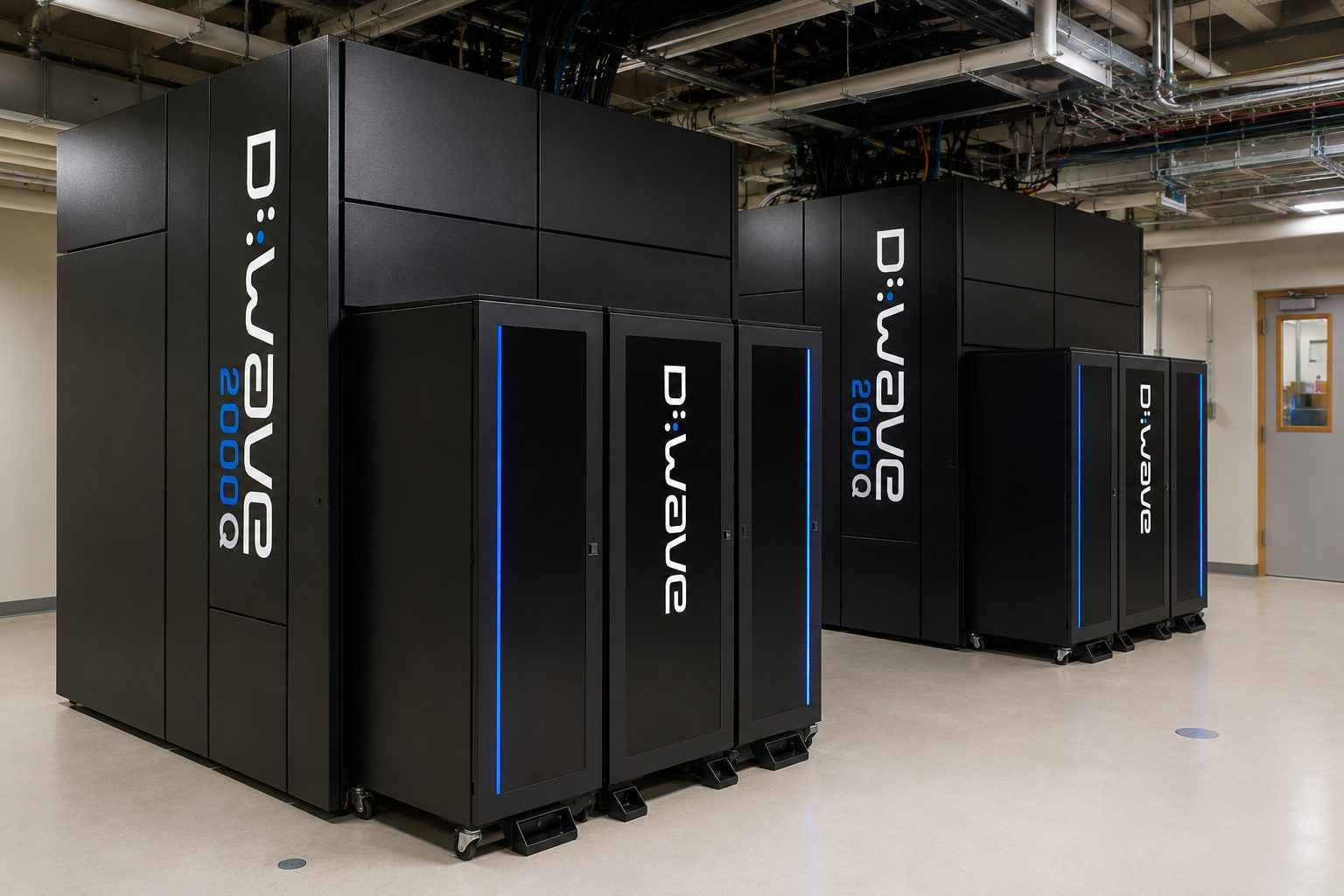
D-Wave Quantum dropped its key number for investors ahead of Tuesday’s open: bookings surged to $33.4 million in the first quarter, a staggering 1,994% jump from the same period last year. That leap got a major lift from Florida Atlantic University’s $20 million order for a system, plus a $10 million, two-year quantum computing-as-a-service contract with a Fortune 100 client. Bookings represent customer orders likely to convert into future revenue—they’re not revenue recognized yet.
That explains why the stock jumped ahead of the report. QBTS finished Monday at $24.03, gaining 6.47% after quantum stocks bounced hard. Options players were set for an 18.83% swing on earnings, either way. Investors weren’t just paying for D-Wave’s latest sales figures; they were betting that those orders might finally translate into more consistent revenue streams.
This quarter, things got tangled. D-Wave pulled in $2.9 million in revenue, an 81% plunge from $15.0 million last year, when it booked its first annealing quantum computer system sale. Net loss ballooned to $18.4 million, or 5 cents per share, compared with a $5.4 million loss, or 2 cents a share. Operating expenses shot up to $56.5 million—more than double—driven in part by the Quantum Circuits acquisition and heavier spending on sales, marketing, and R&D.
The reason behind the move isn’t complicated, though the trade itself still is. What the chart’s picking up is forward-looking—the focus is on the pipeline, not just the latest income statement. D-Wave disclosed $42.4 million in remaining performance obligations, essentially contracted deals that haven’t been fully delivered. Of that, about 54% is expected to hit the revenue line within the next 12 months. Bulls see a path to revenue conversion. Bears see a ticking clock.
Management zeroed in on the commercial story. “Strong execution, expanding commercial adoption,” CEO Alan Baratz said of the quarter. He pointed to the Quantum Circuits deal as a way to accelerate D-Wave’s move toward a scalable, error-corrected gate-model system. The bottom line: D-Wave is aiming to keep selling its optimization-driven annealing systems now, even as it works to develop the gate-model machines the industry is eyeing for the future. Business Wire
D-Wave stands out, at least for now, with more clear evidence of market demand compared to most other pure-play quantum companies. John McPeake at Rosenblatt, quoted on TipRanks, reaffirmed his Buy call, pointing to D-Wave’s “dual-platform position” and momentum with commercial customers—both of which, he argues, provide “good optionality” as quantum tech edges closer to real-world applications. The thesis? This isn’t just about pilot projects; some clients are inking more substantial deals. TipRanks
The bear camp zeroes in on the misses. First-quarter revenue failed to clear the $4.19 million Wall Street target mentioned ahead of results, and adjusted EBITDA loss grew to $32.8 million. Cash and marketable securities finished the quarter at $588.4 million—a hefty buffer, though that’s a drop from last year’s record $884.5 million. In this slice of the sector, runway matters, but it doesn’t mean the business model has been validated.
Competitive dynamics are critical, as D-Wave isn’t operating in isolation. From March 30 to May 6, IonQ shares shot up 98%, D-Wave climbed 84%, and Rigetti tacked on 56%. Those gains paint a clear picture: investors are still snapping up quantum stocks, undeterred by the sector’s lack of steady hardware sales or proven software-style margins.
The signals from peers are all over the place. Rigetti managed a slight revenue beat for Q1, yet shares slipped in after-hours trading. Meanwhile, Quantum Computing Inc. surged on its revenue gains. That divergence matters—investors want to see genuine adoption, but they’ll hammer names that show any whiff of delays, hazy reporting, or aggressive spending before the sales are there.
D-Wave’s next hurdle isn’t chasing splashy contracts—it’s about proving traction. Investors want to see the FAU system sale and that big Fortune 100 QCaaS agreement show up as real revenue in the next few quarters. The June 1 investor day just got a lot more important, with D-Wave pledging extra detail on its gate-model plans. For now, QBTS trades in the space between signed deals and actual reported revenue.
The stock’s swings are likely to stick around. D-Wave stands out in quantum computing—real customers, hardware sales, a cloud product, and two platforms in play. Still, revenue is thin, costs run high, and the current valuation is steep with optimism. The latest report on Tuesday didn’t resolve the debate. If anything, it made the split even clearer.
Related articles: NASDAQ:QBTS