
New York, June 9, 2026, 18:01 EDT
D-Wave Quantum dropped 8.94% Tuesday to finish at $23.52. Shares moved between $22.35 and $26.66 during the session. The slide came as tech stocks with speculation risk were hit, and other quantum stocks fell too. D-Wave settled at $23.40 in after-hours trade, little changed from the close.
D-Wave’s slide caught attention, with investors used to trading the quantum stock on hopes for future government deals and tech progress, not just revenue numbers. Tuesday’s session dented that longer-term focus as the Nasdaq dropped 0.97% and the S&P 500 slipped 0.26%. The Dow closed up 0.17%.
Losses spread through the sector. Shares of IonQ, Rigetti Computing and Quantum Computing Inc. — all names that usually trade together on quantum themes — each fell roughly 9% to 10% during the session. The drop suggests investors were trimming the whole group and not just responding to a D-Wave move.
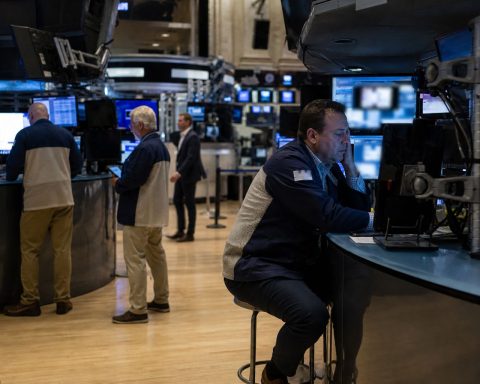
Tech names and other speculative stocks pulled the market down earlier Tuesday, according to Michael P. Reinking, senior market strategist at the NYSE. Reinking said investors are eyeing consumer price index numbers due out Wednesday. The CPI inflation report can move rate expectations, often affecting early-stage growth stocks. Most of their value is out in the future and reacts harder to rate changes.
D-Wave is working to convince investors it’s not just a science play. The company said first-quarter bookings shot to $33.4 million, a jump of 1,994% from last year. Bookings are signed customer orders that should become future revenue. But revenue dropped 81% to $2.9 million. The prior year included a large system sale. Net loss for the quarter came in at $18.4 million.
D-Wave CEO Alan Baratz said in the report that the company’s quarter saw “strong execution, expanding commercial adoption, and differentiated technology leadership.” He highlighted a $10 million quantum-computing-as-a-service deal with a Fortune 100 client. With quantum computing as a service, customers pay to use quantum machines on the cloud instead of owning hardware. D-Wave Quantum
D-Wave put out a technical plan June 1, looking to hit 100 logical qubits on its gate-model quantum computer by 2032. Logical qubits are error-corrected, designed to keep quantum operations on track. CEO Baratz described the roadmap as “a highly differentiated and credible path” to fault tolerance, which means the machine can keep calculating even with errors in play. D-Wave Quantum
Federal funds are in play too. D-Wave said May 21 it signed a letter of intent targeting $100 million in CHIPS and Science Act support. If the final documents go through, the U.S. Department of Commerce would get D-Wave common stock. CEO Baratz said the possible award would be “a transformative moment” for D-Wave, quantum computing and the country. D-Wave Quantum
Analysts are still figuring out which quantum names should get top valuations. Bernstein’s Mark Newman, in a Barron’s note out Tuesday, called quantum computing “set to become the next important step in computing.” He singled out Rigetti and Infleqtion, but investors still have a range of picks in the space. Barron’s
D-Wave says enterprises are picking up the pace with quantum, challenging the view that adoption is slow. “Companies were no longer asking if they should explore quantum, but how quickly they can implement it,” said Murray Thom, vice president of quantum technology evangelism, in a June 3 UK business report. The report found 65% of big UK firms are either using or piloting quantum computing. D-Wave Quantum
D-Wave’s losses are clear. Revenue is uneven, and the federal award isn’t locked in. The company flagged that the deal might not close and issuing shares to Commerce could dilute the current holders. With tech stocks out of favor lately, the nearly 9% drop doesn’t look random—investors are testing how sturdy the story is.