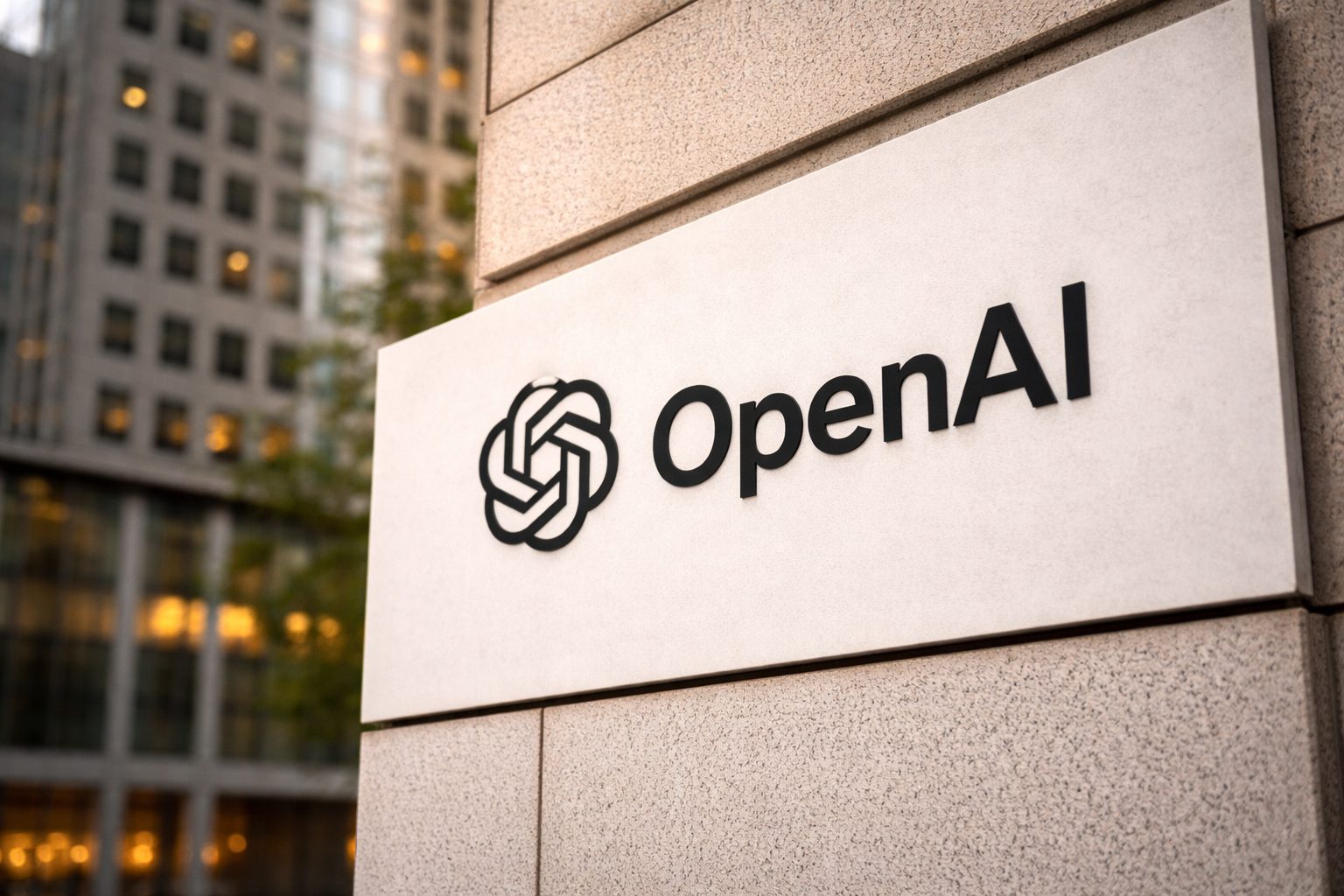

SAN FRANCISCO, Jan 19, 2026, 23:59 (PST)
- OpenAI’s chief financial officer revealed the company’s annualized revenue run rate soared to $20 billion in 2025, a steep rise from $6 billion in 2024.
- OpenAI reported its computing capacity climbed to roughly 1.9 gigawatts in 2025, up from 0.6 gigawatts the previous year.
- Friar said 2026 will center on “practical adoption” across health, science, and enterprise sectors, with increased emphasis on AI “agents” and automating workflows.
OpenAI’s annualized revenue run rate exceeded $20 billion in 2025, CFO Sarah Friar revealed, outlining a 2026 focus on what she described as “practical adoption” for the Microsoft-backed AI firm. https://finance.yahoo.com/news/openai-cfo-says-annualized-revenue-173519097.html
Timing is crucial. The AI surge is moving beyond flashy demos to actual budgets, contracts, and real deployments, even as the price tag for the hardware needed to train and operate cutting-edge models keeps rising. OpenAI aims to prove it can scale demand and cover infrastructure costs without stalling its progress.
Friar linked the revenue surge to a steep increase in computing power, measured in gigawatts available for data centers. She estimated OpenAI’s compute capacity at roughly 0.2 gigawatts in 2023, rising to 0.6 gigawatts in 2024, and jumping to about 1.9 gigawatts by 2025. In her words, “compute is the scarcest resource in AI.” https://openai.com/index/a-business-that-scales-with-the-value-of-intelligence/
The company cited “ARR” — annual recurring revenue — alongside its annualized figure. ARR projects recurring sales over a year but isn’t equivalent to audited, full-year revenue. OpenAI didn’t release any profit or cash-flow numbers in the post.
Reuters reported that Friar noted OpenAI’s weekly and daily active users hit record highs, matching the surge in compute power. The post highlighted growth that “closely” followed the increase in capacity. https://www.reuters.com/business/openai-cfo-says-annualized-revenue-crosses-20-billion-2025-2026-01-19/
Friar explained that OpenAI’s platform covers text, images, voice, code, and application programming interfaces (APIs)—which allow companies to integrate OpenAI models into their software. She described the next step as “agents” and workflow automation that operate nonstop, maintain context, and perform actions across various tools.
Looking ahead to 2026, Friar emphasized the priority: “closing the gap between what AI now makes possible and how people, companies, and countries are using it day to day.” She highlighted health, science, and enterprise as key areas in the near term. https://www.cnbc.com/2026/01/19/openai-to-focus-on-practical-adoption-in-2026-says-finance-chief-sarah-friar.html
She outlined several revenue streams for OpenAI, including consumer and team subscriptions alongside usage-based API pricing. Reuters revealed last week that OpenAI plans to introduce ads in ChatGPT for select U.S. users, aiming to offset development expenses.
On the infrastructure front, Friar noted that OpenAI prefers to keep its balance sheet “light” by leaning on partnerships instead of ownership, and by maintaining flexible contracts across different providers and hardware. She explained they run high-end training on top-tier hardware but handle heavy workloads on cheaper setups — targeting costs “measured in cents per million tokens,” with tokens referring to the text units the models process.
OpenAI is dropping hints about hardware. Policy chief Chris Lehane told Axios the company is “on track” to launch its first device in the latter half of 2026, though he didn’t reveal what the device will be or its exact release date. https://www.axios.com/2026/01/19/openai-device-2026-lehane-jony-ive
But there are important caveats to those figures. Annualized revenue can swing sharply both ways, and the compute limits OpenAI cites as a growth driver might also restrict it if supply tightens or costs climb. Advertising risks backlash if users find it intrusive, and launching a first device puts the company in a space where early AI gadgets have often faltered.
OpenAI isn’t the only player pushing to make AI a steady revenue source. It’s up against heavyweight competitors like Alphabet’s Google and Anthropic, which is backed by Amazon. The competition is shifting toward which company can embed AI tools seamlessly into daily workflows, rather than just impress during a demo.
Related articles: NASDAQ:MSFT