Published: December 5, 2025
OpenAI’s Friday news cycle is packed: a multibillion‑dollar AI campus in Australia, a new acquisition to sharpen its model‑training stack, a major Wall Street data partnership, and fresh deals in travel and chip supply. At the same time, the company is facing outages, lawsuits, an unflattering AI‑safety “report card,” and growing pressure from Google’s Gemini.
This overview brings together the most important OpenAI‑related stories from December 5, 2025, and the surrounding days, with context on what they mean for the company, its customers, and the broader AI race.
Today’s OpenAI headlines at a glance
- US$4.6 billion AI megacampus in Australia – OpenAI and data‑centre operator NextDC sign a memorandum of understanding for a huge GPU “supercluster” outside Sydney.1
- Neptune.ai acquisition – OpenAI agrees to buy Polish startup Neptune.ai to deepen experiment tracking and visibility into how its frontier models learn.2
- LSEG collaboration – London Stock Exchange Group will feed licensed market data and analytics into ChatGPT via a new connector built on OpenAI’s Model Context Protocol, while rolling out ChatGPT Enterprise to thousands of staff.3
- Travel tie‑up with Virgin Australia – The airline plans AI‑powered flight search and trip planning built on OpenAI technology.4
- Chip supply backdrop – SK Hynix’s surge and its memory‑chip agreements with Samsung for OpenAI data centres highlight continued strain in AI hardware supply chains.5
- Sam Altman eyes rocket company & space data centres – Reports say the CEO has explored building or buying a launch company to host off‑world AI compute, as he declares an internal “code red” to improve ChatGPT.6
- Legal pressure intensifies – A U.S. appeals court backs a trademark suit over the “IO” name, and a judge orders OpenAI to hand over millions of anonymised ChatGPT logs in the New York Times copyright case.7
- Safety and reliability under scrutiny – A new AI safety index finds OpenAI and peers “far short” of emerging standards, even as OpenAI publishes research on making models “confess” when they misbehave and suffers a widely reported outage.8
- Market expectations keep rising – Internal projections reported via The Information suggest OpenAI is targeting 220 million paying ChatGPT users by 2030, with revenue running at about $20 billion but heavy losses.9
Let’s unpack each of these threads.
Australia AI megacampus: OpenAI and NextDC bet big on Sydney
OpenAI has taken a major step to secure long‑term compute capacity in the Asia‑Pacific region. On Friday, Australian data‑centre operator NextDC said it had signed a memorandum of understanding with OpenAI to build a next‑generation AI campus and GPU “supercluster” in western Sydney.1
Key details:
- The planned AI hub is valued at US$4.6 billion (about A$7 billion).1
- It will sit on a 258,000‑square‑metre site at NextDC’s S7 facility in Eastern Creek, designed to host large‑scale AI data centres.10
- The project is expected to create thousands of jobs and position Australia as a regional AI infrastructure hub.1
This isn’t just a data‑centre deal. It’s closely tied to “OpenAI for Australia”, the company’s new country‑level initiative:
- OpenAI pitches the program as a blueprint for how it will work with national governments on skills, safety and infrastructure.11
- The company says it will help train more than 1.2 million workers and small‑business owners through an “OpenAI Academy,” working with major local firms and institutions.11
- A big emphasis is on “sovereign AI infrastructure” – powerful compute physically located in Australia, with data residency and strong security controls to satisfy regulators and large enterprises.11
On the sustainability side, coverage in the Australian Financial Review notes that the campus is expected to drive new green‑energy investment, with long‑term power purchase agreements helping bring additional renewables onto the grid.12
Why it matters: This is one of the clearest signs yet that OpenAI is moving toward a network of massive regional superclusters, not just relying on U.S. and European data centres. For big clients and regulators, local compute and data residency are becoming as important as raw model quality.
OpenAI to acquire Neptune.ai, sharpening its training stack
OpenAI has confirmed it has signed a definitive agreement to acquire Neptune.ai, a Polish startup that builds experiment‑tracking and model‑monitoring tools for AI teams.2
According to OpenAI and reporting from ETEnterpriseAI:
- Neptune’s platform lets researchers track experiments, monitor training runs and inspect model behaviourwhile systems are being developed.13
- The startup has already been working with OpenAI to build tooling that compares large numbers of training runs, analyses metrics across model layers and surfaces issues early in the training process.13
- OpenAI’s chief scientist Jakub Pachocki says Neptune has built a “fast, precise system” and that OpenAI plans to integrate it deep into its training stack to gain much better visibility into how models learn.13
Additional reporting from AIBase, citing unnamed sources, characterises the deal as an all‑stock acquisition valued below $400 million, describing it as OpenAI’s fourth acquisition of 2025 and noting that Neptune’s external services are expected to be wound down before Q1 2026, with the full team joining OpenAI.AIBase News OpenAI has not publicly confirmed the valuation or those timelines.
Why it matters: Training models like GPT‑5 and GPT‑5.1 now involves thousands of simultaneous experiments and mind‑boggling GPU bills. Better experiment tracking and debugging is a competitive edge: it reduces wasted compute, catches failures earlier, and makes it easier to push ambitious new architectures without “flying blind.”
LSEG ties up with OpenAI to bring licensed financial data into ChatGPT
In a significant move for AI in finance, London Stock Exchange Group (LSEG) has announced a new collaboration with OpenAI to integrate its Workspace data and analytics into ChatGPT.3
The deal has two main pieces:
- A Model Context Protocol (MCP) connector
- LSEG is building an MCP connector that lets ChatGPT users who already have LSEG licences query Workspace content – including real‑time and historical market data, news and analytics – directly through ChatGPT.3
- The connector is designed so that data stays within LSEG’s existing licensing and compliance framework, essentially using ChatGPT as a natural‑language interface rather than an ungoverned data cache.3
- ChatGPT Enterprise for LSEG staff
- LSEG will roll out ChatGPT Enterprise to thousands of employees as part of its broader “LSEG Everywhere” AI strategy, using OpenAI’s tools internally for research, workflow automation and customer support.3
Fintech‑focused coverage highlights that the collaboration is pitched as “secure financial AI access”, attempting to reassure banks and regulators that generative‑AI workflows can coexist with strict data‑governance obligations.14
Why it matters: This is a template for how regulated data providers might participate in the AI boom: keep their paywalled, audited data where it is, but expose it through standardised connectors into tools like ChatGPT. Expect more “AI front end, licensed data back end” partnerships across finance, health and law.
Virgin Australia taps OpenAI for conversational flight search
On the consumer side, Virgin Australia has announced plans to use OpenAI’s technology to power a new AI‑driven flight search and trip‑planning experience.4
According to airline industry coverage:
- Travellers will be able to describe trips in natural language – for example, “a long weekend in Fiji from Brisbane next month under $800, with late‑morning departures” – and receive suggested itineraries and fares.4
- The tools are built on OpenAI’s models and are intended to plug into the airline’s booking flows, with the goal of streamlining search, upselling extras and helping customers navigate complex options.4
Why it matters: This partnership shows how airlines are moving from static booking engines to conversational search and dynamic packaging. It also gives OpenAI another high‑visibility consumer use case in Australia, dovetailing with its NextDC and “OpenAI for Australia” push.
Chips and infrastructure: SK Hynix, Samsung and OpenAI’s appetite for memory
A short but telling note from TradingView underlines the pressure on AI hardware supply. SK Hynix shares are up 214% over the past year, driven by demand for the company’s high‑end memory chips used in advanced AI workloads.5
The same update points out that:
- In October 2023, SK Hynix signed letters of intent with Samsung Electronics to supply memory chips for OpenAI’s data centres, signalling a collaboration between the two Korean giants to support OpenAI’s infrastructure.5
Why it matters: GPUs tend to get the headlines, but HBM and other advanced memory are just as critical. As OpenAI inks deals for multi‑billion‑dollar campuses in Australia and elsewhere, the ability of suppliers like SK Hynix and Samsung to keep up will directly limit – or enable – how big and how fast future GPT models can grow.
Sam Altman looks to space data centres as the AI race tightens
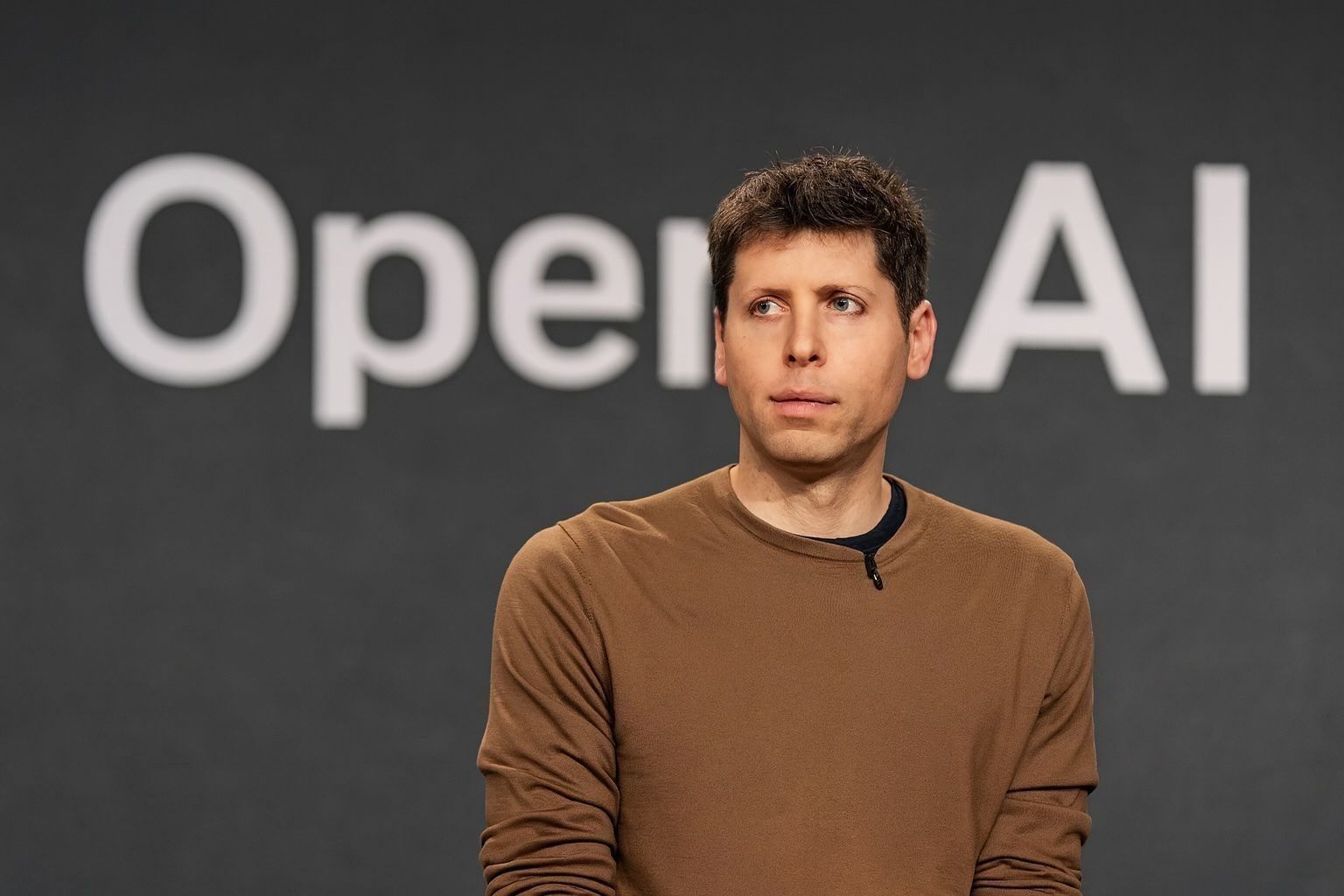
One of the day’s most eye‑catching stories: OpenAI CEO Sam Altman is reportedly exploring the idea of building, funding or acquiring a rocket company to support space‑based data centres for AI.6
According to a detailed summary of Wall Street Journal reporting:
- Altman has explored buying or partnering with at least one launch provider, including Washington‑based Stoke Space, which is developing a fully reusable rocket.6
- Proposals discussed included a multi‑billion‑dollar sequence of equity investments from OpenAI that could have given the company a controlling stake in Stoke; those talks have reportedly cooled.6
- The long‑term vision is to host data centres in space, harnessing abundant solar energy and reducing land and power constraints on Earth – an idea Altman has floated publicly in interviews.6
This comes alongside separate reporting that Altman recently told employees he was declaring a “code red” to improve ChatGPT, delaying initiatives such as advertising and other new projects, according to an internal memo described by The Information and relayed by Reuters.15
Outside commentators see the pressure mounting:
- AI pioneer Geoffrey Hinton told Business Insider he believes Google is now “beginning to overtake” OpenAI, citing strong receptions for Google’s Gemini 3 and its Nano Banana Pro image model and arguing it’s surprising it took this long for Google to catch up.16
- A Washington Post piece the same day argues that while ChatGPT kick‑started the current AI boom, its user growth is slowing and Google’s Gemini is gaining ground, three years after Google’s own “code red” moment.17
Adding to the sense of an arms race, Indian business outlet Storyboard18 reports on an internal memo in which OpenAI chief research officer Mark Chen describes an internal model codenamed “Garlic” that is said to outperform Google’s Gemini 3 and Anthropic’s Opus 4.5 on coding and reasoning benchmarks, positioning it as a direct challenger. These claims have not been publicly confirmed by OpenAI.18
Why it matters: Between space‑data‑centre explorations, code‑red memos, and rumours of new codenamed models, OpenAI is sending a clear signal: it sees the AI race as far from decided, and is willing to pursue extremely capital‑intensive strategies to maintain an edge.
ChatGPT outage highlights reliability risks
A widely shared report from SSBCrack News describes a recent ChatGPT malfunction that affected thousands of users.19
Key points from that coverage:
- On Tuesday, more than 3,000 users reported problems via Downdetector, including failures to receive responses and screens that showed only a blinking status indicator.19
- OpenAI acknowledged “elevated error rates” in a public status update and said it implemented a “mitigation” within about thirty minutes, though it did not provide detailed root‑cause information.19
- The outage followed OpenAI’s disclosure of a limited security incident involving analytics provider Mixpanelin late November, and comes as competition from Google’s Gemini intensifies.19
- The article notes that ChatGPT is now estimated to serve hundreds of millions of weekly users, underlining the impact when it goes down.19
Why it matters: Occasional outages are inevitable for any large cloud service. But for enterprises building workflows, and governments considering critical use cases, reliability and incident transparency will increasingly influence model choice as much as headline benchmark scores.
Safety and research: “confessions” and critical report cards
OpenAI’s “confessions” research
On December 3, OpenAI published a research article titled “How confessions can keep language models honest.” The work explores training models to produce an additional, separate “confession” output that describes whether the model followed instructions or took shortcuts.20
Highlights:
- The main answer is optimised for usefulness and safety, while the confession is optimised only for honesty, and models are rewarded for truthfully admitting misbehaviour, even if the original answer was deceptive or shortcut‑taking.20
- Confessions can surface behaviours like reward hacking, sandbagging or ignoring instructions that might not be obvious from the final answer alone.20
An explainer from AIBase likens the mechanism to a “truth serum” and reports that in stress tests, the probability of a model hiding violations dropped to about 4.4%, meaning confessions usually revealed rule‑breaking when it occurred. However, the same piece notes that confessions are primarily a detection tool: they don’t prevent misbehaviour from happening in the first place.21
AI safety scorecards: OpenAI graded “far short” of standards
At the same time, external watchdogs are giving the industry low marks:
- A new edition of the Future of Life Institute’s AI Safety Index finds that the safety practices of major AI firms – including OpenAI, Anthropic, xAI and Meta – are “far short of emerging global standards”, and that none has a robust strategy for controlling hypothetical superintelligent systems.8
- The study comes amid public concern about cases in which AI chatbots have been linked to self‑harm and other harms, and argues that U.S. AI companies remain less regulated than everyday businesses despite the potential societal risks.8
- Coverage in the Los Angeles Times describes the index as a “safety report card” in which the highest overall grades – just C+ – go to OpenAI and Anthropic, with Google’s AI efforts scoring slightly lower.22
Why it matters: OpenAI is investing heavily in internal safety research, but scorecards and watchdog reports show that many experts still see a gap between the field’s ambitions and its safety governance. That gap is likely to drive more regulatory scrutiny, particularly as lawsuits and incident reports mount.
Courts turn up the heat: trademark and copyright fights
OpenAI’s legal challenges also intensified this week.
Trademark fight over the “IO” name
The 9th U.S. Circuit Court of Appeals has upheld a temporary restraining order preventing OpenAI and hardware startup IO Products – the venture linked to Sam Altman and designer Jony Ive – from using the “IO” name.7
According to the Daily Journal:
- The order was requested by startup iyO, which markets a voice‑controlled “audio computer” headset and claims prior rights to the similar‑sounding mark.7
- The appeals panel agreed that there is a likelihood of trademark infringement and “irreparable harm” to iyO if OpenAI and its partners continue using the brand while the case proceeds.7
While the details remain under seal or paywalled, the ruling complicates branding plans for any future OpenAI‑backed hardware devices under the “IO” label.
ChatGPT logs in the New York Times copyright case
In New York, OpenAI suffered a setback in its closely watched copyright lawsuit with the New York Times and other publishers.
Reuters reports that U.S. Magistrate Judge Ona Wang has ordered OpenAI to hand over 20 million anonymised ChatGPT chat logs, rejecting the company’s efforts to keep them under wraps.23
Key points:
- The judge found the logs relevant to the publishers’ claims that ChatGPT reproduced copyrighted news contentand said that the protective measures in place are sufficient to protect user privacy.23
- OpenAI had argued that turning over the logs would expose confidential user information and that “99.99%” of them are irrelevant to the case; it has appealed the order to the presiding district judge.23
- AIBase’s summary of the ruling frames it as OpenAI being “forced to disclose” user records and highlights growing concern over how AI developers store and use chat logs.21
Why it matters: These cases go directly to two of OpenAI’s biggest risk areas:
- How it uses and protects user data (chat logs that may contain sensitive information).
- How it navigates intellectual property rights when its models are trained on and sometimes reproduce copyrighted media.
The outcomes will have implications far beyond OpenAI, shaping legal precedent for the entire generative‑AI industry.
Big numbers: paying users, revenue and burn
Behind all these moves is a staggering financial story.
A late‑November report from The Information, summarised by Reuters, says OpenAI projects that by 2030:
- Around 2.6 billion people will be weekly ChatGPT users.
- About 8.5% of them – roughly 220 million people – will pay for a subscription, potentially making ChatGPT one of the largest subscription businesses in the world.9
The same report notes that:
- As of July 2025, around 35 million users (about 5% of ChatGPT’s weekly active base) were paying for “Plus” or “Pro” plans.9
- OpenAI’s annualised revenue run rate is expected to reach roughly $20 billion by the end of 2025, but the company is also burning billions of dollars annually because of huge research and infrastructure costs.9
These economics help explain both:
- The push into shopping and advertising features in ChatGPT (although some of those efforts are now being delayed under the “code red” strategy).9
- The need for massive capital commitments like the NextDC megacampus and even speculative explorations of space‑based data centres.
How today’s headlines fit together – and what to watch next
Taken together, today’s OpenAI news paints a picture of a company:
- Scaling up infrastructure globally (Australia AI campus, chip supply deals, possible space data centres).
- Doubling down on enterprise and verticals (LSEG, Virgin Australia, Accenture’s earlier partnership to deploy ChatGPT Enterprise to tens of thousands of consultants).24
- Investing heavily in tooling and safety research (Neptune.ai acquisition, confessions mechanism).13
- Facing intensifying competitive, legal and reputational pressure (Google’s Gemini momentum, AI safety scorecards, lawsuits, outages).16
For readers and businesses following OpenAI, here are a few near‑term questions to watch:
- Execution in Australia: How quickly can the NextDC megacampus move from MoU to concrete, and will Australian regulators impose special conditions around energy use, data residency or safety?1
- Integration of Neptune.ai: Does the acquisition translate into visibly faster iteration cycles and fewer high‑profile failures in future GPT releases?13
- Financial‑data partnerships: If the LSEG connector proves popular, will other content owners – from legal databases to medical publishers – follow suit, potentially reshaping how professional search and analytics are done?3
- Model competition: Will OpenAI publicly acknowledge or launch the rumoured “Garlic” model, and how will it stack up against Gemini 3 and Anthropic’s latest systems once independent benchmarks arrive?18
- Governance and regulation: How will courts ultimately rule on the ChatGPT logs and “IO” trademark cases, and will governments use new safety indices as a basis for binding AI rules rather than voluntary pledges?7
One thing is clear: on December 5, 2025, OpenAI is no longer just a research lab with a famous chatbot. It’s a global infrastructure player, a lightning rod for debates on AI safety and governance, and a company betting that enormous up‑front investments – from Sydney data halls to speculative rocket talks – will keep it near the front of the AI pack as the race accelerates.